
Categories
Selected Articles

Russian peacekeepers in Karabakh under harsh spotlight


og-twitter.png

As the blockade of Nagorno-Karabakh drags on, the performance of the Russian peacekeepers charged with providing security on the road in and out of the territory is coming under closer scrutiny than ever before. And the reviews, from all sides, have been scathing.

Under the harsh spotlight of the constant coverage by pro-government Azerbaijani media, the peacekeepers have appeared uncertain of how to manage the belligerent protesters that have managed to shut down the road for four days and counting. On some occasions the Russians are easily pushed around by the protesters and reporters, on others they lose their patience and lash out.

The performance has only deepened skepticism of the Russian peacekeeping mission on both sides.

For Armenians, the episode has confirmed the Russians’ impotence in the face of Azerbaijani pressure. Baku has been steadily ratcheting up pressure on Yerevan to sign a comprehensive peace agreement that would restore Azerbaijan’s control over Karabakh, and their challenges to the peacekeepers have become sharper as the Russian military has gotten bogged down in Ukraine.

For Azerbaijanis, the crisis has only confirmed that the peacekeepers harbor pro-Armenian sympathies. Azerbaijani officials and media have long accused the peacekeepers of having comradely relations with the de facto government in Nagorno-Karabakh, which Baku regards as an illegitimate separatist entity. 

The peacekeeping presence dates from November 2020, when the Russia-brokered agreement that ended the Second Karabakh War stipulated the deployment of 2,000 Russian soldiers to monitor the ceasefire. The peacekeepers were also to “control” and “protect” the Lachin Corridor, the only road in and out of the Armenian-populated territory. 

Beyond that, though, there was no detailed mandate for their presence and little agreement on what the peacekeepers were supposed to do. In the initial stages of the post-war period, that was largely a theoretical problem. The Russians patrolled the territory, helped clear land mines and assisted locals in a variety of small humanitarian missions.

“So far, no party to the conflict has pushed back on the broad range of activities taken on by Russian peacekeepers,” the International Crisis Group wrote in a November 2021 report. “However, experience from other conflict zones suggests this could quickly become an issue in the event of an escalation in tensions: in that scenario any disparity between the two sides’ visions of Russia’s role will come sharply into view.”

In the current crisis, that warning has been proven prescient. 

Since December 12, a group of Azerbaijani government-sponsored activists have effectively closed off the Lachin Corridor, holding a non-stop protest demanding that Azerbaijani officials get free access to mines that they claim Armenians have been illegally exploiting. The standoff has virtually marooned the Armenians of Karabakh, who have begun to ration food and fuel as the protesters appear ready for the long haul. 

Azerbaijanis argue that nothing in the 2020 ceasefire agreement gives the Russians the right to prevent them from entering Nagorno-Karabakh, which is internationally recognized as Azerbaijani territory. And yet, the peacekeepers have refused to accede to the Azerbaijanis’ demands to be allowed into the territory.

A video report on the protests by the news site Caliber.az, which is connected to Azerbaijan’s Ministry of Defense, enumerates the modest, vague list of responsibilities given to the peacekeepers, contrasting it to a number of episodes in which Russian peacekeepers interfered with Azerbaijani journalists’ coverage of the protests, including hitting a media car with a rifle butt and tearing down a tent. On other occasions Russian peacekeepers have knocked microphones out of reporters’ hands or shone spotlights into the lenses of TV cameras. “What gives you the right?” the narrator asks. 

As international condemnation of the blockade has grown, Azerbaijan has sought to shift the blame on to the Russians.

Azerbaijan’s Foreign Ministry has argued that it is not their side, but the Russian peacekeepers who have blocked the road. (The Russians have, indeed, blocked traffic from getting close to the scene of the protests in an apparent attempt to stop clashes.) Azerbaijanis at the protests say they are willing to let Armenians through, but that the Russians and the de facto Karabakh leadership are preventing it. 

Armenians, meanwhile, have accused the peacekeepers of neglecting the spirit of their mission, which is to ensure the security of the ethnic Armenian population in Karabakh. 

“Azerbaijan is more and more testing the red lines, checking for the Russian peacekeepers’ weaknesses and is trying to see how far this kind of pressure can go,” analyst Alexander Iskandaryan told the news site CivilNet. “The only limit on Azerbaijan is the Russian reaction, which Azerbaijan is constantly testing, and it sees that there has not been any kind of reaction that could stop this. So that’s why this is happening.”

The peacekeepers “have been on duty there for over two years already and in a way should know their tasks,” said Olesya Vartanyan, an analyst at the International Crisis Group and one of the authors of the 2021 report. 

“They are doing now what they have been doing since they got deployed to the region,” Vartanyan told Eurasianet. “The issue now is that they are in the center of a crisis with people from different sides eager to criticize them: Armenians in Nagorno-Karabakh might expect the peacekeepers to remove people who are blocking the road; protestors might attach different hopes to the mission.”

There are complaints not just about the peacekeepers’ passivity on the ground but the relative silence from political leaders in Moscow. While several foreign governments called on Azerbaijan to lift the blockade, four days into the crisis Russia had yet to follow suit.

“At the moment the United States, European Union, France have already issued statements, and according to our information Russia is also preparing a similar statement, which the Armenian people have been waiting for for a long time,” speaker of parliament Alen Simonyan said on December 14. “We hope that this time our partners will not disappoint us.”

On December 15 Moscow did finally address the issue. While it stopped short of blaming Azerbaijan for the blockade, it did hit back at criticism of the peacekeeping mission.

“It is unacceptable to create problems for the lives of the civilian population,” Maria Zakharova, spokesperson for the Russian Foreign Ministry, said in a statement, adding: “Accusations against the peacekeepers are unacceptable and counterproductive, the Russian peacekeeping mission is effectively carrying out its duties acting as the guarantor of stability in the region.”

Indeed, it may be that the crisis has only strengthened the case for the peacekeepers’ presence. 

“The key here is that without the peacekeepers it could be even worse. They are still in a way helping to sustain this shaky stability on the ground,” Vartanyan said. “The mission finds itself in a difficult situation, because, with the current crisis in Ukraine, it is not easy for those in the West to support the Russian presence in Nagorno-Karabakh. This has been a very isolated mission, that has almost no contacts with international organizations, not to mention foreign governments,” she said.

Challenging the peacekeepers may turn out to backfire for Baku. 

“If Baku engages in good faith with local Armenians, this would reduce the risk of potential spoilers of a peace agreement,” Zaur Shiriyev, another analyst at the International Crisis Group, told Eurasianet. “Each new escalation, either military or non-military, aggravates the fresh wounds from the 2020 war. This diminishes hopes for a sustainable peace at the societal level and strengthens radical elements in both societies.”

In that context, Shiriyev said, the blockade “is a very unproductive move. It strengthens the Armenians’ argument that Baku will not provide security and safety if they were integrated into Azerbaijan.”
Categories
Selected Articles

Special Episode: A Conversation with Kakha Gogolashvili on Georgia’s Foreign Agents Law


This week’s special episode of Russian Roulette features an interview on Georgia’s foreign agents law conducted by our sister podcast, The Eurofile. Max Bergmann and Donatienne Ruy from the CSIS Europe, Russia, and Eurasia program sit down with Kakha Gogolashvili, Senior Fellow and Director of EU Studies at the Georgian Foundation for Strategic and International Studies, to discuss the recently abandoned foreign agents law, Russia’s presence in the South Caucasus, and Georgia’s EU membership aspirations.

Listen to The Eurofile | CSIS Podcasts 

Read more: In Georgia, Civil Society Wins against Russia-Style ‘Foreign Agents’ Bill (csis.org) 


Categories
Selected Articles

How the War in Ukraine is Reformatting the Post-Soviet Space


Every day, Russia’s neighbors observe its hostile actions in Ukraine with concern and uncertainty. The war and its consequences are producing a variety of outcomes, many we cannot predict or observe, including dramatic ones that could overhaul history and politics. We cannot foretell decisionmaking from closed political systems or correctly assess decisionmakers’ psychological traits in autocratic regimes. Nor can we observe or extrapolate interactions among elite groups and players in such systems. Accordingly, forecasts on Russia may be frequent but lack value. For example, the start of Moscow’s large-scale offensive against Ukraine was only predicted by a tiny number of experts; most of us did not consider it a realistic option.

One of the main ways in which the war can go is positional and static, dragging on for years, similar to the Syrian conflict. Another direction is that Moscow might boost its fighting intensity in Ukraine and even beyond. President Vladimir Putin said in mid-September that Russia would “certainly use all the means at our disposal,” implying possible escalation and even the hint of using nuclear weapons. Domestic factors such as troop shortages, unhappy nationalists, re-shuffled army generals, variable energy prices, sanctions, disproportionate propaganda, pro-peace attitudes, and the changing season affect Kremlin decisionmaking, clouding projections and sequels. All of the various possibilities have different outcomes, and some of the consequences will have effects regardless of the outcome.

Russia Loses Even If It Wins

First, arguably, Russia has already lost its war against Ukraine. It will end up as the loser even if it wins on the battlefield because the war has consolidated the Ukrainian nation around its confrontation with Russia. We are witnessing a spurt of nation-building based on anti-Russian sentiment, amounting to the birth of the Ukrainian political nation. This is not a new trend in Ukraine; the Ukrainization of the public language space has been ongoing for many years there, as has the rise of anti-Russian sentiment and the political instrumentalization of tensions between the Ukrainian and Russian orthodox churches. However, the war has made these trends final and likely irreversible. Regardless of when and how the war ends, one can no longer imagine a pro-Russian Ukraine.

Second, Russia has lost the information war. After Bucha, Russia’s image suffered a catastrophic decline and will stay that way. Whatever follows, Russia stands no chance of creating anything remotely similar to the soft power toolbox of the West. Western public opinion about Russia is unlikely to change for many years.

Third, it is hard to imagine the West lifting its sanctions against Russia, regardless of future developments, except for the unlikely scenario of a regime change in Moscow and the return of all Ukrainian territories seized, including Crimea. In all other case scenarios, the sanctions will remain in place and will continue crippling Russia’s economy.

Fourth,this war consolidated Europe. True, European states disagree about many things, including this war; it is also true that the war affects European countries in different ways depending on their geographical situation, e.g., the implications are different for Lithuania and Portugal. However, in institutional terms, Russia’s aggression has made Europe more consolidated than it has been since the Cold War, and no outcome of the war can change this.

Fifth,Russia’s confrontation with the West will also continue regardless of how the war unfolds. Arguably, Russia’s ultimate motive for starting this war was to overhaul Europe’s security system, but there is no way that Russia could win a global confrontation with the West. Instead, Russia has landed in a trap of its own making: a protracted war that destroys its reputation, political ties, economy, and resources. This said, it is an open question whether Russia is more dangerous when it feels strong and secure or when it is weak and isolated.

A Post-Post-Soviet World Torn Apart

New post-Soviet allegiances can be seen from the March 2022 UN General Assembly resolution condemning the Russian war on Ukraine: only Moldova and Georgia supported Ukraine, Belarus aligned with Russia, and the rest were essentially absent. The war is changing the former post-Soviet space.

I call it “former” because no single paradigm unites all of its countries any longer. Russia’s manner of calling former Soviet republics its “near abroad” is an atavism that makes Russia treat its immediate neighbor Finland as its “far abroad” and Tajikistan, which has two large countries between it and Russia, as its “near abroad.” While in geopolitical terms, the nations of the former USSR can be defined as “countries surrounding Russia,” their starkly dissimilar geographical situation makes this definition meaningless. Arguably, the Ukraine war has highlighted the differences and contributed to the further disintegration of the post-post-Soviet world.

Moldova and Belarus, located in the zone of open rivalry between Russia and Europe, have been under duress. While Ukraine is the focus of the current rivalry, the competition for Moldova and Belarus was high until the war on Ukraine overshadowed everything. Notably, in all three countries—Ukraine, Moldova, and Belarus—domestic political struggles always boil down to a competition between East and West. In the case of Ukraine, one can argue that its fate will largely depend on how the war ends (or doesn’t), how Ukraine recovers, and what geographical configuration will result. The eventual stationing of Russian troops in the region is a crucial factor for Moldova. A scenario in which Russian troops reach Transnistria is radically different from one in which Moldova is separated from de-facto Russian-controlled regions by territory that is Ukrainian both de jure and de facto.

Contrastingly, Belarus has already joined all the possible unions and alliances with Russia. Strictly speaking, its 2020 elections and their aftermath, including the cruel suppression of mass unrest, the forced exile of the opposition, and the non-recognition of election results by the EU, UK, United States, and Ukraine, have left Belarus no choice but to support the Kremlin. President Alyaksandr Lukashenka has so far been able to refrain from directly sending Belarusian troops into the war, but in every other format, Belarus has given Russia full support. It is an irony of history that although Lukashenko has been on extremely bad terms with Putin for a long time, Moscow has to help him stay in power because any change of leadership in Minsk is prone to a u-turn in Belarusian politics. Lukashenka has no geopolitical choices, whereas a different leader of Belarus theoretically might. Belarus and Russia are thus doomed to mutual support, at least until a regime change in one or the other.

Wars of Their Own

In the South Caucasus, the Russia-Georgia War of 2008 and the Second Karabakh War of 2020 made it very clear that the West has no significant interests in this region, at least not ones that would warrant direct engagement or support to one of the parties in conflict. In the absence of global engagement, the South Caucasus remains at the mercy of regional players: Russia, Turkey, and Iran. Although the countries of the South Caucasus have no immediate stakes in the Russia-Ukraine confrontation, they are, each in its own way, concerned that the confrontation will alter Russia’s role in the South Caucasus.

To begin with, policymakers in Tbilisi have been extra cautious. Even though Georgia has openly chosen a pro-Western political orientation and has ambitions to join NATO, Georgia has been avoiding any direct clash with Russia. Georgian Prime Minister Irakli Garibashvili made it clear that Tbilisi was not going to join Western economic and financial sanctions against Russia because this would harm the country’s national interests. Such a position is understandable because Georgia’s economy is heavily dependent on Russia, whereas the Russian economy would not be significantly affected by a Georgian embargo. Georgia’s problematic relationship with its northern neighbor is ongoing—even intensifying, as masses of Russian men queue at the country’s border to escape Putin’s partial mobilization.

Also, understandably, Armenia has not made any clear statements with regard to sanctions against Russia. Since the Second Karabakh War of 2020, the safety of the Armenian population of Nagorno-Karabakh has been ensured by Russian peacekeepers. Should they leave, the Armenians of Nagorno-Karabakh face ethnic cleansing, which was the fate of civilians on territories seized by Azerbaijan during the 2020 war. Armenia avoids upsetting the fragile ceasefire and, so far without much success, seeks stabilization and transformation of the conflict paradigms, trying to initiate negotiations with Turkey on the normalization of mutual ties and resume talks with Azerbaijan in the framework of the OSCE Minsk Group. In light of these efforts, a fallout with Russia is the last thing on Armenia’s agenda. Besides, Yerevan has another reason to avoid antagonizing either Russia or Ukraine: both have Armenian communities numbering in the hundreds of thousands.

As for Azerbaijan, President Ilham Aliev met Putin just days before launching his military campaign in Ukraine. They signed a host of agreements that brought their relationship “to the level of an alliance.” Baku has been highly guarded since the start of the war but has, at the same time, escalated the number and intensity of clashes and incidents on its own borders with Nagorno-Karabakh and Armenia. With Nagorno-Karabakh clearly not a current priority for Russia, Azerbaijan is apparently testing the red lines and constraints of the Russian peacekeepers stationed there and also using this opportunity to seize convenient high ground. Arguably, it may also be probing for a new escalation in the event that Russia is so weakened by its campaign in Ukraine that it is no longer willing or able to sustain its peacekeeping mission in Nagorno-Karabakh.

In a region as problematic as the South Caucasus, any abrupt change in the power configuration and military balance is potentially threatening. And while the inner workings of regional conflicts in the Caucasus only marginally involve European and global players, geopoliticization of these conflicts is prone to further militarization and threats to the fragile peace. A light parallel can be drawn with Central Asia, which is even further from the direct influence of European players than the Caucasus. Along with Russian persuasions, Central Asian countries contend with powerful China, unstable Afghanistan, Islamic radicalism, and have no European prospects whatsoever, making these states as cautious as those in the South Caucasus about Russian designs. 

Conclusion

The fate of Ukraine shows that the challenges of state-building on the ruins of the communist empire are just one step away from an apocalyptic, large-scale war in the spirit of the twentieth century. Post-Soviet countries that are smaller and less important to the West than Ukraine have the most to fear as geopolitical balances are put to the test. But all are vigilant, even Belarus, where the Russian invasion has “changed the structural environment of the Belarusian regime and complicated prospects for its survival,” write Ryhor Nizhnikau and Arkady Moshes. Indeed, Russia is larger and more powerful than all the other former Soviet countries combined by every parameter—population, territory, economy, military—even if it appears provisionally hesitant and weak.

Alexander Iskandaryan is Director of the Caucasus Institute, Armenia.

Image credit


Categories
Selected Articles

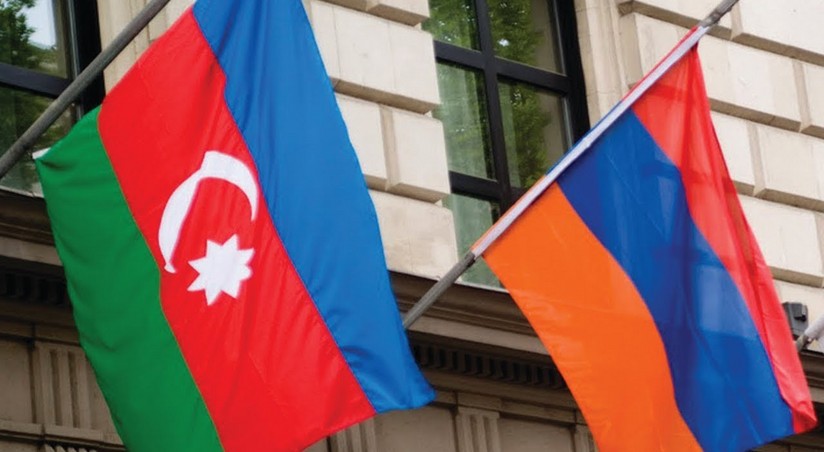
Azerbaijani, Armenian experts meet in Tbilisi


Azerbaijani, Armenian experts meet in Tbilisi

Baku, September 15, AZERTAC

The expert delegations from Azerbaijan and Armenia have met in the Georgian capital of Tbilisi.

The Azerbaijani delegation was headed by Chairman of the Board of the Center of Analysis of International Relations Farid Shafiyev (AIR Center), and the Armenian delegation by Director of the Caucasus Institute Alexander Iskandaryan.

The sides discussed the current issues involving the two countries.


Categories
Selected Articles

Conflicts


This theme embraces the study of ethnopolitical conflicts in the South Caucasus. It has three main focus areas: (1) assessing the current status and the risks of escalation, (2) proposing innovative theoretical approaches, and (3) putting the conflict in a wider historical and geographical perspective. This theme includes research papers.

  • The Conflict over Nagorno-Karabakh after Two Decades: an Inevitable Prolongation of the Status Quo? by Dr Sergey Minasyan, Head of Political Studies at CI, was presented to the public in October 2010. Mr Arman Melikyan, former Minister of Foreign Affairs of the Nagorno-Karabakh Republic, reviewed and criticized the research paper, followed by a discussion of current trends and approaches to the conflict, the risks of war and how they can be mitigated.
  • Nagorno-Karabakh: Paradoxes of Power and Weakness in an Asymmetric Conflict, by Prof. Larisa Deriglazova of Tomsk State University and Dr. Sergey Minasyan of CI, was presented and discussed in January 21, 2011. It was reviewed and criticized by Major-General Hayk S. Kotandjian, Head of the Institute for National Strategic Studies at the Ministry of Defense of Armenia. The ensuing discussion focused on how the theory of asymmetric conflicts can be applied to this and other conflicts in the South Caucasus, and what the added value of such an approach can be.
  • De-Facto Entities In The Post Soviet Space: Twenty Years Of Statebuilding: authored by Sergey Markedonov, a scholar currently working in the U.S. The research paper presents the dynamics of state-building and post-conflict recovery in Abkhasia, Nagorno-Karabakh, Transdniestria and South Ossetia in a comparative perspective, looking at the prospects of the breakaway de-facto states, their domestic development and challenges. The paper was presented to the wider public on May 3, 2012 in order to attract media attention on the eve of the “day of silence” prior to the parliamentary election in Armenia.

Efforts towards widening the perspective on conflict and promote reliance on international experience were launched in 2011, when the CI co-organized (with International Alert) two series of events (discussion with leading journalists, a closed meeting with members of political parties, a public conference, lectures for students and meetings with public officials) to attract public attention to the experience of other ethnopolitical conflicts: Northern Ireland, Cyprus, Indonesia/Timor Leste and the Philippines /Mindanao.


Categories
Selected Articles

Transformations


Skip to content

Within this theme, we study the transformation, building and consolidation of democratic institutions in Armenia and the South Caucasus. The main goal of activities within this theme is to encourage a rational discourse about existing problems and trends in nation-building, based on empirical facts and modern political theory, and to promote technologically sound solutions relying on international experience in the area.

The theme includes

  • The Annual Caucasus Conference, an international event that brings together experts from the South Caucasus (Azerbaijan, Georgia, Armenia), Russia (including the Northern Caucasus), Turkey, the U.S. and the E.U. to assess and discuss the situation with governance, transition and development in the region. The Caucasus Conference is the only regular debate format in Armenia that offers a comparative aspect of the region, looks at both domestic and external factors, and gauges development trends and challenges per country.
  • The Caucasus Yearbook, a volume in Russian based on presentations made at the Caucasus Conference; it contains the results of research on nation-building, democratization, development, regional and European integration of the Caucasus. The papers look at each country of the South Caucasus and at its de-facto states, at the Northern Caucasus as a whole, and at the role of external players in the region (the West, Russia and Turkey).
  • Identities, Ideologies and Institutions. A Decade of Insight into the Caucasus: 2001-2011. A collection of papers in English, written for CI between 2002 and 2011 on a variety of topics, ranging from religion and oil to color revolutions. The papers were chosen based on their insight, original angle and the fact that they remained topical, as the ideas and predictions have remained valid to this day even for papers written in the early 2000s.
  • Heinrich Böll Foundation Public Debates in Yerevan launched in October 2012 in cooperation with the Heinrich Boell Foundation. The topics of the debates are pressing policy issues. Each round of the debates has several speakers with contrasting opinions, representing government, civil society and academia. and result in an intense pluralistic discussion.
  • Elites and Informalities in Armenia: a pilot study launched in September 2012 in cooperation with the ASCN. Informality is little understood in the South Caucasus but highly important in political and economic life; the new project is expected to break the ground.

The Nations in Transit report on Armenia; for five consecutive years, it has been produced by CI director Alexander Iskandaryan with the help of CI researcher Hrant Mikaelyan.


Categories
Selected Articles

Media


Skip to content

The Caucasus Institute has engaged in media studies since its establishment in 2002, placing them in a context of political science and sociology rather than just communication studies. We have conducted media research in a variety of formats and using various methods, including:

  • Armenian Media Quality Assessment, 2004-2007, a  joint study conducted by the CI and the Institute of Applied Media Studies, Zurich University of Applied Sciences. Тwo papers were published in English: one on print media and the other on broadcast media. The study focused on elaborating a methodology for assessing media quality in transition countries and the extent to which the media are fulfilling their role to promote democracy. The methodology was then given a test run using Armenian media as a case study.
  • Post Soviet Media: From Propaganda To Journalism: an international conference and a volume edited by Vicken Cheterian and Nina Iskandaryan (Yerevan: CI, 2005. – 192 p.). The conference and the volume took forward the debate around the role played by news media in the post-totalitarian countries of the former USSR and Eastern Europe. Contributors included scholars from post-Soviet countries, Eastern and Western Europe.
  • Monitoring of the media coverage of elections in 2007 using CoE methodology, and in 2012, using in-house CI methodology (content-analysis of socially relevant campaigning by political parties).
  • Several studies based on media content analysis and aimed at understanding the quality and content of current discourses, including Tolerance in Armenian Mass Media. CI Policy Brief #1, 2009; Nationalism in Armenian Media. CI Policy Brief #4, 2011; and: Armenia and the Armenians, Turkey and the Turks in Armenian Media Coverage. CI Policy Brief #3, 2010 (all available online in Armenian and English).
  • A sociological study of media markets and media sustainability strategies, called Media Environment And Attitudes To Media In Armenia and published as CI Policy Brief #2, 2010, in Armenian, English and Russian.

Apart from this, the CI produced research on the media published in its collections of papers, looking at media development trends, roles, post-Soviet history of the media etc. 


Categories
Selected Articles

Development of Social Sciences Capacity


This theme has two components: assessing research capacities in Armenia, especially in the area of political and social sciences, and improving them via the inclusion of Armenian research bodies in international scholarly discourses, networks and partnerships.

The theme includes:

Since 2006, as part of its partnership with the South Caucasus Bureau of the Heinrich Boell Foundation, the CI has been engaged in the implementation of the HBF Scholarship Program in the South Caucasus, a unique program which young social and political scientists from the three countries of the South Caucasus are awarded research scholarships, given scientific guidance by prominent local and international scholars, and trained at winter and summer schools. Every year the CI organizes the call for proposals in Armenia, and the CI Director serves as a mentor on this program.

The Local Coordination Unit of the ASCN in Armenia, operating at CI since 2011, as a new format for consolidating and capacity-building of policy research in Armenia. A stakeholder meeting was held on February 25, 2011 with representatives of leading think-tanks, NGO and academic bodies active in the area. Current ASCN activities in Armenia also include an exchange program for MA students of social sciences; under it, Armenian study during one semester at Swiss universities. There is also the possibility of short grants for PhD students to go to Swiss universities for 1 to 3 months.

In July 2011 the CI produced, with the support of the U.S. Embassy, the Armenian translation of “Democracies in Danger” under the edition of Alfred Stepan. This fundamental volume represents latest achievements of Americans in the field of political science. The book is especially important for our society given its great practical importance. It summarizes the political situations in the countries of Central and Eastern America, Latin America, Asia and Africa.

Internships at CI for young scholars and students. Over the years, dozens of interns from Armenia, the EU and the US have worked at CI, including

  • 2002 Niculin Jaeger, currently Deputy Head of the Swiss Embassy in Mosambique
  • 2009 Ashley Killough, Fulbright Fellow
  • 2009 Thomas Burns, Fulbright Fellow
  • 2010 Franziska Smolnik, currently Research Fellow at the German Institute for International and Security Affairs, Freie Universität Berlin
  • 2012 Richard White, Carleton University, Canada

Categories
Selected Articles

Armenian-Turkish Relations


The Caucasus Institute (CI) in Yerevan, Armenia, was one of the first organizations to launch Armenia-Turkey civil society rapprochement initiative starting from 2005.

The activities had different components and were realized with the support of various partners and donors including the Swiss Development and Cooperation (SDC), UNDP, the Heinrich Böll Foundation, the EU and others, resulting in partnerships with the Turkish Economic and Social Studies Foundation (TESEV), Economic Policy Research Foundation of Turkey (TEPAV) and Foundation for Political, Economic and Social Research (SETA), the leading think-tanks in Turkey.

Conferences and roundtables in Yerevan and Turkey had attendance on vice-ministerial level and activities received media coverage on national scale in both countries. Publications and policy papers were positively received by policy-makers and International Organizations.

The rapprochement that began in spring 2008 was to a large degree the result of advocacy by Turkish civil society and of the fact that relations with Armenia had become part of the domestic discourse; to both, CI has made an important contribution.

The first CI Research Paper published in 2010 entitled Pragmatic Policies vs. Historical Constraints:  Analyzing Armenia-Turkey Relations, summarizes the research outcome in this sphere done by CI over the previous five years.


Categories
Selected Articles

Expert delegations from Azerbaijan and Armenia meet in Tbilisi


19ea5298-69f0-3946-babf-e60814a2a39e_824

A meeting of expert delegations from Azerbaijan and Armenia took place in Tbilisi, Report informs citing the Center of Analysis of International Relations (AIR Center).

From the Azerbaijani side, the delegation was headed by the chairman of the board of the center, Farid Shafiyev, and from the Armenian side, by the director of the Caucasus Institute, Alexander Iskandaryan.

The parties discussed issues of normalizing relations between the two countries.