Categories
Selected Articles

Azerbaijan demands Armenia to withdraw its forces from Karabakh


thumbs_b_c_ade898f2ca7d978004f85d775cc5a

BAKU, Azerbaijan

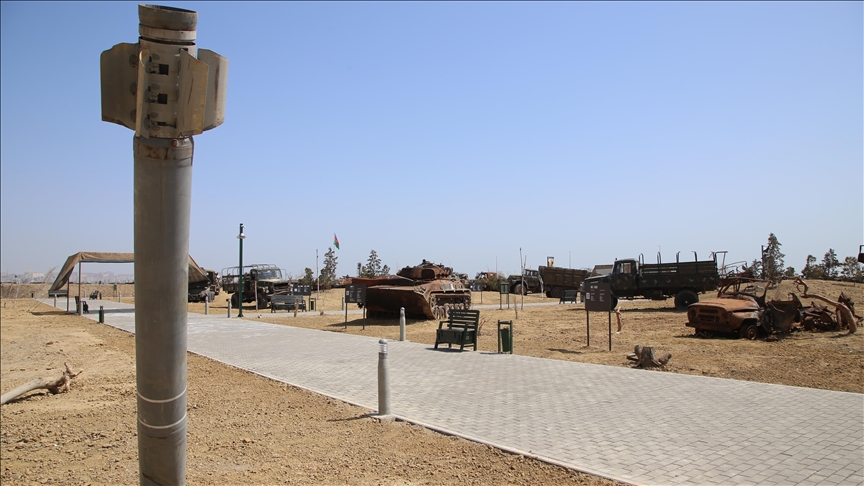
Baku on Monday demanded Armenia to immediately withdraw its armed forces from the Azerbaijani territory of Karabakh, and abolish the military and administrative structure of the so-called regime in the region. 

Relations between Azerbaijan and Armenia have been tense since 1991 when the Armenian military occupied Karabakh, a territory internationally recognized as part of Azerbaijan, and seven adjacent regions.

In the fall of 2020, Azerbaijan liberated several cities, villages, and settlements from Armenian occupation during 44 days of clashes. The war ended with a Russia-brokered cease-fire.

Tensions between the two nations, however, continue despite ongoing talks over a long term peace agreement.

In a special briefing for diplomats on the current situation in Karabakh, the Azerbaijani Foreign Ministry said that despite Azerbaijani efforts through international partners, Armenia and the so-called regime established on Azerbaijan’s sovereign territory continue to harm the normalization process, and reject all proposals to reduce tensions.

The ministry argued that the recent holding of “presidential elections” in the region was a provocative act.

There are more than 10,000 Armenian armed forces loyal to the so-called regime in Karabakh, it said, adding that the forces have over 100 tanks and other armored vehicles, more than 200 heavy artillery weapons, including volley rocket systems, and more than 200 mortar systems.

It added that Armenian forces have violated the tripartite declaration signed on Nov. 10, 2020, and Yerevan is preparing for a new attack.

Like every country in the world, Azerbaijan has the right to defend its sovereignty and territorial integrity according to international law, the ministry said. It urged Armenia to stop its military activities, give up its “revengeful plans,” stop violating Azerbaijan’s sovereignty and territorial integrity, and stop supporting separatism and terrorism in the Karabakh region.

*Writing by Gozde Bayar

Anadolu Agency website contains only a portion of the news stories offered to subscribers in the AA News Broadcasting System (HAS), and in summarized form. Please contact us for subscription options.


Categories
Selected Articles

Georgia accuses ex-official of plotting from Ukraine to oust Tbilisi government


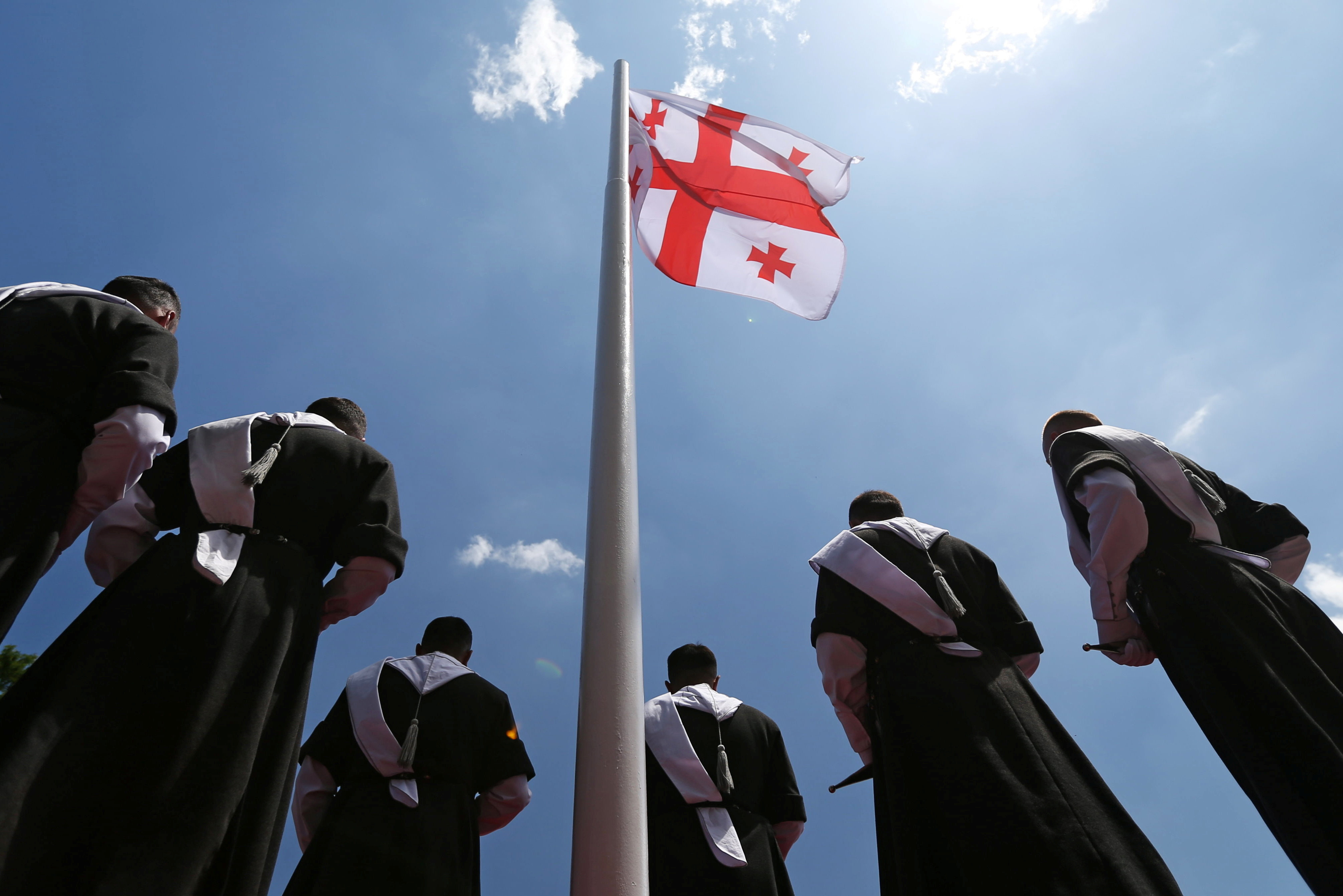
Men wearing traditional clothes stand next to the Georgian flag during the Independence Day celebrations in Tbilisi

Men wearing traditional clothes stand next to the Georgian flag during the Independence Day celebrations in Tbilisi, Georgia May 26, 2022. REUTERS/Irakli Gedenidze Acquire Licensing Rights

TBILISI, Sept 18 (Reuters) – Georgia on Monday accused a former deputy interior minister of plotting from Ukraine to overthrow the Tbilisi government, testing ties with Kyiv as Georgia deepens its relations with Russia.

The State Security Service said it had been monitoring a group led by Giorgi Lortkipanidze, who it alleged was working as deputy head of Ukrainian military intelligence and is a former member of a strongly pro-Western Georgian government.

“According to confirmed and verified information, the implementation of the plan – developed by Giorgi Lortkipanidze – would involve a rather large group of Georgian fighters in Ukraine and a part of Georgian youth,” the service said in a statement.

It did not provide evidence, and in Kyiv, foreign ministry spokesperson Oleg Nikolenko said Tbilisi was “trying to demonise Ukraine” for domestic reasons.

“The Ukrainian state did not interfere, does not interfere and does not plan to interfere in the internal affairs of Georgia,” he wrote on Facebook.

Andriy Yusov, spokesman for Ukrainian military intelligence, said it had never had a Giorgi Lortkipanidze as deputy head, though he declined to say whether it employed such a person.

The Georgian statement said the alleged plotters planned to channel frustration among young Georgians if the European Union failed to grant their country candidate status at an EU summit in mid-December.

Georgia says it is committed to joining the EU. But it was denied candidate status last year, with Brussels saying it must reduce political polarisation and improve state institutions. Since then, EU officials say it has, if anything, slid back.

Relations with Europe have also suffered since the beginning of the war in Ukraine as Tbilisi has avoided blaming Moscow, even though Georgia’s population is heavily pro-Ukraine.

Many Georgians resent Russia’s backing for the breakaway regions of Abkhazia and South Ossetia, and Georgians are well-represented among foreigners fighting for Ukraine.

Though Tbilisi has shipped humanitarian aid to Ukraine, it has declined to impose sanctions on Russia, and in May allowed direct flights to and from its vast neighbour for the first time since 2019.

The same month, Prime Minister Irakli Garibashvili blamed the expansion of the western NATO alliance for Russia’s invasion of Ukraine. In December, the chair of the ruling party suggested that Georgians fighting in Ukraine could lose their citizenship.

Kyiv has also criticised Georgia for imprisoning Mikheil Saakashvili, a pro-Western former president who acquired Ukrainian nationality.

The Georgian State Security Service named a former bodyguard to Saakashvili as one of the alleged conspirators, along with the commander of a Georgian unit fighting in Ukraine.

Reporting by Felix Light; Editing by Kevin Liffey

Our Standards: The Thomson Reuters Trust Principles.


Categories
Selected Articles

US State Department Pledges Aid to Nagorno-Karabakh


We welcome today’s simultaneous shipment of humanitarian goods along the Lachin corridor and the Aghdam roadway into Nagorno-Karabakh, an approach President Aliyev and I recently discussed. These deliveries of critically needed supplies are an important step forward, and we encourage the sides to engage in direct talks and focus on ways to increase the flow of humanitarian supplies to the population of the region. The United States remains committed to supporting efforts between Armenia and Azerbaijan to resolve long-standing issues and achieve a dignified and durable peace.


Categories
Selected Articles

Azerbaijani journalist claims he was threatened by the state security service


nurlan.jpg

With so much misinformation cavalierly and cynically tossed around, it is vitally important that the societies in the Caucasus benefit from journalism that is fact-checked and unbiased, balanced and sensitive. JAMnews has been giving them just that. A full-fledged newsroom presence in almost every part of the region – committed teams of editors and reporters, SMM managers and translators, experts and citizen contributors – has allowed it to always stay on top of national breaking news stories, while also keeping an eye on the not so obvious, but none the less important, issues and trends that are overlooked by others. Now, we all need your support if we are to keep the ball of what we do rolling. Every contribution you make, however small, means we can continue. Thank you

Support JAMnews


Categories
Selected Articles

Azerbaijan, Israel discuss military cooperation


16950522871087945408_1200x630.jpg

Baku, September 18, AZERTAC

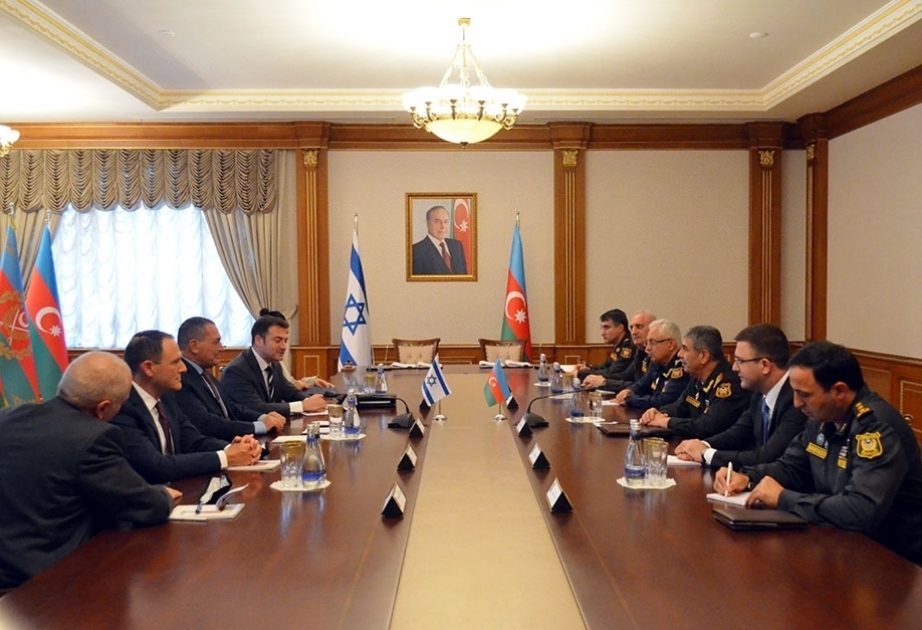
Azerbaijan’s Minister of Defense, Colonel General Zakir Hasanov has met with a delegation led by Israel Defense Ministry’s Director General Eyal Zamir, who is on an official visit to the country, the Ministry of Defense told AZERTAC.

Colonel General Zakir Hasanov hailed the current high level of Azerbaijani-Israeli relations.

Eyal Zamir thanked the Azerbaijani side for the warm reception, and emphasized the importance of such meetings and mutual visits in terms of further expansion of existing cooperation.

During the meeting, the sides exchanged views on defense cooperation between Azerbaijan and Israel.


Categories
Selected Articles

Satan in the Vatican


It is in the best interest of Christianity that Satan remains alive. For so long as the Devil survives, the Church will also thrive. If Satan dies, Christianity will fade way. And what safer place for the Devil to live in, than the House of God itself. This is my story today.
Adam Smith, the most celebrated economist of our times, described “churches as enterprises similar to butchers…” How apt! Of whatever little I read about the Church, the Vatican network, its working, expansion and outreach, I am convinced that it runs the most ruthless and opaque business empire in the world, one that could beat any criminal syndicate or mafia.


What is Mafia? An organized crime network which earns quick money through illicit trades, in collusion with corrupt and friendly officials and governments. It has an organizational hierarchy. There is one supreme commander, no vice-captain. It hires, trains and exploits foot soldiers, launder its earnings via a legit business front and keeps safe havens abroad for an emergency exit. Above all, it is a law unto itself.


And how does the Church function? It peddles Opium of the Masses. It hob nobs with political powers, there is no vice-Pope and the ascension in hierarchy remains shrouded in dark; it builds an infantry by proselytization; it has investments in real estate across the world. It owns a bank, which is periodically in news for wrong reasons. It has safe havens in nearly every country of the world, where the ‘tainted’ Cardinals can retire peacefully. Laundering, murder, drugs, child abuse… nothing sticks to its Teflon skin. For, above all, the Church is the law.


Over the next few minutes, I will present the facts to prove what you may, right now, call my assumptions.
If we go into the history of the Roman Catholic Church and its leaders, we first find them in conflict with the monarchies and later in cahoots with the State. It owned massive land, got one tenth of people’s income. It even created innovative ways of making money, such as Indulgences, where if you have committed a crime, or sin, you need to pay a sum to be absolved of it, much like blood money. All these are documented facts in history books, Catholic encyclopedias and open resources.


The tide, however, turned against Church as western societies grew increasingly secular in the early 20th century. Their resources dwindled. By some accounts, the Lateran Palace where Pope lived required repair. Then, in 1929, the Church struck a Faustian deal with the Devil, better known to the world as Benito Mussolini, the Fascist dictator second only to Adolf Hitler.


Pope Pius XI signed what is known to the world as the Lateran Treaty with Mussolini’s government, affirming Il Duce and netting him the political capital necessary for a secure Fascist future in exchange for $90 million in cash, a new tax-exempt papal state on Vatican Hill, government salaries for Italian parish priests, and the promise of both power and financial security. In return, the Church lent legitimacy to Mussolini’s fascist regime.


Today, the Vatican owns over $50 billion in securities, plus gold reserves that exceed those of some industrialized nations, real estate holdings that equal the total area of many countries, and opulent palaces and museums. Many economists believe the Church’s wealth is not countable, law enforcers believe it is also unaccountable.


(Source: THE VATICAN EXPOSED, a book by Journalist and FBI consultant Paul L. Williams)


Birds of the same feather flock together. The Vatican Bank veiled operations drew attention of the US mafia. Matteo de Lorenzo, one of the New York mob’s top earners in the 1960s and 70s, traveled to Europe to discuss a plan to launder millions of dollars’ worth of phony securities. The plot involved Archbishop Paul Marcinkus, the president of the Vatican Bank. But, the New York Police Dept was already on the case—thanks to the legendary Detective Joseph Coffey. Three years later, The New York Times reported, Lorenzo was arrested by the police for tax evasion. However, the Archbishop remained unharmed and, in a few years, was promoted to be the governor of the Vatican City. (Source: The Vatican Connection: A Billion Dollar Conspiracy between Church and Mafia by Richard Hammer. This book won ‘Edgar Award for Best Fact Crime’ and can be corroborated with New York Times news reports)
I will now quote from news stories published in The Economist, Forbes, The Week and FATF (the global watchdog on money laundering and terror financing). Kindly hear me out till the concluding lines from a Book Review published in The Guardian presented in the end.


Forbes magazine in June 2012 described the Vatican Bank as the world’s most secret bank. It was reporting on the detention of the bank’s former head over financial bungling.


In July 2012, The Economist, in a report titled God’s Bankers, wrote: “A beleaguered papacy is embroiled in intrigue. Some scent a succession struggle. Few things annoy Vatican officials more than lurid novels that depict the papacy as the secretive heart of a global conspiracy. But it is Pope Benedict XVI’s most senior official, his secretary of state, Cardinal Tarcisio Bertone who put the papal butler, Paolo Gabriele, in a four-by-four-metre cell, accused of leaking a stream of confidential letters. The next day, he fired the head of the Vatican Bank, Ettore Gotti Tedeschi, and published a blistering statement accusing him of failing to do his job. An Italian police investigation, in which documents were seized from Mr Gotti Tedeschi on June 5th, has stoked fears of more scandal.”


The Week in January 2015 reported Vatican’s links with Italian mafia, doubting the real cause of death of Pope John Paul I. It wrote: “In The Godfather: Part III, a shady deal between the Mafia and the Vatican leads to the murder of the Pope. Was this based on a true story? Possibly. On the morning of September 29, 1978, Pope John Paul I was found dead, sitting up in his bed, after only 33 days in office. Although Vatican officials claimed the 65-year-old pope died of a heart attack, there was never an autopsy, and at the time, the Vatican definitely had ties to organized crime. Sure enough, in 1982, Vatican Bank president Father Paul Marcinkus resigned from his post after a series of scandals exposed the bank’s ties to the Mafia.”


In its September 2020 report on Vatican Finances, The Economist reported that the Vatican will be visited by inspectors from Moneyval-FATF, the organisation set up to fight money-laundering and terrorist funding in Europe.


The journal called it a “Holy Mess”. Later, FATF seized two assets worth over one million Euros. And here is what FATF wrote in its report dated April 2021, available on their site: “ML (money laundering) activities investigated and prosecuted so far are, in general, consistent with risks identified by the jurisdiction. Actual sanctions imposed in ML cases where there have been convictions are below the statutory thresholds for the ML offence and appear rather minimal. Arguably, they are not proportionate and dissuasive.”


In 2003, a journal called Boston Globe won Pulitzer Prize for publishing a series of investigative reports on sex abuse in Churches. The incidents later were adopted into an Oscar winning movie The Spotlight.


The magnitude of this abuse, and the Church’s reaction is best presented in an October 2021 report by The Economist: “As many as 330,000 children (Yes, you heard it right, Three lakh thirty thousand in France alone) were sexually abused by clergy and lay members of the Catholic church in France between 1950 and 2020. A two-year independent investigation, published in recent days, revealed the extent of the scandal. But France is not alone in facing up to the Church’s history of abuse. Accusations against Catholic priests around the world have surged since the 1990s. Thousands of cases have emerged across dozens of countries, including America, Australia, Germany, Ireland, Mexico, the Philippines and Poland.”
The Economist concluded that the Vatican’s response was at best “erratic”. The Church has been rocked by drugs, gay parties in office, murder and child abuse many times but it held fort. And, like any powerful Mafia syndicate, it will continue to do so. Why? Because Religion considers itself above Law.


I shall conclude with a book review in The Guardian. Reviewing In The Closet of Vatican: Power, Homosexuality, Hypocrisy in March 2019, The Guardian wrote: “After reading this book, I suspect God didn’t die of elderly enfeeblement but committed suicide in remorse, aghast at the crimes and un-Christian sins of organized religion.”
I rest my case.


Disclaimer

Views expressed above are the author’s own.


END OF ARTICLE



Categories
Selected Articles

Satan in the Vatican – Times of India


Satan in the Vatican  Times of India

Categories
Selected Articles

Biden behind Trump in new CBS News poll, voters concerned about … – CBS News


Biden behind Trump in new CBS News poll, voters concerned about …  CBS News

Categories
Selected Articles

Trump refuses to say how he watched Jan. 6 attack unfold – Norwalk Reflector


NEW YORK (AP) — Former President Donald Trump repeatedly declined in an interview aired Sunday to answer questions about whether he watched the …

Categories
Selected Articles

A Jan. 6 rioter was convicted and sentenced in secret. No one will say why. – Maryland Daily Record


Lazar, 37, of Ephrata, Pennsylvania, was arrested in July 2021 on charges that he came to the Capitol on Jan. 6, 2021, dressed in tactical gear and …