Categories
Selected Articles

Armenia’s Armed Forces do not participate in military operations in NK: RA FM spokesperson responds to Zakharova


default.jpg

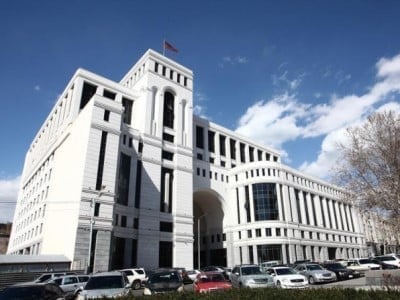
The Armed Forces of Armenia are not participating in the military operations in Artsakh/Nagorno Karabakh, Ani Bandalyan, press secretary of Armenia’s Ministry of Foreign Affairs said in response to a statement of Maria Zakharova, the official representative of the Russian Ministry of Foreign Affairs.

“In response to the call of the official representative of the Russian Ministry of Foreign Affairs to Armenia and Azerbaijan to “immediately stop military operations, and return to the path of political-diplomatic settlement,” we would like to inform that the Armed Forces of the Republic of Armenia are not participating in the military operations.

The Republic of Armenia has always been committed to resolving all existing issues exclusively through political and diplomatic means, with appropriate proposals,” she said.

Earlier NEWS.am reported that Azerbaijan՛s Armed Forces started to use artillery along the entire line of contact in Nagorno Karabakh as of 1 p.m. on September 19, attempting to penetrate into the depth of the defense line of the Defense Forces of Nagorno Karabakh.

Stepanakert, the capital of Nagorno Karabakh, as well as other settlements are under heavy selling now. The Human Rights Defender of Nagorno Karabakh, Gegham Stepanyan, reported that there are multiple casualties and injuries among civilians, including children.

!

This text available in   Հայերեն and Русский

Print


Categories
Selected Articles

Opinion: Did India assassinate a Canadian citizen? – The Globe and Mail


Opinion: Did India assassinate a Canadian citizen?  The Globe and Mail

Categories
Selected Articles

US Prisoners Return Home After ‘Nightmare’ Imprisonment in Iran


Five Americans freed from Iran made an emotional return to the United States on Tuesday ending their imprisonment “nightmare,” a day after they were swapped for five Iranians held in the United States and the unfreezing of $6 billion in Iranian funds.

Coming off the plane, the returning Americans were embraced by family and friends with smiles, laughs, and visible emotion, video footage from the airport showed. One of the returnees briefly waved a small Stars and Stripes handed to him.

“The nightmare is finally over,” said Babak Namazi, speaking with his arm around his returning brother Siamak at Fort Belvoir, Virginia.

The welcome ceremony followed a carefully choreographed exchange, agreed after months of Qatar-mediated talks, that was triggered on Monday when the funds that had been blocked in South Korea were wired, via Switzerland, to banks in Doha.

After the transfer was confirmed, the five U.S. prisoners plus two relatives took off on a Qatari plane from Tehran, at the same time as two of the five Iranian detainees landed in Doha on their way home. Three Iranians chose not to go to Iran.

The deal removes a point of friction between the United States, which brands Tehran a sponsor of terrorism, and Iran, which calls Washington the “Great Satan”.

But it is unclear whether it will bring the two adversaries, which have been at odds for 40 years, closer on any other issues, such as Iran‘s nuclear program and its backing for regional militias or the U.S. military presence in the Gulf and U.S. sanctions.

The freed Americans include U.S.-Iranian dual citizens Siamak Namazi, 51, and Emad Sharqi, 59, both businessmen, and Morad Tahbaz, 67, an environmentalist who also holds British nationality. Two of them have not been publicly identified.

‘Humanitarian action’

President Joe Biden welcomed the return of the prisoners home in a statement on Monday but his administration also announced fresh U.S. sanctions.

“We will continue to impose costs on Iran for their provocative actions in the region,” he said.

Iranian president Ebrahim Raisi, who was in New York for the annual U.N. General Assembly, called the swap a humanitarian action. “It can certainly be a step based upon which in the future other humanitarian actions can be taken,” he added.

Biden, a Democrat, has faced criticism from Republicans over the deal. House Foreign Affairs Committee chairman Michael McCaul, a prominent Republican, said the transfer of the $6 billion could encourage Iran to detain more U.S. citizens.

Biden aides say the money belongs to Iran and is being transferred from restricted South Korean accounts to restricted accounts in Qatar, which will monitor the cash to ensure it is spent on humanitarian goods not items under U.S. sanctions.

Relations between the United States and Iran have been especially bitter since 2018 when then-President Donald Trump pulled out of a deal aimed at curbing Tehran’s nuclear ambitions and toughened U.S. sanctions.

Washington suspects Iran‘s nuclear program may be aimed at developing nuclear arms, a charge Iran denies.

U.S. Secretary of State Antony Blinken left the door open to nuclear diplomacy, but suggested nothing was imminent.

U.S. analysts were skeptical about prospects for progress, particularly with a U.S. election looming in 2024.

“The prisoner swap does likely pave the way for additional diplomacy around the nuclear program this fall, although the prospect for actually reaching a deal is very remote,” said Henry Rome of the Washington Institute for Near East Policy.

(Reporting by Andrew Mills in Doha; Humeyra Pamuk and Parisa Hafezi in New York; writing by Edmund Blair and Arshad Mohammed; editing by Gareth Jones, Jon Boyle, Alexandra Hudson)

The post US Prisoners Return Home After ‘Nightmare’ Imprisonment in Iran appeared first on Washington Free Beacon.


Categories
Selected Articles

Putin To Visit Beijing in Bid To Strengthen Alliance Against US


President Vladimir Putin will meet China’s Xi Jinping for talks in Beijing in October, Russia said on Tuesday, Putin‘s first known trip abroad since an arrest warrant was issued against him over the deportation of children from Ukraine.

Nikolai Patrushev, a close Putin ally and the secretary of Russia’s Security Council, said Russia and China should deepen cooperation in the face of the West’s attempt to contain them both.

He was quoted by the Interfax news agency as saying that the talks in Beijing would be “thorough,” at a meeting in Moscow with China’s top diplomat, Wang Yi.

Putin will attend the third Belt and Road Forum after an invitation by Xi during a high-profile visit to Moscow in March.

Days before that visit, the International Criminal Court (ICC) issued a warrant for Putin‘s arrest on suspicion of illegally deporting hundreds of children or more from Ukraine.

Moscow denies the allegations and the Kremlin said the warrant was evidence of the West’s hostility to Russia, which opened a criminal case against the ICC prosecutor and the judges who issued the warrant.

Russia’s full-scale invasion of Ukraine early last year has triggered one of the deadliest European conflicts since World War Two and the biggest confrontation between Moscow and the West since the 1962 Cuban Missile Crisis.

Putin has pivoted toward China, and Xi has stood by him.

Chinese-Russian trade has soared since the invasion, and Russia has sold Asian powers including China greater volumes of the oil it can no longer sell to the West because of sanctions.

Putin last visited Beijing in February 2022, days before the invasion, where he and Xi announced a “no limits” partnership. Moscow says this does not mean a military alliance, however.

Putin and Xi share a broad world view, which sees the West as decadent and in decline just as China challenges U.S. supremacy in everything from technology to espionage and military power.

Trade between Russia and China soared 30 percent in the first half of this year and will rise to more than $200 billion in 2023, Russian economy minister Maxim Reshetnikov said on a visit to China.

“We are actively developing investments, including in our large gas and petrochemical projects, where we actively use Chinese technologies,” Reshetnikov said.

“We are strongly interested in transforming technological cooperation into investment cooperation, so that Chinese companies actively enter into these projects, invest in capital, and lend money, because the projects are capital-intensive and not all of them can be fully provided for by the Russian financial system.”

The United States sees China as its gravest long-term “strategic competitor” and Russia as an “acute threat.”

China has refrained from condemning Russia’s operation against Ukraine or calling it an invasion, in line with the Kremlin, which casts the war as a “special military operation.”

Earlier this year, CIA director William Burns said Russia was becoming more and more dependent on China and was even at risk of becoming its “economic colony” in time.

(Reporting by Reuters; editing by Guy Faulconbridge, Kevin Liffey and Christina Fincher)

The post Putin To Visit Beijing in Bid To Strengthen Alliance Against US appeared first on Washington Free Beacon.


Categories
Selected Articles

International Criminal Court reports cybersecurity ‘incident’ – Reuters


International Criminal Court reports cybersecurity ‘incident’  Reuters

Categories
Selected Articles

Armenia says Azerbaijan launched ground operation in Nagorno … – LBCI Lebanon


Armenia says Azerbaijan launched ground operation in Nagorno …  LBCI Lebanon

Categories
Selected Articles

СМИ: Азербайджан закрыл свое воздушное пространство для Армении – Российская газета


rg-social-dummy-logo-650x360.jpg


Categories
Selected Articles

6 citizens killed by land mines in Karabakh, claims Azerbaijan


6 citizens killed by land mines in Karabakh, claims Azerbaijan

With a population that is primarily of Armenian descent and accepted internationally as being a part of Azerbaijan, Karabakh broke away from Baku’s rule in the early 1990s following a war. In a conflict in 2020, Azerbaijan reclaimed large areas of surrounding territory Image Courtesy AFP

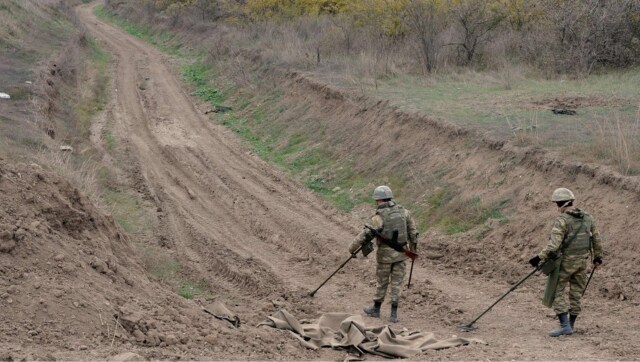
In two separate events in the Nagorno-Karabakh region, Azerbaijan reported on Tuesday that six of its nationals had been killed by land mines. “Illegal Armenian armed groups” were to blame for the lethal devices’ placement.

With a population that is primarily of Armenian descent and accepted internationally as being a part of Azerbaijan, Karabakh broke away from Baku’s rule in the early 1990s following a war. In a conflict in 2020, Azerbaijan reclaimed large areas of surrounding territory.

Four personnel of the interior ministry were killed, according to reports from Baku, when a mine blew up their truck close to where a tunnel was being built. It said that another mine had killed two civilians who were also riding in a truck.

Karabakh:Karabakh:

The ethnic Armenian administration in Karabakh, which Azerbaijan wants to dismantle in order to reintegrate the region, did not respond right away. On Monday, Armenia denied claims that its own armed personnel had planted mines on Azerbaijani soil.

A day after desperately needed supplies of food and medication were simultaneously transported to Karabakh along two highways, a move that appeared to have the potential to reduce rising tension between Azerbaijan and Armenia, the landmine incidents took place.

But bilateral relations are still quite strained.

On Tuesday, the defence ministry of Azerbaijan accused “illegal Armenian armed groups” of interfering with a passenger plane’s GPS navigation as it was travelling from Tbilisi, Georgia, to Baku.

The charge, according to ethnic Armenians in Karabakh, is “an absolute lie” that is intended to draw attention away from “the humanitarian catastrophe caused by the illegal blockade” of Karabakh by Baku.

That was in reference to Azerbaijani restrictions that had been in place for months on the Lachin corridor, the only route between Armenia and Karabakh, and which, until recently, had prevented aid from entering on the pretext that it was allegedly being used for arms smuggling.

The foreign ministry of Armenia stated on Monday that it appeared as though Azerbaijan was setting the stage for a military escalation with its diplomatic attitude.

Both parties claim that they remain committed to settling their differences via a peace deal.

(With agency inputs)

Published on: September 19, 2023 15:39:00 IST


Categories
Selected Articles

Azerbaijan says six killed in Karabakh mine blasts


Tuesday, 19th September 2023

The Guardian
<To guardian.ng
Search

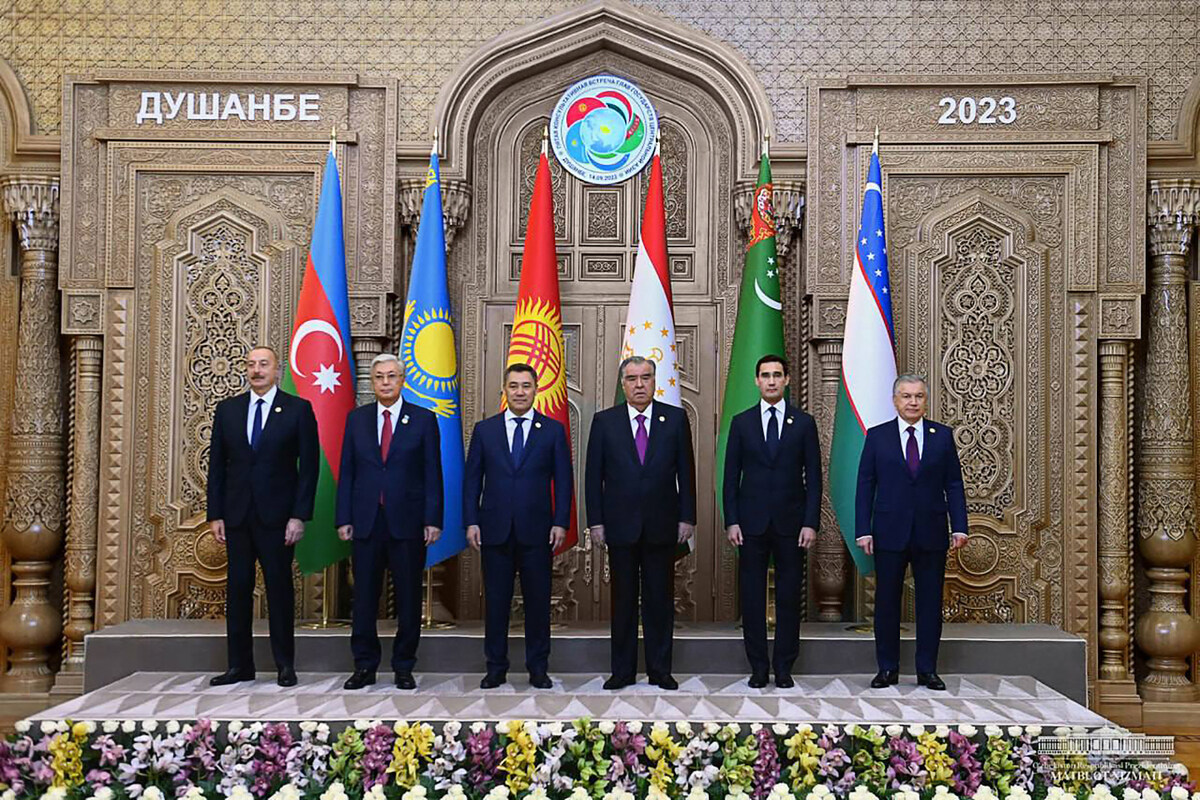
This handout photograph released by the Uzbek Presidential press service on September 14, 2023, shows the heads of states of participating countries if the Fifth Consultative Meeting of Central Asian Heads of State in Dushanbe. (From L): Azerbaijan’s President Ilham Aliyev, President Kassym-Jomart Tokayev of the Republic of Kazakhstan, Kyrgyzstan’s President Sadyr Japarov, Tajikistan’s President Emomali Rakhmon, Turkmenistan’s President Serdar Berdimuhamedov and President of the Republic of Uzbekistan Shavkat Mirziyoyev. (Photo by Handout / Uzbek Presidential Press Service / AFP) / RESTRICTED TO EDITORIAL USE – MANDATORY CREDIT “AFP PHOTO / UZBEK PRESIDENTIAL PRESS SERVICE ” – NO MARKETING NO ADVERTISING CAMPAIGNS – DISTRIBUTED AS A SERVICE TO CLIENTS – RESTRICTED TO EDITORIAL USE – MANDATORY CREDIT “AFP PHOTO / UZBEK PRESIDENTIAL PRESS SERVICE ” – NO MARKETING NO ADVERTISING CAMPAIGNS – DISTRIBUTED AS A SERVICE TO CLIENTS /

Four policemen and two civilians were killed in separate mine blasts Tuesday in the breakaway region of Nagorno-Karabakh, Azerbaijan said, blaming “sabotage groups” amid spiraling tensions with neighbouring Armenia.

Fears of a fresh war between the Caucasus arch-foes — locked in a decades-long dispute over the breakaway mountainous region — have grown in recent months.

Azerbaijan’s security services said two men died in the Khodzhavenskiy district and four police officers were later killed en route to the blast site.

The two civilians — born in 1970 and 1965 — were killed around 4:00 am by a mine placed by Armenian separatist “sabotage groups,” it said.

The blast happened “in the zone of temporary deployment of the Russian peacekeeping contingent,” deployed by Moscow in 2020 as part of a ceasefire deal between Armenia and Azerbaijan.

The police officers who subsequently died were on the road to Azerbaijani-controlled Shusha, a settlement captured from separatists during the 2020 war.

The policemen, travelling on a Kamaz truck, were born between 1987 and 1998.

Azerbaijan opened a terrorism probe into the incident.

The deaths came a day after aid deliveries resumed to breakaway Karabakh territories, raising hopes for tensions between Armenia and Azerbaijan to ease.

Karabakh, over which Baku and Yerevan fought two wars, is heavily mined.

Azerbaijani President Ilham Aliyev has said that landmines were the main obstacle for the return of displaced people to territories retaken from Armenian separatists in 2020.

Follow Us


Categories
Selected Articles

Azerbaijan launches attack in Nagorno-Karabakh, announces ‘evacuation’ of Armenian population


GettyImages-1239433454-scaled.jpg

Azerbaijan has announced a major new military offensive in the breakaway region of Nagorno-Karabakh, declaring an “evacuation” of ethnic Armenians in “the dangerous area” and opening up a crisis that risks spiralling into all-out war.

The escalation comes after months of fruitless negotiations and amid growing speculation that Turkey-backed Azerbaijan has been gearing up to use force to bring a decades-long frozen conflict to an end. A war between Armenia and Azerbaijan in 2020 killed thousands on each side. Over the past months, Azerbaijan has been tightening a supply blockade of food and medicines into the ethnic Armenian enclave that lies entirely within its territory. 

Baku’s defense ministry said on Tuesday it was launching “local anti-terrorist activities” to “suppress large-scale provocations” in the territory. Reports and film footage from Nagorno-Karabakh showed heavy shelling and gunfire in the enclave. Air raid sirens wailed in Stepanakert, the de facto capital of the unrecognized state.

Azerbaijan’s claim that it would also evacuate the Armenian population from “dangerous areas” triggered instant fears of ethnic cleansing. 

The prospect of renewed war in the Caucasus is a major strategic and diplomatic set-back for the EU, which has been courting Azerbaijan as an ally and alternative gas supplier to Russia. 

European Commission President Ursula von der Leyen made an official visit to Azerbaijan last July in an effort to secure increased exports of natural gas. Describing the country as a “reliable, trustworthy partner,” she and President Ilham Aliyev signed a memorandum of understanding on increased economic cooperation, despite warnings from experts that Brussels was simply seeking to replace one autocracy with another. 

Azerbaijan’s government said it launched Tuesday’s assault in response to the destruction of vehicles by landmines, which killed four of its soldiers and two civilians, but it gave no indication of how besieged Karabakh Armenians laid such weapons. 

“As part of the [“anti-terrorist”] measures, positions on the front line and in-depth, long-term firing points of the formations of Armenia’s armed forces, as well as combat assets and military facilities are incapacitated using high-precision weapons,” the Azerbaijani government said in a statement.

Armenian Prime Minister Nikol Pashinyan convened the country’s security council and has called for the U.N. Security Council and Russia to take “clear and unambiguous steps to end Azerbaijani aggression.”

Speaking to POLITICO, Hikmet Hajiyev, foreign policy adviser to Azerbaijani President Aliyev, said that the “goal is to neutralize military infrastructure” and added that the local Armenian population had been sent SMS messages warning them of the “counter-terrorism actions.”

“They have been asked to stay apart from legitimate military targets,” Hajiyev said.

In a subsequent statement, the Azerbaijani defense ministry said it had established “humanitarian corridors and reception points” in order to “ensure the evacuation of the population from the dangerous area.”

However, in a voice message from Stepanakert, Siranush Sargsyan, a local Karabakh Armenian journalist, told POLITICO that neither she nor any of her family had received SMS messages warning of the attack and said it was impossible to trust Azerbaijan’s “humanitarian corridor” offer to leave. “How can I trust them? They will kill me, definitely,” she added.

After Armenia and Azerbaijan fought a war over Nagorno-Karabakh in 2020, a Russia-brokered cease-fire agreement has since collapsed, with Azerbaijani forces taking control of the Lachin Corridor, the road connecting the territory to Armenia. Since then, aid organizations say they have been unable to deliver supplies of food and fuel, amid growing fears of “ethnic cleansing.”

In a message shared through intermediaries outside the region due to intermittent internet connection, Sergey Ghazaryan, the unrecognized government’s foreign minister, said Azerbaijan had sent in troops “in order to implement its policy of genocide, is moving towards the physical destruction of the civilian population and the destruction of civilian objects.”

In an interview with POLITICO last week, Armenian Prime Minister Pashinyan said Azerbaijan had built up large numbers of troops on both the countries’ shared border, and along the contact line in Nagorno-Karabakh. “It is not possible to exclude the scenario of escalation,” he said. While Azerbaijan is increasingly able to depend on Turkey for strategic support, Pashinyan complained that Russia was no longer well-placed to act as a guarantor of Armenia’s security after the invasion of Ukraine.

Photos and videos purportedly posted by mobilized Azerbaijani soldiers showed large convoys heading towards the region, many marked with an inverted A-symbol — similar to the Z sign Russian forces painted on their vehicles during the invasion of Ukraine last year.

The offensive comes after months of high-stakes negotiations brokered by the EU, U.S. and Russia in an effort to avoid a repeat of the 2020 war and end the worsening famine.

In July, the EU’s top diplomat, Josep Borrell, said that Brussels was “deeply concerned about the serious humanitarian situation”  and called on all sides to commit to “ negotiated outcomes and a future built on common interests and mutual trust.”

In a call with Aliyev earlier this month, U.S. Secretary of State Antony Blinken urged Azerbaijan to refrain from military escalations and emphasized the “need for a dialogue,” while also pressing the country to reopen the Lachin Corridor.

European Council President Charles Michel, who has led talks with Armenia and Azerbaijan in recent months, said the news was “devastating” and insisted the “military actions of Azerbaijan must be immediately halted to allow for a genuine dialogue between Baku and Karabakh Armenians.”

This story is being updated.