Aliyev’s speech at Baku Dialogue Forum
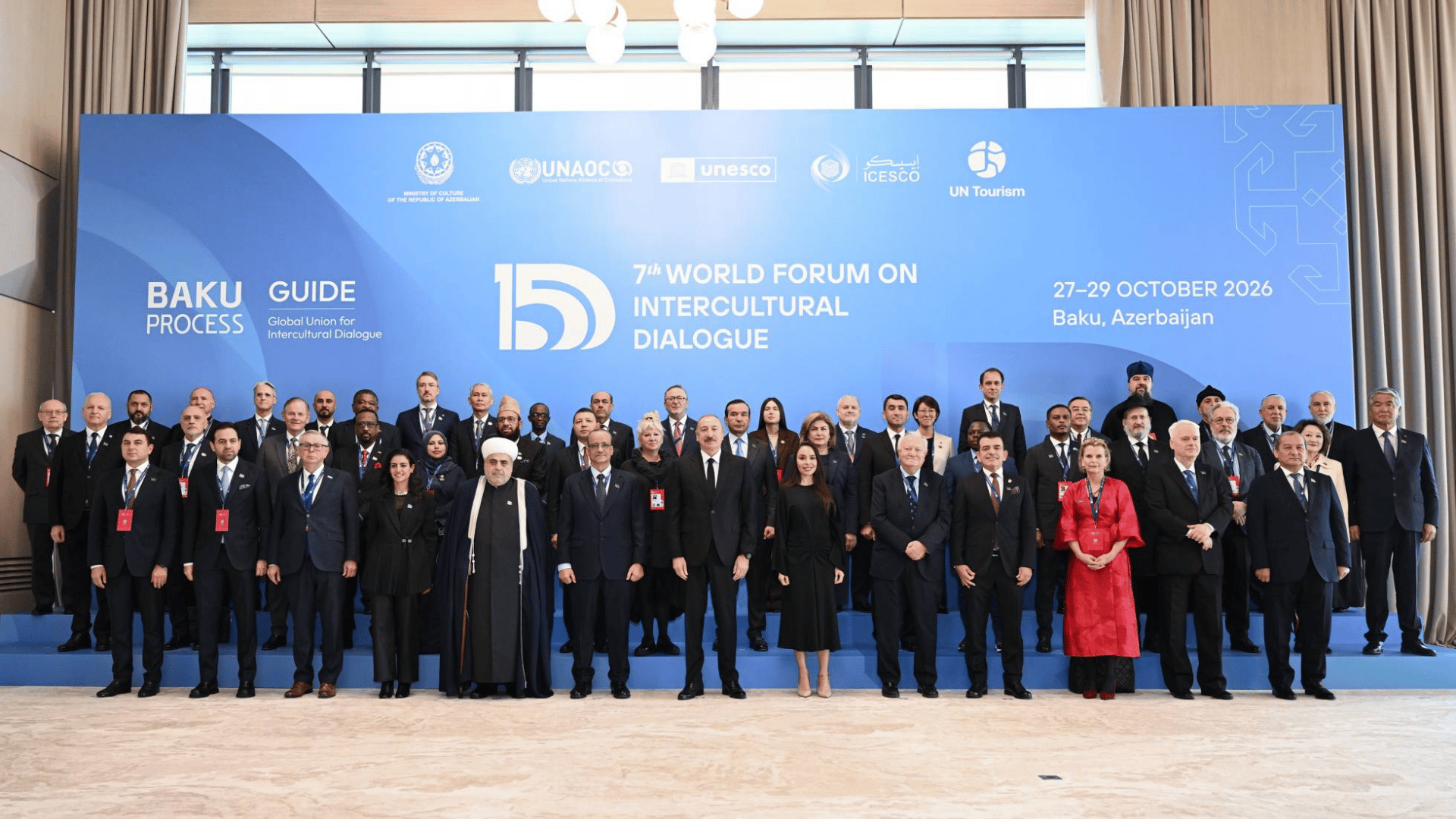
Azerbaijani President Ilham Aliyev spoke at the opening of the 7th World Forum on Intercultural Dialogue in Baku on 27 October. In his speech, he addressed peace efforts with Armenia, the role of international organisations, Azerbaijan’s foreign policy and security.
Aliyev said the country faced no internal threats, criticised “double standards” in international politics and proposed using Azerbaijan’s experience of transitioning from war to peace to help resolve other conflicts.
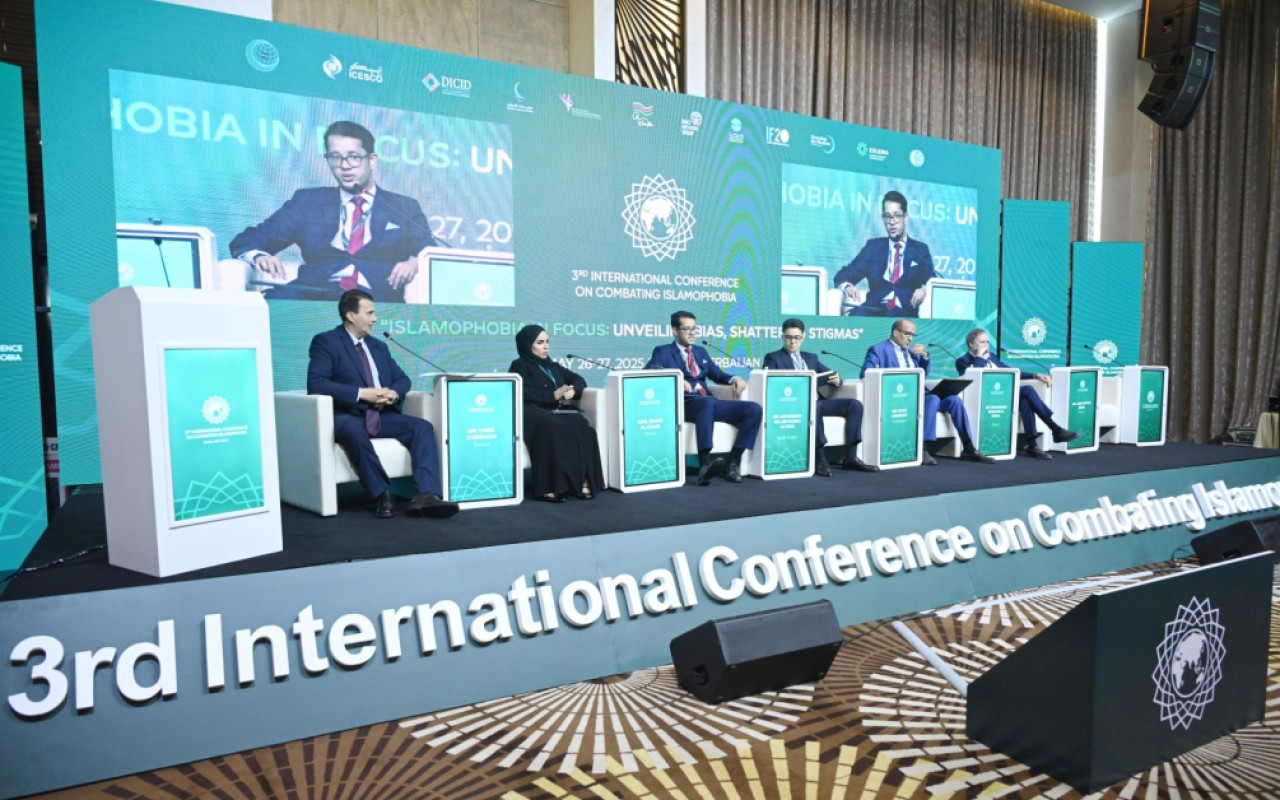
The World Forum on Intercultural Dialogue brings together representatives of governments, international organisations and experts from different countries to discuss intercultural and interfaith dialogue. The forum was first held in Baku in 2011 as part of the Baku Process initiative launched by Azerbaijan in 2008. It was originally intended to take place every two years.
After a break caused by the COVID-19 pandemic, the forum resumed in 2024. This year’s seventh edition takes place from 27 to 29 October under the theme “Dialogue for a Shared Future”.
Intercultural dialogue and national unity
Aliyev described Azerbaijan’s geographical position between Europe and Asia as an important factor in fostering intercultural ties. He said religious and ethnic tolerance, as well as traditions of multiculturalism, were among the foundations of the country’s stable development.
The president said members of different ethnic and religious groups in Azerbaijan enjoyed equal constitutional rights and lived in an atmosphere of mutual understanding. According to him, the idea of Azerbaijani identity united different ethnic groups, and this unity had been evident even during the most difficult periods in the history of independent Azerbaijan. As an example, he cited the participation of members of different ethnic and religious groups in the Second Karabakh War.
Aliyev recalled that October marked the 35th anniversary of the restoration of Azerbaijan’s independence. He stressed that, despite changes in political systems, the Azerbaijani people had managed to preserve their language, traditions and national identity. The president said the country’s achievements since independence were the result of the Azerbaijani people’s efforts and that its development had taken place without international assistance.
“All potential threats come from beyond our borders”
In the part of his speech devoted to security, Aliyev said Azerbaijani society demonstrated unity on all issues. In his assessment, the country faced no internal threats, while all potential risks came from abroad.
“All potential threats come from beyond our borders,” the president said.
He compared ideological risks to physical threats and stressed the need to remain vigilant to protect national identity, statehood, independence and the country’s way of life. However, Aliyev did not specify which countries or organisations might pose such threats.
Karabakh negotiations and military operations
Aliyev said that restoring Azerbaijan’s territorial integrity had been the country’s main goal for most of its independence. The president criticised the years of negotiations over the Karabakh conflict, saying they had been aimed not at resolving the conflict but at freezing it.
He justified Azerbaijan’s military actions by citing the right to self-defence under the UN Charter.
According to the president, Azerbaijan restored its territorial integrity and sovereignty as a result of the 2020 war and the 2023 military operation, independently securing the implementation of UN Security Council resolutions adopted in 1993.
Peace with Armenia and experience of ending war
Speaking about relations with Armenia, Aliyev said that Azerbaijan had initiated peace efforts after the end of hostilities. According to him, the draft peace agreement initialled in the summer of 2025 had also been prepared by Baku.
The president stressed that Azerbaijan had not sought a protracted war and had decided not to continue the confrontation after achieving its military objectives. He noted that the desire for revenge could make war endless. In Aliyev’s view, it was important not only to achieve victory but also to know when to stop and offer peace.
The president suggested that parties involved in armed conflicts study Azerbaijan’s experience. He acknowledged that every conflict had its own characteristics but noted that ambition, aggression, the pursuit of superiority and a sense of impunity all played a role in their emergence.
UN resolutions, sanctions and “double standards”
Aliyev called for special attention to be paid to establishing a mechanism to ensure the implementation of UN Security Council decisions as part of discussions on UN reform. He criticised the failure to implement four resolutions on the Karabakh conflict for many years and the absence of sanctions against Armenia.
The president recalled that numerous sanctions had been imposed on countries to Azerbaijan’s north and south, describing the different approach towards Armenia as an example of “double standards”. He accused Armenia of occupying around 20% of Azerbaijan’s territory, carrying out ethnic cleansing and destroying religious and historical monuments. According to him, one million Azerbaijanis had been forced to flee their homes, while 65 mosques had been destroyed in Karabakh.
In criticising “double standards”, Aliyev addressed not only the international community’s response to wars. He also described attempts by other countries to dictate how Azerbaijan should live and what decisions it should make as unacceptable.
The president said Azerbaijan did not interfere in the internal affairs of other countries and expected the same treatment in return. According to him, displays of disrespect towards Azerbaijan and attempts to impose outside demands on the country had always met with firm resistance and would continue to do so. Aliyev also noted that relations based on mutual respect could help reduce the number of international conflicts.
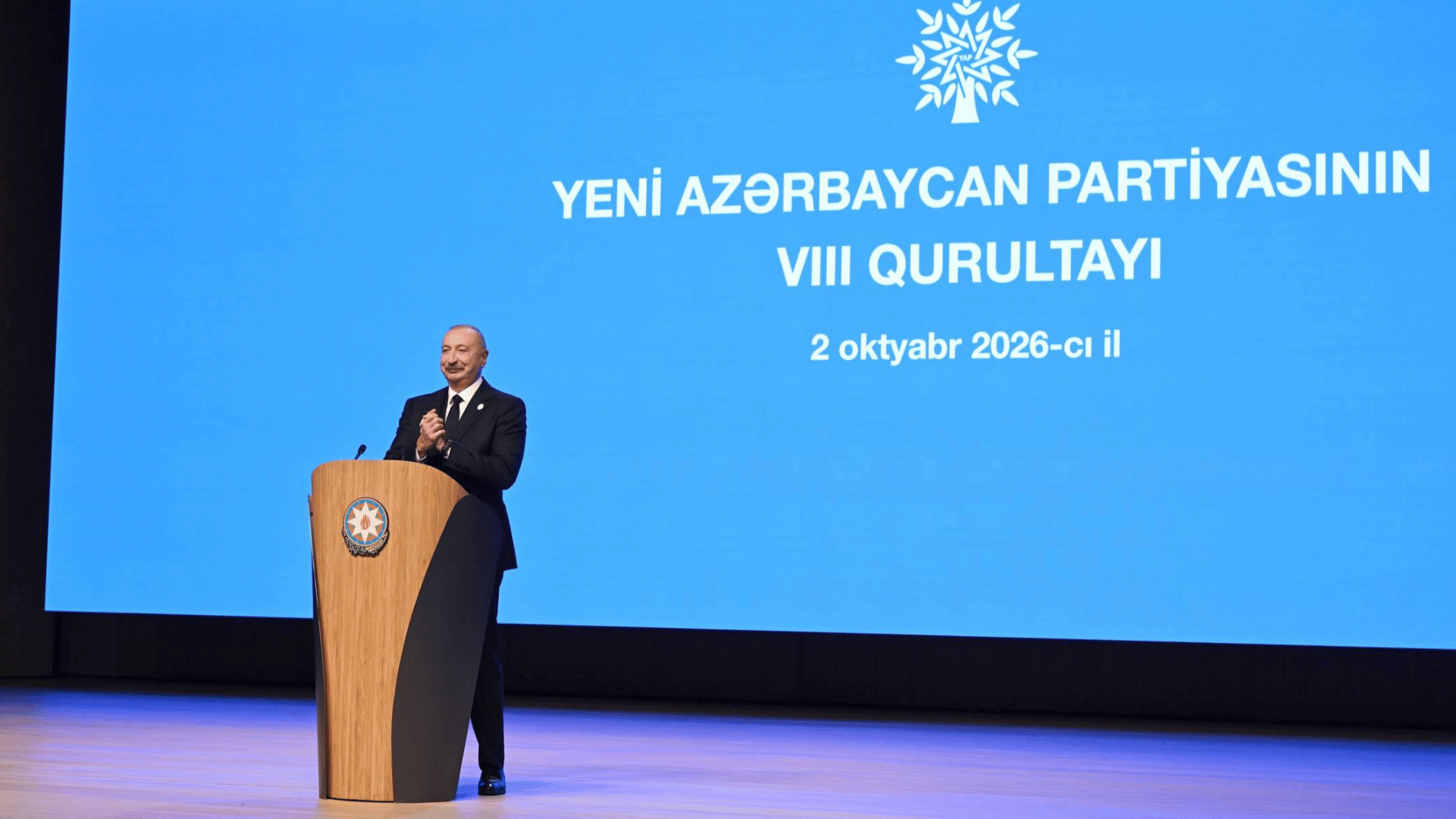
Partnerships with US, China and Europe
Speaking about foreign policy, the president described Azerbaijan as a pillar of stability in an unstable region. He attributed the country’s stronger international standing to its independent policies, economic potential and role in the energy and transport sectors.
Aliyev highlighted strategic partnerships with China and the US, as well as strategic partnership agreements with ten EU member states. The president said Azerbaijan would host a summit of the Organisation of Islamic Cooperation in 2027 and a summit of the European Political Community in 2028.
He also recalled the summit of the Conference on Interaction and Confidence Building Measures in Asia, held in Baku in October. According to him, Azerbaijan’s chairmanship of the organisation had been extended for another two years, and the country had been invited to become a full member of the Central Asian Consultative Format. Aliyev described these decisions as recognition of Azerbaijan’s growing role on the international stage.
External debt, energy and transport routes
Turning to economic issues, Aliyev said Azerbaijan’s external debt stood at just over 5% of GDP. He highlighted energy exports and international transport links as factors strengthening the country’s position.
In his view, Azerbaijan’s infrastructure and political ties, as well as its geographical location, played an important role in the development of international transport routes.
The president stressed that developing international transport links required maintaining good relations not only with neighbouring countries but also with their neighbours.

Peace agreement initialled in Washington and region’s future
Concluding his speech, Aliyev noted that both positive and negative developments had taken place around the world since the previous forum. He cited the outbreak of new wars in neighbouring regions as negative developments and the peace process with Armenia as a positive one.
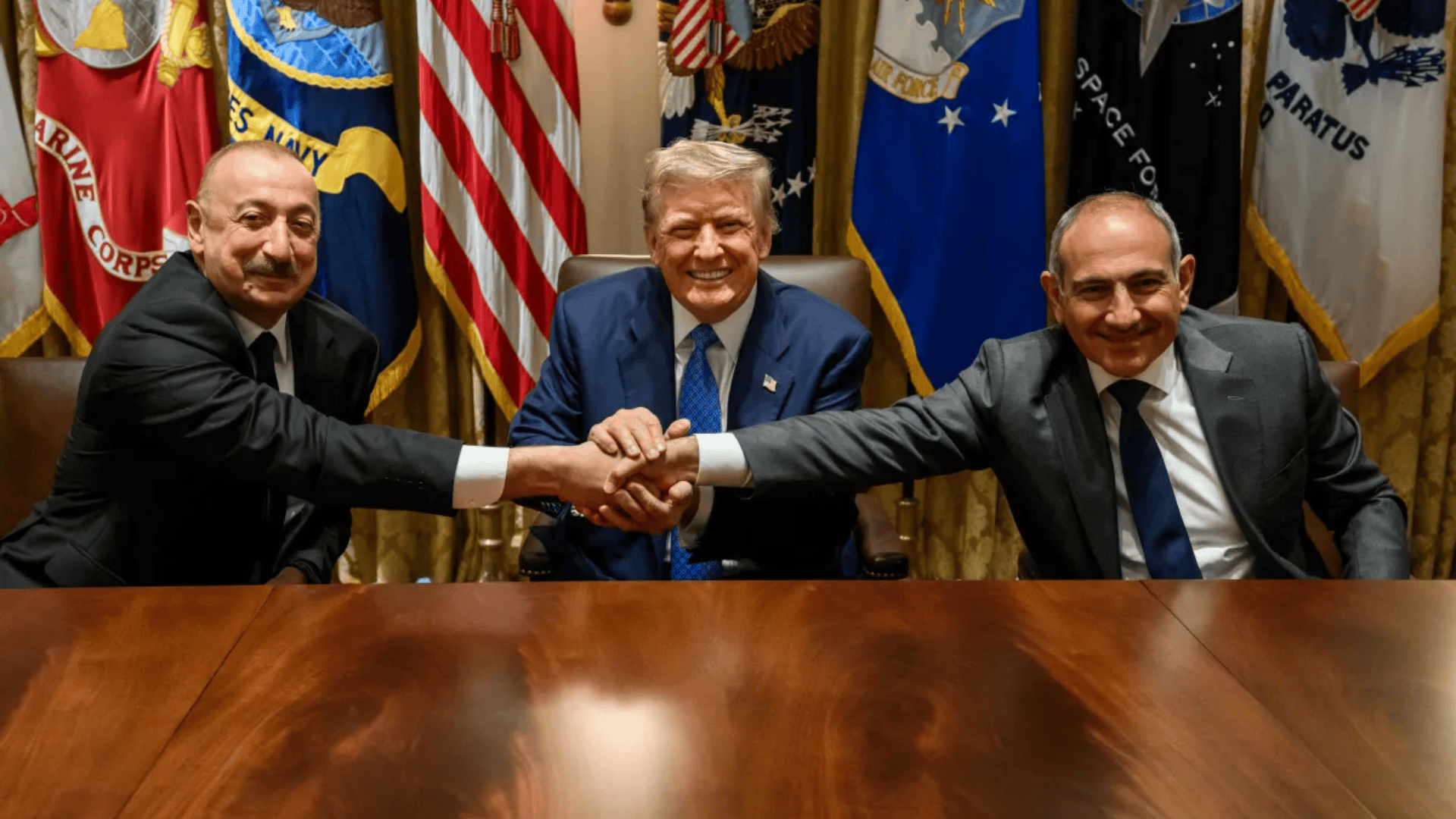
The president recalled that the text of a peace agreement had been initialled in Washington in August 2025, with the participation of Donald Trump. Aliyev stressed that, at that stage, the agreement had only been initialled, not signed. The US president had, however, signed a trilateral declaration as a witness. According to Aliyev, this process marked a new chapter for the South Caucasus.