
Categories
South Caucasus News

‘Georgia without Ivanishvili’: Opposition launches new wave of protests – photos and video


New wave of protests in Georgia
New wave of protests in Georgia

New wave of protests in Georgia

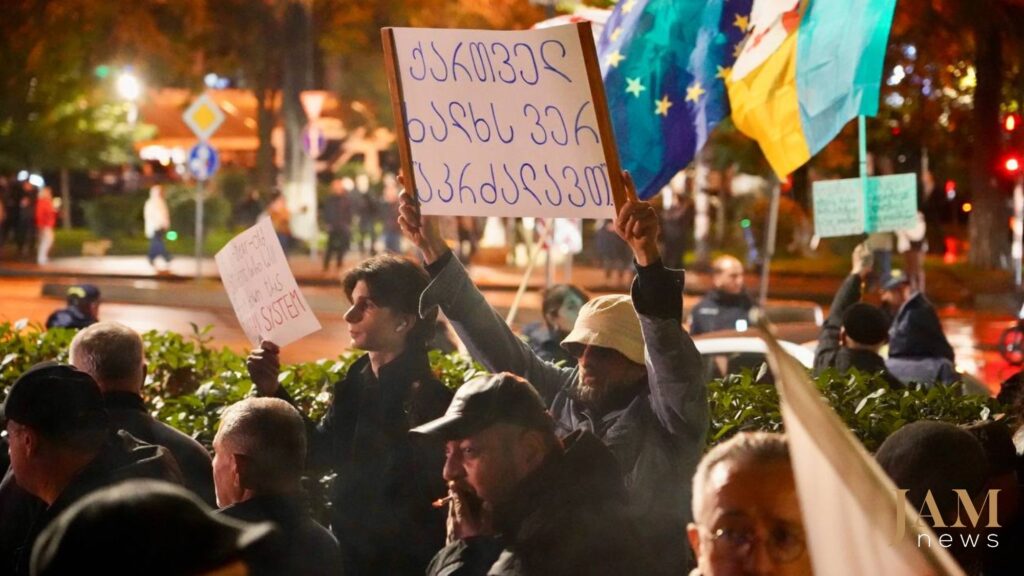
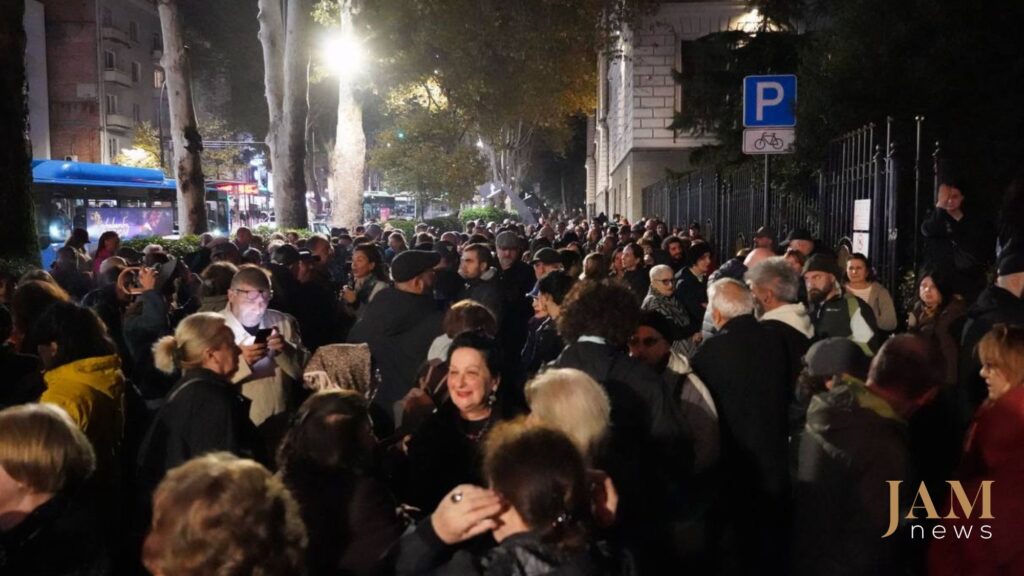
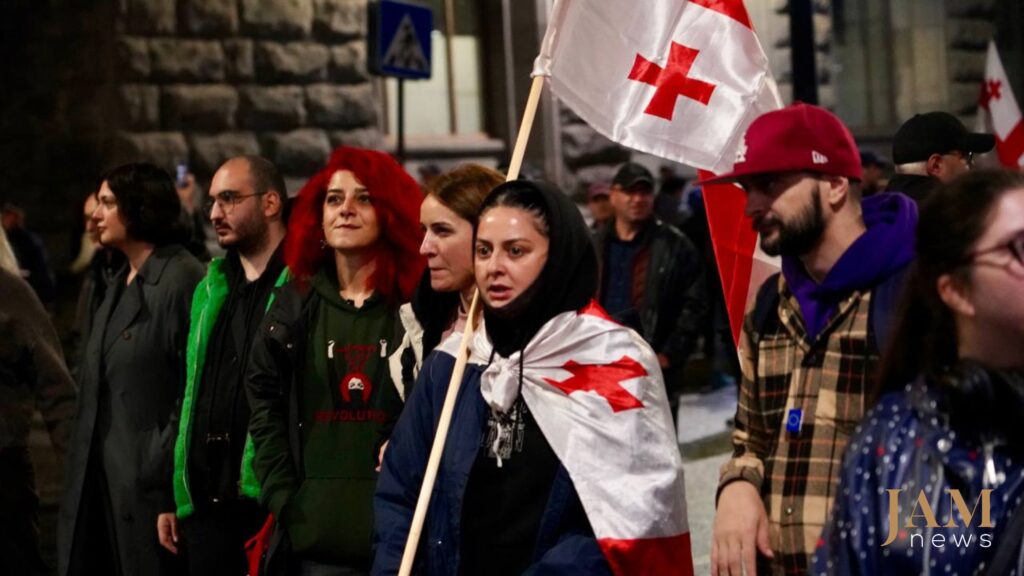
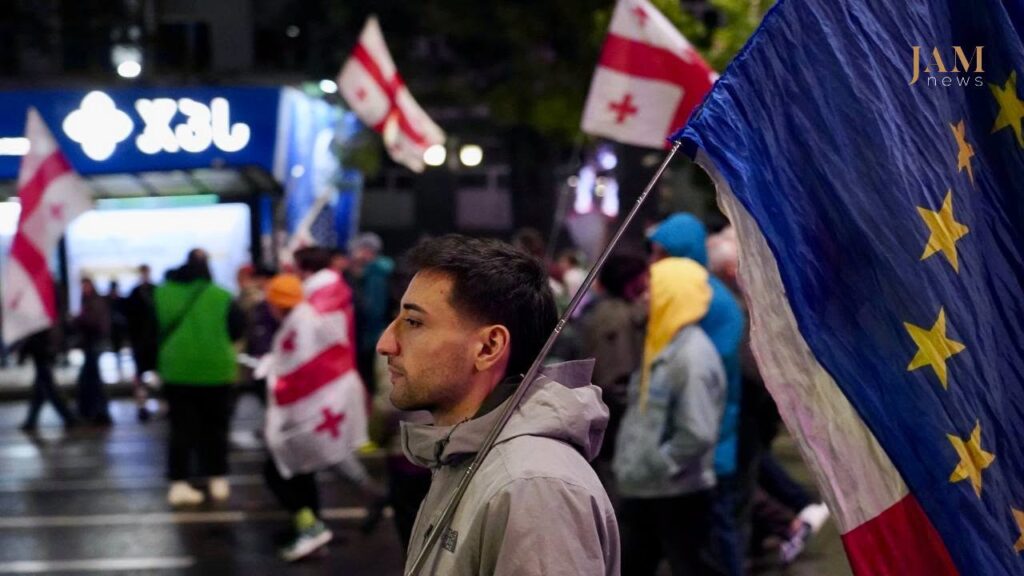
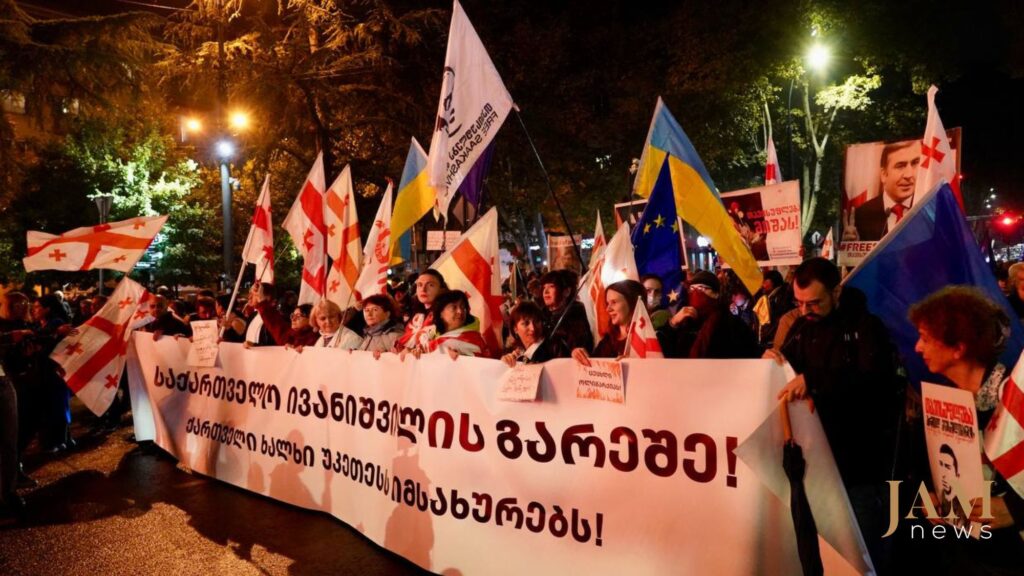
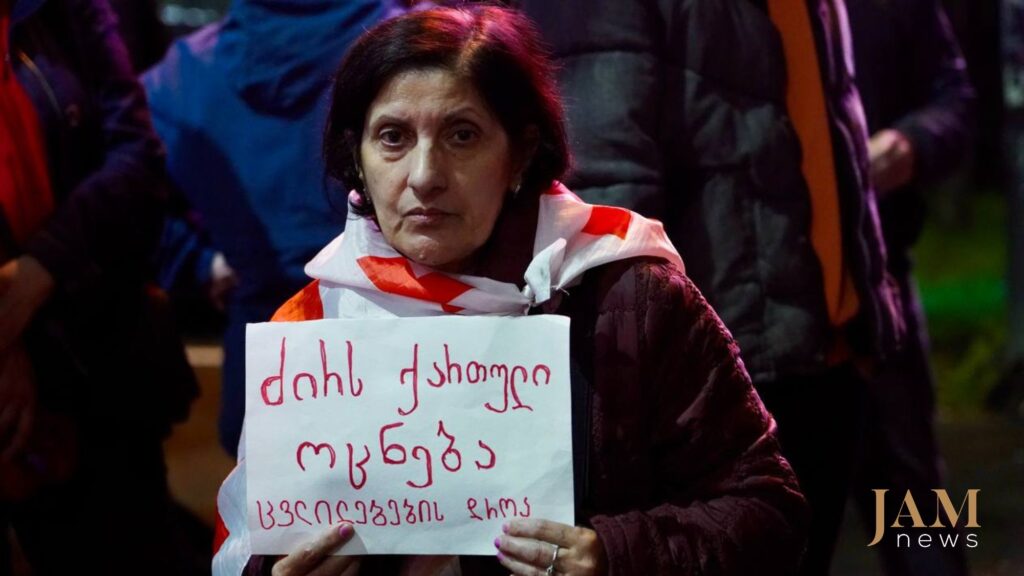
On 25 October, thousands of people gathered in Tbilisi for a major opposition-organised protest under the slogan ‘Georgia without Ivanishvili’.

Waving flags and blowing horns, protesters gathered outside Tbilisi State University before setting off on a mass march towards Rustaveli metro station.


With this rally, the opposition announced the start of a new wave of protests in Georgia. The next rally is scheduled for 28 November.

The date is symbolic: exactly two years earlier, the ruling Georgian Dream party publicly announced that it was suspending EU accession talks.

The announcement sparked ongoing pro-European protests, with demonstrators demanding fresh, free and fair parliamentary elections.

Key messages from opposition leaders

The rally’s organisers, leaders of the pro-Western opposition, addressed the demonstrators.

“This day, 28 November, represents a defeat for all of us as long as Bidzina Ivanishvili remains in power. The postponement of our integration into the European Union is a defeat for all of us. The indefinite delay of a brighter future for our children is a defeat for all of us,” said Nika Gvaramia, one of the leaders of the Coalition for Change.

“Ivanishvili’s group is trying to formally strip us of one of the most important achievements secured by the United National Movement – multiparty elections in Georgia. They now seek to legally establish a one-party dictatorship,” said Levan Tsutskiridze, leader of the Freedom Square party.
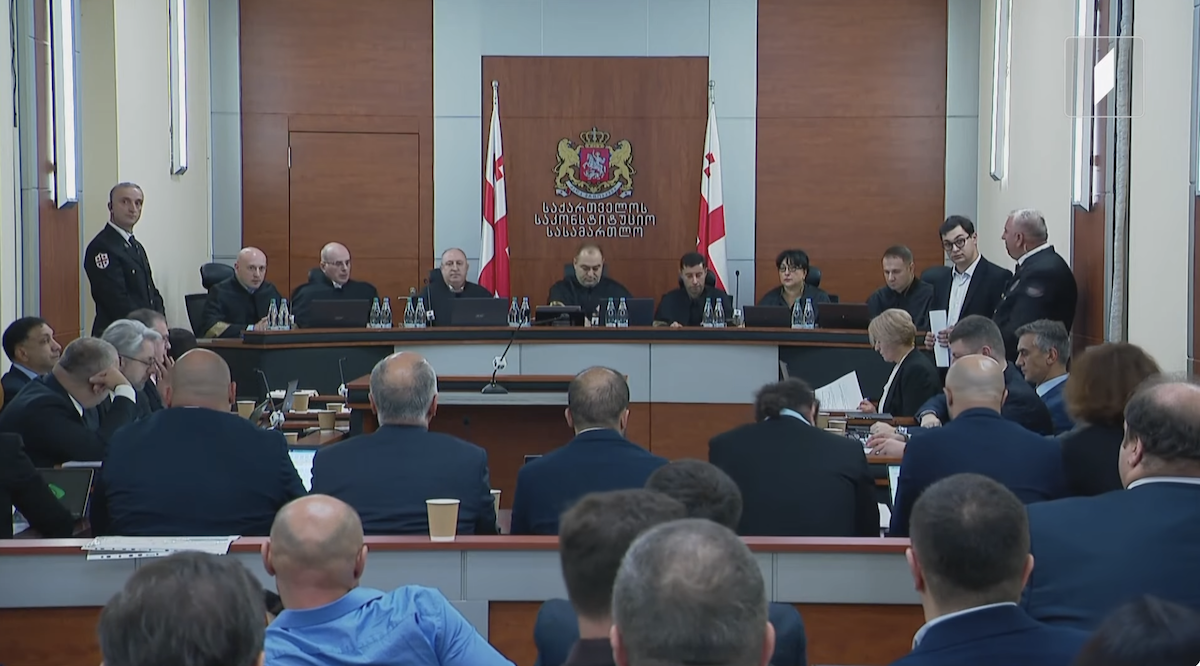
“It may seem that Bidzina Ivanishvili is making such a brazen decision that we should all despair. In fact, the opposite is true. By banning any alternative, Ivanishvili is acknowledging a crisis of his own legitimacy. He is admitting that he no longer trusts the Georgian people – that he fears the free choice of Georgian citizens, and quite rightly so,” said Tamar Chergoleishvili, leader of the Federalists movement.

Young people and other protesters were also among the speakers.

“Look at one another – you are surrounded by people who refuse to give up, who continue to fight for a better future for our country,” student Luka Mishveladze told the crowd.

Background

The 25 October rally was part of Georgia’s pro-European protest movement, which has been ongoing for nearly two years. The demonstration was announced and organised by the opposition.

The date was no coincidence: on 24 October 2024, Georgia held crucial parliamentary elections, with the country’s European future at stake.

The election results remain disputed both domestically and internationally. The vote marked the beginning of a major political crisis in Georgia, leading to strained relations with Western partners, sanctions and the suspension of multimillion-dollar aid packages.

The protests were met with violent police crackdowns, including beatings, torture and arrests of activists. Several packages of repressive laws were adopted, while pressure on the media and civil society intensified, including measures that effectively blocked access to funding.

Western institutions adopted numerous resolutions criticising these developments.

The political crisis entered a new phase when the ruling Georgian Dream party moved to ban pro-Western opposition groups it deemed unacceptable.

Almost all the parties that organised the 25 October rally and announced a new wave of protests were among those facing a proposed ban.
Protests in Georgia's capital, Tbilisi

Новая волна протестов в Грузии
Новости, события в Грузии

Categories
South Caucasus News

EIB backs Azerbaijan-led green energy corridor but seeks clarity on financing and risks


The European Investment Bank (EIB) has reaffirmed its support for the Caspian–Black Sea–Europe Green Energy Corridor, while stressing that the allocation of costs, benefits and risks among participating countries must be clarified before financing decisions can be made.

Categories
South Caucasus News

Женщина в «мужской» хирургии: как выжить в академии и начать все с нуля в другой стране


Categories
South Caucasus News

How to Remove a Fluorescent Light Cover | Step by Step Guide


Follow these steps attentively to ensure a safe and efficient removal process for any type of fluorescent light cover you encounter. Always prioritize caution and care, maintaining alertness to avoid accidents or damage to the lighting components.

Categories
South Caucasus News

Поражение Вучича | Удары хуситов по аэропорту | Протесты во Франции


Categories
South Caucasus News

Removing Fluorescent Light Covers: A Beginner’s Guide!


Discover easy methods for removing fluorescent light covers to replace bulbs or clean fixtures without damaging your lights.

Categories
South Caucasus News

Why are Abkhazia residents with dual citizenship asked to show Russian passports at Moscow airports? – JAMnews


Why are Abkhazia residents with dual citizenship asked to show Russian passports at Moscow airports?  JAMnews

Categories
South Caucasus News

Не будем воевать за других! Громкое заявление из Франции


Categories
South Caucasus News

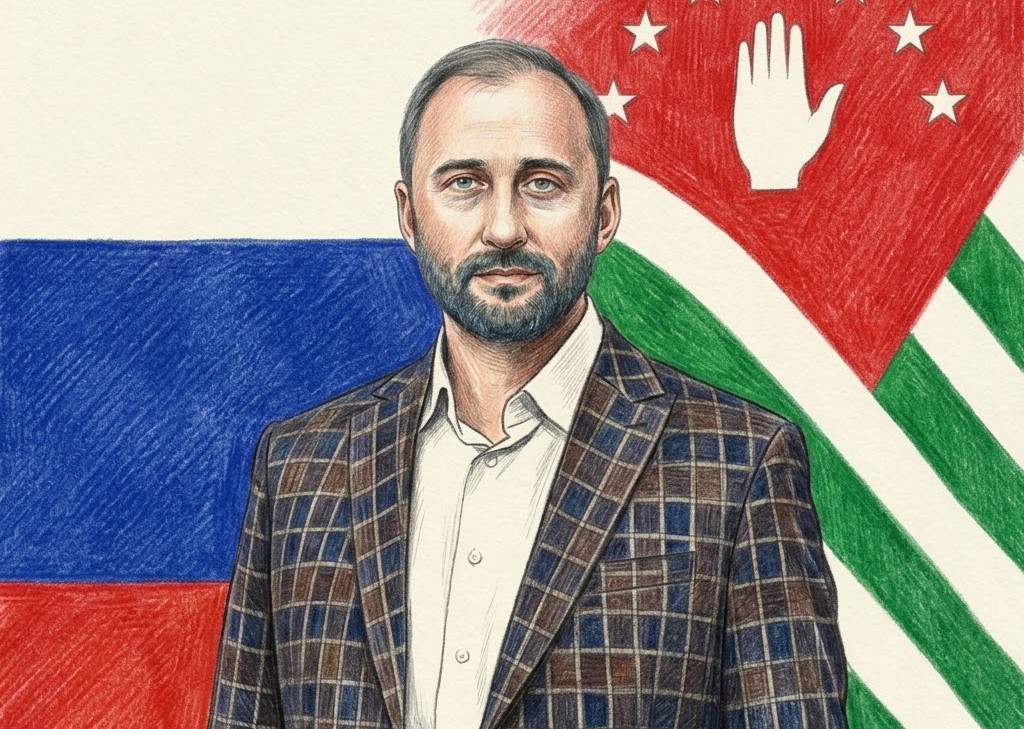
Why are Abkhazia residents with dual citizenship asked to show Russian passports at Moscow airports?


Abkhazia residents with dual citizenship

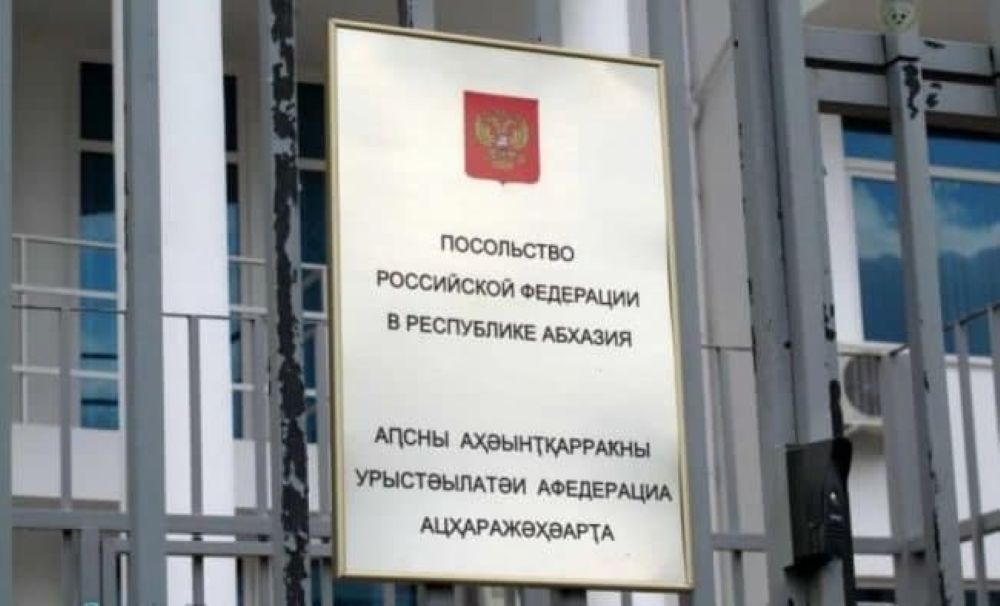
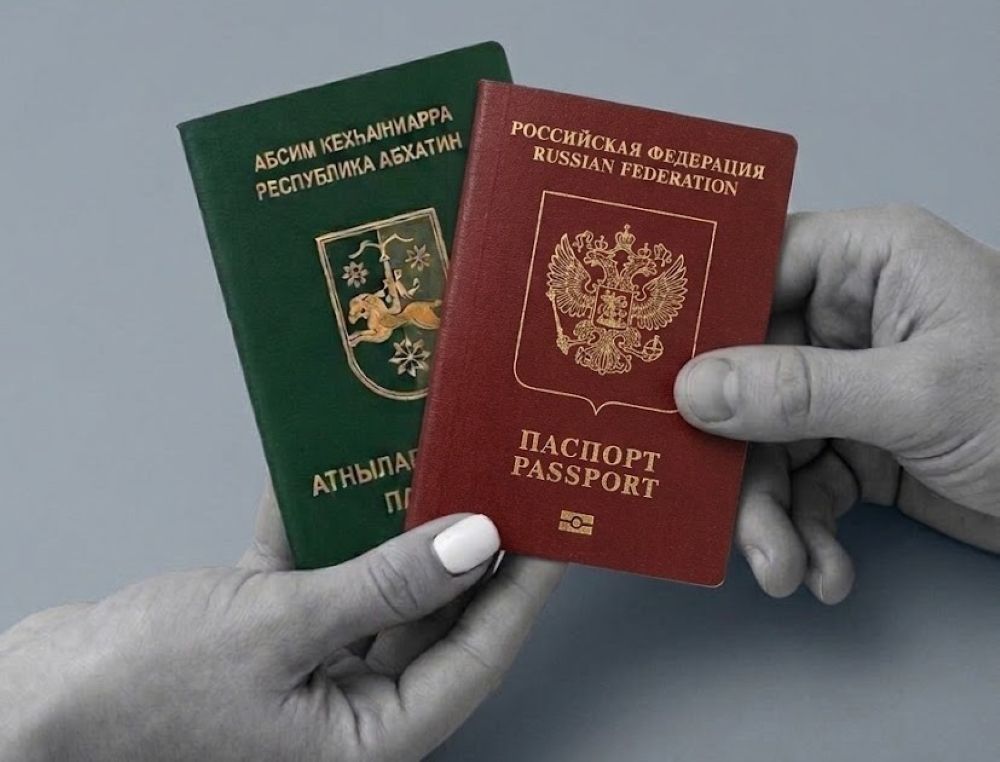
Abkhazia‘s Foreign Ministry has said that some residents of the breakaway republic who hold dual Abkhaz-Russian citizenship are experiencing difficulties crossing the Russian border at Moscow airports.

Russian border guards have reportedly been refusing to allow dual nationals to enter or leave the country using their Abkhaz passports, instead demanding Russian documents.

As Abkhazia is a largely unrecognised republic, its passports are also not widely recognised internationally. Travelling on an Abkhaz passport is virtually impossible, except to a handful of countries, including Russia.

For Abkhazians, obtaining a Russian passport is therefore practically the only way to travel internationally. However, this generally means a Russian international passport rather than a domestic identity document. Most do not hold Russian internal passports because they permanently reside in Abkhazia, where Russian passport holders account for around 70% of the population.

The ministry added that people holding only Abkhaz citizenship do not encounter such problems at airports. Similar incidents have not been reported at other border crossing points either.

Russia explains its position by saying that, for dual nationals, a Russian passport is not merely the primary document required to cross the border, but the only acceptable one. However, the explanation has been met with scepticism in Abkhazia, where some suspect the border guards may have other motives.

The issue was discussed by Abkhaz and Russian foreign ministers Oleg Bartsits and Sergei Lavrov during a recent meeting in Moscow. However, no solution has yet been found. According to Abkhazia’s Foreign Ministry, the matter remains subject to “consultations with the competent authorities of the Russian Federation, taking into account the provisions of existing bilateral agreements”.

In the meantime, the ministry has advised Abkhaz citizens experiencing difficulties at border crossings to formally report the incidents to the ministry, providing detailed accounts of what happened.

From the perspective of international practice, border guards at Moscow airports are not doing anything unlawful.

As a general rule, people holding two or more citizenships are required to present the passport of the country whose border they are crossing, if they are citizens of that country.

This requirement is enshrined in national legislation and strictly enforced in countries including Georgia, the United States and many others.

This raises the question: what exactly is the problem, why are Abkhaz citizens unhappy, and why are they reluctant to present their Russian passports at the border if they have them?

For some Abkhazians with dual citizenship, the right to use an Abkhaz passport is a matter of principle and national pride. While this argument carries little legal weight, it is highly significant in Abkhazia.

Others simply want the option of crossing the border using their Abkhaz documents in certain circumstances, such as when their Russian passport has expired and they have not yet received a replacement.


The terminology, place names and views expressed in this article are those of the author and do not necessarily reflect the editorial position of this website.


Categories
South Caucasus News

Making a living in dangerous waters: Challenges facing Azerbaijani sailors in Black Sea


Azerbaijani sailors in Black Sea

Azerbaijani sailors in Black Sea

Rufan Ahmadov was among the Azerbaijani sailors rescued from a vessel attacked off the coast of Romania on 23 October. According to Azerbaijan’s Foreign Ministry, he sustained minor injuries and was accommodated in a hotel after undergoing a medical examination.

Russia was behind the drone attack on the Khoryv vessel. Two other Azerbaijani nationals on board were also rescued. This time, the sailors’ families received news that their loved ones had survived.

However, in recent months, families of other Azerbaijani sailors working in the Black Sea have received news of their loved ones being killed or going missing.

According to Azerbaijani Foreign Ministry statements on individual incidents, at least 48 Azerbaijani nationals were on board vessels targeted in attacks between June and October. Six Azerbaijanis were confirmed killed. Two others, initially reported missing, were subsequently declared dead. One person remains missing. At least 39 survived, ten of whom were injured or hospitalised.

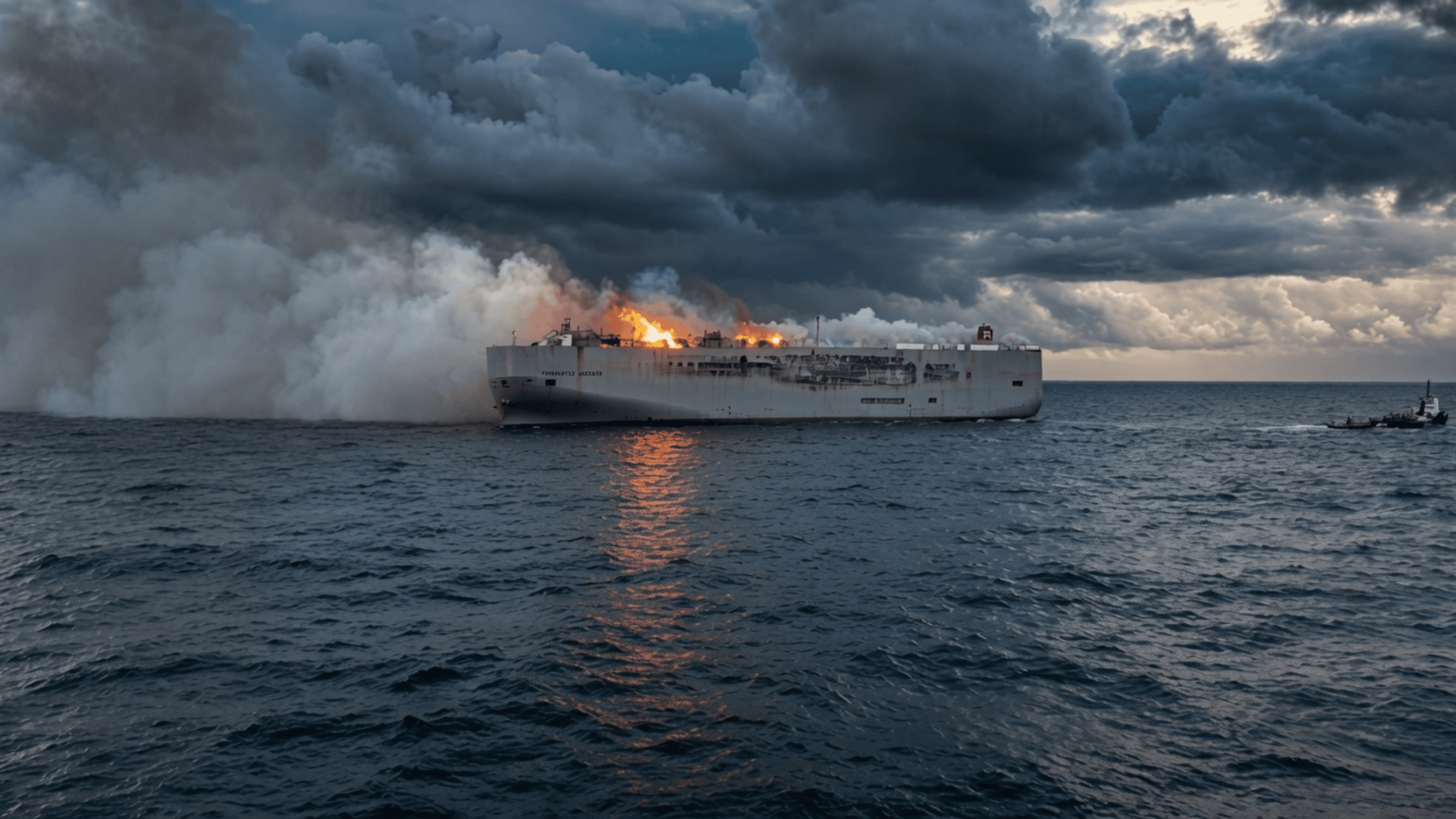
Both Russia and Ukraine regularly launch strikes against merchant vessels in the Black Sea. Azerbaijani nationals work on these ships as captains, engine operators and in other roles. They transport civilian cargo, but their routes take them through areas affected by hostilities.

When a vessel comes under attack, the entire crew is put at risk. If a voyage is interrupted, the threat to their safety is compounded by other concerns: will the sailors receive their wages, will they be able to return home, and who will cover the cost of their repatriation?

Azerbaijani sailors killed or missing following attacks

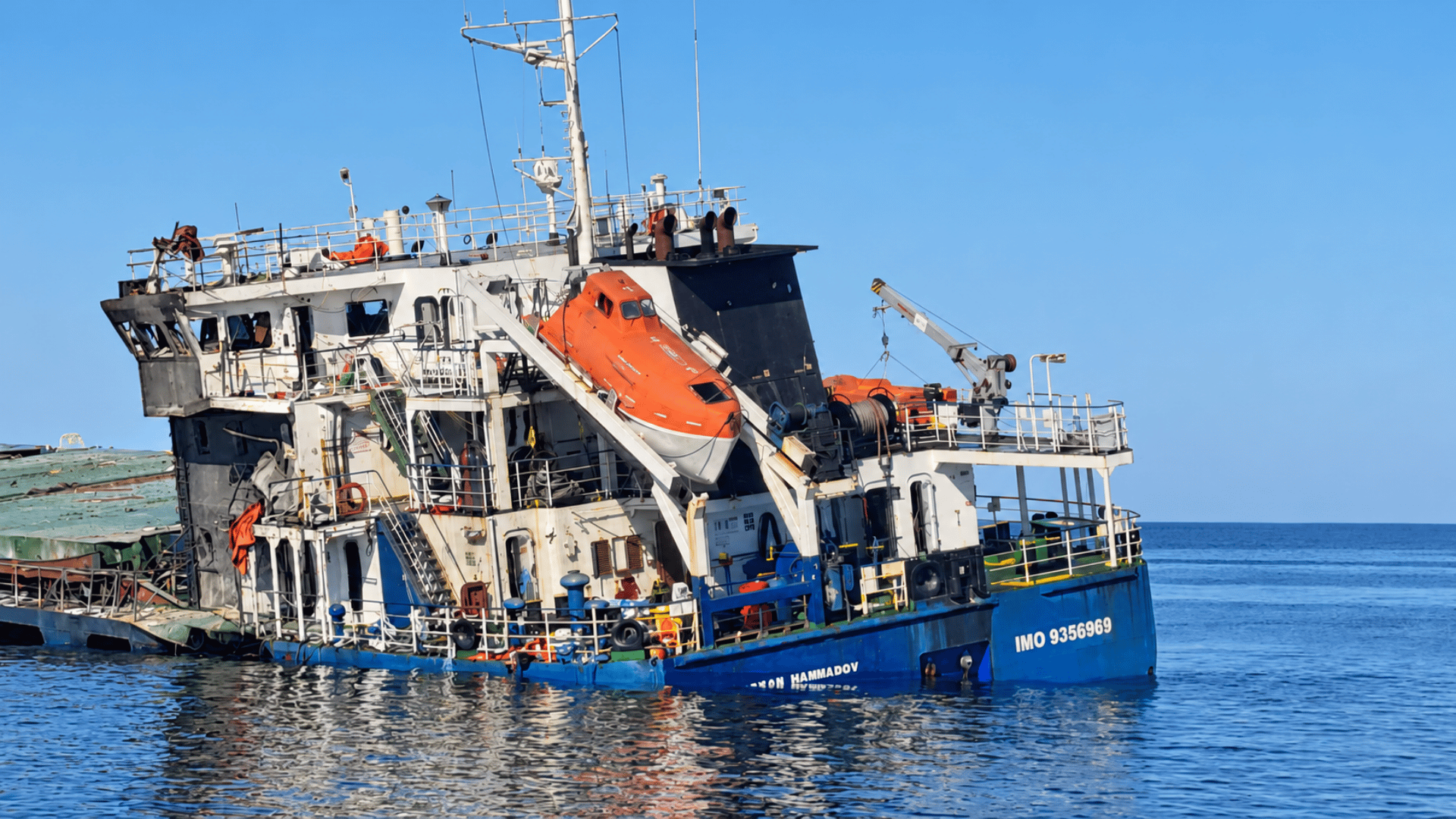
Rustam Hasanov was killed on 5 October in an attack on the Royad Mammadov vessel. Ukrainian President Volodymyr Zelensky said the vessel had been struck by two Russian drones.

The victim’s father, Ismail Hasanov, last spoke to his son on 4 October, a day before the attack. In an interview with Khazar Khabar TV, he said Rustam had been working as the vessel’s captain since August.

Joshgun Mammadaliyev, a native of Digah village in Azerbaijan’s Masalli district, who worked as an engine operator on the same vessel, was injured and hospitalised in Romania. According to the broadcaster, he had worked in this role for three years.

In a statement issued on 6 October, Azerbaijan’s Foreign Ministry listed another Azerbaijani sailor, Muhammad Suleymanzade, born in 2002, as missing. At the time, three rescued Azerbaijani nationals were reported to be in hospital. There has been no further information about Suleymanzade’s fate.

Attacks continue

On 14 July, the Atlas Bey vessel, carrying 11 Azerbaijani nationals, came under attack off the coast of Odesa. Ukrainian officials described the incident as part of a series of Russian attacks on civilian vessels.

Ten sailors were brought ashore. The body of the vessel’s captain, Samad Nasrullayev, was recovered during a search operation and repatriated to Azerbaijan on 17 July.

Azerbaijani sailors were also affected by attacks on the Natra and Zirkon vessels in the Sea of Azov on 5 June. Russian Foreign Ministry spokeswoman Maria Zakharova said the vessels had been struck by Ukrainian drones.

These incidents suggest that the threat is not confined to a single vessel or voyage. Over several months, Azerbaijani sailors have repeatedly faced attacks in the same region.

Crew awaiting wages and hoping to return home

The difficulties facing sailors extend beyond the threat of attacks. On 7 October, Sabukhi Salahov, captain of the Consul vessel, told Konkret that his crew had been stranded in Rostov-on-Don for several months without receiving their wages. According to the sailors, ongoing drone attacks near the vessel’s mooring location have prevented them from leaving the ship and returning to Azerbaijan.

“We want to get the money they owe us and return to Azerbaijan. But there’s nothing we can do,” the captain said.

According to Salahov, the crew have been waiting for their wages for several months and remain unable to return home. There has been no information about whether the sailors have since received their outstanding pay or been reunited with their families following their complaint.

“We were transporting dry cargo from Russia. Our last delivery was coal to Moldova. We then set off to collect a similar cargo, but the routes were blocked. Around 200 vessels have come under drone attack in the Azov-Black Sea region. Since then, we’ve been in the Russian city of Rostov-on-Don. We’ve been here for almost three or four months,” Salahov said.

The complaint also raises questions about how to ensure the safe return of Azerbaijani nationals from the dangerous region. If, as the captain claims, the crew are not receiving their wages and cannot return home, the sailors need consular assistance. However, there is no information about what steps Azerbaijani authorities are taking to repatriate the sailors or resolve the issue of unpaid wages.

Do all sailors have the right to refuse dangerous voyages?

The International Transport Workers’ Federation (ITF) has established rules for seafarers covered by certain collective bargaining agreements. Depending on the level of risk in the area of operation, these rules provide for additional payments, the right to refuse dangerous voyages and repatriation at the employer’s expense.

However, these protections do not automatically apply to all Azerbaijani sailors. To establish whether an individual seafarer is entitled to such protection, it is necessary to examine the terms of their employment contract, determine which collective bargaining agreement applies to the vessel and establish the risk classification of the area of operation.

Azerbaijan’s Foreign Ministry warns citizens about the risks of working in regions affected by war and instability. However, for those already working on vessels in such areas, it is important not only to be aware of the dangers but also to have a genuine opportunity to refuse to continue a dangerous voyage.

The ministry has also reported providing medical and consular assistance to sailors following attacks. However, measures to ensure their safety should not be limited to rescue operations and the repatriation of those affected.

It is also important to establish what support is available to Azerbaijani nationals who wish to leave dangerous areas, recover unpaid wages and provide for their families. For these sailors, warnings about the risks are not enough. They also need practical assistance that would enable them to refuse dangerous work.