European Commission trade spokesperson Olof Gill said on Tuesday that the European Union will not reopen negotiations on its free trade agreement (FTA) with Australia, which were concluded in March.
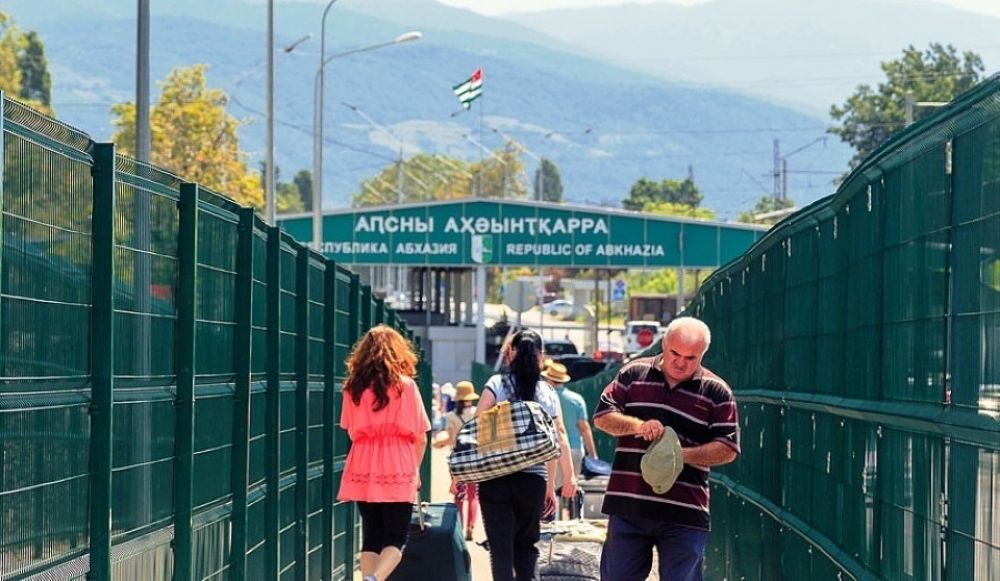
Independent Abkhaz journalist Nizfa Arshba published agreements on cooperation between the interior ministries of Abkhazia and the Russian Federation on her Telegram channel, Aiaashara, sparking a political debate in Abkhazia’s public sphere.
The debate centres on signed cooperation plans that have drawn sharply opposing reactions: some accuse the authorities of surrendering sovereignty, while others argue that joint efforts to fight crime are necessary.
In her investigation, Nizfa Arshba draws on a 2024–2025 cooperation plan between the Russian and Abkhaz interior ministries that she obtained. She also refers to a similar document for 2026–2027, signed by Russian Interior Minister Vladimir Kolokoltsev and his Abkhaz counterpart, Robert Kiut.
The journalist strongly criticised the leadership of Abkhazia’s Interior Ministry, calling it incapable of doing its job. In her view, seeking help from another country’s ministry directly illustrates its inability to fulfil its own responsibilities.
Низфа Аршба
“The agency entrusted to Robert Kiut employs several thousand people and has a wide range of technical equipment, yet it can do nothing. It cannot independently monitor and analyse the country’s crime situation. It cannot assess its own effectiveness. It cannot manage the situation in border regions on its own,” Arshba writes.
The provision that angered her most concerns the transfer to Russia of information about individuals capable of “destabilising the situation in a border region”. She directly links this mechanism to the recent stripping of Abkhaz heroes and opposition politicians Levan Mikaa and Kan Kvarchia of their Russian citizenship.
Arshba believes that Abkhazia’s Interior Ministry, under Robert Kiut, alerted the relevant Russian agencies to the two men, “documenting the shameful surrender of Abkhaz citizens” and helping the authorities eliminate their opponents through the actions of another country.
The story has attracted further attention because Nizfa Arshba herself exposed the ministry documents. Although she is an Abkhaz citizen and does not hold Russian citizenship, Russia’s Justice Ministry previously added her to its register of “foreign agents”.
Civil society reacts
The public movement Apsuaa Rymch saw the published documents as a threat to the independence of Abkhazia’s institutions and issued a strongly worded statement.
In its view, the list of measures in the cooperation plans illustrates the Abkhaz Interior Ministry’s inability to handle basic tasks independently.
“If you put together everything the Abkhaz Interior Ministry cannot handle on its own under this plan, you end up with a complete list of the ministry’s responsibilities,” Apsuaa Rymch members said.
Like Arshba, they objected to the provisions on information sharing and search operations. Apsuaa Rymch drew a direct parallel between agreements to monitor people capable of destabilising border regions and what it called “punitive” decisions against individual Abkhaz public figures.
“The documents list the transfer of information about individuals destabilising the operational situation to relevant Russian agencies as one of the measures to be carried out… What is this, if not an example of shifting responsibilities and laying the groundwork for pressure?” Apsuaa Rymch asked, calling for a legal review of the agreements and the publication of their full texts.
Critics of the documents argue that the public and parliament have not received a full account of the details of the interagency agreements covering 2024–2025 and 2026–2027.
The Interior Ministry itself takes a very different view of the agreements and the actual results of cooperation between the two agencies.
In interviews with television channels, Interior Minister Robert Kiut explained the arrangements in detail. He stressed that the ministry’s work focuses strictly on protecting citizens and maintaining law and order, and remains separate from politics.
According to the minister, speculation surrounding the cooperation plans has no real basis because the mechanism rests on a long-standing legal framework.
Robert Kiut
“The current cooperation plan between the Abkhaz and Russian interior ministries introduces no new obligations. It operates within the framework of existing basic interstate agreements signed in 2009 and 2014.
Abkhaz law unquestionably retains priority. The mechanism has been in place for more than five years, and the coordination we have established serves exclusively to address practical security issues,” Kiut said.
The minister urged people to judge the cooperation by its concrete results rather than political slogans. In particular, Robert Kiut said that joint efforts with Russian colleagues had dismantled around four major drug supply routes in 2025–2026.
According to the minister, another major achievement for the Interior Ministry was resolving the issue of maternity capital.
“Thanks to cooperation with Russian law enforcement agencies, around 400 Abkhaz citizens who had previously been listed as suspects in the illegal cashing-out of [maternity capital] have been reclassified as witnesses, effectively shielding them from criminal prosecution,” Kiut said.
He also expects technological advances to mark a significant step forward. Joint projects at the new Information and Coordination Centre, which is under construction, will include a modern DNA laboratory. This will reduce the time needed to conduct forensic examinations from a year and a half to just a few days.
Public demand for transparency
Overall, the debate surrounding the Interior Ministry’s cooperation plans has highlighted public demand for greater transparency in government decision-making. People are calling for full openness and the protection of sovereignty, fearing any form of institutional secrecy.
The Abkhaz parliament will probably hold hearings on the interagency agreements in the near future. Some MPs believe the documents need to be checked for compliance with Abkhazia’s constitution.
The terminology, place names and views expressed in this article are those of the author and do not necessarily reflect the editorial position of this website.
August Hanning, former head of Germany’s Federal Intelligence Service (BND), is being investigated over possible links to Azerbaijani intelligence.
According to information obtained by Der Spiegel, investigators are examining evidence suggesting that the former BND chief, who was arrested on suspicion of espionage, may have been in contact with an employee of Azerbaijan’s intelligence service.
According to the publication, the Federal Prosecutor General’s Office suspects 80-year-old Hanning of obtaining classified BND documents through his former chief of staff, Manfred D.
According to investigators, Hanning used these documents to prepare an analysis intended for an employee of a foreign intelligence service.
The investigation is examining whether the information or the analysis was actually passed on to a foreign party.
Der Spiegel also notes that Hanning has previous ties to Azerbaijan. The former BND chief was a member of the board of the German-Azerbaijani Forum.
Hanning was arrested on Tuesday. He is being investigated on suspicion of espionage constituting treason, attempted espionage, and other espionage-related offences.
Law enforcement authorities also arrested his former chief of staff, Manfred D.
According to the current theory of the investigation, Manfred D. obtained thousands of documents from the BND for Hanning in exchange for payment until 2022, including classified material.
Prosecutors say D. is suspected of passing around 2,000 documents to Hanning over several years.
The documents reportedly included classified material intended for internal BND use only, as well as high-level intelligence briefings submitted to the German Chancellery.
According to Süddeutsche Zeitung, some of the material concerned Iran’s nuclear programme and the Russian military.
The publication also reports that the documents included highly sensitive information obtained from foreign intelligence agencies with which Germany cooperates.
According to information obtained by Süddeutsche Zeitung, the investigation is currently not believed to be linked to Russia.
According to Bild, prosecutors allege that Hanning received classified information from a former BND employee and planned to use the information as part of his consulting activities.
The publication reports that investigators are also examining whether Hanning may have subsequently used the material he obtained in analyses prepared for third parties.
Hanning’s former chief of staff, Manfred D., reportedly worked in the office of the BND leadership until March 2026.
This position may have given him access to some of Germany’s most current and sensitive intelligence information.
According to the prosecution’s theory, D. held this position for a significant part of the period during which he allegedly removed documents from the BND without authorization.
Hanning is expected to appear before an investigating judge at the Federal Court of Justice.
Manfred D. is also expected to appear before a judge in the same manner.
There are also concerns within German security circles about the possible consequences of the case.
Roderich Kiesewetter, a conservative security expert and member of parliament, told Handelsblatt that the arrest of a former BND chief in such a case could damage Germany’s relations with partner intelligence services. According to him, espionage cases of this kind can have serious consequences, particularly in terms of mutual trust.
Martin Jaeger, the current president of the BND, said that a comprehensive internal investigation had been launched as soon as the suspicions came to light.
“There can be no compromise when it comes to internal security,” he said.
According to Der Spiegel, the investigation is separately examining Hanning’s possible contact with an employee of Azerbaijan’s intelligence service and whether he prepared analyses based on classified information for that person.
The Federal Prosecutor General’s Office declined to comment on the information reported by the media.
The Azerbaijani side has also issued a statement on the matter. Azerbaijan’s Media and Broadcasting Council described the mention of Azerbaijan in the investigation involving the former head of German intelligence as disinformation.
The post Former head of German intelligence investigated over possible links to Azerbaijan appeared first on MEYDAN.TV.
The international human rights organization “Raoul Wallenberg Centre for Human Rights” (RWCHR) has expressed concern over the health condition of imprisoned Meydan TV journalist Aytaj Tapdig.
In a statement released on September 25, the organization called on the Azerbaijani authorities to ensure that the journalist undergoes specialized medical examination and treatment, as well as to release her.
According to the RWCHR, Aytaj Tapdig suffers from a deviated septum and associated chronic breathing issues. Citing Azerbaijani media, the organization states that the journalist’s condition has deteriorated during her detention. It is noted that she has not been permitted to be examined by an ENT (ear, nose, and throat) specialist or to undergo MRI and CT scans.
The statement also notes that Aytaj Tapdig has used more than 80 nasal sprays to breathe while in custody. The RWCHR mentions that high humidity in the location of the detention facility could further aggravate her respiratory problems.
Earlier, Human Rights Watch also stated—based on information from Aytaj Tapdig’s family and lawyer—that the journalist was not being provided with access to specialized medical examinations. HRW’s August 20 report noted that requests regarding MRI and CT scans remained unanswered.
According to the RWCHR, after the issue was brought to the attention of international human rights organizations, Aytaj Tapdig was examined by a doctor at the detention center on August 19. According to the journalist, that doctor was not an ENT specialist.
The organization notes that the Azerbaijani side subsequently announced that the journalist had received medical care. The RWCHR, however, stated that this was insufficient and demanded that Aytaj Tapdig be examined by a specialist doctor and undergo the necessary MRI and CT scans.
The statement also emphasizes that Aytaj Tapdig is one of several female journalists who reported facing physical and psychological abuse, as well as gender-based and sexual threats during their detention.
The RWCHR links the journalist’s imprisonment to her journalistic activities and calls on the Azerbaijani authorities to drop the charges brought against Aytaj Tapdig and other journalists and to release them.
“Journalism is not a crime. No journalist should be imprisoned for work done in the public interest,” the organization’s statement reads.
Aytaj Tapdig was detained on December 6, 2024, as part of the “Meydan TV case.” A total of 12 people have been brought to criminal liability in connection with the case. Initially, they were charged under Article 206.3.2 of the Criminal Code—smuggling committed by a group of persons acting in prior agreement. On August 28, 2025, the charges were escalated.
They are currently standing trial under several charges, including illegal entrepreneurship, smuggling, tax evasion, document forgery, and money laundering (legalization of criminally obtained property). The journalists deny the charges, linking their arrests to their professional activities and critical journalism.
The post Call from international organization regarding Aytaj Tapdig’s health: “Journalism is not a crime” appeared first on MEYDAN.TV.