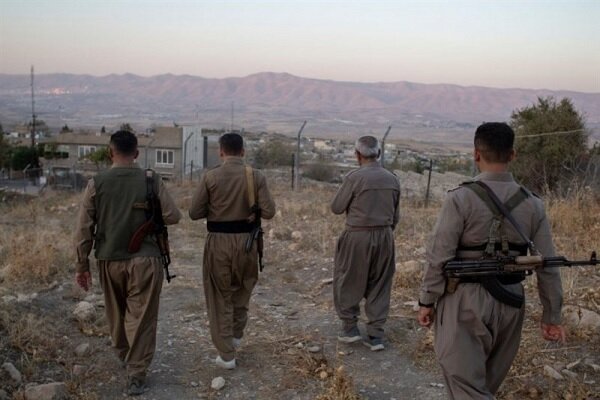
TEHRAN, Oct. 20 (MNA) – Iran’s ambassador to Baghdad Mohammad Kazem Al-e-Sadeq says Iran and Iraq have reached an agreement to expel a separatist group from Iraq’s Kurdistan Region.
 The South Caucasus News - SouthCaucasusNews.com
Michael Novakhov (@mikenov)A false-flag operation?
In September 1999, a wave of coordinated time-bomb explosions targeted residential apartment buildings across Russia, killing over 300 people, injuring more than 1,000, and sparking the Second Chechen War. [1, 2]Timeline of the September 1999 Bombings
September 4, 1999 (Buynaksk): A truck bomb exploded outside a five-story apartment building housing families of Russian military personnel in Buynaksk (Dagestan), killing 64 people. [1]
September 9, 1999 (Moscow, Guryanov Street): A powerful bomb planted on the ground floor of a nine-story apartment building on Guryanov Street detonated, destroying the structure and killing over 100 people in their sleep. [1, 2, 3]
September 13, 1999 (Moscow, Kashirskoye Highway): A massive bomb ripped through a nine-story apartment building on Kashirskoye Shosse, killing 119 people. [1, 2, 3]
September 16, 1999 (Volgodonsk): A truck bomb exploded near a nine-story residential building in Volgodonsk, killing 17 people and damaging surrounding structures. [1]
September 22, 1999 (Ryazan): Residents in a Ryazan apartment building spotted suspicious bags being carried into the basement. Police discovered bags containing an explosive substance (analyzed to have RDX vapors) and a detonator. The Federal Security Service (FSB) later claimed the event was a local civil defense “training exercise” using bags of sugar. [1, 2, 3]Political Aftermath and Controversy
Official Attribution: The Russian government officially blamed Chechen and Dagestani separatists for the campaign of terror, using the crisis as the primary justification to launch the Second Chechen War. [1, 2, 3]
Rise of Vladimir Putin: Then-Prime Minister Vladimir Putin used the crisis and a hardline response (“wipe out terrorists in the outhouse”) to dramatically surge in popularity, laying the groundwork for his election as Russian president in 2000. [1, 2, 3]
False-Flag Allegations: Independent journalists, investigators (such as Alexander Litvinenko and David Satter), and critics have alleged that the bombings were a false-flag operation orchestrated by the FSB to engineer public support for the war and consolidate political power. [1, 2, 3]Russian apartment buildings in September 1999 – Google Search google.com/search?q=Russian+…
Michael Novakhov (@mikenov)Director of FSB (1999–2008)
On 9 August 1999, a decree by President Boris Yeltsin promoted him to director, replacing his close friend Vladimir Putin.In September 1999, a series of explosions hit four apartment blocks in three Russian cities, killing more than 300. The bombings, together with the Invasion of Dagestan, triggered the Second Chechen War. The handling of the crisis by Vladimir Putin, who was prime minister at the time, boosted his popularity greatly and helped him attain the presidency within a few months.[11] A suspicious device resembling those used in the bombings was found and defused in an apartment block in the Russian city of Ryazan on 22 September 1999.[12] On 23 September, Vladimir Putin praised the vigilance of the inhabitants of Ryazan and ordered the air bombing of Grozny, which marked the beginning of the Second Chechen War.[13] Three FSB agents who had planted the devices at Ryazan were arrested by the local police.[14] The next day, Patrushev announced that the incident in Ryazan had been an anti-terror drill and the device found there contained only sugar, and freed the FSB agents involved.[15] FSB also issued a public apology about the incident.[16]
Although the bombings were widely blamed on Chechen rebels, their guilt was never conclusively proven. A number of historians and investigative journalists have instead called the bombings a false flag attack perpetrated by the FSB to win public support for a new war in Chechnya and to boost the popularity of Vladimir Putin, the former head of the FSB, prior to the upcoming presidential elections.[14]
Former FSB agent Alexander Litvinenko, who blamed the FSB for the bombings and was a critic of Putin, was assassinated in London in 2006. The United Kingdom public inquiry into the poisoning of Litvinenko found that “the FSB operation to kill Mr Litvinenko was probably approved by Mr Patrushev and also by President Putin.”[17]
Nikolai Patrushev – Wikipedia en.wikipedia.org/wiki/Nikola…