
Day: October 12, 2026
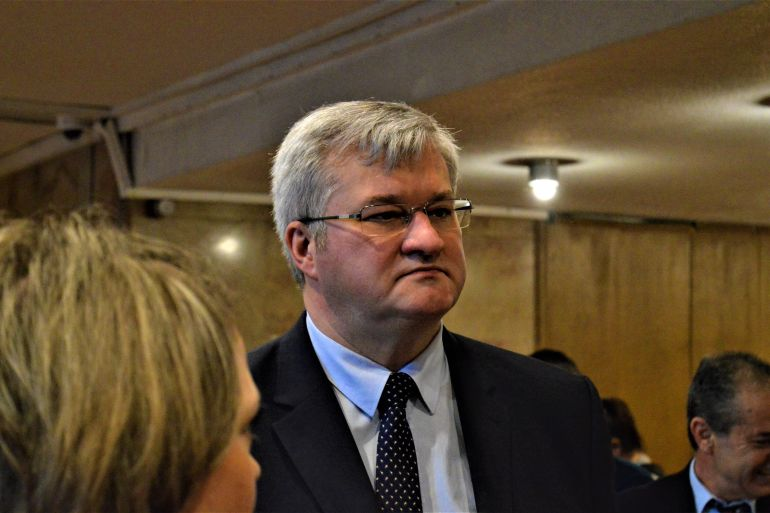
HYEMINDS benefit to feature vocalist Manet-Miriam and Avedisian School principal The Armenian Weekly
#Mossad and #Russian #Intelligence services: 1998 – 2003 – Google Search
Between 1998 and 2003, the relationship between Israel’s Mossad and Russian Intelligence services—primarily the SVR (Foreign Intelligence Service) and the FSB (Federal Security Service)—underwent a pragmatic transformation. Driven by the rise of Vladimir Putin (who took over the FSB in 1998 and the Russian presidency in 2000) and Efraim Halevy, who became the Director of Mossad in 1998, the agencies shifted from Cold War adversaries to cautious, transactional partners focused on shared geopolitical threats. [1, 2, 3, 4]
1. Counterterrorism and Islamic Extremism
The core driver of intelligence sharing during this window was a mutual concern over radical Islamist movements. [2, 5]
Between 1998 and 2003, the relationship between Israel’s Mossad and Russian Intelligence services—primarily the SVR (Foreign Intelligence Service) and the FSB (Federal Security Service)—underwent a pragmatic transformation. Driven by the rise of Vladimir Putin (who took over the FSB in 1998 and the Russian presidency in 2000) and Efraim Halevy, who became the Director of Mossad in 1998, the agencies shifted from Cold War adversaries to cautious, transactional partners focused on shared geopolitical threats. [1, 2, 3, 4]
1. Counterterrorism and Islamic Extremism
The core driver of intelligence sharing during this window was a mutual concern over radical Islamist movements. [2, 5]
The Chechen-Palestinian Parallel: Following the outbreak of the Second Chechen War in 1999 and a wave of terrorist bombings in Russia, Russian leaders explicitly linked Chechen rebels to Middle Eastern extremist networks. Israeli officials drew parallels between these groups and Palestinian militant organizations. [5]
Intelligence Exchange: Mossad and Russian intelligence secretly shared operational data regarding financial pipelines, training camps, and the movement of foreign fighters traveling between the Middle East and the North Caucasus. [2, 5]
2. Monitoring Iran’s Weapons Programs
A major point of friction, but also engagement, was Russia’s relationship with Iran, particularly concerning the transfer of military and nuclear technology. [3, 6]
Direct Consultative Mechanisms: In March 1999, Israeli Prime Minister Benjamin Netanyahu met with Russian Prime Minister Yevgeny Primakov (himself a former chief of the SVR) to establish a direct, bilateral channel to address technology leaks to Iran. [6]
Mossad’s Role: Under Halevy, monitoring Iran’s nuclear program was Mossad’s top priority. Mossad frequently provided the SVR and FSB with actionable intelligence showing how Russian entities or scientists were being actively targeted or co-opted by Iranian procurement agents, prompting Moscow to tighten export controls. [3]
3. Managing Post-Soviet Transnational Organized Crime
The massive wave of over one million Soviet-Jewish immigrants arriving in Israel throughout the 1990s created an intrinsic domestic security link between Moscow and Tel Aviv. [2, 7]
The “Russian Mafia” Threat: The porous boundaries of the post-Soviet landscape allowed transnational Eurasian organized crime syndicates to expand their footprints into Israel. [2]
FSB-Mossad Cooperation: To counter money laundering, narcotics trafficking, and cybercrime, Mossad worked alongside Israel’s Shin Bet to establish joint informational networks with Russia’s FSB to track high-profile criminal figures moving assets across international lines. [2]
4. Defense Industry Collaboration
The era also laid the groundwork for robust military-technical intelligence agreements. Under a framework initialized in 1995, Israeli and Russian defense industries collaborated on upgrading older Soviet-era hardware (such as MiG fighter jets and tanks) for third-party export. [8]
This intelligence and technological proximity culminated in October 2003, when Israel and Russia finalized a landmark tripartite deal to supply India with specialized airborne early warning and control radar systems (PHALCON) integrated onto Russian aircraft bodies. [8]
Summary of the Dynamic
While both agencies maintained deep skepticism of one another—and actively monitored each other for domestic espionage—the 1998–2003 era proved that Mossad and Russian intelligence could compartments their geopolitical differences (such as Russia’s historic ties to Arab states) to exploit overlapping security interests in counterterrorism and global tracking. [2, 4]
[1] foreignpolicy.org.tr
[2] thegeopolitics.com
[3] mossad.gov.il
[4] youtube.com
[5] fdd.org
[6] jamestown.org
[7] youtube.com
[8] files.ethz.ch
Mossad and Russian Intelligence services: 1998 – 2003 – Google Search google.com/search?q=Mossad+a…