The blast occurred shortly before 9 p.m. (1900 GMT). French newspaper Le Figaro said video surveillance images showed a man dropping a backpack at the entrance of a residential building shortly before the explosion, News.az reports, citing Reuters.
***
Eric Ciotti, the right-wing mayor of nearby Nice, across the border in France, said on X: “The attack committed this evening is a tragedy for Monaco.”
A spokesperson for the Monaco police declined to comment.
Monaco is a tax-free microstate on the French Riviera known as a haven for billionaires and their luxury yachts.
Britain will unveil its long-delayed Defence Investment Plan on Tuesday, setting out how it intends to spend a growing military budget in the coming years as it prepares for possible future conflicts, News.az reports, citing Reuters.
***
Here are some of the measures already announced in the run-up to the plan’s publication:
NAVY
– Britain said its Royal Navy would become a ‘Hybrid Navy’ combining autonomous vessels and AI with warships and aircraft.
– This includes a range of uncrewed vessels with individual specialities such as submarine hunting, missile platforms and reconnaissance stations.
– The government will invest in at least six “Common Combat Vessels” to serve as control hubs for uncrewed systems. These will come into service in the 2030s.
– New high-speed boats for Royal Marine Commandos.
ARMY
– Investment in “inexpensive expendable autonomous systems and loitering munitions”
– A programme to develop uncrewed ground vehicles.
– Up to 24 autonomous armed drones by 2030 to work alongside conventional Apache helicopters.
– Up to 24 surveillance drones to replace the existing ‘Watchkeeper’ uncrewed surveillance aircraft.
AIR FORCE
– The development of new autonomous fighter jets which will fly alongside crewed jets.
The evacuation, expected to begin within days, will be carried out using special charter flights operated by Uganda Airlines and financed by the Ugandan government, News.az reports.
***
The move comes after one Ugandan citizen was killed in an anti-migrant attack and amid reports that vigilante groups have intensified threats against migrants in several communities.
Why is Uganda evacuating its citizens from South Africa?
Uganda’s decision to evacuate its citizens reflects growing concern over the deteriorating security situation facing foreign nationals in South Africa. According to Ugandan officials, the country has witnessed months of escalating xenophobic violence, with migrants increasingly becoming targets of intimidation, harassment, assaults, and in some cases, deadly attacks. The government says the evacuation is intended to provide a safe way home for citizens who no longer feel protected or secure.
Authorities revealed that 746 Ugandans have already registered to return voluntarily, indicating that fears within the Ugandan community are widespread rather than isolated. The decision was also influenced by reports that vigilante groups allegedly issued deadlines demanding that migrants leave certain areas, creating panic among many foreign residents. Rather than waiting for the situation to deteriorate further, Kampala opted to organize a coordinated evacuation, describing the safety of its citizens as its highest priority.
The operation also demonstrates Uganda’s commitment to protecting its nationals abroad. Governments routinely organize evacuations during wars, natural disasters, or severe political crises, and Uganda considers the current security situation sufficiently serious to justify similar action.
What sparked the latest wave of xenophobic violence?
While South Africa has experienced repeated outbreaks of xenophobic violence over the past two decades, recent tensions appear to have intensified due to growing economic frustrations. High unemployment, rising living costs, persistent inequality, and competition over jobs and informal businesses have fueled resentment among some local communities. In many cases, migrants become convenient targets for anger over broader socioeconomic challenges.
According to Ugandan officials, the latest escalation included increasing reports of threats against foreigners and alleged ultimatums issued by anti-migrant vigilante groups. These developments created fear among migrant communities, prompting many Ugandans to seek assistance from their embassy.
Analysts note that although migrants are often blamed for unemployment or crime, there is little evidence supporting claims that they are responsible for South Africa’s structural economic problems. Instead, experts argue that xenophobic violence is rooted in complex political, economic, and social issues that have persisted for years.
How many Ugandans are expected to return home?
The Ugandan Ministry of Foreign Affairs says 746 citizens have already registered to participate in the evacuation. Officials expect this figure could increase as more Ugandans contact the High Commission in Pretoria before flights begin.
The number highlights the scale of concern within the Ugandan diaspora. Although thousands of Ugandans continue to live and work across South Africa, hundreds have concluded that remaining in the country currently presents unacceptable security risks. Many have chosen to leave not because they have lost employment or business opportunities, but because they fear becoming victims of violence.
Government officials continue encouraging citizens who wish to return to register promptly so they can be included in the evacuation plan and receive the necessary travel assistance.
How will Uganda carry out the evacuation?
The evacuation will involve several carefully coordinated stages designed to ensure that citizens return home safely and efficiently. First, Ugandan authorities will finalize the registration of all citizens wishing to leave. Officials will then transport registered evacuees to secure assembly centers where they will await departure.
For those whose passports or travel documents have expired or been lost, the Uganda High Commission will issue emergency travel documents, ensuring that documentation problems do not prevent citizens from returning home.
Once preparations are complete, Uganda Airlines will operate dedicated charter flights to transport evacuees back to Uganda. Unlike commercial flights, charter operations allow the government to move hundreds of people simultaneously while maintaining full control over logistics, passenger safety, and scheduling.
Officials say every stage of the operation is being coordinated jointly by the Ministry of Foreign Affairs, the Uganda High Commission in Pretoria, relevant government agencies, and leaders of the Ugandan community living in South Africa.
Who is paying for the evacuation?
The Ugandan government has confirmed that it will fully finance the evacuation operation, including the cost of charter flights operated by Uganda Airlines. This means registered citizens will not have to purchase expensive emergency airline tickets or arrange private transportation to Uganda.
Funding the operation reflects the government’s view that protecting citizens abroad is a core responsibility of the state. Officials recognize that many people seeking evacuation may have experienced financial hardship after leaving jobs, businesses, or homes because of security concerns. Removing financial barriers allows those who feel threatened to return home without worrying about the cost of international travel.
The government’s financial commitment also underscores the seriousness with which Kampala views the situation.
Was any Ugandan killed during the violence?
Yes. Ugandan authorities confirmed that one Ugandan citizen lost his life in an anti-migrant attack in KwaZulu-Natal Province. Officials say preparations are underway to repatriate the victim’s body to Uganda so that the family can conduct funeral arrangements at home.
The fatal attack significantly increased concerns within the Ugandan government and among the Ugandan community in South Africa. While previous incidents had raised alarms, the death demonstrated that the threat facing migrants had become very real.
Authorities have not suggested that all parts of South Africa are equally dangerous, but they say the killing illustrates why precautionary measures, including evacuation, have become necessary for citizens who no longer feel safe.
What should Ugandans in South Africa do now?
Ugandan officials are urging all citizens who wish to return home to immediately register with the Uganda High Commission in Pretoria. Registration enables the government to determine how many people require assistance, prepare emergency travel documentation where necessary, organize transportation to assembly points, and allocate seats on charter flights.
Officials emphasize that waiting until the last moment could complicate travel arrangements and delay departures. Citizens are therefore encouraged to remain in close contact with diplomatic officials and follow official announcements regarding assembly locations and flight schedules.
For Ugandans choosing to remain in South Africa, authorities recommend staying informed about local security conditions, avoiding areas experiencing unrest, and maintaining communication with the High Commission should emergency assistance become necessary.
Is everyone being forced to leave South Africa?
No. The evacuation is entirely voluntary. Uganda is not ordering all of its citizens to leave South Africa but is instead offering assistance to those who have decided that returning home is the safest option.
Many Ugandans continue to live and work successfully in South Africa and have chosen to remain despite the recent unrest. The Ugandan government says it respects those decisions while continuing diplomatic efforts to ensure the safety of all Ugandan nationals who stay behind.
This approach allows individuals to assess their own circumstances while ensuring that those facing immediate security concerns have access to government support.
What is Uganda asking South Africa to do?
Uganda says it continues to engage South African authorities through diplomatic channels to ensure adequate protection for Ugandan citizens who remain in the country. Kampala expects South Africa to uphold its responsibility to protect all residents, regardless of nationality, and to prevent further attacks against foreign nationals.
Officials are also seeking assurances that law enforcement agencies will respond quickly to incidents of violence, investigate attacks thoroughly, and prosecute those responsible. Diplomatic cooperation remains an important part of Uganda’s strategy, since the evacuation addresses only those citizens who choose to leave, while many others will continue living and working in South Africa.
Maintaining close communication between the two governments is considered essential for preventing further escalation and reassuring foreign communities.
Why does South Africa experience recurring xenophobic violence?
South Africa’s history of xenophobic violence is closely linked to longstanding socioeconomic challenges. The country continues to face exceptionally high unemployment, widespread poverty, significant income inequality, and persistent frustrations over limited economic opportunities. During periods of economic hardship, migrants are sometimes blamed for taking jobs, opening businesses, or competing for scarce resources.
Researchers and international organizations, however, argue that these perceptions oversimplify much deeper structural problems. Immigration is only one small factor in a much broader economic picture, and many migrants contribute positively by creating businesses, generating employment, and paying taxes.
Despite repeated government condemnations of xenophobic attacks, violence has periodically resurfaced over the past two decades, affecting migrants from Zimbabwe, Mozambique, Nigeria, Ethiopia, Somalia, Uganda, and many other African countries.
What does this evacuation mean for regional diplomacy?
Uganda’s evacuation effort sends a significant diplomatic message across Africa. When one government decides to organize the return of hundreds of its citizens because of security concerns in another African country, it highlights the seriousness of the situation and places additional pressure on the host government to restore public confidence.
The operation also demonstrates Uganda’s willingness to actively protect its citizens abroad, even when doing so requires substantial logistical planning and financial resources. At the same time, Kampala has been careful not to escalate tensions with Pretoria, emphasizing continued diplomatic engagement rather than confrontation.
For South Africa, the evacuation may increase scrutiny from neighboring countries and regional organizations, many of which have previously expressed concern about recurring xenophobic violence and its impact on African unity and regional cooperation.
What happens next?
In the coming days, Ugandan authorities are expected to finalize passenger lists, complete documentation procedures, transport registered citizens to assembly centers, and begin operating special Uganda Airlines charter flights. Officials will continue accepting registrations while monitoring developments on the ground.
At the same time, Uganda will maintain diplomatic engagement with South African authorities to ensure that citizens who remain continue receiving appropriate protection. The government has made clear that while the evacuation addresses immediate humanitarian concerns, broader efforts to improve the security environment for foreign nationals in South Africa remain equally important.
The success of the evacuation will depend on close coordination between both governments, Uganda Airlines, diplomatic missions, community organizations, and the affected citizens themselves. The operation represents not only an emergency response to escalating violence but also an effort to reassure Ugandans that their government stands ready to protect them wherever they may be.
I’m trying to install xvst: http://xviservicethief.sourceforge.net on my ubuntu 14.04 64bits I have tried adding the repositories as described over here: http://linuxaria.com/article/download-your-
Ten years ago, Britons voted to leave the European Union. At the time, supporters of Brexit promised to restore control over the country and put an end to years of disputes with Brussels. Today, however, nearly half of the UK population supports holding a new referendum, while the consequences of that decision continue to shape the country’s political and economic landscape.
Why did Brexit fail to deliver the promised stability? How did it reshape not only Britain but Western politics more broadly? And why, a decade later, has the question of the UK’s place in Europe returned to the forefront of public debate?
The actions of British Prime Minister David Cameron are often cited today as an example of how tactical calculation can turn into strategic defeat. By calling a referendum on leaving the European Union, he operated on the assumption that the UK already occupied an optimal position in its relationship with Brussels: benefiting from access to the single market and customs union while remaining outside both the eurozone and the Schengen Area.
The United Kingdom retained control over its borders and was not bound by a range of EU social and labor regulations that it viewed as constraints on economic competitiveness.
At the same time, London was not being pushed toward deeper integration. There was no new EU treaty forcing British policymakers into a difficult choice, nor was there widespread public anger over a perceived “dictate from Brussels.” Most Britons limited themselves to jokes about European bureaucracy and standards governing the shape of cucumbers and bananas. Membership in the EU was supported by all major political parties, as well as by the governments of Scotland, Wales, and Northern Ireland.
A natural question followed: why fix what was not broken?
After the 2014 referendum on Scottish independence, Cameron became convinced he could achieve a similar outcome on EU membership. This, in turn, would allow him to neutralize pressure from Eurosceptics within the Conservative Party and put the question of leaving the European Union to rest for the foreseeable future.
However, he made two key miscalculations. First, he brought the question to a referendum in the absence of a genuine public demand. Second, he underestimated the ability of Brexit supporters to mobilize fears related to migration, as well as growing anti-elite sentiment.
Following the vote on June 23, 2016, the pound sterling lost more than 10% of its value, reaching its lowest level since 1985. The FTSE 100 index also fell sharply. Cameron announced his resignation and left office as prime minister on July 13 of the same year.
On March 29, 2017, the formal process of the United Kingdom’s withdrawal from the EU was launched, concluding on January 31, 2020. Yet subsequent events have shown that the promise to settle the issue for generations to come remains unfulfilled.
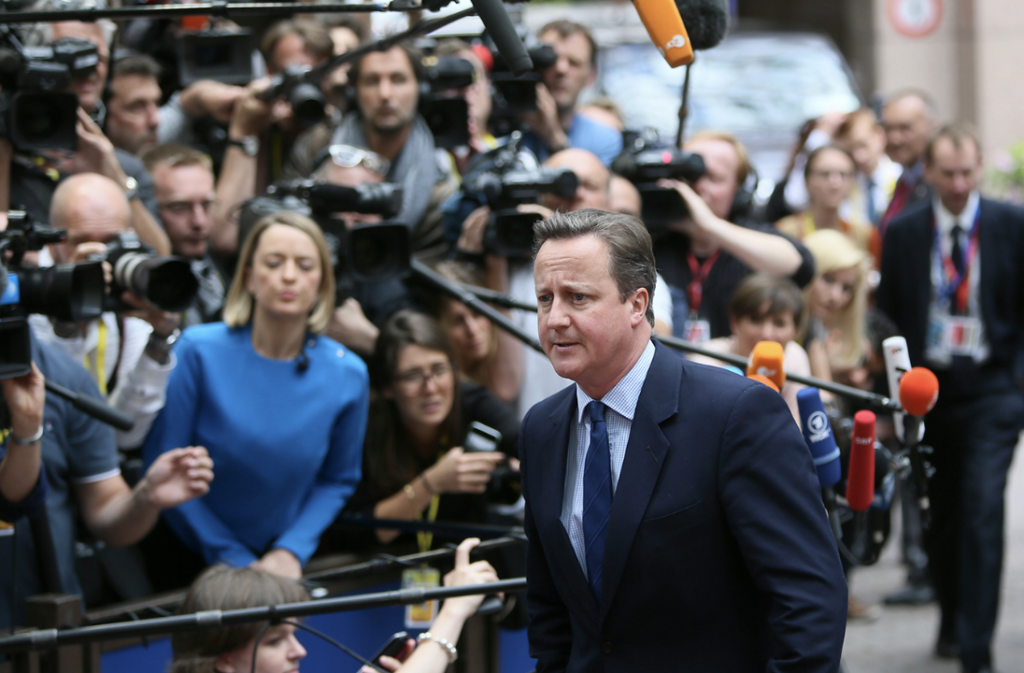
Prime Minister David Cameron of Britain arrives for a European Council meeting in Brussels on June 28, 2016. (Olivier Hoslet/EPA)
Control over the economy
The central slogan of the Brexit campaign was “Take Back Control.” But reality proved far more complicated than its proponents had promised.
Advocates of leaving the European Union envisioned Britain as a more liberal economy, marked by lower taxes and a reduced role for the state. Yet that vision ran counter to the expectations of many voters, who instead wanted greater spending on public services.
Nor did Brexit usher in a sweeping wave of deregulation. Efforts to abandon European standards in pursuit of closer trade ties with the United States would likely have faced resistance from both the public and farmers. In the end, Britain became neither a “Singapore-on-Thames” nor a freer economy. On the contrary, as the Financial Times columnist Janan Ganesh has argued, the years since Brexit have left Britain not more global, but more dependent on the state.
The economic catastrophe predicted by Brexit’s opponents never materialized. But neither did the promised economic renaissance. Instead, Britain experienced a gradual weakening of its economy.
According to estimates by the U.S. National Bureau of Economic Research, by 2025 Britain’s gross domestic product per capita was 6 to 8 percent lower than it would have been had the country remained in the European Union. Investment fell by 12 to 18 percent, while employment and productivity were each 3 to 4 percent below their expected levels.
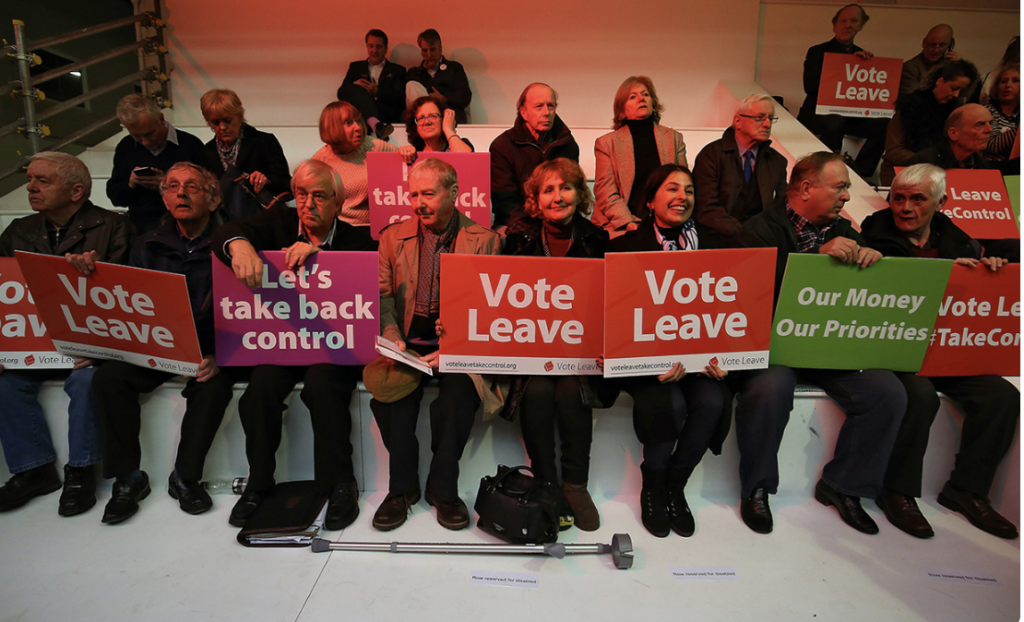
Supporters of the Vote Leave campaign in Manchester, England, on April 15, 2016. (Nigel Roddis/EPA)
A study by Cambridge Econometrics found that, following Brexit, the United Kingdom had 1.8 million fewer jobs than it otherwise would have, while the average Briton in 2023 lost about £2,000 in annual income.
Manufacturing was hit particularly hard. In 2024, the British automotive industry produced 780,000 vehicles, its weakest output since 1956, excluding the pandemic years.
The consequences extended beyond business. Musicians, actors, and other creative professionals lost the right to work freely across European Union countries. What had once been guaranteed by membership in the bloc now has to be renegotiated through complex arrangements with Brussels.
In May 2025, the European Union and the United Kingdom announced a partial reset of relations covering trade, fisheries, energy, and defense. In effect, the two sides began restoring elements of cooperation that had been dismantled after Brexit.
As The Telegraph reported, Brexit did not act as a catalyst for positive transformation but instead deepened existing economic challenges. Britain gained greater control over its domestic policymaking, but at the cost of much of the advantage it once derived from membership in the European single market.
Control over migration
If the economic consequences of Brexit can be partly attributed to the pandemic and global crises, migration policy was a direct outcome of decisions taken by British authorities. Migration was, in fact, the central argument of Brexit supporters: ahead of the referendum, 48 percent of Britons named it the country’s most pressing concern.
Yet the outcome moved in the opposite direction. In 2016, net migration stood at 248,000 people; by 2023, it had risen to 860,000.
After Brexit, the government of Boris Johnson introduced a points-based system that ended the free movement of European Union citizens but simultaneously expanded pathways for labor and student migration from Asia and Africa. Many newcomers were also granted the right to bring their families. Between 2019 and 2023, the number of work visas issued to Asian nationals nearly tripled, while those issued to Africans increased almost tenfold.
According to the sociologist Hein de Haas, Brexit also produced another effect: many Eastern Europeans chose not to return home, instead settling permanently in Britain.
Photo: Alastair Grant / AP / Scanpix / LETA
Facing rising migration levels, the government began tightening rules. From 2025, the residency requirement for permanent status will increase from five to ten years, additional language requirements will be introduced, and certain employers will lose the ability to hire foreign workers.
At the same time, irregular migration rose sharply. In 2018, 299 people crossed the English Channel in small boats; by 2023, the number had exceeded 29,000. In 2024, asylum applications reached their highest level in more than two decades.
Paradoxically, after leaving the European Union, Britain lost the ability to return asylum seekers to the first EU country they entered, a mechanism previously allowed under the Dublin Regulation.
The changes also affected British citizens themselves. In the eight years following the referendum, more than 123,000 UK nationals obtained passports from EU member states. The freedom of movement across Europe, which Britons had enjoyed for nearly half a century, came to an end. Today, they are limited to stays of no more than 90 days within any 180-day period in EU countries.
Control 0ver the United Kingdom
When calling the referendum, David Cameron expected to strengthen his position within the Conservative Party. Instead, Brexit became the source of a prolonged political crisis.
In the ten years since the vote, Britain has had six prime ministers: Cameron, Theresa May, Boris Johnson, Liz Truss, Rishi Sunak, and Keir Starmer. The last of these stepped down on June 22, under pressure from within his own party after disappointing Labour election results.
As the Financial Times columnist Janan Ganesh has noted, British politics has become significantly more fragmented since Brexit. Several major parties now compete for influence, while the traditional two-party system has been notably weakened.
The most prominent political winner of recent years has been Nigel Farage. His party, Reform UK, born out of frustration over the protracted Brexit process, has gradually emerged as one of the country’s leading political forces. Following its success in the 2026 local elections, Farage is now openly positioning himself for victory in the next general election.
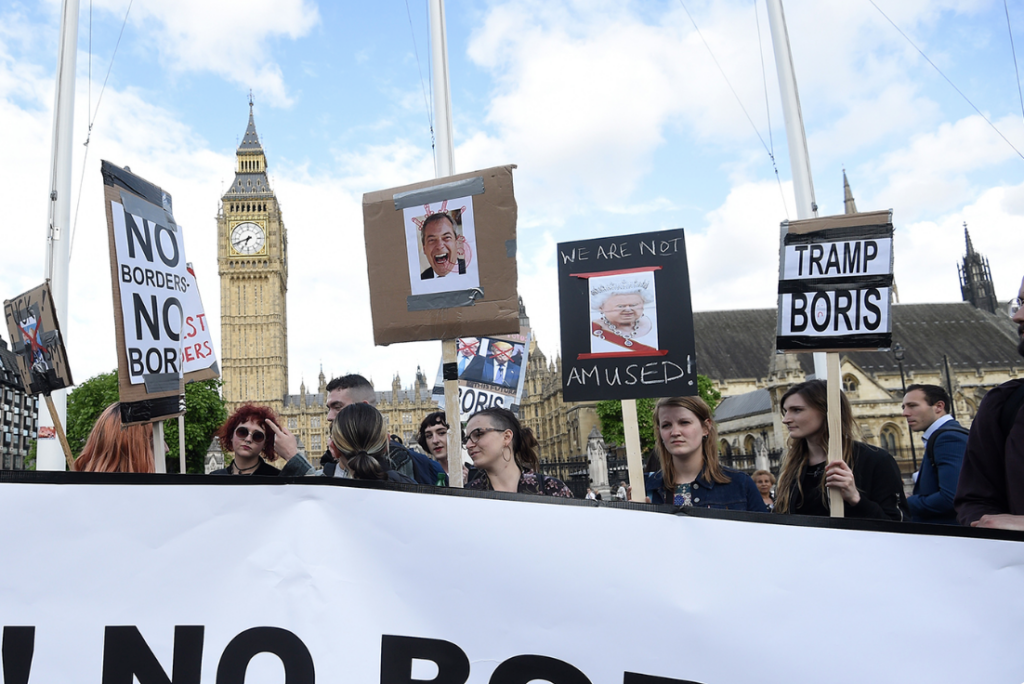
Protesters outside the Houses of Parliament on the day British Prime Minister David Cameron announced his resignation following the defeat in the referendum on EU membership in London, United Kingdom, June 24, 2016. (Facundo Arrizabalaga/EPA)
Brexit has redrawn Britain’s familiar political map. Labour lost part of its traditional electorate in the north of England, while the Conservatives saw support erode in the south and in rural areas. A significant share of these voters shifted toward Reform UK.
At the same time, the main political divide is no longer simply left versus right, but rather attitudes toward Brexit itself. British politics is increasingly defined by those who support and those who oppose leaving the European Union.
Brexit has also intensified centrifugal forces within the United Kingdom. In Scotland, another independence referendum is again under discussion, while in Wales nationalist parties advocating greater autonomy have strengthened their position.
Northern Ireland has also moved, in practical terms, further away from London. To avoid a hard border with Ireland, the region has retained close economic ties with the EU market. As a result, Brexit — which promised to restore control to London — has, in some respects, weakened the central government’s control over its own state.
Control over foreign policy
Brexit supporters promised to turn Britain into an independent “global power,” less dependent on Europe and anchored in a special relationship with the United States. Reality proved more complicated.
As early as 1962, the American diplomat Dean Acheson observed that Britain had lost an empire but had yet to find a new role in the world. After Brexit, that question returned to the center of debate. It became clear that much of Britain’s international appeal had rested on its membership in the European Union.
After Russia’s invasion of Ukraine, London instead became more actively involved in pan-European security initiatives and in support for Kyiv. Rather than distancing itself from Europe, Britain found itself compelled to coordinate more closely with its European allies.
The timing of Brexit proved particularly unfortunate. Just months after the referendum, Donald Trump was elected president of the United States, a figure skeptical of NATO and traditional alliance structures. He later returned to power and intensified pressure on the existing system of international alliances.
At the same time, nationalist and Eurosceptic forces gained strength across Europe. Even before the referendum, many analysts warned that Brexit could inspire populist movements across the continent and weaken European unity.
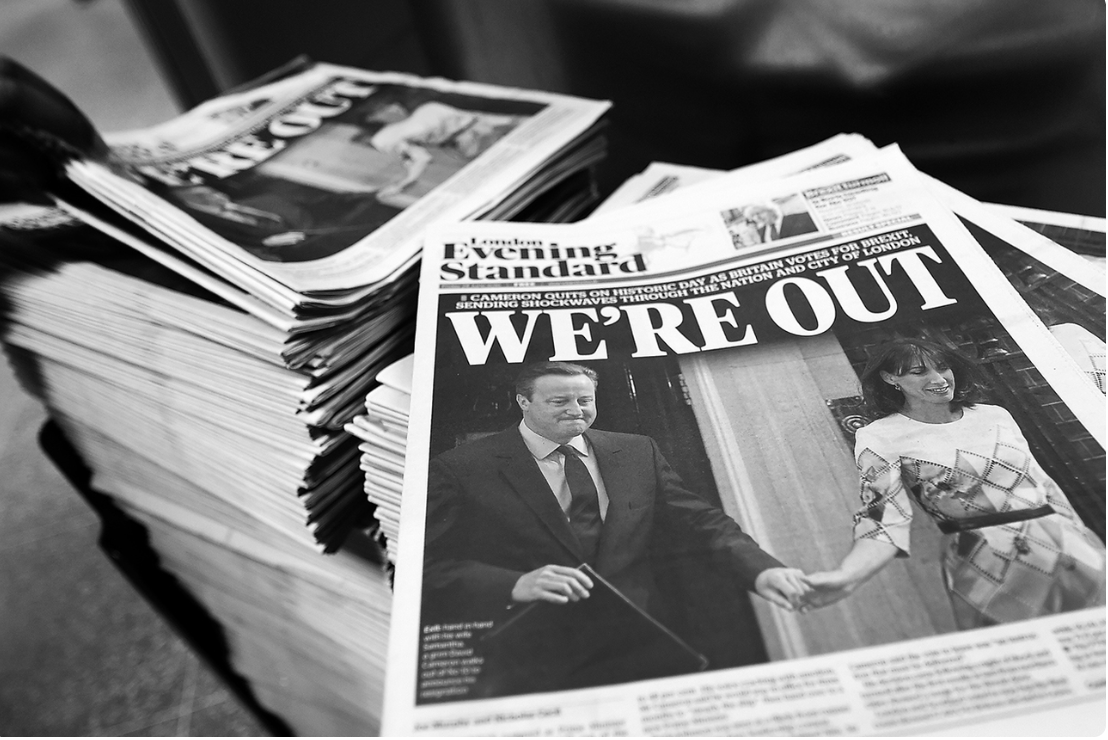
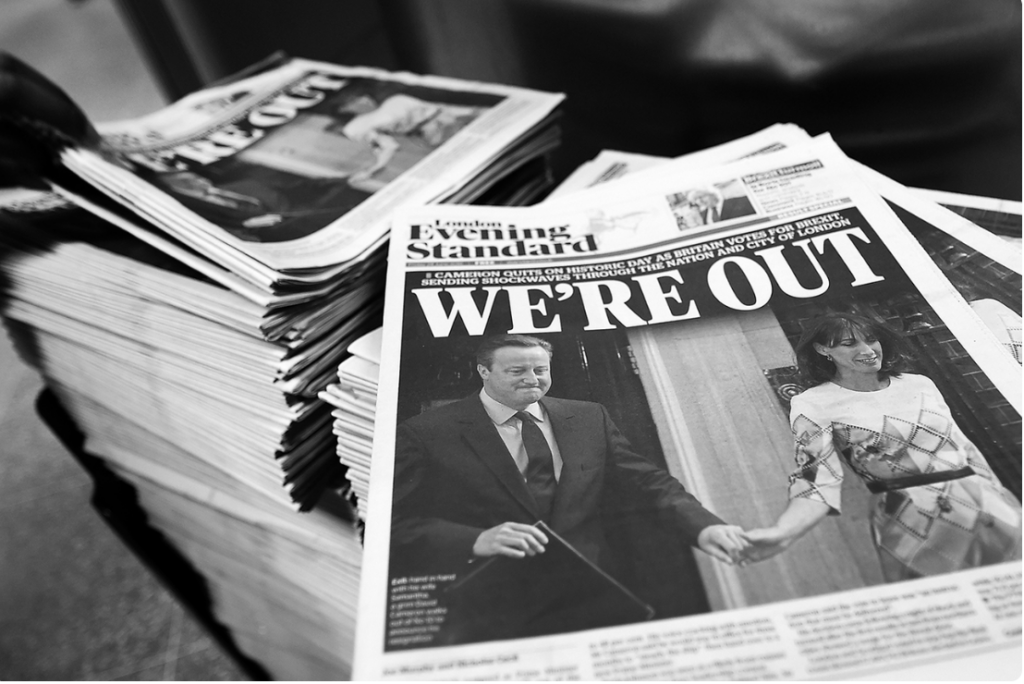
Front-page coverage of Brexit in the Evening Standard newspaper on June 24, 2016, in London, United Kingdom. (Andy Rain/EPA)
Political scientist Stephen Walt has described Brexit as a symptom of deeper changes within Western societies. In his view, for many people questions of national identity, tradition, and cultural values came to outweigh the liberal ideals of globalization and open borders.
Over the past decade, Europe’s political landscape has indeed shifted markedly. Far-right parties are no longer marginal forces but have become significant players in European politics. One example of this trend is the rise of Nigel Farage and his party Reform UK.
No turning back
A decade after the referendum, British attitudes toward the European Union have shifted markedly. According to a YouGov poll from April 2026, 63 percent of Britons say they would vote to rejoin the EU, while 37 percent would oppose it. Nearly half support holding a new referendum, and among younger voters that share rises to a majority.
In addition, 47 percent of respondents believe the government should pursue closer relations with the EU. Only 16 percent favor further distancing.
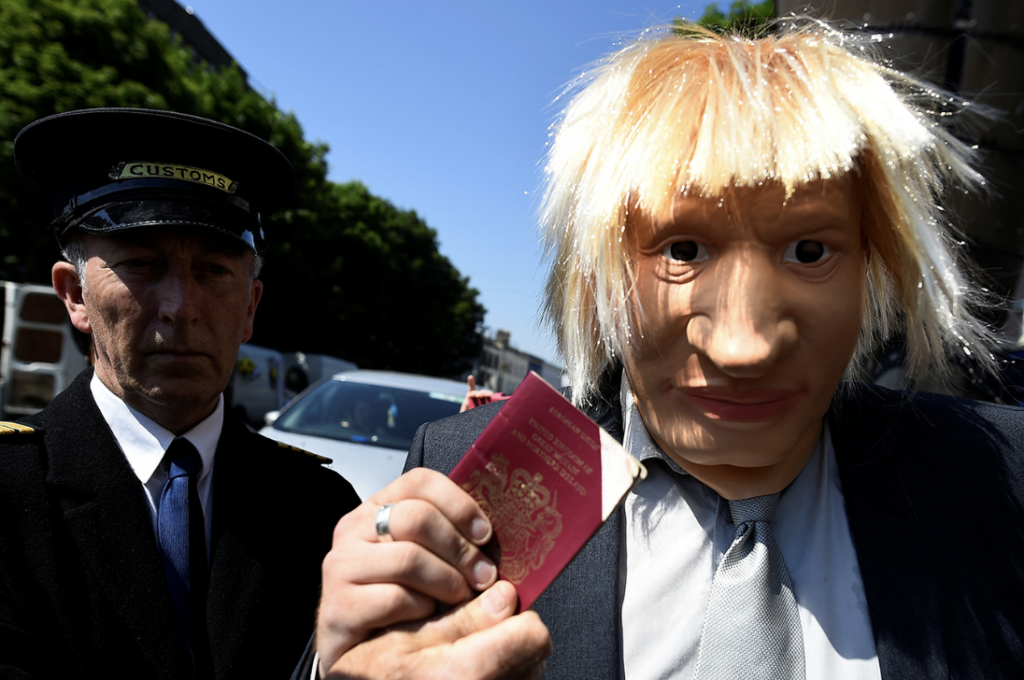
An actor wearing a mask of Boris Johnson and holding a red British passport during the “Borders Against Brexit” protest in the border town of Dundalk, Ireland, on June 28, 2018. (Clodagh Kilcoyne/Reuters/Scanpix/LETA)
These changing attitudes are beginning to influence politicians as well. In June 2026, Spencer Livermore, the Treasury minister, described Britain’s return to the European Union as “inevitable,” arguing that it would serve the country’s economic interests. A number of prominent Labour politicians have likewise begun openly describing Brexit as a serious mistake.
For now, however, full reentry into the European Union remains politically unlikely. Over the past decade, the bloc has changed, and Britain would have to readopt many of the rules and obligations from which it had previously been exempt.
As a result, intermediate options are attracting growing attention, including closer integration with the European Union or some form of associate membership. A framework similar to those now being discussed in connection with Ukraine could, at least in theory, also offer a model for Britain.
Perhaps no symbol captures the story of Brexit better than the British passport. After leaving the European Union, its cover returned to dark blue, replacing the burgundy color shared by EU member states. Brexit supporters hailed the change as the restoration of a national symbol.
It soon emerged, however, that the new passports were being produced by a French company after a British firm with more than two centuries of history lost the contract. The episode became an apt metaphor for Brexit itself: Britain left the European Union, but it could neither fully sever its ties with Europe nor, most likely, ever will.
Descubre Kosovo: geografía, historia, economía y cultura del país más joven de Europa. Datos del país, mapa, bandera e independencia declarada en 2008.
With the latest technology and decades of experience, we will do everything we can to improve your quality of life. SERVICES. We treat patients with general ocular problems or those desiring a screening evaluation for cataracts, glaucoma and vision corrective surgery. Routine ophthalmic evaluations are provided.
– Verwandle dein Leben in einen Film und entdecke mit Reels auf Instagram unterhaltsame Kurzvideos. – Personalisiere deine Beiträge mit exklusiven Vorlagen, Musik, Stickern und Filtern.