
Accommodations at Ottawa Marriott Hotel have comfortable beds, workstations & more. Find the perfect room for your stay.
Day: June 28, 2026

The Cryptocurrency Case

Georgia is in the throes of a crypto uproar. British school student Alexander Browder exposed an entire network of cryptocurrency platforms allegedly used by Russia to circumvent sanctions. Georgian crypto exchanges, it turned out, played no small part in the scheme. To make matters worse for Tbilisi, the meticulous teenager is the son of William Browder — the financier behind the Magnitsky Act. Russia swiftly imposed sanctions on the boy, accusing him of tarnishing the country’s image on the international stage.
Meanwhile, Georgia is trying to rehabilitate its crypto reputation in the eyes of the West while tightening control over its domestic crypto market. Alongside a successful joint operation with European law enforcement agencies that dismantled a cybercrime network based in Adjara, the authorities have also set out to crack down on the freewheeling crypto scene in Svaneti. Local residents swear before icons that they have given up mining — yet many continue nonetheless.
Iya Barateli pieced together the fragments of this crypto detective story.
A report by Novaya Gazeta Europe.
New Sanctions for Georgia From London and Brussels
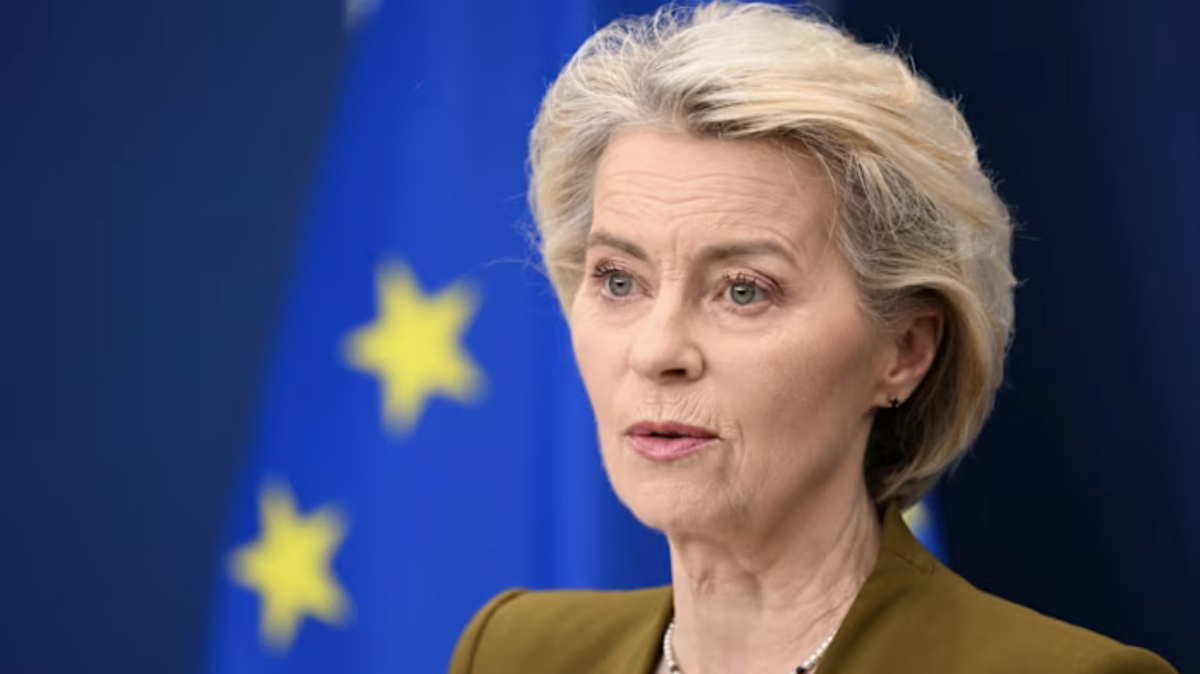
In the coming days, the European Union is expected to include several Georgian cryptocurrency platforms in its 21st package of sanctions against Russia. The move was first reported by the Financial Times, which said that European officials suspect a number of crypto companies registered in Georgia of helping Moscow circumvent Western sanctions.
Earlier, in late May, the British government imposed sweeping sanctions on cryptocurrency platforms linked to the Russian payment network A7, which, according to the Foreign Office, had been used to support Russia’s wartime economy.
More than $90 billion passed through the network last year alone — an amount equivalent to roughly half of Russia’s annual military spending.
London Imposes Sanctions on 18 Financial Platforms Across Multiple Jurisdictions
London has imposed sanctions on 18 platforms — including cryptocurrency exchanges, banks, and financial networks operating in Russia, the United Kingdom, Georgia, Kyrgyzstan, the United Arab Emirates, Panama, and El Salvador — which, according to a statement from the UK Foreign Office, were used as “shadow financial systems” to bypass sanctions on Russia.
The assets of the designated companies have been frozen, and British entities have been instructed to cease all cooperation with them.
Three Georgian crypto exchanges were included in the sanctions list: Arvix LLC, Rapira Group LLC, and Aifory LLC.
“We are also taking action against three Georgian companies that operate Russia-focused exchanges and are attempting to circumvent sanctions,” the UK government said in its statement.
The exposure of the Russian shadow crypto laundering network was aided by a 17-year-old British school student, Alexander Browder. He is the son of prominent British financier William Browder, the main initiator of the Magnitsky Act, adopted by the United States in 2012, which introduced visa and financial restrictions on senior Russian officials implicated in human rights violations.
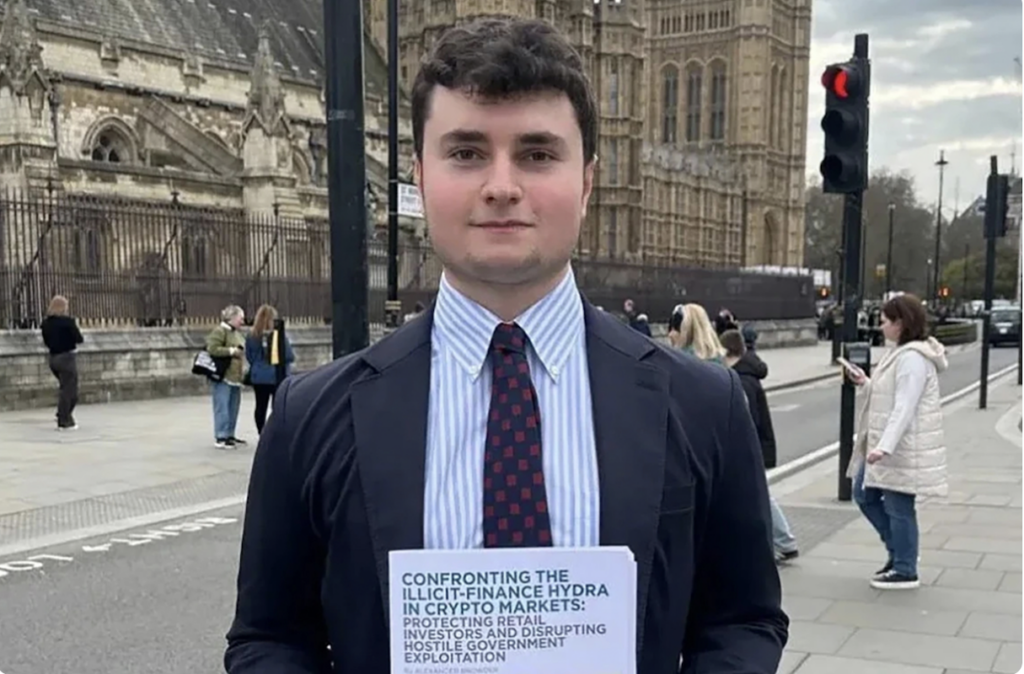
Earlier in March, Alexander Browder published a report for the Henry Jackson Society think tank outlining illicit schemes for moving funds through cryptocurrency networks. In it, he argued that a ruble-backed stablecoin known as A7A5 represents “one of the most serious challenges facing the West” in efforts to combat sanctions-related money laundering.
According to Browder, several countries — including Russia, Iran, and North Korea — have laundered approximately $350 billion through such channels.
After it emerged that the British government had consulted Browder, Russia’s Foreign Ministry announced retaliatory measures. On June 2, officials in Moscow said they were banning Alexander Browder and four other British citizens from entering Russia, citing “defamatory claims and false information.”
“Any attempts by British political elites to incite Russophobia, deliberately damage our country’s international image, and expand anti-Russian sanctions will be met with resolute countermeasures,” Russia’s Foreign Ministry said.
The British school student, however, signaled in posts on X that the travel ban imposed by Russia does not concern him.
“I am proud to be the first school student in the world placed on a sanctions list by an authoritarian regime for exposing corruption,” he wrote. “I identified their Achilles’ heel. Without A7A5, they would not be able to finance their aggressive war.”
-
What is known about the Georgian companies that have been sanctioned?

According to JAM News, the Rapira group of companies is most frequently cited in international analytical reports. Founded in November 2022, the company is currently in liquidation. Its owner and liquidator is listed as British citizen Ilya Akhaev.
The blockchain analytics firm Elliptic states that Rapira was registered in Georgia but also maintained an office in Moscow and actively cooperated with Russia’s cryptocurrency market. The company provided services converting rubles into cryptocurrency, enabling Russian companies and individuals to bypass international banking restrictions.
Rapira is reported to have conducted direct transactions exceeding $72 million with Grinex, a platform previously linked by Western authorities to sanctions-evasion schemes. In late 2025, Russian law enforcement agencies also reportedly searched Rapira’s Moscow office in connection with suspected capital outflows.
Aifory was registered in Georgia in June 2023. According to the business registry, its director and sole owner is Georgian citizen Mikheil Gevorkian. The company operated in Moscow, Dubai, and Turkey, offering cash-to-cryptocurrency conversion services as well as USDT-linked virtual cards that could be used on Western online platforms restricted in Russia.
Reports indicate that Aifory also facilitated intermediary payment services between Russia and other countries, with some transactions linked to Iranian cryptocurrency exchanges.
Arvix was registered in Georgia in October 2023. According to business registry data, its director and sole owner is Georgian citizen Tamaz Garaev. UK authorities say the company was part of the same network allegedly attempting to weaken financial restrictions imposed on Russia.
Reaction to the Sanctions: Fast, but Still Late
Already the day after the United Kingdom announced sanctions, officials in Tbilisi signaled that they were not only unsurprised — they had, in fact, already taken action.
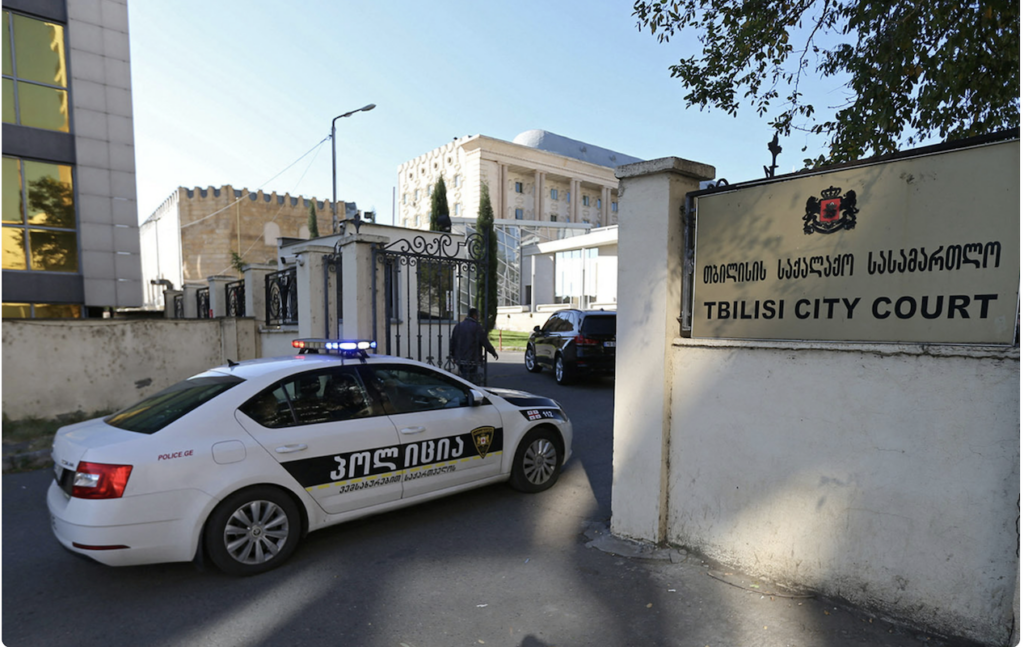
Georgia’s Investigative Service of the Ministry of Finance issued an official statement saying that the companies Aifory, Arvix, and Rapira Group had already been under investigation. The inquiry concluded that Aifory and Arvix had been registered through nominee owners in exchange for payment, and that neither company maintained offices or assets in Georgia.
As for Rapira Group, investigators said the company had been registered by a British citizen via power of attorney, but no financial transactions were recorded on its accounts, and it likewise had no offices or assets in Georgia. According to the findings, Rapira served exclusively Russian clients through the website rapira.net, using a Russian registrar.
The Ministry of Finance reported that more than a month before the sanctions were introduced — on April 28, 2026 — a court decision had already been issued in the case. According to the ruling, two company executives were fined 30,000 lari (about $10,000), while the alleged organizer of the fraudulent scheme, a man identified as Davit Jinchardze, was sentenced to 9.5 years in prison.
In its statement, the Ministry emphasized that Georgia continues to cooperate with international partners on cases related to sanctions evasion. It also said that illicit transactions had been detected by the National Bank of Georgia itself — not by a British teenager — and that the British side had been informed accordingly.
Nevertheless, the opposition has raised a number of questions, primarily over why the investigative authorities did not publicly disclose the case earlier, given its significance. Parliament Speaker Shalva Papuashvili appeared caught off guard by journalists’ inquiries. “I do not know exactly what communication took place,” he said evasively when asked directly whether the National Bank of Georgia had provided London with information about money laundering in support of Russia.
New Police Operation
Meanwhile, some level of communication with European counterparts clearly took place, and not all credit is likely to go to the British teenage crypto whistleblower.
On June 11, Georgia’s Prosecutor General’s Office, Interior Ministry, and Ministry of Finance reported their participation in a large-scale international operation aimed at dismantling a network that has been operating since 2022 to launder illicit funds through cryptocurrency. The volume of laundered assets is estimated at several hundred million dollars.
The case centers on a platform known as AudiA6 — a so-called “crypto mixer” that, in exchange for high fees, obscures the trail of suspicious cryptocurrency transactions.
It is believed that as much as $9.5 million was laundered through AudiA6 in April 2026 — funds allegedly stolen from more than 50 users via a fraudulent application impersonating Ledger Live.
The software in question is designed for managing cryptocurrency wallets, but was reportedly distributed by scammers through Apple’s official app marketplace after bypassing its verification systems.
In addition, the criminal group is said to operate an online forum known as Dark2Web, where cybercriminals from different countries advertise and exchange illicit services.
Coordination of the operation was led by EU agencies Europol and Eurojust. Alongside Georgian investigators, the effort involved officers from the United States Secret Service, Poland’s Central Cybercrime Bureau, and the District Prosecutor’s Office in Łódź.
According to official data, around 100 investigators and operational officers conducted searches across dozens of locations in Georgia, including residential homes, offices, and vehicles. Two foreign nationals were detained in Adjara, though their citizenship has not been disclosed. Electronic devices and documentation were seized.
Authorities also froze assets believed to belong to members of the network, acquired in an effort to launder proceeds of crime. These include 173 vehicles, high-value real estate, and funds held in bank accounts.
Crypto from the Svaneti Mountains
In Georgia, income from cryptocurrency sales is not taxed, and operations with digital assets are fully legal. Large-scale industrial mining is concentrated not only in private facilities but also in free industrial zones, primarily in Gldani (a district of Tbilisi) and Kutaisi.
Residents of these zones operate under a special tax regime: for permitted activities within the zone, they are exempt from corporate profit tax, VAT on intra-zone transactions, property tax, and import duties. The Tbilisi Free Industrial Zone also highlights as an advantage the provision of electricity without VAT.
The Gldani hub developed around the Bitfury project. In 2015, the company received 18 hectares of land in Gldani at a symbolic price, and the area was granted free industrial zone status. By 2016, a 40-megawatt data center had been built there.
The Bitfury project has been linked in Georgia’s political discourse to the circle of the country’s informal power broker, Bidzina Ivanishvili. It is known that the Georgian Co-Investment Fund, established by Ivanishvili, provided Bitfury with a $10 million loan in 2014 for its first data center in Gori. However, Forbes Georgia later reported that the fund does not hold equity stakes in any of Bitfury’s data centers.
Against this relatively stable crypto backdrop, authorities have now decided to address, for the first time in years, the surging scale of mining activity in Svaneti.
Residents of this small but strikingly scenic high-mountain region of Georgia have, for more than two decades, officially benefited from electricity subsidies — effectively paying nothing for power. This arrangement has been attributed both to widespread poverty among mountain communities and to the authorities’ reluctance to strain relations with locals over the installation of electricity meters.
The subsidies were originally intended to support the development of tourism in Svaneti. Instead, many local residents found an even more profitable use for free electricity. It is estimated that today around 10,000 crypto mining devices operate in the region.
Thanks to liberal regulations, Georgia now ranks first in the South Caucasus and among the top ten countries globally in terms of ease of access to cryptocurrency mining. However, the widespread abuse of mining privileges in Svaneti has begun to take a toll on local tourism as well as the country’s broader economy.
According to experts, under normal conditions electricity consumption in Svaneti should not exceed 7–10 million kWh per year. In reality, however, usage is many times higher.
Data from Energo-Pro Georgia shows that in 2020 the municipality consumed 91.1 million kWh of electricity, rising to 132.9 million kWh in 2025.
The power grid is unable to withstand such overload, making blackouts a routine problem in the Svaneti mountains.
Four years ago, when the situation became critical, Mestia — the administrative center of Svaneti — witnessed one of the most unusual protests in the history of cryptocurrency. Hundreds of Svan residents gathered in the Church of St. George to swear on an icon, in accordance with local custom, that they would shut down mining rigs.
While this ritual in earlier times was known to halt even cycles of blood feuds, it proved ineffective against crypto mining. The activity in the mountains of Svaneti has continued to thrive.
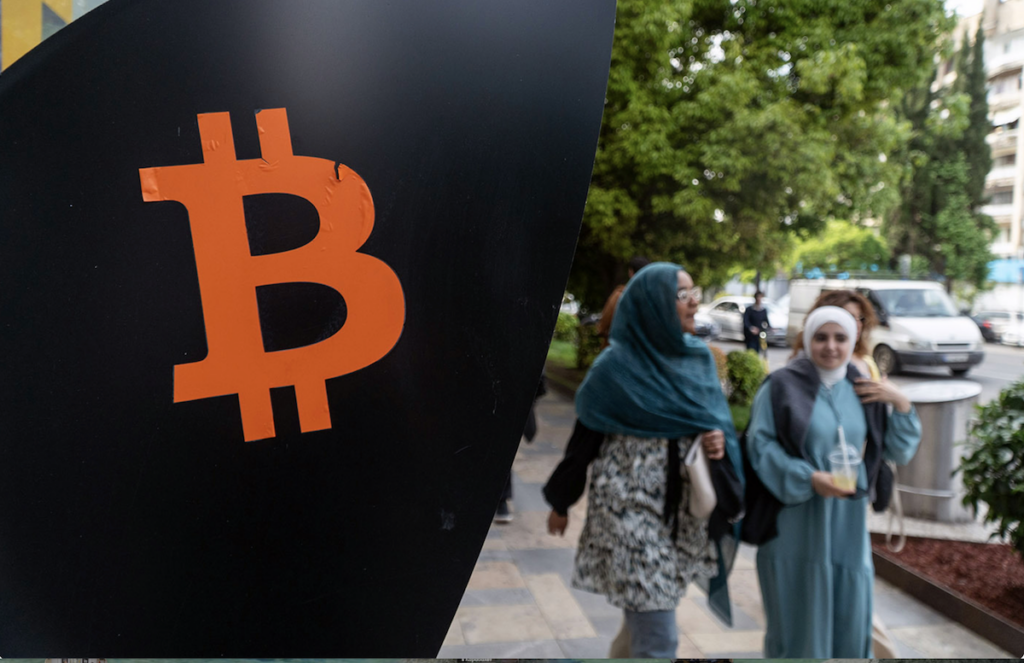
However, in recent days, the government of Georgian Dream has abruptly sounded the alarm, announcing that miners in Svaneti are effectively draining the energy system of between 20 and 25 million lari (about $8 million) annually.
In response, authorities declared war on illegal mining, sending police special forces to Mestia to confiscate equipment from local residents.
The opposition, however, has expressed skepticism about the government’s determination, demanding that officials disclose the names and identities of those allegedly protecting Svaneti’s crypto farms. Critics argue that the raids are unlikely to be effective, pointing out that mining activity exists in other regions as well. They also view the initiative as a symptom of internal clan struggles within Georgian Dream rather than a genuine regulatory crackdown.
exchange

Pakistan’s security forces carried out an intelligence-based ground operation along the Pakistan-Afghanistan border on Sunday, followed by “calibrated strikes” on militant hideouts, killing 29 fighters, the Associated Press reported on Monday, citing officials, News.az reports, citing Reuters.
**
Information Minister Attaullah Tarar said on social media platform X the action was launched in response to multiple militant attacks across the country, the report said.
The post Pakistan forces kill 29 militants in border operation appeared first on azeritimes.com.

Under the agreement, Firmus will purchase Nvidia AI infrastructure and offer Nvidia-powered cloud services to AI-native customers and other businesses. The deal is expected to generate product revenue for Nvidia, while the U.S. chipmaker will also receive a share of the cloud services revenue, News.az reports.
***
The partnership includes the deployment of 170,000 graphics processing units (GPUs) between the first quarter of 2027 and early 2028. The AI infrastructure will be based in Batam, Indonesia.
Firmus said customer commitments indicate the agreement could generate up to $30 billion in revenue during its first six years.
The company said the partnership is designed to make advanced AI computing infrastructure more accessible to startups and smaller AI developers, allowing them to compete with larger technology companies.
“We have worked to figure out how to close the gap between the cost benefits that the large guys have access to… This is actually a really material way to level the playing field a little bit to give the next a chance to compete with the big guys,” Firmus co-Chief Executive Tim Rosenfield told Reuters.
Nvidia is also an existing investor in Firmus, having participated in the Australian company’s previous fundraising rounds.
Firmus said in April it had raised $1.35 billion over the previous six months, valuing the company at $5.5 billion after the funding round. According to people familiar with the matter, the company has also appointed investment banks to prepare for a potential initial public offering (IPO).
The post Australia’s Firmus Technologies strikes AI access deal with Nvidia appeared first on azeritimes.com.
Speaking at the United Russia party congress on Sunday, Putin said Russia is living through a pivotal period and remains prepared to defend its national interests, News.az reports.
***
“Russia is standing firm on its feet… and is ready to fight for our future, way of living, sovereign ideology, foundations, and living principles,” Putin said.
The Russian leader argued that Western countries had failed to inflict a strategic defeat on Russia or destabilize the country’s political situation.
“They have been unable to inflict a strategic defeat on us or win a victory on the battlefield. Nor are they succeeding in destabilizing the political situation,” he stated.
Putin also accused the Ukrainian government of escalating attacks against civilians and civilian infrastructure, claiming such actions were the result of setbacks on the battlefield.
“The regime is retreating along the entire line of engagement, and therefore it has resorted to openly terrorist activities,” he said.
The Russian president further criticized Western nations for imposing additional sanctions on Moscow while, according to him, ignoring Ukrainian attacks.
Addressing Russia’s domestic agenda, Putin pledged that the country’s security and territorial integrity would be protected and said all strategically important development programs would move forward despite current challenges.
“We will certainly ensure the security of our country and our citizens as well as the inviolability of our borders in a longer historical perspective,” he said.
Putin also vowed to modernize the Russian economy through technological development, investment in infrastructure, support for domestic industries and the creation of high-paying jobs.
Looking ahead to Russia’s parliamentary elections in September, Putin said the vote would be held as scheduled and in accordance with the law. He added that the ruling United Russia party would nominate more young candidates and described participants in Russia’s military campaign in Ukraine as the country’s “true elite,” calling for greater opportunities for them to serve in government, politics and the economy after their military service.
The post Putin reveals Russia’s long-term strategic plans appeared first on azeritimes.com.
According to the military, the operation targeted individuals who were considered an immediate threat to Israeli soldiers operating near the frontier, News.az reports.
***
In a brief statement, the IDF said it would continue carrying out military operations to eliminate any threats against Israeli civilians and its armed forces. The military did not identify those killed or specify whether they belonged to a particular armed group. Israeli officials have consistently argued that proactive operations are necessary to prevent attacks before they can be launched against Israeli territory or military positions.
The latest operation reflects Israel’s continuing strategy of conducting security missions beyond its internationally recognized borders whenever military commanders believe potential threats are emerging.
Why is Israel operating inside southern Syria?
Israel says its military presence in southern Syria is intended to prevent hostile groups from establishing positions close to its northern border. Israeli officials have repeatedly stated that instability inside Syria could allow armed organizations to expand their activities, increasing the risk of attacks against Israel.
Following major political and military developments inside Syria in December 2024, Israeli forces advanced into parts of the United Nations-monitored buffer zone. Israeli leaders described the deployment as a temporary security measure designed to address rapidly changing conditions on the ground.
Military officials have indicated that Israeli forces will remain in the area as long as security assessments determine that threats continue to exist. The presence is presented by Israel as part of a defensive strategy rather than an attempt to permanently expand territory.
What changed in December 2024?
The security landscape shifted dramatically in December 2024 when Israeli troops entered the buffer zone separating Israeli and Syrian forces near the occupied Golan Heights. The move followed significant political changes inside Syria that raised concerns in Israel about the future stability of the border region.
For decades, the area had been supervised by the United Nations Disengagement Observer Force (UNDOF), which was established under the 1973 Disengagement Agreement between Israel and Syria. The force has monitored the ceasefire line and helped reduce the risk of direct military confrontation between the two countries.
Israel argued that changing conditions required immediate military action to prevent security gaps that could be exploited by armed groups operating in southern Syria.
Why has the deployment been controversial?
The deployment has drawn widespread international attention because many governments and international organizations argue that moving troops into the buffer zone violates the ceasefire arrangements established after the 1973 Arab-Israeli War.
The United Nations has repeatedly called for respect for the existing agreements governing the area and urged all parties to avoid actions that could increase regional tensions. International officials have warned that unilateral military deployments could undermine decades of relative stability along one of the Middle East’s most sensitive frontiers.
Israel rejects those criticisms, maintaining that the deployment is based solely on security considerations and is intended to prevent future attacks rather than alter permanent borders.
How much additional territory is under Israeli military control?
According to assessments by the United Nations, Israel’s advance into southern Syria resulted in approximately 235 square kilometers, or about 90 square miles, of additional Syrian territory coming under Israeli military control.
The territory is located adjacent to the occupied Golan Heights and includes areas that had previously formed part of the demilitarized buffer zone monitored by the United Nations. The expansion has become a key issue in diplomatic discussions over the legality of Israel’s military presence and the future of the ceasefire arrangements.
Although Israel describes the deployment as temporary, the continued military presence has fueled international debate about the long-term status of the territory.
Why is southern Syria strategically important?
Southern Syria occupies a highly sensitive location because it borders Israel and Jordan while providing access to key military routes across the region. Control of elevated terrain and observation points gives military forces important advantages for surveillance and early warning.
For Israel, preventing hostile groups from establishing infrastructure near its border is considered a national security priority. For Syria, the continued presence of Israeli troops inside its territory is viewed as a violation of sovereignty.
The region has long served as one of the Middle East’s most closely monitored military frontiers, making any change in troop deployments significant for regional security.
Could the situation lead to further escalation?
The possibility of further escalation remains a major concern. Israeli forces continue to conduct operations whenever intelligence indicates potential security threats, while Syria continues to oppose Israel’s military presence inside its territory.
The United Nations has repeatedly urged restraint and emphasized the importance of maintaining the ceasefire mechanisms that have helped prevent broader conflict for decades. However, continued military operations, combined with unresolved political disputes, increase the risk of additional confrontations.
Analysts say that unless a broader political or security arrangement is reached, southern Syria is likely to remain an area of periodic military operations and heightened regional tensions.
The post Why is Israel operating inside Syria? appeared first on azeritimes.com.
Bungee dock lines offer a practical, quick-docking solution that protects your boat from wave shock and dock damage. This guide helps American boaters choose lines that absorb impact, simplify tie-ups, and fit various watercraft. The top picks below are best for different boat sizes and use cases, from jet skis to pontoons.
Categories