
Kostenlose Email, Nachrichten & Wetter, Finanzen , Sport und Star-News auf AOL.de
Day: June 27, 2026
Categories
AOL.de

Speaking at the European Parliament, Sachs said U.S.-led wars were not isolated events but part of a broader foreign policy pattern that, in his view, began after the collapse of the Soviet Union, News.az reports.
***
“They were wars that the United States led and caused. And this has been true for more than 40 years now — more than 30 years, I should say, to be more precise,” Sachs said.
According to him, the turning point came in 1990-1991, when the United States concluded that the post-Cold War international order gave it unmatched authority in global affairs.
“What happened, especially in 1990-1991 and then with the end of the Soviet Union, was that the United States came to the view that it now ran the world, and that it did not have to heed anybody’s views, red lines, concerns, security perspectives, international obligations or any UN framework,” he said.
Sachs said he was speaking bluntly because he wanted European policymakers to understand what he described as the roots of the current geopolitical crisis.
“I am sorry to put it so plainly, but I do want you to understand,” he added.
The economist also recalled his efforts in 1991 to secure Western financial support for Soviet leader Mikhail Gorbachev during the final period of the Soviet Union. Sachs described Gorbachev as “the greatest statesman of our modern time” and said Washington rejected the proposal.
“In 1991, I tried very hard to secure help for Gorbachev, whom I consider the greatest statesman of our modern time,” Sachs said.
He added that he had later read archived records of a U.S. National Security Council discussion on his proposal, claiming that officials dismissed the idea.
“I recently read the archived memo of the National Security Council discussion of my proposal. They completely dismissed it and laughed it off the table when I said that the United States should help the Soviet Union with financial stabilization and reforms,” Sachs said.
His remarks add to Sachs’ broader criticism of U.S. foreign policy, particularly Washington’s role in shaping the post-Cold War security architecture and its approach to Russia.
The post Jeffrey Sachs: After the Soviet collapse, Washington decided it could run the world – VIDEO appeared first on azeritimes.com.
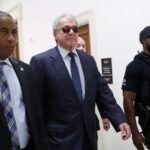
The House Oversight Committee is examining Epstein’s relationships with influential political, financial and business figures, as well as allegations that confidentiality agreements may have been used to conceal misconduct or silence women, News.az reports.
***
Black, who voluntarily appeared before the committee, denied any wrongdoing and insisted he was unaware of Epstein’s criminal conduct until 2019. His departure prompted lawmakers to issue subpoenas seeking both testimony under oath and documents related to any NDAs.
Why is Congress questioning Leon Black?
The House Oversight Committee is investigating Jeffrey Epstein’s network of wealthy and influential associates to determine whether financial arrangements, legal agreements or other mechanisms helped conceal abuse or protect individuals connected to the disgraced financier.
Leon Black attracted congressional attention because of his long professional relationship with Epstein and the substantial payments he made to him over many years.
Lawmakers are attempting to determine whether Epstein played any role in negotiating, drafting or facilitating confidentiality agreements involving women connected to Black or whether any such agreements could provide additional insight into Epstein’s wider network.
Committee members stress that the investigation seeks information rather than presuming criminal liability.
Why did Leon Black leave the hearing?
According to committee leaders, Black ended his voluntary testimony after refusing to answer questions concerning non-disclosure agreements.
House Oversight Committee Chairman James Comer said investigators specifically wanted information about whether Epstein had any involvement in drafting NDAs, arranging financial settlements or advising on agreements intended to keep certain relationships confidential.
Rather than continue answering questions, Black’s legal team concluded the interview and he departed the hearing.
Following his exit, the committee issued subpoenas requiring him to provide relevant documents and return for sworn testimony before investigators.
What are non-disclosure agreements and why do they matter?
A non-disclosure agreement, commonly known as an NDA, is a legally binding contract that restricts one or more parties from publicly disclosing certain information.
NDAs are widely used in business transactions, employment contracts and legal settlements. However, in recent years they have received increased public scrutiny because some agreements have allegedly been used to discourage victims from publicly discussing sexual misconduct or abuse.
Congress is examining whether confidentiality agreements connected to individuals in Epstein’s circle may have prevented information from becoming public sooner.
Investigators are particularly interested in determining whether Epstein himself participated in arranging or influencing such agreements.
What was Leon Black’s relationship with Jeffrey Epstein?
Leon Black, co-founder of Apollo Global Management, maintained a professional relationship with Epstein for years after Epstein’s earlier criminal conviction.
Black has acknowledged paying Epstein approximately $158 million for tax planning, estate planning and wealth management advice.
The size of those payments previously attracted scrutiny from a Senate investigation examining whether the compensation reflected legitimate professional services or included payments for other undisclosed purposes.
Black has consistently maintained that every payment related to legitimate financial advice, citing an independent internal review commissioned by Apollo that reached the same conclusion.
What does Leon Black say about the allegations?
Black has repeatedly denied any criminal wrongdoing or involvement in Epstein’s sexual abuse.
In his prepared statement to congressional investigators, he said he believed Epstein had deceived him about his true activities and insisted he learned of the financier’s trafficking crimes only after Epstein’s arrest in 2019.
Black also denied ever abusing women, engaging in sex trafficking, paying Epstein for access to women or being blackmailed by him.
His attorneys argue that political considerations, rather than evidence of misconduct, are driving congressional interest in his testimony.
Why are investigators interested in Leon Black’s NDAs?
Part of the committee’s inquiry focuses on allegations made in previous civil litigation involving former Russian model Guzel Ganieva.
In a lawsuit that was later dismissed, Ganieva alleged that Black required her to sign a confidentiality agreement designed to prevent her from speaking publicly about their relationship.
Court records and documents released by the US Department of Justice also included communications suggesting Epstein offered advice regarding how Black should respond to disputes involving Ganieva.
Black’s legal team strongly disputes the allegations, describing them as false and emphasizing that the lawsuit was dismissed.
The dismissal itself was based in part on the existence of the signed agreement and prior financial settlements referenced by the court.
Why did Leon Black leave Apollo?
Leon Black stepped down as chief executive of Apollo Global Management in 2021 after intense scrutiny over his financial relationship with Epstein.
Although an independent law firm’s review concluded that Epstein had provided legitimate tax-related advice and found no evidence that Black participated in Epstein’s criminal activities, the controversy generated substantial public criticism and reputational damage.
His departure reflected growing pressure on major corporations to distance themselves from executives connected to Epstein, even when no criminal charges were brought against those individuals.
What happens next?
The House Oversight Committee has issued subpoenas requiring Leon Black to produce documents related to any non-disclosure agreements and to provide additional testimony under oath.
If Black refuses to comply, lawmakers could consider further legal steps available to Congress for enforcing subpoenas.
More broadly, the investigation remains part of a wider congressional effort to examine Jeffrey Epstein’s relationships with influential figures, determine whether powerful individuals benefited from secrecy arrangements and assess whether institutional failures allowed Epstein’s abuse to continue for years.
While Black denies any wrongdoing, the congressional inquiry into Epstein’s network is expected to continue with additional witnesses and document requests in the coming months.
The post Why did billionaire Leon Black walk out of the Epstein hearing? appeared first on azeritimes.com.

Speaking at the European Parliament, Sachs said the Western strategy was based on the belief that Russia would ultimately collapse under sanctions and military support for Ukraine, News.az reports.
***
“The project failed,” Sachs said.
According to him, US policymakers assumed Russia would not resist prolonged pressure, citing the geopolitical thinking of former US national security adviser Zbigniew Brzezinski.
“The Americans thought: we have the upper hand, we are going to win because we are going to bluff them. They are not really going to fight. They are not really going to mobilize,” Sachs said.
He argued that measures including Russia’s exclusion from the SWIFT international payment system, sweeping economic sanctions and the supply of advanced Western weapons to Ukraine—including HIMARS rocket systems, ATACMS missiles and F-16 fighter jets—were all expected to force Russia into defeat.
“Cutting Russia out of SWIFT was supposed to do them in. Economic sanctions were supposed to do them in. HIMARS, ATACMS, F-16s — all of this was supposed to do them in,” he said.
Sachs also criticized successive US administrations, saying he has long observed what he considers unrealistic foreign policy assumptions.
“Honestly, I have been listening to this for 70 years. With some understanding, I would say, for about 56 years. They speak nonsense every day — my country, my government. This is completely familiar to me,” he stated.
Reflecting on his previous advisory role in Ukraine, Sachs said he urged Ukrainian officials to pursue neutrality rather than rely on US support.
“I begged the Ukrainians. I had a track record with Ukraine; I advised the Ukrainians. I am not anti-Ukrainian. I am completely pro-Ukrainian,” he said.
“I told them: save your lives, save your sovereignty, save your territory — be neutral. Do not listen to the Americans.”
Sachs concluded by recalling a quotation commonly attributed to former US Secretary of State Henry Kissinger.
“I repeated to them the famous adage of Henry Kissinger: to be an enemy of the United States is dangerous, but to be its friend is fatal,” he said.
The post Jeffrey Sachs at the EP: To be an enemy of the US is dangerous, but to be its friend is fatal – VIDEO appeared first on azeritimes.com.

The Amal movement, which supports Hezbollah, said in a statement on Saturday evening that it rejected direct negotiations with Israel. Amal said that it “entrenches realities in favor of the enemy at the expense of the national interest”, News.Az reports, citing CNN.
***
The Amal movement said the agreement “carries political and sovereign risks and cannot be accepted.”
After the signing of the agreement on Friday, Hassan Fadallah, a Hezbollah member of the Lebanese parliament, rejected the agreement, calling on the country to “retract these negotiations and all the decisions they have made against their people.”
The post Hezbollah’s main political ally in Lebanon rejects agreement with Israel appeared first on azeritimes.com.

The two sites represent relatively small areas in southern Lebanon along the so-called “yellow line,” which delineates Israeli-occupied territory. In a statement on Friday evening, Netanyahu said one of the areas would be north of the line, while the second would be south of it, News.Az reports, citing CNN.
***
Both areas in the vicinity of the Lebanese city of Nabatiyeh, which has been the focus of fighting recently.
Netanyahu called the deal signed with Lebanon under the auspices of the Trump administration a “tremendous achievement” that forced Iran out of the picture.
“We are breaking the Iranian axis – the axis of Iranian terror – but we are also breaking Iran’s political axis,” he said. Netanyahu also asserted that Israel will continue to occupy a broader security zone in southern Lebanon.
But even as Netanyahu celebrated the agreement, his far-right coalition partner, Itamar Ben Gvir, called it a “big mistake.” In a statement on Saturday evening, he said he had requested a cabinet vote on the agreement. “The State of Lebanon will not disarm Hezbollah, members of the Lebanese government are Hezbollah ministers, and Lebanon cannot be trusted to take Hezbollah’s weapons,” he said.
The post A day after agreement with Lebanon, Netanyahu shows areas of Israeli withdrawal appeared first on azeritimes.com.