
Ubuntu 14.04 download page Ask Question Asked 11 years, 7 months ago Modified 6 years, 9 months ago
Day: June 26, 2026
Burkina Faso is breaking off diplomatic relations with France over its alleged failure to abide by the principles of mutual respect and non-interference, communications minister Gilbert Ouedraogo said on state television on Friday, News.az reports, citing Reuters.
***
The post Burkina Faso breaks off diplomatic relations with France appeared first on azeritimes.com.
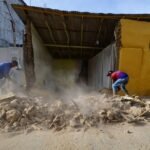
Preliminary assessments suggest the twin earthquakes may inflict billions of dollars in economic losses, affecting infrastructure, energy production, housing, healthcare, transportation and public finances, News.az reports.
***
While the full extent of the destruction is still being evaluated, economists and disaster experts warn that rebuilding could take years and place enormous pressure on an economy that was already struggling before the disaster.
How much damage are the earthquakes expected to cause?
Initial estimates suggest the earthquakes could cause economic losses equivalent to between 1% and 7% of Venezuela’s gross domestic product (GDP).
With Venezuela’s economy estimated at around $111 billion, the financial damage could range from approximately $1.1 billion to nearly $8 billion, depending on the final assessment of destroyed infrastructure, business disruption and reconstruction costs.
These figures include both direct physical damage—such as collapsed buildings and damaged roads—and indirect economic losses resulting from interrupted business activity, reduced industrial production and lower tax revenues.
Because rescue operations are still underway, the estimates are expected to change as engineers gain access to affected areas.
Why could the economic impact be so severe?
Natural disasters affect much more than buildings.
Large earthquakes interrupt economic activity across multiple sectors simultaneously. Businesses close, factories stop operating, transportation networks are disrupted and government resources are redirected toward emergency response instead of long-term development.
In Venezuela, the impact could be even greater because many public services and critical infrastructure were already under significant strain before the earthquakes occurred.
Power outages, shortages of medical supplies and aging infrastructure increase reconstruction costs and slow the country’s ability to recover.
Which sectors are expected to suffer the biggest losses?
Several key sectors are expected to experience significant damage.
Housing has been heavily affected, with hundreds of residential buildings either destroyed or left structurally unsafe. Transportation infrastructure, including roads, bridges and public transit systems, has also sustained considerable damage.
Hospitals, schools and government buildings require extensive repairs in many affected regions.
The industrial sector may face prolonged production interruptions due to damaged facilities, electricity shortages and logistical disruptions.
Tourism, retail businesses and small enterprises are also likely to experience substantial revenue losses as affected communities focus on recovery rather than economic activity.
Could Venezuela’s oil industry be affected?
The oil sector remains one of Venezuela’s most important economic pillars.
Although no major nationwide damage to oil production facilities has yet been confirmed, any disruption affecting refineries, pipelines, export terminals or transportation infrastructure could have significant economic consequences.
Even temporary interruptions to oil exports would reduce government revenue at a time when emergency spending is rapidly increasing.
If energy infrastructure requires major repairs, reconstruction costs could rise substantially while export earnings decline.
How will reconstruction affect Venezuela’s economy?
Rebuilding after earthquakes typically requires enormous financial resources.
Governments must repair roads, bridges, schools, hospitals, electricity networks, water systems and public housing while also supporting displaced families and businesses.
For Venezuela, reconstruction may require billions of dollars in public investment over several years.
Large reconstruction programs can eventually stimulate economic activity by creating jobs and increasing demand for construction materials. However, financing these projects presents a major challenge, particularly for countries facing fiscal constraints.
Can Venezuela finance the recovery on its own?
Financing a recovery of this scale will likely prove difficult.
The Venezuelan government already faces budgetary pressures, while emergency spending on healthcare, humanitarian assistance and infrastructure repairs has increased significantly following the disaster.
International financial assistance, humanitarian aid and technical support are therefore expected to play an important role in reconstruction.
Without substantial external assistance, rebuilding damaged infrastructure could take considerably longer.
How much will rebuilding homes and infrastructure cost?
Housing reconstruction is expected to account for one of the largest portions of total recovery spending.
Thousands of families have lost homes or cannot safely return to damaged buildings. Reconstructing residential neighborhoods requires not only rebuilding houses but also restoring electricity, water supplies, sewage systems, schools and healthcare facilities.
Major infrastructure projects—including bridges, highways and public buildings—often require years to complete following large earthquakes.
The final reconstruction bill will depend on the number of buildings ultimately declared unsafe.
How could the earthquakes affect inflation?
Large natural disasters often contribute to higher inflation.
Damage to transportation networks can disrupt food distribution, while shortages of construction materials increase rebuilding costs. At the same time, increased government spending and reduced production may place additional pressure on prices.
If imports of food, medicine and construction materials increase significantly, exchange-rate pressures could further complicate inflation management.
The actual inflation impact will depend on government policy, supply chain recovery and the pace of reconstruction.
Will employment be affected?
Yes.
Many businesses located in affected areas have suspended operations because of damaged buildings, power outages or reduced customer activity.
Workers employed in retail, hospitality, manufacturing and local services may experience temporary or prolonged job losses.
At the same time, reconstruction projects are expected to create new employment opportunities in construction, engineering, logistics and public infrastructure once rebuilding begins.
The balance between job losses and new employment will largely depend on the speed of recovery efforts.
Could the earthquakes reduce Venezuela’s GDP growth?
Most economists expect the disaster to slow economic growth in the short term.
Business interruptions, lower industrial output and weaker consumer spending are likely to reduce overall economic activity during the coming months.
However, reconstruction spending could partially offset these losses over the medium term by increasing investment in infrastructure and construction.
The overall impact on GDP will depend on the duration of disruptions and the availability of financing for rebuilding projects.
Why is international aid economically important?
International assistance provides more than humanitarian relief.
Financial aid, engineering expertise, medical support and emergency equipment reduce the burden on national budgets and allow governments to focus domestic resources on long-term recovery.
Foreign assistance can also accelerate infrastructure repairs, reduce business disruptions and help restore economic activity more quickly.
For countries facing limited fiscal resources, international cooperation often becomes one of the most important factors determining how rapidly reconstruction can proceed.
How long could Venezuela’s recovery take?
Recovery from major earthquakes is typically measured in years rather than months.
Emergency rescue operations usually last several weeks, while restoring essential services can require several months. Rebuilding damaged housing, transportation infrastructure and public facilities often continues for five to ten years after a disaster.
The pace of Venezuela’s recovery will depend on the availability of reconstruction funding, the effectiveness of government planning, international assistance and the resilience of key sectors such as energy, transportation and healthcare.
Although rebuilding will likely be a lengthy process, coordinated domestic and international efforts could significantly reduce both the humanitarian and economic consequences of one of the country’s most destructive earthquakes in modern history.
The post How much economic damage could Venezuela’s earthquakes cause? appeared first on azeritimes.com.

The cases center on allegations that tens of millions of dollars and billions of Iraqi dinars were stolen through contracts suspected of being fake, News.Az reports, citing foreign media.
***
The developments come as the Iraqi government faces mounting financial and political pressure ahead of Prime Minister Ali al-Zaidi’s visit to the United States in mid-July.
The government is also grappling with efforts to bring weapons under state control, complete the formation of the government and confront financial strain caused by a drop in Iraqi oil exports after the closure of the Strait of Hormuz.
The pressure has prompted Baghdad to seek alternatives to secure state employees’ salaries for the next three months.
The post Iraq faces dispute over $140 billion in alleged missing funds appeared first on azeritimes.com.
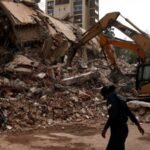
With the death toll continuing to rise and thousands of people injured or displaced, governments and international organizations are racing to support rescue operations and help Venezuela cope with one of the country’s deadliest natural disasters in more than a century, News.az reports.
***
The earthquakes struck at a time when Venezuela was already facing serious economic and infrastructure challenges, making international assistance critical to the country’s recovery efforts.
What happened in Venezuela?
Venezuela was struck by two powerful earthquakes within less than a minute of each other. The first measured magnitude 7.2, followed almost immediately by an even stronger magnitude 7.5 earthquake, making it the country’s strongest recorded earthquake since 1900.
The twin tremors caused widespread destruction across several regions, collapsing buildings, damaging hospitals, disrupting electricity and telecommunications, and trapping hundreds of people beneath rubble.
Authorities have confirmed hundreds of deaths and thousands of injuries, while emergency crews continue searching for survivors. Hundreds of buildings have either collapsed completely or suffered severe structural damage, leaving many families homeless.
The scale of destruction has overwhelmed local emergency services, prompting an international humanitarian response.
Why does Venezuela need international assistance?
Although Venezuela has experience responding to natural disasters, the country entered this crisis with significant economic and infrastructure challenges.
Years of economic difficulties have weakened public services, leaving many hospitals with shortages of equipment, medicines and specialized medical personnel. Electricity shortages and damaged transportation infrastructure have also complicated rescue efforts.
The earthquakes have placed enormous pressure on emergency responders who must simultaneously search for survivors, provide medical treatment, restore essential services and shelter displaced residents.
International support is helping fill critical gaps by supplying specialized rescue teams, field hospitals, medical equipment and humanitarian relief.
Which countries in the Americas have pledged assistance?
Several countries across the Western Hemisphere were among the first to announce emergency support.
The United States pledged a large-scale humanitarian response that includes financial assistance, military transport aircraft, helicopters and logistical support designed to accelerate rescue operations and deliver emergency supplies.
Brazil announced the deployment of firefighters, rescue specialists, telecommunications experts and a field hospital. Brazilian authorities are also sending medical supplies, water purification systems and specialized rescue equipment.
Mexico confirmed it is dispatching military rescue teams and medical personnel while remaining prepared to provide additional assistance if required.
Colombia, which also experienced tremors from the earthquakes, is sending search-and-rescue teams together with humanitarian supplies to support operations across the border.
El Salvador announced the deployment of hundreds of rescue workers, paramedics and large quantities of emergency equipment and medical supplies.
Cuba has mobilized medical personnel already present in Venezuela while expanding healthcare assistance for communities affected by the disaster.
Together, these countries represent one of the largest regional humanitarian responses in recent Latin American history.
Which European countries are helping Venezuela?
European governments have also pledged significant humanitarian assistance.
Spain has deployed government-supported urban search-and-rescue teams together with humanitarian experts to assess conditions on the ground and assist local authorities.
France is sending dozens of specialized rescue workers trained in locating survivors trapped beneath collapsed buildings.
Germany has committed military transport aircraft to help deliver emergency supplies and personnel into Venezuela.
Switzerland is contributing rescue specialists, trained search dogs and substantial quantities of emergency equipment for disaster response operations.
The Netherlands has announced financial support to fund search-and-rescue activities, while the Czech Republic is preparing specialized emergency teams for deployment.
The Vatican has also provided emergency financial assistance as part of its humanitarian response.
These contributions complement broader international efforts coordinated through humanitarian organizations.
How are Asian countries supporting the relief effort?
Several Asian nations have also joined the international response.
India has deployed military aircraft carrying field hospitals, medical teams, trauma specialists, surgeons, emergency medicines and humanitarian supplies. The mission includes healthcare professionals experienced in disaster medicine and large-scale emergency operations.
China announced emergency humanitarian assistance together with rescue personnel and medical aid. Chinese authorities are coordinating their support through both government channels and humanitarian organizations.
Their participation highlights the increasingly global nature of disaster relief operations, with countries from multiple continents contributing specialized expertise and resources.
What role are international organizations playing?
International organizations have become central to coordinating the humanitarian response.
The United Nations has mobilized certified urban search-and-rescue specialists while coordinating international assistance among participating countries.
The International Federation of Red Cross and Red Crescent Societies (IFRC) has released emergency funding to support immediate humanitarian operations, including shelter, healthcare, water and sanitation services.
These organizations help ensure that international assistance reaches the areas where it is needed most while coordinating efforts among dozens of governments, humanitarian agencies and local authorities.
What type of aid is being delivered?
The assistance extends far beyond financial donations.
Countries are providing search-and-rescue specialists, firefighters, doctors, nurses, trauma surgeons, engineers, telecommunications experts and logistics personnel.
Equipment being delivered includes field hospitals, portable medical facilities, rescue vehicles, heavy lifting machinery, emergency shelters, water purification systems, medicines, surgical supplies, communications equipment and rescue dogs trained to locate survivors beneath collapsed structures.
Many governments are also providing military transport aircraft capable of rapidly moving personnel and relief supplies into affected regions.
This combination of technical expertise and humanitarian assistance is essential during the critical first days following a major earthquake.
Why are search-and-rescue teams so important after earthquakes?
The first several days following a major earthquake are often considered the most critical period for saving lives.
Specialized urban search-and-rescue teams possess equipment and expertise that local emergency responders may not have available, including thermal imaging devices, listening equipment, structural engineers and highly trained rescue dogs.
These teams can safely enter unstable buildings, locate trapped survivors and conduct complex rescue operations while minimizing additional risks to victims and rescue workers.
International disaster response teams are specifically trained to operate in collapsed urban environments where conditions are extremely dangerous.
Why is the international response especially significant for Venezuela?
The earthquakes struck a country already coping with longstanding economic challenges, aging infrastructure and pressure on public services.
Hospitals in several affected regions were already operating with limited resources before the disaster. The earthquakes further damaged healthcare facilities while dramatically increasing demand for emergency medical treatment.
International assistance therefore plays a particularly important role not only in immediate rescue operations but also in helping Venezuela maintain essential healthcare, restore infrastructure and provide humanitarian support for displaced communities.
The broad participation of countries from multiple continents demonstrates widespread recognition that the scale of the disaster exceeds Venezuela’s domestic response capacity.
What happens next?
The immediate priority remains locating survivors, treating the injured and providing emergency shelter for displaced residents.
As rescue operations gradually transition into recovery efforts, international assistance is expected to shift toward rebuilding damaged infrastructure, restoring healthcare services, repairing transportation networks and supporting long-term reconstruction.
Experts warn that recovery from earthquakes of this magnitude could take years. Beyond rebuilding homes and public infrastructure, Venezuela will also need to address the economic consequences of the disaster, which are expected to place additional pressure on a country already facing significant financial challenges.
For now, the continued arrival of international rescue teams, humanitarian aid and medical assistance offers critical support as Venezuela confronts one of the most devastating natural disasters in its modern history.
The post Which countries have pledged aid to Venezuela after the devastating earthquakes? appeared first on azeritimes.com.

On Friday, U.S. District Judge Nicholas Garaufis ordered the Department of Justice to formally justify its sudden decision to drop the high-profile bribery case. The move comes just days after Adani’s legal team filed a formal request to have the matter permanently wiped from the docket, News.Az reports, citing Reuters.
Adani was originally indicted in 2024 over allegations that he agreed to bribe Indian government officials to secure lucrative solar energy contracts for an Adani Group subsidiary, while allegedly misleading American investors about the company’s anti-corruption policies. While the Justice Department announced last month that it would no longer pursue the prosecution, the Brooklyn-based judge is demanding clear answers before officially letting the case go.
The post Judge demands answers before dropping Gautam Adani bribery case appeared first on azeritimes.com.