
President of the Republic of Azerbaijan Ilham Aliyev and President of Turkmenistan Serdar …
Day: June 21, 2026
Categories
維基百科:歷史上的今天 – 維基百科,自由的百科全書
本頁面是首頁「歷史上的今天」欄目本月模板的一個集合,其它月份模板的集合可以點選「按月份導航」的對應月份進入。 如果需要編輯某日在首頁「歷史上的今天」展出的模板,點選該日期模塊右上角的「編輯」進入即可進行編輯。 本日的模板請點選 維基百科:歷史上的今天/6月14日 進入。 在編輯時請 注意:請儘量選擇主題已撰寫的條目。 每日條目數5條。 每條主題詞請用 粗體 標出。 並按照時間順序自上而下排列。 每日使用一幅圖像,請在相應事件的條目連結後添加「(圖)」。 注意各地中文用詞差異,必要時添加字詞轉換規則, 不能使用 { {NoteTA}}。 純文字 版本是為了純文字首頁而設的。 羅馬元老院 判處前任 皇帝 尤利安努斯 死刑,並宣布 塞提米烏斯·塞維魯斯 為 新任 皇帝。

**17.57
California Governor Gavin Newsom has declared a state of emergency in Los Angeles County as a massive warehouse fire in Boyle Heights continues to burn for a fifth day, News.az reports.
The blaze broke out on June 17 at a large cold-storage facility and has created serious air-quality and public health concerns. Officials say the warehouse contained around 85 million pounds of frozen food, raising fears of biohazard risks as the cleanup begins.
The situation was further complicated by an ammonia leak from the facility’s refrigeration system. Authorities have urged nearby residents to limit outdoor activity, while the state is deploying emergency resources, including millions of N95 masks.
Fire crews are still working to control remaining hot spots, and the cause of the fire remains under investigation.
** 16.40
The blaze broke out on Wednesday afternoon at the Lineage Big Bear cold-storage facility—a sprawling, 500,000-square-foot warehouse in LA’s Boyle Heights neighborhood. Because the building is designed like a giant cooler—featuring thick corrugated steel walls packed with dense foam insulation—the fire has trapped itself deep inside, creating near-zero visibility and forcing firefighters to battle the flames entirely from the outside, News.Az reports, citing Anadolu Agency.
The official emergency declaration clears the way for a massive state response, with California pre-positioning 5.5 million N95 respirator masks, commercial-grade air purifiers, and advanced air-quality monitoring equipment for impacted communities. Los Angeles Mayor Karen Bass also enacted a local emergency to fast-track municipal resources to the scene.
***
While hazardous refrigeration chemicals like ammonia have safely been cleared from the site, a new crisis is mounting. Officials warn that more than 85 million pounds (39 million kilograms) of frozen food trapped inside the building is beginning to thaw and rot, creating a potential biohazard situation. To contain the stubborn hot spots, crews have deployed large water-dropping helicopters—typically reserved for wildfires—alongside gel-based fire retardants to bring the multi-day incident under control.
The post California declares emergency over massive LA warehouse fire appeared first on azeritimes.com.

The first round of talks between Iran and the United States in Switzerland has concluded, a source close to the Iranian negotiating team told Reuters on Sunday.
At the same time, Iran’s Fars news agency, citing a source familiar with the negotiating team, reported that the four-party talks were suspended after 80 minutes of consultations. According to the source, the pause was needed to allow internal consultations within the delegations.
** 18.09
US Vice President JD Vance said the US-Iran talks in Bürgenstock, Switzerland, would not resolve all differences, but would give both sides a chance to address the issues that matter most.
“Today marked the beginning of technical talks that will not solve every disagreement, but will allow us, for the first time in history, to sit together as teams and figure out what matters most to both sides, settle those issues, resolve those issues and work toward a better future,” Vance told reporters.
Vance also said significant progress had already been made in the talks with Iran in Switzerland.
“We have already made great progress in just the last few hours, and I expect that in the coming hours we will make additional progress,” he said.
Calling the meeting “historic,” Vance added: “Never before, outside of Islamabad over the last few months, have Iranian and American leaders met at such a high level.”
The US vice president said President Donald Trump had asked his team “to turn the page, to transform our relationship with the people of Iran and to extend a hand that says to the Iranian people: if your leadership is willing to stop being a driver of regional instability, if they are willing to give up their nuclear ambitions over the long term, then the United States is prepared to fundamentally transform our relationship with that country.”
“That is certainly our goal,” Vance said.
Speaking about the consultations, Vance added: “The question before us now is what we can achieve together. Can we turn the page? Can we change the relationship in the Middle East on a permanent basis? Or will we go back to the old ways? We are not seeking that, but of course it is possible.”
Vance also said that “over the last couple of days, we have seen a lot of progress when it comes to maintaining the ceasefire in Lebanon.”
**17.45
Tehran has signaled just how seriously it takes the high-stakes Swiss peace summit, deploying an ultra-high-profile delegation packed with heavy hitters spanning diplomacy, national security, banking, and energy.
Leading the powerhouse lineup as chief negotiator is Mohammad Bagher Ghalibaf, the current speaker of Iran’s parliament. Ghalibaf boasts deep ties to the nation’s military apparatus, having famously served as a long-time commander of the Revolutionary Guard’s air force before transitions into politics as Iran’s national police chief and a twelve-year stint as the mayor of Tehran.
Flanking him is Foreign Minister Abbas Araghchi, the country’s second-highest-ranking representative at the table. Araghchi brings intense diplomatic gravity to the room, known globally for his intimate alignment with the Supreme Leader’s office. He is joined by Ali Bagheri, a towering figure in Iranian international relations who previously masterminded Iran’s nuclear file negotiations under the late President Ebrahim Raisi.
But it’s the economic muscle of the delegation that reveals Tehran’s immediate goals. With sanctions relief and frozen assets on the line, Iran has put Central Bank Governor Abdolnaser Hemmati and Deputy Oil Minister Hamid Bord—who doubles as the head of the National Iranian Oil Company—directly at the negotiating table. The sheer seniority of the group highlights Iran’s strategy: ensuring that any potential security or maritime breakthroughs are backed immediately by airtight financial and energy agreements.
Institute for the Study of War
** 17:20
U.S. and Iranian negotiators entered the meeting room, officially kicking off high-stakes talks to resolve the conflict in the Middle East.
Members of the American delegation began the session by shaking hands with the Pakistani mediators who helped broker the diplomatic summit. Shortly after, Pakistani Prime Minister Shehbaz Sharif began addressing a packed room of international media, flanked directly by Qatari Prime Minister Sheikh Mohammed bin Abdulrahman bin Jassim Al Thani on his left and U.S. Vice President JD Vance on his right.
The highly anticipated Lucerne Lake Summit follows the recently signed Islamabad Memorandum of Understanding. While top political leadership from all four nations are present to establish the structural groundwork for a permanent peace deal, technical committees are set to remain on-site to hash out deep-seated disagreements regarding nuclear verification, regional ceasefires, and vital maritime shipping routes.
**
15:40
Iranian and U.S. delegations have begun negotiations in Bürgenstock, Switzerland. Mediators from Qatar, Pakistan, and Switzerland are also taking part in the talks.
Prime Minister Muhammad Shehbaz Sharif meeting with Vice President of the United States J.D. Vance on the sidelines of US-Iran technical level talks as a follow -up of Islamabad MoU, being held in Burgenstock, Switzerland, 21 June 2026.#PakistanForPeace pic.twitter.com/vqHHvFhXVR
— Prime Minister’s Office (@PakPMO) June 21, 2026
The U.S. delegation is led by Vice President J.D. Vance and includes Jared Kushner, former President Donald Trump’s son-in-law, as well as Special Envoy Steven Witkoff. The Iranian side is represented by Parliament Speaker Mohammad Bagher Ghalibaf and Foreign Minister Abbas Araghchi.
Before the negotiations began, U.S. Vice President J.D. Vance met with Pakistani Prime Minister Shehbaz Sharif and Pakistan’s Chief of Army Staff Asim Munir in Bürgenstock, according to a statement from the Pakistani Prime Minister’s Office.
** 13:59
Delegations from the United States and Iran, along with mediators from Qatar and Pakistan, have arrived at the venue for technical negotiations in Bürgenstock, according to a statement by Switzerland’s Foreign Ministry.
“The U.S. delegation, led by U.S. Vice President J.D. Vance, the Iranian delegation, headed by Iranian Parliament Speaker Mohammad Bagher Ghalibaf, as well as the mediators — Pakistan and Qatar — have arrived in Bürgenstock,” the ministry said in a post on X.
The head of the Iranian delegation and Speaker of the Iranian Parliament, Mohammad Bagher Ghalibaf, met in Switzerland with Qatari Prime Minister Mohammed bin Abdulrahman Al Thani.
“The agenda of this meeting includes monitoring the implementation of the memorandum’s provisions, particularly Clauses 1 and 11, which concern ending the war on all fronts, especially in Lebanon, and the release of $12 billion in frozen Iranian assets. The discussions also cover Clause 6 of the memorandum, which relates to $300 billion in reconstruction investments,” the agency reported.
** 10:45
The U.S. side aims to turn the preliminary memorandum between Washington and Tehran into a full-fledged agreement within 60 days. Steve Witkoff and Jared Kushner are also taking part in the talks.
The negotiations are taking place against the backdrop of tensions around the Strait of Hormuz and the situation on the Lebanese front.
** 10:30
U.S. Vice President JD Vance has arrived in Switzerland ahead of expected discussions with Iranian officials, as diplomatic efforts continue to ease tensions and explore possible paths toward a broader agreement.
Vance and his wife arrived at Emmen Air Base in Switzerland at 5:59 a.m. (0359 GMT), a vice presidential spokesperson said.
The post US–Iran nuclear talks LIVE : Vance in Switzerland as negotiations enter decisive phase appeared first on azeritimes.com.
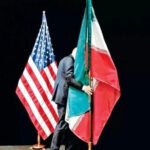
Iran’s delegation at talks with the United States in Switzerland refused to take part in a handshake ceremony and a joint photo session with the American side, Iran’s Tasnim news agency reported, citing a source close to the negotiating team, News.az reports.
According to the source, the organizers of the meeting and the US delegation had planned to open the talks with a symbolic handshake and a joint photo opportunity between Iranian and American representatives. However, the head of the Iranian delegation and other members of the team rejected the format and said they would not appear in a photo session with the US side.
***
As a result, the source said, the live broadcast and photo coverage were stopped. The Iranian delegation reportedly entered the meeting venue only after journalists had left the room.
The US side, according to Tasnim, asked the Iranian delegation for five minutes to allow members of the media to leave the hall. The talks then continued without the public ceremonial part.
The incident came as Iran and the United States held talks in Switzerland with the mediation of Pakistan and Qatar. The meeting is seen as one of the key diplomatic episodes amid continuing tensions over Iran’s nuclear program and regional security.
The post BREAKING: Iran refuses handshake with US delegation as live broadcast is cut appeared first on azeritimes.com.

For the first time in diplomatic history, a memorandum of understanding between states has effectively been signed virtually, without the leaders meeting face to face. This raises an interesting question: how will relations between the parties develop under such unusual circumstances?
Despite this diplomatic paradox, U.S. President Donald Trump signed agreement. A photograph of the signed document was then sent to Iran, where President Masoud Pezeshkian approved it on behalf of Tehran. As soon as news of the signing emerged, oil prices fell sharply. Brent crude dropped below $79 per barrel, while WTI slipped under $75. This outcome was precisely what the current US administration needed to strengthen its domestic political position ahead of the upcoming midterm congressional elections.
President Trump cannot afford a Democratic victory. It is crucial for him to avoid becoming a “lame duck” during the remaining two years of his presidency. This political reality appears to have played a decisive role in securing the ceasefire.
According to BBC correspondent Bernd Debusmann Jr., US officials who briefed journalists on the memorandum emphasised that the document does not legally bind Washington. Its implementation, they stressed, will depend on Iran’s future conduct. Nevertheless, the Strait of Hormuz is now open, and petrol prices at American filling stations are expected to fall.
It is anticipated that US Vice President J.D. Vance and Iranian Parliament Speaker Mohammad Baqer Qalibaf will soon discuss the launch of negotiations on Iran’s nuclear programme.
Let us now examine the agreement itself.
Clause 1: Immediate ceasefire
The first clause states that the United States, Iran and their respective allies will announce an “immediate and final” cessation of military operations “on all fronts”, including Lebanon.
However, Israel did not sign the memorandum and is therefore not legally obliged to comply with its provisions. This is precisely why President Trump has expressed concern that Israeli military operations against Hezbollah could jeopardise the agreement with Iran.
Particular attention should be paid to this issue.
The document further states that, from this moment onwards, neither side will initiate military operations or threaten the other. Both parties also commit to respecting Lebanon’s territorial integrity and sovereignty
Clause 2: Non-interference in internal affairs
This clause provides that the United States and Iran will respect each other’s sovereignty and territorial integrity and refrain from interfering in each other’s domestic affairs.
Many Iranian dissidents are likely to view this provision negatively.
Earlier this year, during anti-government demonstrations that swept across Iranian cities, Trump promised protesters that “help is on its way”. Whether such support materialises in the future will largely depend on the resilience of the Iranian regime, which has already undergone significant transformation.
Clause 3: A 60-day negotiation period
The United States and Iran commit to conducting negotiations and reaching a final agreement within 60 days.
The deadline may be extended by mutual consent.
It is entirely possible that negotiations will continue beyond the US midterm elections. The 60-day countdown officially began once both leaders signed the memorandum of understanding.
Clause 4: End of the US naval blockade
Following the signing of the memorandum, the United States will begin a phased lifting of the naval blockade and remove “all restrictions and obstacles” imposed on Iranian ports.
According to the agreement and statements from Iran’s Foreign Ministry, the blockade should be fully lifted within 30 days.
During the transitional period, the number of vessels permitted to pass through Iranian ports will correspond to the volume of shipping traffic restored by Iran in the Strait of Hormuz.
Furthermore, within 30 days of the signing of a final agreement, the United States will withdraw its forces from Iran’s borders and adjacent regions.
In practical terms, this means US forces will return to the readiness levels and force structure that existed before hostilities began on 28 February.
In other words, the US naval fleet and air forces will remain in the region until a final settlement is reached.
Clause 5: The Strait of Hormuz
Under the memorandum, Iran will “make every effort” to establish measures ensuring the safe and unrestricted passage of commercial vessels through the Strait of Hormuz.
This has been a key objective for Washington since the conflict began and the strait was closed, causing a dramatic rise in global oil prices.
Over the longer term, Iran will cooperate with Oman and other Gulf states to develop a broader framework governing navigation and management of the strategic waterway.
Clause 6: Funding Iran’s reconstruction
The sixth clause commits the United States and its regional partners to preparing a mutually agreed reconstruction and economic development plan for Iran worth at least $300 billion.
The final mechanism will be determined within 60 days of the conclusion of a comprehensive agreement.
All licences and approvals will be issued by the United States.
Washington, however, will not directly finance the reconstruction effort. Instead, it will oversee the financial architecture of the programme.
According to one US official, if Tehran fulfils its commitments, countries such as the United Arab Emirates could build infrastructure projects in Iran, including power plants, while the United States would provide the necessary approvals.
This would effectively allow foreign investors to finance and own infrastructure assets while operating under a framework supervised by Washington.
Trump and other US officials have emphasised that the United States will not transfer funds directly to Tehran, arguing that this fundamentally distinguishes the arrangement from the 2015 nuclear agreement negotiated under President Barack Obama.
Clause 7: Lifting sanctions
The United States will terminate all economic sanctions imposed on Iran, including those linked to United Nations Security Council measures.

Source: Reuters
The timeline remains unclear.
The memorandum states that a detailed schedule will be negotiated as part of the final agreement, although both sides recognise the need to begin addressing the issue immediately.
Iran has suffered heavily under sanctions, while Washington’s campaign of economic pressure sought to isolate Tehran from the global financial system.
Clause 8: Renunciation of nuclear weapons
Iran has agreed neither to produce nor acquire nuclear weapons.
The issue of its existing stockpile of enriched uranium will be addressed during subsequent negotiations.
The memorandum states that the relevant mechanism will be agreed at a later stage, but, at a minimum, existing enriched material will be diluted under the supervision of the International Atomic Energy Agency (IAEA).
A senior US official described this provision as a “minimum standard” and a “major victory” for Washington.
Trump has previously stated that preventing Iran from acquiring nuclear weapons was the primary objective of Operation Epic Fury.
Clauses 9 and 10: Preserving the status quo
The next two provisions establish a temporary status quo while negotiations over uranium-related issues continue.
In practical terms, this means the United States will refrain from introducing new sanctions.
Iranian exports of crude oil, petroleum products, and related banking and logistics operations will also receive temporary protection from punitive measures.
Clause 11: Frozen assets
This provision represented one of the most significant obstacles during negotiations.
For years, Iran has demanded access to frozen assets abroad, viewing their release as a vital lifeline for its economy.
The memorandum states that the United States commits to making frozen or restricted funds available following the signing of the agreement, with procedures to be determined during negotiations.
According to White House officials, the assets will be released gradually as Iran fulfils specific obligations, such as dismantling its highly enriched uranium stockpiles.
Clauses 12–14: Monitoring and final negotiations
The final three clauses outline the implementation process.
The United States and Iran are expected to establish a mechanism for monitoring compliance with both the memorandum and any future agreement, although details remain unclear.
Once implementation begins, negotiations on a final settlement will commence.
Any such agreement would ultimately require approval by the United Nations Security Council.

Source: crisisgroup
According to President Trump, the memorandum does not contradict his broader objective of achieving complete victory over Tehran.
Indeed, Trump described the signing of the memorandum as a form of Iranian capitulation.
In an interview with Axios, he stated:
“It really is probably an unconditional surrender. That’s how I see it.”
The president added that the United States had inflicted a military defeat on Iran through the superiority of American armed forces. He also pointed to the naval blockade as evidence of Washington’s leverage.
According to Trump, the United States never came close to exhausting its military capabilities. On the contrary, he argued that Washington faces no meaningful limitations in this sphere.
Speaking about Lebanon, Trump suggested that Israel could conduct military operations there in a more restrained manner. He also proposed that efforts to counter Hezbollah could be entrusted to Syrian President Ahmed al-Sharaa.
“He would like to do it. Hezbollah are his enemies. He would simply operate with great precision,” Trump said.
Whether Israel would accept a stronger Syrian role in the region remains highly doubtful, particularly given Damascus’s close relationship with Türkiye.
The coming weeks will determine whether this memorandum becomes the foundation for a historic diplomatic breakthrough or merely a temporary pause in a much broader geopolitical confrontation.
The post Memorandum signed – what comes next? appeared first on azeritimes.com.
Includes all features of Camect Go. Advanced analytics including “long distance mode” (for detecting smaller objects, e.g. good for monitoring parking lots) and loitering detection. Ability to turn off auto-suppression for frequently-occurring alerts. Re-streaming of cameras, e.g. to integrate with other devices or services.