
Participants highlighted the importance of enhancing coordination and expanding practical cooperation aimed at deepening the strategic partnership between Kazakhstan and China in the field of civil nuclear energy.
Day: June 16, 2026
Georgia’s disputed Parliament Speaker Shalva Papuashvili criticized remarks by the EU Enlargement Commissioner Marta Kos implying “new safeguards” to prevent new members from misusing veto powers, calling the idea “dangerous” and a “legal segregation of countries,” and warning that its adoption would fundamentally alter the union Georgia applied to join in 2022.
Papuashvili’s criticism came after Kos, speaking on the sidelines of the EU Foreign Affairs Council meeting on June 15, was asked how the bloc could ensure that future members such as Ukraine would not use their veto to block important foreign affairs decisions.
In response, Kos said: “This will be a new generation of accession treaties in the sense that we will have new safeguards which will do, or provide, exactly what you have mentioned: how to make sure that once we get new members on board, they will follow European rules, being a member five, ten, or fifteen years after. So we will discuss every country once we come to the point of having an accession treaty.”
Posting on Facebook in Georgian and on X in English alongside a screenshot of a Ukrainian media outlet’s headline (“European Commission confirmed that the right of veto for new member states will be discussed”), Papuashvili argued that the proposal would mean that when moving to the membership stage, Georgia, like other new members, “would have obligations similar to those of other EU members, but would not be equal to them in terms of rights.”
Kos “noted that the European Union is considering an idea under which future EU member states would not have the same voting rights as current members,” Papuashvili said, adding that in practice, “this means that the EU would be able to make decisions on matters of existential importance to Georgia’s national interests without Georgia’s actual participation.”
“Many will probably recall the phrase often repeated by Brussels: ‘Nothing about Ukraine, without Ukraine.’ The idea being discussed in the EU is precisely the abandonment of this approach, not only toward Ukraine, but toward all candidate countries. Ukrainians have also recognized this clearly and have stated that they would not agree to second-class membership,” he noted.
The speaker further argued that the EU’s motto, “United in Diversity,” is being replaced by the principle of “Do not deviate from the general line,” claiming that candidate countries would be admitted only if their voices served a “merely decorative function.” Papuashvili said: “Indeed, such an approach would make decision-making even easier as there would be no need for difficult discussions, differing positions, or that aspect of democracy, which involves dissenting opinions.”
He described the initiative as “Brussels’ idea of introducing a legal segregation of countries,” contraditory to the bloc’s rules-based system, which “radically changes this founding principle of the EU and transforms it from a union of equal nations into a union of ‘first-class’ and ‘second-class’ nations.”
“Therefore, one thing must be stated clearly: if this idea is implemented, it will no longer be the union that Georgia applied to join four years ago. Nor will it be the union that is envisioned in Article 78 of Georgia’s Constitution,” Papuashvili said.
He then drew parallels with Georgia’s Soviet past, saying, “Georgia has already had 70 years of experience with nominal and unequal membership in a [Soviet] union, and we do not intend to repeat that experience. If the post-Soviet countries that are already EU members allow such a change to happen, it will appear that their problem was not with the Soviet Union itself, but rather with who dominates such a union.”
Papuashvili further claimed that “EU should immediately stop entertaining this dangerous idea,” adding that “even [if] it is never adopted, the damage has already been done. Raising this suggestion tells us how EU views its forthcoming members: as less equal than the others, in Orwellian sense.”
In recent years, Hungary under previous Prime Minister Viktor Orbán has emerged as one of the Georgian Dream government’s closest European partners, even as Tbilisi’s relations with its traditional Western allies have deteriorated amid concerns of the Georgian ruling party’s anti-democratic and anti-Western moves. Budapest has also reportedly used its veto power to block stronger EU measures, including sanctions, in response to developments in Georgia following the disputed 2024 parliamentary elections.
Also Read:
The head of Russia’s Foreign Intelligence Service (SVR) Sergei Naryshkin has said Armenia’s parliamentary elections were ‘in a certain sense, questionable’. Russian President Vladimir Putin has yet to congratulate Prime Minister Nikol Pashinyan on his victory, breaking tradition as a longtime ally of Armenia, AzerNEWS reports via OC Media.
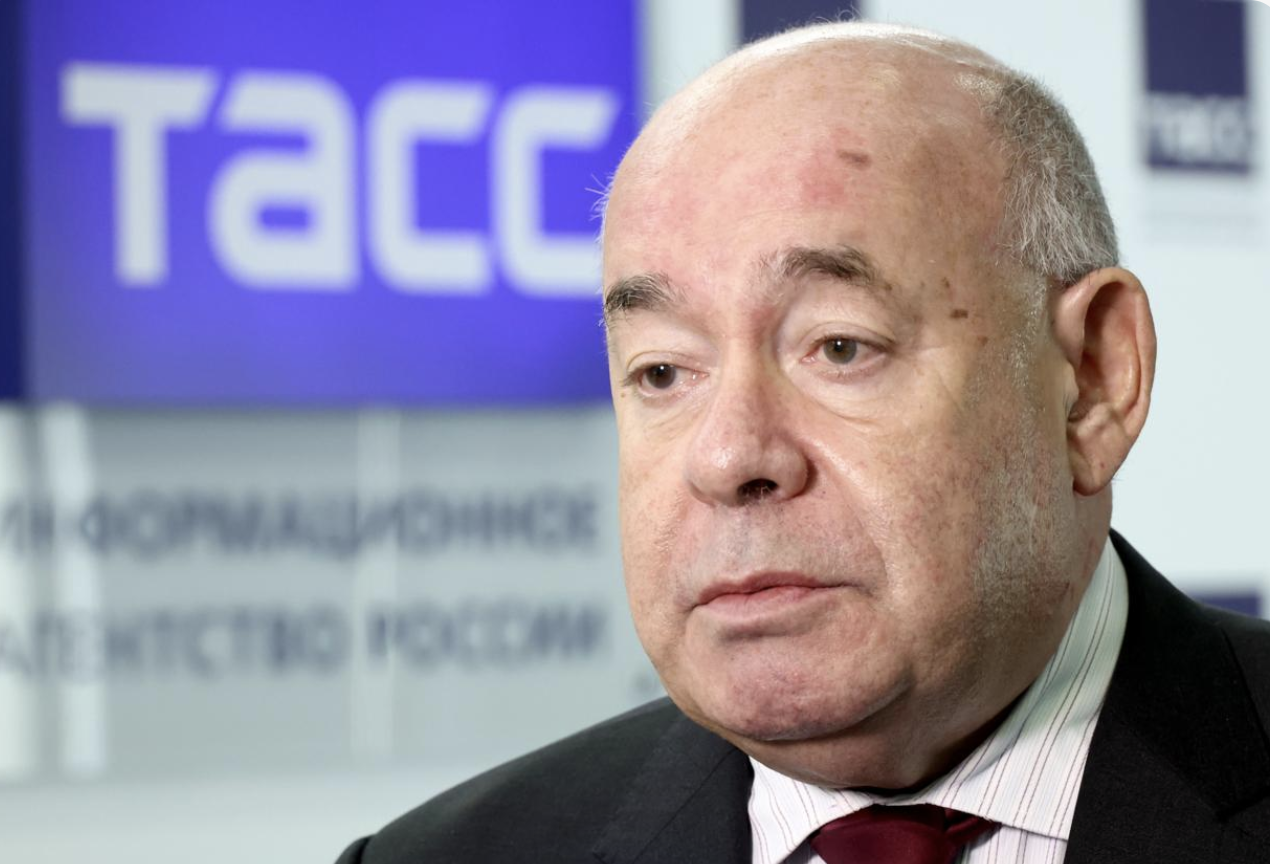
Russian presidential envoy visits Tbilisi
Mikhail Shvydkoy, the Russian president’s special representative for international cultural cooperation, visited Tbilisi, according to Russian state news agency TASS.
Shvydkoy, who also serves as artistic director of the Moscow Musical Theatre, attended screenings in Tbilisi of the theatre’s filmed productions, The Circus Princess and Reverse.
During the visit, he said that culture could play an important role in restoring trust between Russia and Georgia.
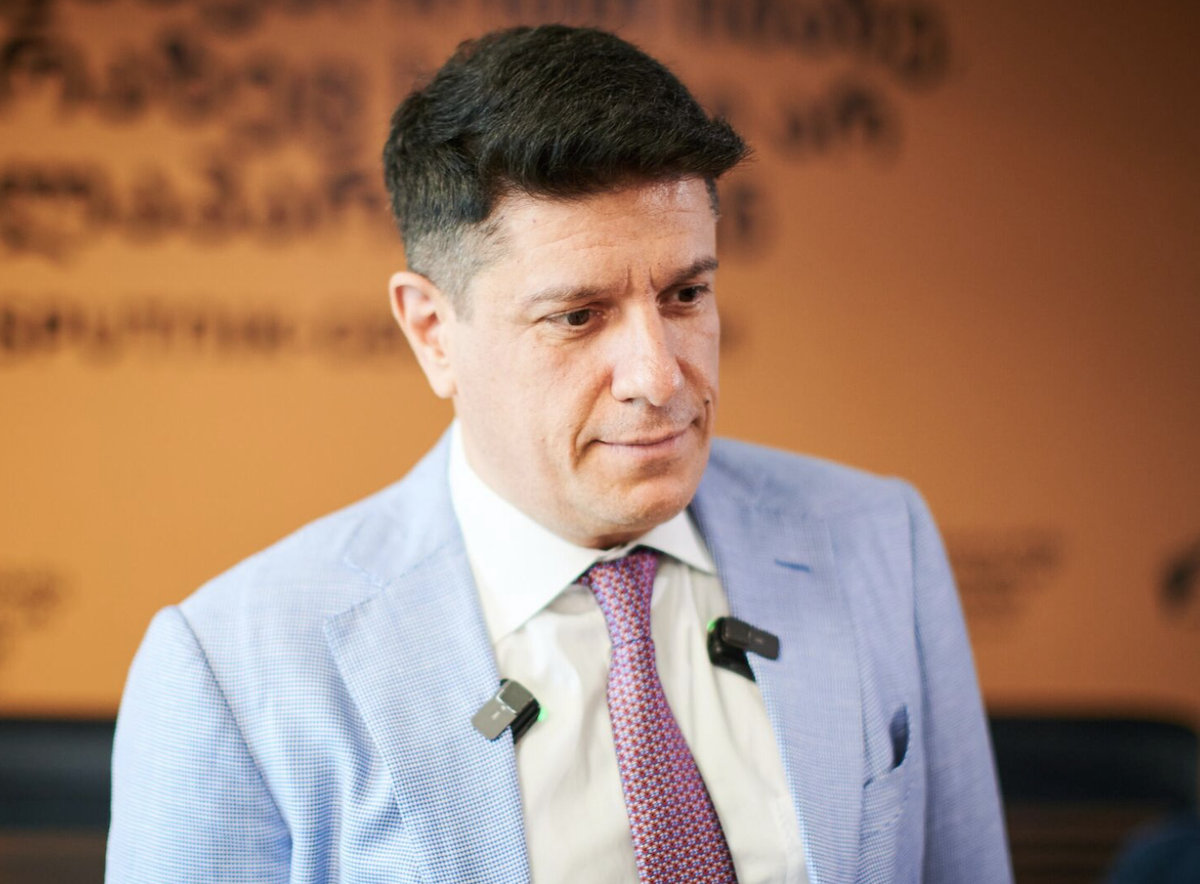
“It seems to me that culture is the sphere that can, step by step and without any forceful moves, restore the atmosphere of trust that once existed between our countries. After all, our peoples have always gravitated towards one another — our ties are simply too deep,” Mikhail Shvydkoy said.
Shvydkoy described the film screenings as “highly appealing” as a means of engaging with Georgian audiences:
“I think this will be of interest to our colleagues, because we want to present to Georgia, as far as possible, contemporary Russian art, contemporary Russian painting, cinema and performances by artists. Naturally, we will only do what is comfortable for our Georgian partners, but it seems to me that cultural initiatives of this kind serve a purpose.”
Shvydkoy also stressed that Russia remains open to Georgian artists and performers:
“It should be said that there are many Georgian performers in Russia. Large Georgian ensembles regularly tour the country, and there are many outstanding musicians and performers who live and work in Russia.”
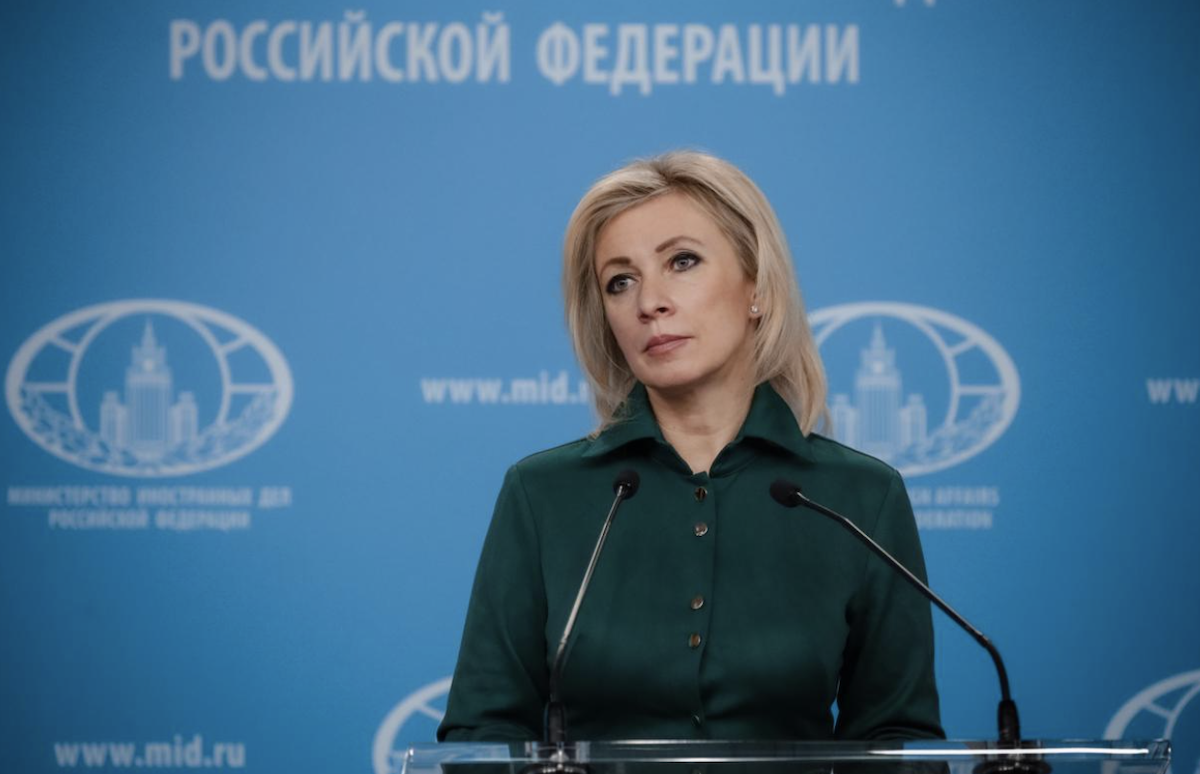
This was Mikhail Shvydkoy’s second visit to Georgia in the past three months. In March, he travelled to Tbilisi as one of the leaders of the Russian delegation attending the funeral of Ilia II.