Armenia’s election and Georgia
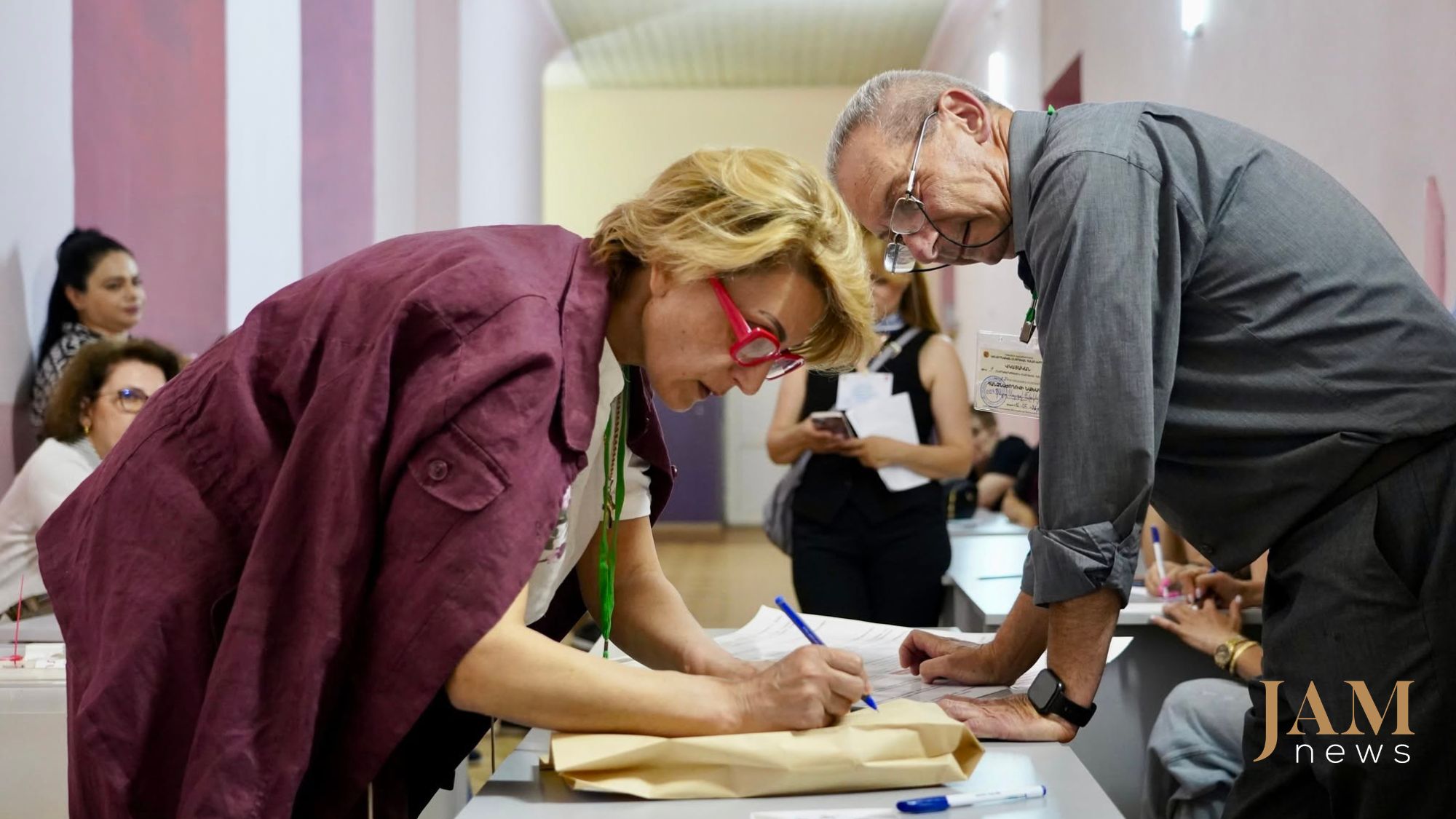
On 7 June 2026, Armenia held parliamentary elections that many observers described as a referendum on the country’s foreign policy direction, as voters were effectively deciding which course Armenia should follow.
According to the preliminary results, Prime Minister Nikol Pashinyan’s Civil Contract party won 49.8% of the vote, allowing him to retain a parliamentary majority. The main opposition force, Strong Armenia, led by Samvel Karapetyan and widely regarded as pro-Russian, came second with 23.29%.
The results suggest that most Armenians support Prime Minister Pashinyan’s foreign policy course, which focuses on reducing dependence on Russia, strengthening ties with the European Union and the West, and pursuing peace with Azerbaijan.
These elections were more than a domestic political event in Armenia. Analysts viewed them as one of the most important votes for the future of the South Caucasus.
According to experts, the outcome could influence three key issues: peace, the regional geopolitical balance and transport corridors.
Why do these elections matter, and what impact could their results have on the South Caucasus?
Peace process and regional security
According to experts, Nikol Pashinyan’s victory means that Yerevan will continue its policy of normalising relations with Azerbaijan and pursuing a peace agreement.
Before the election, the key question was whether the government would retain a mandate to continue that policy. His victory has increased the chances of reaching an agreement.
“It is important that Pashinyan continues the process of normalising relations with countries in the region, first and foremost with Azerbaijan. Cooperation with Turkey will also continue. Most importantly, Armenia will maintain cooperation with key regional actors — the United States and the European Union,” former State Minister for European and Euro-Atlantic Integration Alexi Petriashvili told JAMnews.
Experts say this matters for Georgia because it reduces the risk of military escalation in the region and improves the prospects for stability.
“As a result of these elections, Armenia will be able to pursue a peaceful and sovereign policy free from Russian interests. Russia’s interests have never been aimed at securing long-term peace in the region,” security expert Teona Akubardia said.
Russia’s geopolitical setback
Experts argue that Pashinyan’s victory demonstrates support among a significant share of voters for reducing Armenia’s dependence on Moscow.
They also believe the result could leave Russia in a comparatively weaker position in the South Caucasus for the first time since the region’s post-Soviet independence.
“This is a geopolitical defeat for Russia in our region. It is a step towards weakening Russian influence,” Alexi Petriashvili said.
According to Teona Akubardia, that development is particularly important for Georgia.
“Russian occupation and Russian interests are the main threat to Georgia’s national security. The weakening of Russian influence became evident after the Karabakh war and Trump’s peace agreement. Armenia’s election results have reinforced that trend. And that is in Georgia’s interest.”
Petriashvili noted that Russia still retains considerable leverage over Armenia in areas such as the economy, energy and security.
“Whether it is nuclear energy or gas supplies, Russia remains Armenia’s main provider. So, of course, Moscow still has tools of influence. It will try to use them and de-escalate the situation in its favour. Shortly after the election, it even announced restrictions on fish imports. This will not be easy. Russia will not accept the loss of influence that it has built and maintained over centuries. That is why the active involvement of regional states will be extremely important,” he said.
Growing Western interest in the region
Pashinyan’s political course emphasises closer cooperation with the European Union and the United States. Experts therefore believe that his victory is likely to increase Western interest in the South Caucasus.
Giorgi Rukhadze, founder of the Georgian Centre for Strategic Analysis and an international relations specialist, outlined several factors behind that growing interest in an interview with JAMnews.
“On the one hand, there is Trump’s route. There is strategic cooperation with Armenia and Azerbaijan. There is also their peace agreement, which will probably be signed soon. On the other hand, there are the economic interests of the United States.”
According to Rukhadze, the European Union is also stepping up its engagement. He pointed to the European Political Community summit in Armenia as one example.
The EU and Armenia are also discussing visa liberalisation, a particularly significant issue at a time when the European Union is tightening its immigration policies.
“All of this points to growing interest from both sides. That is the context in which Armenia’s election results should be viewed.”
Experts also point to transport corridors that Russia has sought to dominate. With Western influence remaining strong in the region, Moscow is losing leverage in this area as well.
“If Pashinyan had lost and a pro-Russian government had come to power, that task would have become much easier for Russia.”
Prospects for European integration
Experts believe Western interest in Georgia is also likely to grow.
“In reality, Georgia is neither pro-Russian, pro-Chinese nor pro-Iranian. The majority of the population supports European Union membership and Euro-Atlantic integration. The only obstacle on that path is the Ivanishvili regime. As a result, both the European Union and its member states are looking at the situation from a longer-term perspective. Once Georgia changes its government, integrating the Caucasus into the European space will become much easier,” Giorgi Rukhadze argued.
According to him, Georgia is currently “missing the European integration train” because of Georgian Dream. However, the larger the territory that matters to the European Union — including Georgia, Armenia and Azerbaijan as a major energy supplier — the greater the likelihood that Georgia will receive another opportunity for integration.
Will Georgian Dream change course?
Georgian Prime Minister Irakli Kobakhidze was among the first leaders to congratulate Nikol Pashinyan on his victory. He called his Armenian counterpart even before the announcement of the preliminary official results.
Rukhadze does not view that move as a sign of geopolitical change.
“This is more of a local issue. Pashinyan’s government does not create problems for Georgian Dream. Pashinyan recognises its legitimacy and meets with Kobakhidze. So, despite Armenia’s geopolitical orientation, which Kobakhidze certainly does not like, he is not particularly dissatisfied with Pashinyan’s behaviour.”
According to the analyst, Georgian Dream’s real attitudes are reflected in its propaganda. He therefore argues that attention should focus on messages coming from pro-government media.
“This is a continuation of typical Russian propaganda. The narrative claims the election took place amid terrible violations and unprecedented pressure. It suggests that Pashinyan could not even secure 50% support. Propaganda is very good at manipulating figures. Pashinyan won around 61 seats out of 105. That is more than 50%. Yet the propaganda avoids mentioning those figures and downplays his achievement.”
Given these circumstances, Rukhadze does not expect Georgian Dream to change its course.
“The main point is something entirely different. The examples of Armenia, Moldova, Hungary, Iran, Syria and Venezuela show that Russia no longer has the capacity to sustain or install regimes that suit its interests. We should take that as an important lesson.”
According to him, Georgian Dream sought to build closer ties with the Kremlin and create a myth around Bidzina Ivanishvili’s invincibility.
“That myth is now collapsing. Ivanishvili’s regime is linked to Russia, and that significantly weakens it. We must take that into account. Defeating Ivanishvili is our task, and the country’s geopolitical future is in our hands,” Giorgi Rukhadze concluded.
Armenia’s election and Georgia