
After a tooth extraction, patients may experience numbness for several hours, which is normal and can be triggered by a blood clot filling the tooth’s empty socket. The bleeding from the wound should stop, but if it persists, it interferes with the formation of tissues needed for the healing process.
Day: June 3, 2026

The “Safeguarding Our Secrets” bulletin says China’s military intelligence services were using a wide array of professional networking sites and online recruitment services to target those in government, the military or anyone who could access classified information, News.az reports, citing Reuters.
***
“Chinese military intelligence services ultimately seek to acquire privileged military, political and economic intelligence that can provide China with a strategic and tactical advantage over the Five Eyes,” the domestic security agencies from the U.S., Britain, Canada, Australia and New Zealand, said.
Although there have been similar warnings from individual countries in the past, the joint bulletin was described as unprecedented. Beijing has repeatedly rejected such espionage claims, calling them “pure fabrication and malicious slander”.
In the bulletin, the Five Eyes agencies said Chinese spies were particularly targeting those who specialised in defence, foreign affairs and intelligence, and military personnel, including those stationed in the Indo-Pacific region.
Also at risk were journalists, think tank employees or those with peripheral access to government data.
It said the spies used “an aggressive online recruitment strategy” with successful candidates then pressured to provide confidential information “for unspecified clients who are associated with the Chinese government”.
Those who were recruited could be paid anywhere from a few hundred to several thousand dollars per report, and offered more for increasingly sensitive information, the bulletin said.
The U.S. has previously warned about Chinese intelligence using deception to target current and former U.S. government employees while Britain’s MI5 security service last November cautioned lawmakers about Chinese agents trying to spy on parliament.
The post Five Eyes security alliance warns of Chinese espionage threat appeared first on azeritimes.com.

On June 11, Mexico City will host the inaugural World Cup match between Mexico and South Africa at Azteca stadium in the capital, News.az reports, citing Reuters.
***
With Mexico in the global spotlight, teachers and other groups have staged marches and blocked major avenues. They have said their protests, which are unrelated to the tournament, could intensify unless President Claudia Sheinbaum’s government addresses their demands.
The CNTE, a dissident wing of the national teachers’ union, has threatened mass demonstrations at the opening of the World Cup in official statements shared on social media.
The union is demanding the government fulfill a campaign pledge to repeal a 2007 law that overhauled the pension and social security system for public-sector workers, as well as salary increases.
“The current government made a campaign commitment — both the government of (former President) Andres Manuel Lopez Obrador and President Sheinbaum’s — they said they had that commitment to teachers to strike down that reform … but it never happened,” Rodrigo Arias, a schoolteacher from the southern state of Oaxaca with 40 years of classroom experience, said.
“There is neglect. There is a policy of managing timelines, of making commitments that are never truly kept. We will keep mobilizing until we are heard — even with the World Cup on the horizon,” added Arias, outside the Interior Ministry, where the CNTE was holding a protest while its leaders met with authorities in hope of reaching agreements.
The protests are concentrated on Insurgentes and Paseo de la Reforma, two of the capital’s busiest and most emblematic boulevards. Elsewhere in the capital, teachers were also blocking roads, generating traffic gridlock and frustrating commuters.On Tuesday, protesters toppled towering statues of football players on Mexico City’s Paseo de la Reforma.
Arias said those responsible were not members of the union and that the CNTE was not seeking to destroy property or provoke confrontation. Nevertheless, several businesses along the avenue had by Wednesday erected metal and wooden barriers to protect themselves.
Sheinbaum said at her daily morning press conference that she would not be baited into provocations or order a crackdown on the demonstrations.
In downtown Mexico City, retired judges and magistrates were also protesting, demanding severance pay and pensions following a sweeping 2024 judicial reform that restructured the country’s justice system.
“The traffic is really affecting us; we’re losing too much time,” lamented Armando Escobedo, a delivery driver, as he took a detour around street closures. “You have to be empathetic with the teachers, but they do hurt us at work,” he added.
Mexico will host 13 World Cup matches: five in the capital, and four each in the cities of Guadalajara and Monterrey. Mexico City has undergone several infrastructure projects ahead of the world’s biggest sporting event.
However, renovations at the Benito Juarez International Airport in Mexico City, the country’s largest and busiest airport, and repairs to the capital’s metro system and main avenues have yet to be completed. On Tuesday, a metal structure from a pedestrian bridge at the airport collapsed, injuring a motorist.
The post Protests and last-minute construction work disrupt Mexico City ahead of World Cup appeared first on azeritimes.com.
Categories
ny knicks torch | Reef2Reef

Sporadic protests have erupted in parts of Sudan, including Khartoum, after bread prices more than doubled earlier this month following a jump in the cost of flour, News.Az reports, citing Aljazeera.
***
On Tuesday, hundreds of Sudanese demonstrated near the presidential palace in response to a call by the Communist Party.
Anti-riot police fired tear gas and beat protesters with batons to disperse the crowd.
Early on Wednesday, agents of the National Intelligence and Security Service (NISS) arrested the Communist Party’s leader, spokesman Ali Saeed said.
“Today, at 3:00 am (0100 GMT), two trucks full of armed men from NISS came to the house of our general secretary Mokhtar al-Khatib and took him to an unknown location,” Saeed told AFP.
“We don’t know where he is but we do know that it was NISS that took him.”
Several other senior Communist Party figures, student leaders and activists have already been arrested since the bread price protests began.
The Communist Party said its members would continue to mobilise people and organise demonstrations, while the country’s main opposition Umma Party has called an anti-government demonstration for later on Wednesday.
The protests erupted after the cost of a 50 kilogramme (110 pound) sack of flour jumped from 167 Sudanese pounds to 450 ($9 to $25) as wheat supplies dwindled following the government’s decision to leave grain imports to private companies.
So far they have been sporadic and quickly broken up by security forces. A student was killed during a protest in the western region of Darfur on January 7.
Similar protests were held in late 2016 after the government cut fuel subsidies.
The authorities cracked down on those protests to prevent a repeat of the deadly unrest that followed an earlier round of subsidy cuts in 2013.
Dozens of people were killed when security forces crushed the 2013 demonstrations, drawing international condemnation.
The post Sudan holds communist leader after bread price demo appeared first on azeritimes.com.

While the issue may appear to be a routine transportation matter, it comes against the backdrop of a complex relationship between Saudi Arabia and Iran, two regional powers whose ties have experienced both rivalry and cautious rapprochement in recent years, News.az reports.
***
The decision has prompted questions about security concerns, pilgrimage logistics, regional diplomacy, and the broader state of Saudi-Iranian relations. Although Iranian pilgrims were still able to participate in Hajj and return home through alternative arrangements, the controversy surrounding Taif Airport highlights how even technical issues can take on geopolitical significance.
This FAQ Explainer examines what happened, why Taif Airport matters, what may have influenced Saudi Arabia’s decision, and what the incident reveals about the evolving relationship between Riyadh and Tehran.
What happened?
Saudi Arabia declined Iran’s request to use Taif Airport as a departure point for Iranian pilgrims returning home after completing the Hajj pilgrimage.
Instead, Iranian pilgrims were required to use Jeddah’s King Abdulaziz International Airport, which traditionally serves as the primary gateway for millions of Hajj pilgrims arriving in and departing from Saudi Arabia.
The decision sparked debate because Taif Airport is geographically closer to some pilgrimage routes and could have provided a more convenient option for transporting Iranian pilgrims.
Why did Iran want to use Taif Airport?
The primary reason appears to have been logistical efficiency.
During Hajj, millions of people travel across western Saudi Arabia within a relatively short period. Transportation networks become heavily congested as pilgrims move between Mecca, Mina, Arafat, Muzdalifah, Medina, and departure points.
Using Taif Airport could potentially reduce travel times and ease transportation burdens for some pilgrims. For organizers managing tens of thousands of travelers, even modest improvements in logistics can have a significant impact on efficiency and comfort.
From Iran’s perspective, Taif represented an alternative departure point that could help streamline the return process.
Why is Taif Airport important?
Taif International Airport occupies a strategic location in western Saudi Arabia.
Situated relatively close to Mecca, the airport has often been viewed as an auxiliary facility capable of supporting Hajj and Umrah operations. Its location allows it to serve both religious travelers and residents of the broader Mecca region.
Saudi Arabia has invested heavily in modernizing transportation infrastructure associated with religious tourism. Airports, highways, railways, and public transportation systems have all been expanded to accommodate growing numbers of pilgrims.
In this context, Taif Airport represents an important component of the kingdom’s broader transportation network.
Why did Saudi Arabia reject the request?
Saudi authorities have not publicly offered a detailed explanation.
However, regional observers have pointed to several possible factors.
One explanation involves security considerations. Governments often impose additional restrictions on transportation routes, airports, and infrastructure during periods of heightened regional tension.
Another possibility relates to operational planning. Managing Hajj logistics requires careful coordination involving airlines, airports, security agencies, customs authorities, and transportation services. Saudi authorities may have concluded that existing arrangements through Jeddah were preferable from an organizational perspective.
It is also possible that multiple factors contributed to the decision.
Does this mean relations between Saudi Arabia and Iran are deteriorating?
Not necessarily.
The most important fact is that Iranian pilgrims were allowed to participate in Hajj.
Had Saudi Arabia imposed restrictions on the pilgrimage itself, the political implications would have been far more significant.
Instead, the dispute concerned the choice of airport rather than access to religious sites.
While the decision may reflect lingering mistrust or differing priorities, it does not automatically indicate a broader diplomatic crisis.
Why is Hajj so politically sensitive?
Hajj is one of the most important religious obligations in Islam.
Every year, millions of Muslims from around the world travel to Saudi Arabia to perform the pilgrimage. As the custodian of Islam’s two holiest sites, Saudi Arabia plays a unique role in organizing and securing this massive annual event.
Because pilgrims come from dozens of countries with diverse political systems and international relationships, Hajj inevitably intersects with diplomacy.
Any issue affecting pilgrim access, safety, transportation, or accommodation can quickly acquire political significance.
Have Saudi Arabia and Iran disagreed over Hajj before?
Yes.
The history of Saudi-Iranian relations includes several disputes related to pilgrimage arrangements.
One of the most notable controversies followed the deadly Mina stampede in 2015, which resulted in the deaths of hundreds of Iranian pilgrims among many other victims.
The tragedy intensified tensions between the two countries and led to disagreements over responsibility, safety measures, and future pilgrimage arrangements.
For a period, Iranian participation in Hajj was disrupted because of broader diplomatic disputes.
Although relations have improved since then, memories of those tensions continue to influence perceptions on both sides.
How have Saudi-Iranian relations changed in recent years?
The relationship between Saudi Arabia and Iran has undergone significant changes.
For many years, the two countries were viewed as regional rivals competing for influence across the Middle East.
They supported opposing sides in several regional conflicts and frequently exchanged accusations regarding security and foreign policy.
However, diplomatic efforts in recent years have led to a gradual improvement in relations.
Embassies have reopened, official contacts have resumed, and both governments have emphasized the importance of dialogue.
Despite these improvements, differences remain on many strategic issues.
The Taif Airport dispute illustrates that cooperation and caution continue to coexist in the relationship.
Could security concerns have influenced the decision?
Security considerations cannot be ruled out.
The Middle East has experienced multiple periods of heightened tension involving missile attacks, drone operations, and military confrontations in recent years.
Governments across the region have become increasingly focused on protecting critical infrastructure, transportation hubs, and strategic facilities.
In such an environment, authorities may adopt a more restrictive approach to airport access and transportation planning.
Even if security concerns were not the sole factor behind the decision, they may have played a role in the overall assessment.
What impact does the decision have on pilgrims?
For most pilgrims, the impact is primarily logistical.
Instead of departing from Taif, Iranian pilgrims use Jeddah Airport, which remains fully capable of handling large numbers of travelers.
The change may result in longer ground transportation times and additional organizational requirements.
However, it does not prevent pilgrims from completing their journey or returning home safely.
As a result, the practical consequences are relatively limited compared with the political attention generated by the issue.
Could similar disputes arise in the future?
Yes.
Given the scale of Hajj operations, disagreements over logistics, transportation, accommodations, quotas, and security procedures are always possible.
The annual pilgrimage requires coordination on an enormous scale.
As the number of pilgrims continues to grow, governments and organizers will face increasing pressure to optimize transportation and infrastructure.
Future discussions regarding airport access and transportation arrangements are therefore likely.
What does this incident reveal about regional politics?
The controversy demonstrates how seemingly technical decisions can reflect broader geopolitical realities.
Saudi Arabia and Iran have improved their diplomatic relationship, but they have not eliminated all areas of disagreement.
Mutual caution remains an important feature of the relationship.
As a result, even decisions involving airports, transportation routes, or administrative procedures can become subjects of political discussion.
The incident serves as a reminder that regional diplomacy often operates on multiple levels simultaneously, ranging from high-level negotiations to practical issues affecting ordinary citizens.
Why does this matter beyond Saudi Arabia and Iran?
The issue is relevant because it highlights broader questions about religious diplomacy, regional security, and international cooperation.
Hajj is one of the largest annual gatherings in the world. The management of such a complex event requires collaboration among governments, transportation providers, security agencies, and religious institutions.
Any dispute involving pilgrimage logistics attracts attention because it touches on matters that are both deeply religious and politically significant.
For many observers, the Taif Airport issue provides insight into how Saudi Arabia and Iran are managing their relationship during a period of cautious engagement.
What is the key takeaway?
Saudi Arabia’s decision to reject Iran’s request to use Taif Airport does not appear to represent a major diplomatic rupture. Iranian pilgrims were still able to participate in Hajj and return home through existing transportation arrangements.
However, the episode highlights the continuing sensitivity of Saudi-Iranian relations and demonstrates how issues involving transportation, security, and religious travel can quickly acquire geopolitical importance.
The incident reflects a broader reality: while relations between Riyadh and Tehran have improved, they continue to be shaped by a combination of cooperation, competition, and caution. As a result, even routine logistical decisions can become a window into the complex dynamics of Middle Eastern politics.
The post Hajj, politics and security: Why Saudi Arabia rejected Iran’s airport request appeared first on azeritimes.com.
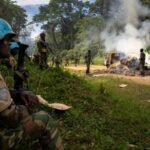
The attack, which took place in an area previously affected by Ebola outbreaks, underscores the overlapping challenges of armed conflict, public health emergencies, humanitarian crises, and weak state control, News.az reports.
***
For years, eastern Congo has been plagued by violence carried out by numerous armed groups competing for territory, resources, and influence. Among them is the Allied Democratic Forces (ADF), a rebel group that has increasingly been linked to the Islamic State and has become one of the deadliest militant organizations operating in Central Africa.
The latest attack has raised concerns among regional governments, international organizations, and humanitarian agencies, particularly because it occurred in a region where communities continue to recover from repeated Ebola outbreaks and other public health challenges.
This FAQ Explainer examines what happened, who was responsible, why the region remains vulnerable, and what the implications may be for Congo and the wider region.
What happened in eastern Congo?
According to local authorities and security sources, fighters linked to the Islamic State carried out an attack that killed at least 16 people in eastern Democratic Republic of Congo.
The assault reportedly targeted civilians in an area that has experienced repeated episodes of violence in recent years. Such attacks have become a recurring feature of life in parts of North Kivu and Ituri provinces, where militant groups often target villages, travelers, farmers, and local communities.
While details surrounding individual incidents often emerge gradually because of limited access to remote areas, the attack once again demonstrates the ability of militant groups to strike vulnerable populations despite ongoing military operations.
The violence occurred in a region that was previously at the center of major Ebola outbreaks, adding another layer of concern for humanitarian organizations already operating under difficult conditions.
Who are the attackers?
The attack has been attributed to fighters linked to the Allied Democratic Forces, commonly known as the ADF.
The ADF originated in neighboring Uganda during the 1990s. Initially established as an anti-government insurgent movement, the group later relocated much of its activity into eastern Congo, where weak governance and difficult terrain provided opportunities for survival and expansion.
Over time, the group evolved from a localized insurgency into a more organized militant network.
In recent years, security analysts and international organizations have increasingly linked the ADF to the Islamic State. The militant organization has claimed responsibility for various attacks carried out by the group and has referred to it as part of its Central Africa Province.
This relationship remains the subject of ongoing analysis, but there is broad agreement among security experts that the ADF has adopted tactics and ideological elements associated with the Islamic State.
Why is eastern Congo so unstable?
Eastern Congo has experienced conflict for decades.
Several factors contribute to instability:
• Weak state institutions
• Porous borders
• Competition over mineral resources
• Ethnic tensions
• Presence of numerous armed groups
• Limited infrastructure
• Poverty and unemployment
The region contains significant deposits of gold, cobalt, coltan, tin, and other valuable minerals. Control over these resources often provides funding for armed groups.
The mountainous terrain, dense forests, and remote villages also make it difficult for government forces to maintain effective control over large areas.
As a result, armed organizations are able to establish bases, recruit fighters, and conduct operations with relatively limited interference.
Why is the Ebola connection important?
The area where the attack occurred has previously been affected by Ebola outbreaks.
Eastern Congo experienced one of the world’s largest Ebola epidemics between 2018 and 2020. The outbreak killed thousands of people and required a massive international response.
During that period, healthcare workers frequently faced attacks from armed groups.
Medical facilities were targeted.
Health personnel were threatened.
Vaccination campaigns were disrupted.
Public health operations became significantly more difficult.
The combination of violence and disease created a particularly dangerous environment for local populations.
Although Ebola is no longer spreading at the levels seen during previous outbreaks, the region remains vulnerable because healthcare infrastructure is fragile and many communities continue to struggle with the long-term consequences of the epidemic.
Why do armed groups target civilians?
Attacks on civilians often serve several objectives.
Militant groups may seek to:
• Spread fear
• Demonstrate power
• Undermine government authority
• Punish communities accused of cooperating with security forces
• Gain control over territory
• Disrupt economic activity
Such attacks can also generate media attention and increase the perceived influence of the organization responsible.
Unfortunately, civilians frequently become the primary victims of conflicts involving insurgent groups.
Farmers, traders, local leaders, women, and children often bear the greatest burden of insecurity.
How significant is the ADF threat?
The ADF is considered one of the most dangerous armed groups operating in eastern Congo.
Over the past decade, the organization has been blamed for thousands of deaths.
Its attacks have included:
• Village massacres
• Ambushes
• Bombings
• Kidnappings
• Assassinations
The group’s operational capabilities have fluctuated over time, but it has repeatedly demonstrated an ability to survive military pressure and adapt to changing conditions.
Security experts believe that the organization benefits from mobility, local networks, and the ability to exploit weak governance structures.
What is the role of the Islamic State?
The Islamic State has sought to expand its influence beyond the Middle East by establishing or supporting affiliated groups in various parts of Africa.
These affiliates operate in countries including:
• Democratic Republic of Congo
• Mozambique
• Nigeria
• Niger
• Mali
• Somalia
By associating with local militant organizations, the Islamic State can project an image of global reach even when its central leadership faces setbacks elsewhere.
For local groups, association with the Islamic State may provide ideological legitimacy, propaganda support, and increased international attention.
What has the Congolese government done?
The government of Democratic Republic of Congo has launched numerous military operations against armed groups operating in the east.
In some cases, these efforts have involved cooperation with neighboring Uganda.
Joint military operations have targeted ADF bases and logistical networks.
Authorities argue that such operations have weakened the group and eliminated some of its leaders.
However, critics contend that military victories have often been temporary and have not fully addressed the underlying causes of insecurity.
The persistence of attacks suggests that armed groups continue to maintain operational capabilities despite sustained pressure.
How is Uganda involved?
Uganda has a direct interest in combating the ADF because the group originally emerged on Ugandan territory.
In recent years, Uganda and Congo have expanded military cooperation.
Ugandan forces have participated in operations targeting ADF positions inside Congo.
Both governments argue that cross-border collaboration is necessary because militant groups frequently operate across national boundaries.
The partnership reflects growing recognition that regional security challenges cannot be addressed by any single country acting alone.
What is the humanitarian impact?
The humanitarian consequences are severe.
Millions of people in eastern Congo have been displaced by conflict.
Many communities face:
• Food insecurity
• Limited healthcare access
• Lack of education
• Economic hardship
• Psychological trauma
Repeated attacks disrupt daily life and make long-term development extremely difficult.
Humanitarian organizations often struggle to reach vulnerable populations because insecurity limits access to affected areas.
The result is a cycle in which violence, poverty, and displacement reinforce one another.
Why is the international community concerned?
The latest attack raises concerns far beyond Congo itself.
International organizations worry that continued instability could:
• Fuel regional insecurity
• Increase displacement
• Strengthen extremist networks
• Undermine development efforts
• Create conditions for future humanitarian emergencies
The presence of Islamic State-linked groups in Central Africa also highlights the evolving nature of global terrorism.
Rather than being concentrated in a single region, extremist movements increasingly operate through decentralized networks across multiple continents.
What are the main challenges facing security forces?
Security forces confront several obstacles.
These include:
• Difficult terrain
• Insufficient resources
• Intelligence gaps
• Corruption
• Weak infrastructure
• Limited government presence
Armed groups often exploit these weaknesses to evade military operations.
Even when militants are forced from one area, they may relocate and resume activities elsewhere.
This creates a persistent challenge for both national and regional authorities.
What could happen next?
Several scenarios are possible.
Military pressure may continue to limit the operational space available to militant groups.
However, unless broader governance and development challenges are addressed, the conditions that enable armed groups to recruit and operate are likely to persist.
Future stability will depend on a combination of:
• Effective security operations
• Regional cooperation
• Economic development
• Improved governance
• Humanitarian assistance
• Community resilience
Without progress in these areas, eastern Congo is likely to remain vulnerable to further violence.
What is the key takeaway?
The killing of 16 people by Islamic State-linked fighters in eastern Congo is more than an isolated security incident.
It reflects the broader challenges facing a region where conflict, extremism, poverty, displacement, and public health crises intersect.
Despite years of military operations and international assistance, armed groups continue to exploit local vulnerabilities and threaten civilian populations.
The latest attack serves as a reminder that lasting stability in eastern Congo will require more than military action alone. It will depend on sustained efforts to strengthen governance, improve economic opportunities, support affected communities, and address the root causes of insecurity that have fueled violence for decades.
The post What is behind the latest IS-linked attack in Congo? appeared first on azeritimes.com.
Categories
Log In | Robinhood

Ford Motor is recalling nearly 420,000 vehicles over a seat belt-related issue that may increase the risk of injury for passengers, News.Az reports, citing CBS News.
The National Highway Traffic Safety Administration said in a recall notice that seat belts in certain Ford Expedition and Lincoln Navigator vehicles may unintentionally lock, which can prevent the seat belt from properly retracting or extending.
The recall covers vehicles from model years 2018 to 2022.
***
According to the agency, “seat belts that do not retract or extend can fail to restrain an occupant as intended, increasing the risk of injury in a crash.”
Ford reported to the safety regulator that it is aware of one injury linked to the faulty seat belts.
The automaker will begin notifying affected owners by mail starting June 8. Ford and Lincoln dealers will inspect the vehicles and replace the seat belt retractors at no cost. The recall is identified as 26S34.
Separately, the Detroit-based automaker has also issued a “Do Not Drive” warning covering 4,653 vehicles, including the Ford Maverick and Ford Bronco Sport, due to a suspension-related manufacturing issue.
Ford said the front lower control arm ball joints in these vehicles “may have been incorrectly installed or incorrectly repaired at the vehicle assembly plant, allowing the control arm to disconnect from the front wheel knuckle.”
This second recall affects certain 2021–2026 Bronco Sport and 2022–2026 Maverick vehicles. Ford is advising owners not to drive the affected vehicles until repairs are completed. Dealers will inspect and repair the defective components free of charge, according to the notice.
The post Ford recalls nearly 420,000 vehicles over seat belt issue appeared first on azeritimes.com.