
Day: June 2, 2026
Categories
Fuel gets cheaper in Türkiye
Voice of America Director Mike Abramowitz issued a statement on the one-year anniversary of journalist Ulviyya Guliyeva (Ali)’s detention by Azerbaijani authorities.
The statement says that 32-year-old Ulviyya Ali worked as an independent journalist and also collaborated with various independent media organizations, including the Azerbaijani Service of Voice of America. She is described as one of the few journalists who continued reporting on politically sensitive topics inside the country.
The statement recalls that one year ago, Ulviyya Ali was arrested following a police raid on her home in Baku. It states that she was subjected to physical violence, her apartment was searched, and her equipment was confiscated.
Authorities have charged the journalist under the Criminal Code’s smuggling article. If convicted, she could face up to eight years in prison. The statement emphasizes that her detention comes amid a broad crackdown on independent media in the country and raises concerns that she may have been targeted because of her collaboration with Voice of America.
Mike Abramowitz added that Ulviyya Ali is currently being held in a pretrial detention center in Baku, and her colleagues are seriously concerned about her health and well-being.
“We call on the Azerbaijani authorities to ensure her well-being, to review the charges brought against her in a fair and transparent manner, and to take appropriate steps toward her release,” the statement says.
Journalist Ulviyya Ali was arrested on May 7 of last year in connection with a criminal case related to Meydan TV.
She was initially charged under Article 206.3.2 of the Criminal Code (smuggling committed by a group of persons acting in prior collusion).
In total, 12 people were arrested in connection with the “Meydan TV case” between December 2024 and August 2025.
On August 28, 2025, the charges in the “Meydan TV case” were made more severe.
The post Voice of America Director calls for release of journalist Ulviyya Ali after one year in detention appeared first on MEYDAN.TV.
The post Voice of America Director calls for release of journalist Ulviyya Ali after one year in detention appeared first on azeritimes.com.
Armenia opens its first AI factory
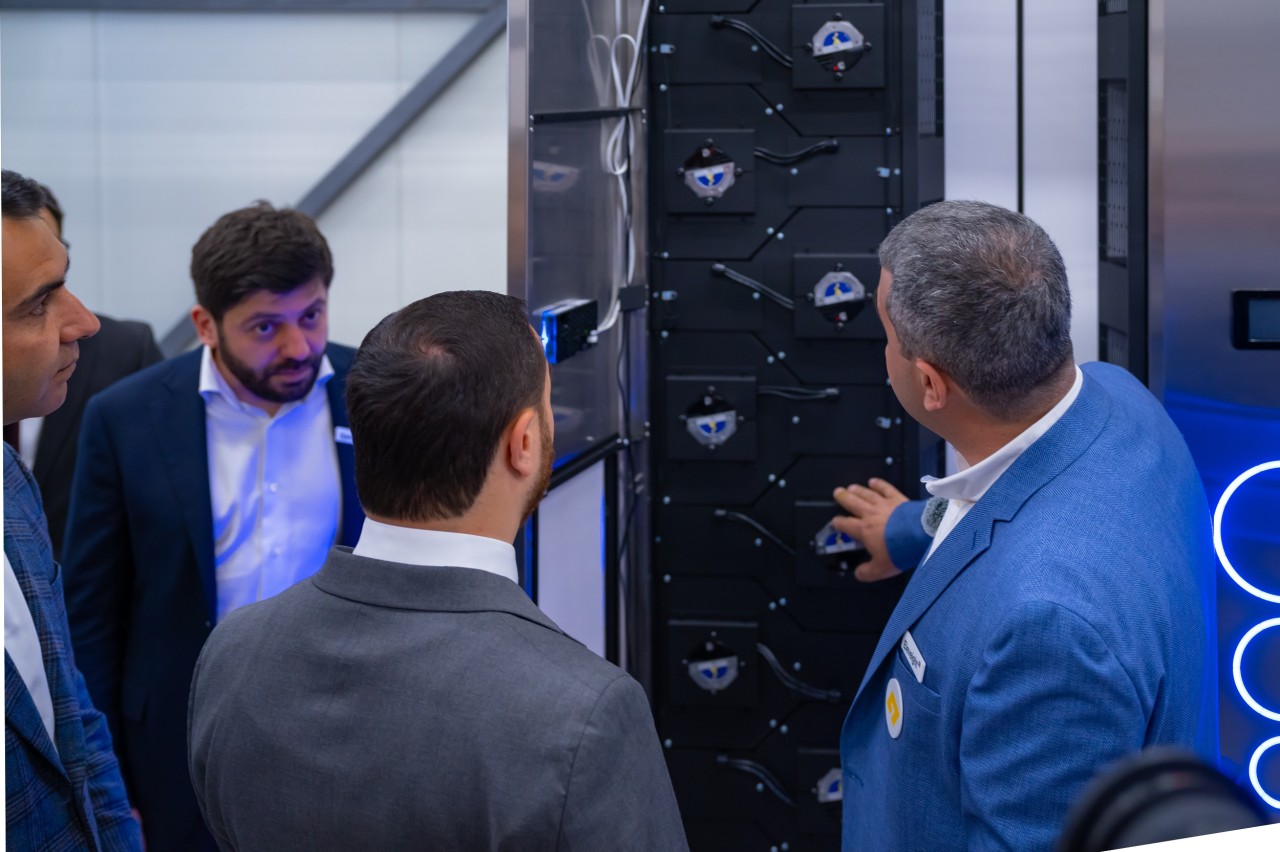
Armenia has officially inaugurated its first artificial intelligence factory. Eleveight AI built the facility in the village of Gagarin in the Gegharkunik region. At present, it is the first AI factory in the South Caucasus to use NVIDIA Blackwell B300 technology.
The company invested $70m in the first phase of the project. It plans to invest a further $50m by the end of 2026.
Developers expect the advanced infrastructure to create new opportunities for businesses, start-ups, research and education.
The AI factory complies with NVIDIA Reference Architecture standards. As a result, international technology companies and research teams can move their projects to Armenia and launch them without facing technical integration challenges.
During the opening ceremony, Armenia’s Ministry of High-Tech Industry and Eleveight AI signed a memorandum of understanding.
“The AI factory lays one of the cornerstones of Armenia’s future economy. With this project, Armenia becomes not only a consumer and user of advanced technologies, but also a producer and supplier for the global market,” said Mkhitar Hayrapetyan..
- ‘Creating a new path’ – Marco Rubio on agreements signed in Yerevan
- US vice-president’s visit to Armenia hailed as ‘historic’ – what it delivered
- Business in Armenia: sectors worth investing in
Key facts about the AI factory
The facility is designed to support large-scale AI computing and provide digital solutions for both the public and private sectors.
The factory currently operates with 512 graphics processing units (GPUs). At present, it runs on 1.2 MW of power. The company plans to increase capacity to 5 MW in the next phase and eventually to 35 MW.
According to the company, this expansion will:
- significantly increase the factory’s computing capacity;
- accommodate thousands of next-generation AI processors;
- establish a regional AI infrastructure hub.
To support local talent and promote scientific innovation, Eleveight AI plans to allocate 20% of the factory’s total computing capacity to projects run by Armenian universities and research centres.
The project relies on a sustainable and environmentally responsible model. The infrastructure operates under a Zero Chemical Footprint approach, which uses natural cooling solutions instead of chemical-based systems.
Eleveight AI also owns solar power facilities that provide the factory with a high degree of energy independence and operational autonomy.

Armenia’s Ministry of High-Tech Industry has published photographs of the new AI factory
Eleveight AI aims to put Armenia on the global technology map
According to Arman Aleksanyan, computing power has become “strategic infrastructure” in the age of artificial intelligence. He argues that Armenia should not merely adapt to these changes but should also help shape them.
“We created Eleveight AI with exactly this goal in mind: to build world-class artificial intelligence infrastructure in the region and secure Armenia’s place on the global technology map,” he said.

A public-private partnership
Armenia’s Ministry of High-Tech Industry says the memorandum signed with Eleveight AI aims to develop the country’s AI ecosystem, foster innovation, build capacity and support practical applications.
The agreement envisages efforts to integrate artificial intelligence into public administration and develop cloud services for both the public and private sectors.
The memorandum identifies several areas of cooperation, including:
- support for AI start-ups, research teams and innovative initiatives;
- implementation of educational and professional development programmes;
- strengthening scientific and technological capacity;
- expansion of high-performance computing infrastructure;
- promotion of pilot and applied AI projects.
“The parties also plan to establish the Artificial Intelligence Virtual Institute (AIVI) as a platform for cooperation. It will support the development of educational programmes, professional communities, research groups and innovative initiatives,” the ministry said.
The memorandum also provides for activities aimed at increasing the international visibility and reputation of Armenia’s AI sector. These include joint events with foreign partners, professional forums and pilot projects.

‘We must turn Armenia into a garden of AI factories’
According to Mkhitar Hayrapetyan, the countries that create “gardens of AI factories” will hold the competitive advantage in the 21st century. Armenia, he said, aims to rank among the leaders and become the region’s own “garden of AI factories”.
“That means creating an ecosystem where high-performance computing infrastructure, AI models, laboratories and innovative companies can thrive.”
Hayrapetyan argued that Armenia’s competitive strengths lie in its human capital, engineering culture, global Armenian network and ability to make fast and effective decisions.
He stressed that the government’s role is to create favourable conditions for investment, develop energy and digital infrastructure, train specialists and give Armenian start-ups access to modern computing resources.
The minister said the government will soon begin discussions with state institutions and technology-sector stakeholders to determine how part of the available resources can meet specific needs within Armenia.
“Eleveight AI should not only export computing resources. It should also provide cloud services to Armenian companies, particularly those that urgently need such resources. Demand for them is growing every day,” he said.

Armenia opens its first AI factory