Categories
South Caucasus News

Ukrainian soldier deceived Russian invaders and took them prisoner; coordinates were given to Kyiv


Categories
South Caucasus News

OpenAI rolls out GPT-5.5 Instant for ChatGPT user


The company said the model reduces hallucination in sensitive areas such as law, medicine, and finance, while maintaining the low latency of its predecessor, News.Az reports, citing TechCrunch.
***
OpenAI released the latest GPT-5.5 model last month with the company claiming improvements in areas like coding and knowledge work.
The new model also achieved a score of 81.2 in the AIME 2025 math test, compared to 65.4 for the older model. It also outperformed its predecessor on the MMMU-Pro multimodal reasoning benchmark, with a score of 76 vs. 69.2.
The release placed a particular emphasis on context management. GPT-5.5 Instant can use its search tool to refer back to past conversations, files, and Gmail to give you more personalized answers. This feature will be available to Plus and Pro users on the web, with plans to roll it out to mobile soon. OpenAI said that it plans to extend access to this feature to Free, Go Business, and enterprise users in the coming weeks.
With this update, ChatGPT will also show memory sources across all models to help you understand where it generated the answers from. Users can delete outdated sources or correct them if the answer was wrong. Crucially, the company said that if you share a chat with someone, they won’t be able to see the memory sources.
For developers, the GPT-5.5 model will be available through API as “chat-latest,” with 5.3 available as an option for paid users for only three months.
The company has faced rebuttal from previous model withdrawal moves. When OpenAI withdrew its GPT-4o model, there was significant backlash from users who related to the model’s “personality.” GPT-4o affirmed users’ choices frequently and that made them feel a connection to that particular model. Users who signed petitions to stop OpenAI from retiring it described the model as their “best friend” or “a mirror.” Despite the outcry, GPT-4o was deprecated in February 2026.

The post OpenAI rolls out GPT-5.5 Instant for ChatGPT user appeared first on azeritimes.com.


Categories
South Caucasus News

Azerbaijani and Turkish military delegations meet


Lieutenant General Azer Aliyev, expressing his satisfaction at welcoming the guests to the country, noted that relations between Azerbaijan and Türkiye, grounded in brotherhood and friendship, have been rapidly developing in the military sphere and have been elevated to the level of a strategic partnership, News.Az reports, citing the Defense Ministry.
***
It was noted during the meeting that mutual visits make a significant contribution to the continuous analysis of activities in the field of radiological, chemical, and biological protection, taking into account global and regional development trends, and to maintaining the capabilities of the Armed Forces at the highest level.
The sides also discussed the current status of ongoing activities in the military, military-technical, and other fields, and conducted a comprehensive exchange of views on issues of common interest.

The post Azerbaijani and Turkish military delegations meet appeared first on azeritimes.com.


Categories
South Caucasus News

Google sees massive 800% rise in AI agent revenue


Speaking to investors during the company’s Q1 2026 earnings call, Alphabet (Google’s parent company) CEO Sundar Pichai revealed that revenue from products built on Google’s GenAI models grew nearly 800% year-over-year, News.Az reports, citing CX Today.
***
Gemini Enterprise paid monthly active users also grew 40% quarter-over-quarter in the same period, with Bosch, Merck, and Mars Inc. named among the major global brands now active on the platform.
Speaking to investors during the call, Pichai said:
“We are winning new customers faster with new customer acquisition doubling compared to the same period last year.
Until now, Google’s enterprise AI build-out has largely been tracked through product launches and partnership agreements.
CX Today has followed much of that journey – from the January launch of Gemini Enterprise for Customer Experience, to the SAP marketing agents integration in April, and the expanding Salesforce partnership.
What the latest earnings call added was something more tangible: evidence that enterprise buyers are committing at scale, and that those commitments are growing in size.
The results arrived alongside a new Gemini Enterprise Agent Platform, unveiled at Google Cloud Next.
Pichai described it as empowering users to “build, orchestrate, govern, and optimize agents with the controls that enterprise customers need.”
New capabilities added to the Gemini Enterprise app (projects, canvas, long-running agents, and skills) are designed to push agent deployment well beyond specialist IT teams.
“Every employee can build agents,” Pichai said.
Alongside the platform, Google introduced what it is calling an agentic data cloud, with Pichai claiming that it gives “agents business context from enterprise data to help them reason intelligently,” drawing on Google’s Cloud Lake House, knowledge catalog, and deep research agents.
For CX and contact center teams, this is the infrastructure layer that determines how useful an enterprise AI agent can actually be.
An agent working from real-time customer history, product inventory, and transaction data is a very different proposition from one working off a static knowledge base – and Google is increasingly building with that distinction in mind.
A $462 Billion Backlog Tells Its Own StoryThe AI agent numbers sit inside a broader Google Cloud performance that is accelerating quickly.
Alphabet CFO Anat Ashkenazi reported cloud revenues of $20 billion in Q1, up 63% year-over-year, with AI solutions named as the “largest contributor to cloud’s growth this quarter, driven by strong demand for industry-leading models, including Gemini 3.”
Cloud backlog nearly doubled sequentially in Q1, reaching $462 billion, driven by what Ashkenazi called “strong demand for enterprise AI offerings.”
The backlog figure is arguably more telling than the revenue line. Revenue reflects what enterprises have spent; backlog reflects what they have committed to spend.
A near-doubling in a single quarter suggests the enterprise AI evaluation phase is giving way to something more durable.
Reading the 800% CarefullyThe near-800% growth rate will attract the most attention, but some context is useful.
Google hasn’t disclosed the base from which that figure is calculated, and GenAI solution revenue is still reported within Cloud’s broader numbers rather than broken out separately.
As the base expands – and based on the backlog, it is expanding fast – that growth rate will naturally compress.
What the Q1 results do establish is that Google has shifted its enterprise AI agent story from potential to performance.
The Gemini platform, the SAP and Salesforce integrations, the Customer Engagement Suite; all of it is showing up in contracted revenue, expanding deal sizes, and a roster of paying customers that includes some of the world’s most recognizable brands.
For CX leaders who have been tracking Google’s enterprise AI moves from a distance, the Q1 numbers are a signal that a lot of their peers have already stopped watching and started spending.

The post Google sees massive 800% rise in AI agent revenue appeared first on azeritimes.com.


Categories
South Caucasus News

NATO comes to Sweden: Europe’s security map is changing​


For Sweden, this meeting is a symbolic and political milestone. For NATO, it is a demonstration that the Alliance’s enlargement to the north has already changed the strategic balance in Europe. For Russia, it is a reminder that its war against Ukraine has produced consequences opposite to those Moscow had sought: instead of weakening NATO, it has pushed historically non-aligned countries into the Alliance and strengthened NATO’s position in the Baltic Sea and the High North.

Sweden’s accession to NATO in March 2024 marked the end of more than two centuries of military non-alignment. For generations, Swedish foreign policy was built on the idea that the country should avoid formal military blocs while maintaining a strong national defence and close cooperation with Western partners. That model survived the Cold War, the collapse of the Soviet Union, and the first decades of the post-Cold War era. However, Russia’s full-scale invasion of Ukraine in February 2022 fundamentally changed threat perceptions in Northern Europe.

***

The decision by Sweden and Finland to apply for NATO membership was not merely a diplomatic shift. It was a strategic turning point. Finland joined NATO in 2023, bringing with it a long border with Russia and one of Europe’s strongest reserve-based defence systems. Sweden followed in 2024, adding advanced military capabilities, a powerful defence industry, control over key parts of the Baltic Sea region, and an important geographic position between the Nordic region, Central Europe and the Arctic.

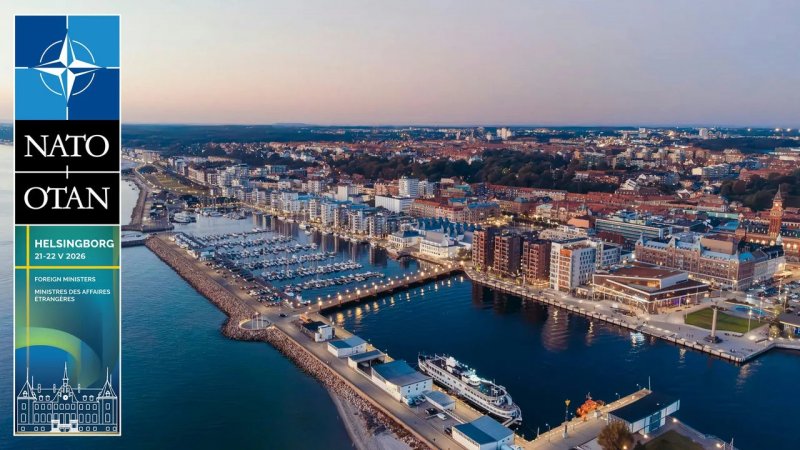
The Helsingborg meeting will therefore be held in a country that is still a relatively new NATO member, but already plays a major role in the Alliance’s evolving northern strategy. Sweden is not entering NATO as a passive participant. It brings advanced air capabilities, naval expertise, intelligence experience, cyber capacity and a defence industry that produces some of Europe’s most important military systems, including Gripen fighter aircraft, submarines, armoured vehicles and anti-tank weapons.
Source: NATO

The choice of Helsingborg also has geopolitical significance. Located in southern Sweden, close to Denmark and the Öresund Strait, the city sits near one of Northern Europe’s most important maritime corridors. The strait links the Baltic Sea with the North Sea and the wider Atlantic space. In peacetime, this is a route for trade, transport and energy infrastructure. In a crisis, it would be a strategic passage for military mobility, reinforcement and control of the Baltic region.

The Baltic Sea has become one of the most important security zones in Europe. With Sweden and Finland inside NATO, the region’s strategic map has changed dramatically. The Baltic states — Estonia, Latvia and Lithuania — are no longer geographically exposed in quite the same way as before. Their security is now more directly linked to Nordic defence planning, Swedish territory, Finnish capabilities and NATO’s wider northern posture. The island of Gotland, in particular, has regained enormous strategic importance. Whoever controls access around Gotland can influence military movements across much of the Baltic Sea.

For NATO, this means stronger deterrence. For Russia, it means a more complex military environment. Russia’s Baltic Fleet, based in Kaliningrad and St Petersburg, now operates in a region where NATO has a much stronger maritime, air and intelligence presence. Kaliningrad remains a heavily militarised Russian exclave, but its strategic position has become more constrained as the surrounding region has become increasingly integrated into NATO defence planning.

This is one reason the Helsingborg meeting will likely focus heavily on Russia, even if the official agenda is framed more broadly around deterrence, defence spending, Ukraine and preparations for future NATO summits. Russia remains the central military challenge for the Alliance. Its war against Ukraine has destroyed the assumption that large-scale war in Europe belongs to the past. It has forced European governments to rethink defence budgets, ammunition production, military mobility, air defence, cyber resilience and civil preparedness.

Ukraine will almost certainly be one of the core topics in Helsingborg. NATO countries continue to face the same strategic question: how to sustain support for Kyiv not for weeks or months, but for years. The war has shown that modern conflict requires enormous quantities of ammunition, drones, air defence systems, spare parts, intelligence support and industrial capacity. Political declarations are important, but they are no substitute for production lines, logistics and long-term financing.

For Ukraine, the issue is not only whether NATO members are willing to help. The issue is whether they can build a predictable system of support. Kyiv needs air defence to protect cities and infrastructure, artillery shells to hold front lines, drones for reconnaissance and strikes, armoured vehicles, training, financial assistance and political backing. The longer the war continues, the more important the industrial dimension becomes. Europe’s defence industry must move from emergency support to sustained production.

This is where the Helsingborg meeting may become especially important. NATO foreign ministers are not defence ministers, but they shape the political framework within which military and financial decisions are made. They will discuss the diplomatic and strategic direction of the Alliance before later meetings at the level of heads of state and government. In that sense, Helsingborg can be seen as part of a broader process: defining how NATO prepares for a long confrontation with Russia while keeping Ukraine at the centre of the Euro-Atlantic security agenda.

The meeting will also take place against the backdrop of a broader debate about defence spending. For many years, European NATO members were criticised for underinvesting in defence. The war in Ukraine has changed the political atmosphere, but the gap between promises and real capabilities remains a serious challenge. Tanks, missiles, air defence systems, ammunition stockpiles and trained personnel cannot be created overnight. NATO’s credibility depends not only on political unity, but on whether member states can actually deliver the forces and equipment required for deterrence.

Sweden’s position is particularly interesting in this context. Unlike some European countries that significantly reduced their defence capacity after the Cold War, Sweden maintained a strong defence culture, even though it also went through periods of downsizing. In recent years, Stockholm has moved to rebuild and expand its military readiness. Sweden’s experience with territorial defence, civil preparedness and total defence planning is now highly relevant for NATO. The idea that society as a whole must be prepared for crisis — not only the armed forces — has returned to the centre of European security thinking.

The Nordic dimension is another major factor. With Sweden and Finland now inside NATO, the Nordic countries can coordinate defence planning in a way that was previously politically impossible. Norway brings Atlantic and Arctic experience. Denmark controls key approaches between the Baltic and North Seas and has responsibilities in Greenland and the Faroe Islands. Finland brings a strong land defence model and direct experience of living next to Russia. Sweden adds industrial depth, air and naval capabilities and strategic geography. Together, they create a much more coherent northern pillar within NATO.

This has implications not only for the Baltic Sea, but also for the Arctic. The High North is becoming increasingly important as climate change, military competition, energy interests and great-power rivalry reshape the region. Russia has invested heavily in Arctic military infrastructure. NATO, meanwhile, must ensure that the North Atlantic, the Norwegian Sea, the Barents region and Arctic approaches remain secure. Sweden’s entry into NATO strengthens the Alliance’s ability to think about the Baltic and Arctic theatres as connected spaces rather than separate regions.

The Arctic is no longer a remote geopolitical frontier. It is linked to submarine routes, missile warning systems, energy infrastructure, undersea cables and access between North America and Europe. Any serious confrontation between Russia and NATO would have a northern dimension. That makes Sweden’s membership strategically valuable far beyond its own borders.

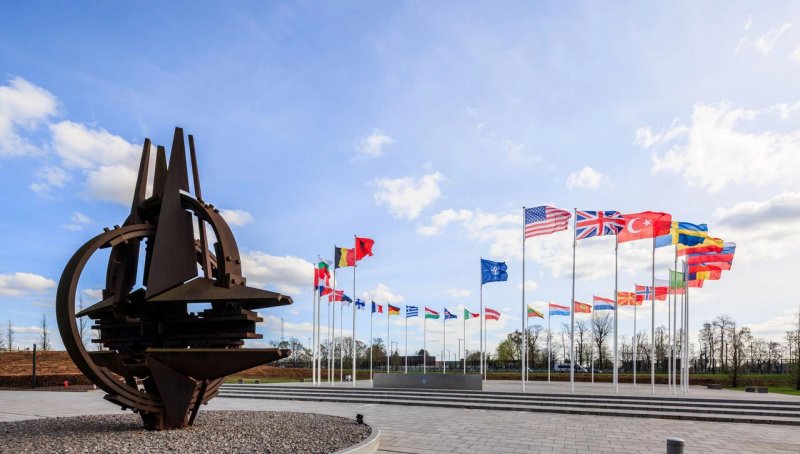
The meeting in Helsingborg will also send an important political message to European capitals. NATO is no longer the same Alliance it was before 2022. It is larger, more northern, more focused on territorial defence and more directly shaped by the war in Ukraine. For years, NATO was involved in crisis management missions beyond its borders, including in Afghanistan and the Balkans. Today, its core mission has returned to the centre: collective defence of Allied territory.

That return to collective defence requires a different mindset. It requires readiness, stockpiles, infrastructure, troop mobility, air defence, cyber protection and political resilience. It also requires societies to understand that security is not only a matter for soldiers and diplomats. Energy systems, ports, railways, telecommunications networks and undersea infrastructure have all become part of the security equation.

This is particularly relevant in the Baltic Sea region, where undersea cables, pipelines and energy infrastructure have become increasingly sensitive. Recent years have shown how vulnerable critical infrastructure can be to sabotage, hybrid operations and political pressure. NATO’s northern members are now paying far more attention to protecting maritime infrastructure, monitoring suspicious activity and improving cooperation between military and civilian agencies.

Sweden’s role in this area is likely to grow. Its location, navy, coast guard, intelligence services and defence industry all make it a key actor in Baltic Sea security. Hosting NATO foreign ministers in Helsingborg is therefore not only symbolic; it also reflects Sweden’s growing practical importance inside the Alliance.

The meeting will also matter for Türkiye. The upcoming NATO summit in Ankara gives the Helsingborg gathering an additional layer of importance. Foreign ministers will use the Swedish meeting to prepare the political ground for later decisions at leaders’ level. This is especially notable because Türkiye played a central role in Sweden’s NATO accession process, raising concerns over security, terrorism and political commitments before eventually approving Sweden’s membership. Now, Sweden is hosting NATO ministers ahead of a summit in Türkiye — a diplomatic sequence that reflects how Alliance politics can move from tension to institutional integration.

For European security, the broader conclusion is clear: the map has changed. Sweden’s NATO membership has closed one of the last major gaps in the Alliance’s northern architecture. Finland’s accession extended NATO’s direct border with Russia. Sweden’s accession strengthened NATO’s control and situational awareness in the Baltic region. Together, these moves have made Northern Europe one of the most important strategic centres of the Alliance.

Russia’s invasion of Ukraine was intended, among other things, to limit NATO’s influence and force a new security order in Europe on Moscow’s terms. Instead, it triggered the opposite outcome. NATO expanded. European countries increased defence spending. Ukraine became deeply integrated into Western military support networks. The Baltic and Nordic regions moved closer together. Russia now faces a more unified northern flank than at any point in the post-Cold War period.

However, NATO also faces serious challenges. Unity must be maintained across 32 member states with different political priorities, threat perceptions and economic capacities. Support for Ukraine must be sustained despite domestic pressures in member countries. Defence industries must expand faster. European governments must persuade their societies that higher defence spending is not temporary, but part of a new security reality. And the Alliance must prepare for hybrid threats, cyberattacks, disinformation, infrastructure sabotage and pressure on democratic institutions.

This is why the Helsingborg meeting should not be seen as a ceremonial event. It is part of a much larger process of adaptation. NATO is adjusting to a world where peace in Europe can no longer be taken for granted, where Russia is prepared to use force to change borders, and where security in the Baltic, Arctic and Black Sea regions is interconnected.
Source: NATO

For Sweden, the meeting will be a test of diplomatic maturity inside NATO. The country has moved quickly from applicant to full member and host of a major ministerial event. That transition reflects both Sweden’s own ambitions and the urgency of the security environment. Stockholm wants to show that it is not merely protected by NATO, but also contributes to NATO’s political direction, operational planning and strategic resilience.

For the Baltic states, Sweden’s deeper NATO integration strengthens confidence in regional defence. For Finland and Norway, it creates new opportunities for northern coordination. For Denmark, it reinforces the strategic importance of the Danish straits and the link between the Baltic and Atlantic spaces. For Poland and Germany, it strengthens the broader security architecture of Northern and Central Europe.

For Ukraine, the meeting will be another indicator of whether NATO can maintain political focus and practical support. For Russia, it will be another sign that the European security order has shifted in ways that Moscow cannot easily reverse.

The gathering in Helsingborg will not produce a single dramatic turning point. Most ministerial meetings do not. But its importance lies in what it represents: a new NATO geography, a new Swedish role, a more militarised strategic environment and a Europe that is steadily moving from post-Cold War assumptions to wartime realities.

In this sense, the title “NATO Comes to Sweden” captures more than a diplomatic event. It captures a historic reversal. For decades, Sweden stood outside military alliances while cooperating closely with the West. Today, NATO is not only present in Sweden — Sweden is helping shape NATO’s future.

Europe’s security map is changing, and Helsingborg will be one of the places where that change becomes visible.

By Samir Muradov

The post NATO comes to Sweden: Europe’s security map is changing​ appeared first on azeritimes.com.


Categories
South Caucasus News

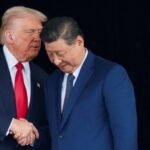
Taiwan likely topic in Trump-Xi discussions, U.S. confirms​


Rubio told a White House press ​briefing that the United States doesn’t ⁠need any destabilizing events to occur ​with regard to Taiwan, News.Az reports, citing Reuters.

***

“I’m sure Taiwan will ​be a topic of conversation; it always is,” Rubio said. “I think both countries understand that it ​is in neither one of our ​interests to see anything destabilizing happen in that part ‌of ⁠the world. We don’t need any destabilizing events to occur with regards to Taiwan or anywhere in the Indo Pacific.”

Trump ​is set ​to ⁠visit Beijing on May 14 and 15.

Taiwan is facing rising military ​pressure from Beijing, which claims ​the ⁠democratically governed island as its own territory. The United States is Taiwan’s most important ⁠international ​backer and arms supplier, ​to the constant anger of Beijing.

The post Taiwan likely topic in Trump-Xi discussions, U.S. confirms​ appeared first on azeritimes.com.

Categories
South Caucasus News

Airlines slash two million seats amid high fuel prices​


About 13,000 fewer flights will operate in May around the world after recent cancellations, according to data from the aviation analytics company Cirium, News.Az reports, citing The Guardian.

***

Although the figure represents less than 2% of global aviation capacity, and only a net 111 flights have disappeared from London Heathrow schedules it comes amid fears that the long-term supply of jet fuel could cause further summer cancellations, with UK airlines told at the weekend they could have more flexibility to consolidate flights on popular routes if needed.

Some of the 2m seats have been cut by using smaller planes, as well as outright cancellations.

Istanbul and Munich have recorded the biggest drop in flights, with Turkish Airlines and the German flag carrier Lufthansa making swingeing cuts. Lufthansa has cut 20,000 short-haul flights, operated by its CityLine subsidiary.

The price of jet fuel has more than doubled since the US-Israel attack on Iran and the closure of the strait of Hormuz.

Most big short-haul airlines operating from the UK are well hedged on jet fuel, meaning they do not expect to face immediate cost increases. EasyJet and Wizz Air have pledged to operate their summer schedules in full, despite pressure on the unhedged portion of their fuel bill.

The industry says it is not experiencing any current shortages, given the usual six weeks’ visibility of supply. However, international agencies have predicted that Europe faces shortages of jet fuel if the war in the Middle East continues to disrupt supplies.

Analysts at Goldman Sachs said in a research note on Monday that the UK was the most exposed as the largest net importer of jet fuel in Europe, with a low inventory, high import reliance, and reduced domestic refining capacity for jet fuel.

It said stocks in the UK could fall to “critically low levels, increasing the likelihood of rationing measures”.

The UK government said at the weekend that unusual measures could be taken in advance to avoid late disruption for holidaymakers over the summer, including consolidating schedules on routes where there were multiple flights to the same place on the same day.

It will relax the “use-it-or-lose-it” slot rules, with airlines able to cancel some flights with fewer seats sold without losing valuable rights to operate them the following season. If carriers have not sold a significant proportion of tickets, flights may also be cancelled to prevent wasting fuel from running near-empty planes, ministers said.

The transport secretary, Heidi Alexander, who agreed the measures with the aviation industry, said there were no “immediate supply issues”, but the government was “preparing now to give families long-term certainty and avoid unnecessary disruption at the departure gate this summer”.

UK refineries have been asked to maximise jet fuel production under contingency planning, although ministers have resisted requests from the industry to cut taxes and reduce environmental and noise rules.

The post Airlines slash two million seats amid high fuel prices​ appeared first on azeritimes.com.


Categories
South Caucasus News

New danger for Putin; new wave of mobilization explodes situation in Russia, elite also took action


Categories
South Caucasus News

Boko Haram attack on Chadian forces leaves 23 dead


The military said in a statement on Tuesday that the Nigeria-based armed group – which has long posed a threat around Lake Chad, located at the junction of Cameroon, Chad, Niger and Nigeria – struck on Monday night on Chad’s island of Barka Tolorom, News.Az reports, citing Al Jazeera.
***
The army said “a significant number” of the attackers were killed and the group was repelled.
“Once again, the nebulous Boko Haram terrorist group carried out a cowardly attack last night on our military base at Barka Tolorom,” Chadian President Mahamat Idriss Deby Itno said on Tuesday in a Facebook post.
“We will continue the fight with renewed determination until this threat is completely eradicated,” he said, offering his condolences to the bereaved families.
Chadian soldiers have come under increasing fire from Boko Haram in the Lake Chad region, with an October 2024 attack killing about 40 soldiers in the Chadian army’s ranks.
Recent months have also seen a surge in attacks by the group’s JAS faction, including kidnappings and attacks on advanced army positions, especially on the islands and along Niger’s portion of the lake’s shores.
In response to the October 2024 attack, Deby launched a counteroffensive, which he promised to “personally” lead on the ground for two weeks.
After that offensive ended in February last year, the army insisted that Boko Haram had “no more sanctuary on Chadian territory”.
Lake Chad’s islands and marshes also serve as a haven for Boko Haram’s rival splinter group, the ISIL affiliate in West Africa Province (ISWAP).
The landlocked Central African country has faced years of instability, marked by recurring rebellions, armed factions, and coups. Despite its oil wealth, economic stagnation and a harsh climate have kept Chad among the poorest nations in Africa.

The post Boko Haram attack on Chadian forces leaves 23 dead appeared first on azeritimes.com.


Categories
South Caucasus News

Tayfun Block‑4 and launcher debut at SAHA 2026 – VIDEO


The display took place during the SAHA 2026 exhibition in Turkey, according to the analytical platform SavunmaSanayiST on X, News.Az reports, citing Militarnyi.
***
This is the first public demonstration of the whole system — the missile together with the ground-based launcher.
The Tayfun Block-4 had previously been presented, but without an integrated launcher.
This is now a complete operational-tactical missile system ready for deployment. 
According to unofficial information, the firing range is approximately 1,000 km, which significantly expands the capabilities of the Turkish Armed Forces.
ROKETSAN is actively developing the TAYFUN family of ballistic missiles. The first tests of the missile took place in October 2022 — the missile hit a target 561 km away after a 458-second flight.
Subsequent tests took place in June 2023 from the Rize-Artvin airfield in the northeast of the country. The tests confirmed the missile’s combat capabilities and marked another step toward the serial production of the new weapon.

The post Tayfun Block‑4 and launcher debut at SAHA 2026 – VIDEO appeared first on azeritimes.com.