
Month: March 2026
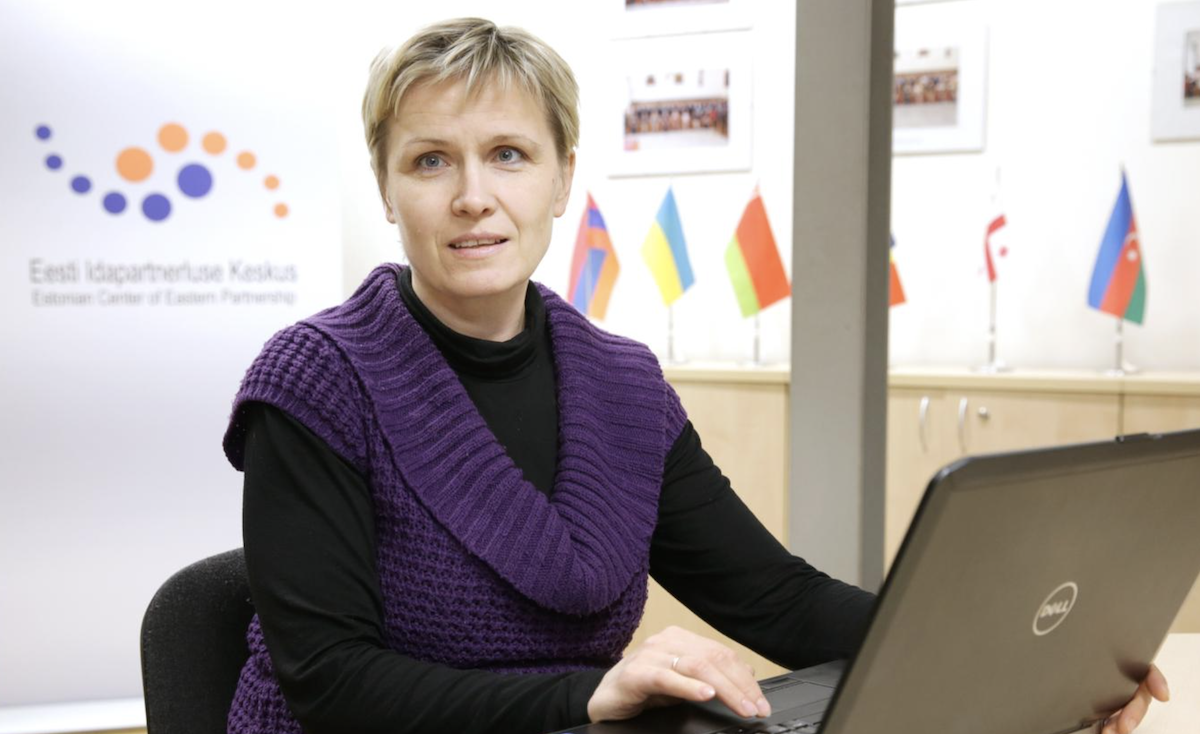
Estonia’s ambassador to Georgia, Marge Mardisalu-Kahar, has said that the processes currently unfolding in Georgia’s higher education system do not represent the Estonian model.
In an exclusive interview with Interpressnews, she was responding to claims by the Georgian government that the reform being implemented in the higher education sector is largely based on Estonia’s experience.
According to Mardisalu-Kahar, any borrowed model can only be useful if it is adapted to the local environment, culture and political context.
The Georgian government is introducing sweeping changes to the country’s higher education system.
Under the new reform, student admissions to state universities will be distributed according to a strict specialisation principle, with specific academic fields assigned to particular cities and universities.
The government says the aim of the reform is to better align education with labour market needs and concentrate resources. However, the changes have already raised questions about academic freedom, regional development and the autonomy of universities.
More details about the education reform can be found here.
Marge Mardisalu-Kahar: “We share our experience. We tell our story, with its strengths and weaknesses, and then Georgia decides which parts of that experience are useful and which are not. The intention is never to simply transfer one country’s model to another. It does not work that way.
For any model to be useful, it must be adapted to the local environment, culture and political context. Direct copying of experience does not happen. There is indeed strong interest from Georgia in Estonia’s experience, particularly in the education sector. This includes primary, vocational and higher education.
But at the moment Georgia is moving in the opposite direction in this regard. This is not directly about the reform itself. Our education sector is also constantly undergoing reforms. We have also reduced the number of universities. The issue is not the number of institutions or the reform itself.
The issue lies in the fundamental principles on which the reform is based. These are democratic principles, including whether academic institutions have autonomy, whether academic freedom exists, and whether Georgia’s education system aligns with the Bologna Process and European standards.
In this context, we see that the direction of Georgia’s education system is unfortunately the opposite. This is not the Estonian model and it does not reflect its spirit. The key issue is the fundamental principles on which the education system is based. That is what fundamentally distinguishes what is happening in Georgia from Estonia’s model. In our system there is academic freedom, autonomy of academic institutions and democratic standards in education.”

About Georgia’s education reform
Categories
iURL Shortener – iURL
Collect data within minutes. Hassle-free. One short link, infinite possibilities. A short link is a powerful marketing tool when you use it carefully. It is not just a link but a medium between your customer and their destination. A short link allows you to collect so much data about your customers and their behaviors.
Georgian Dream Prime Minister Irakli Kobakhidze hinted at the possibility of reviewing Georgia’s membership in the Istanbul Convention, a Council of Europe treaty protecting women and girls from violence, after Zurab Makharadze, leader of the far-right Alt-Info/Conservative Movement party, it undermined traditional family roles.
The exchange took place during a televised debate on the pro-government Imedi TV on Saturday, on the eve of International Women’s Day, triggering backlash from government critics and human rights groups, who described the possible withdrawal from the Convention as “alarming.” Georgia ratified the Convention in 2017.
Claiming that the Istanbul Convention portrays “traditional roles of a woman and a man” as a “problem” and calls on states to “replace” them, Makharadze asked Kobakhidze why Georgia is still a party.
Kobakhidze said Georgia was facing “enormous pressure” to “instill” what he described as a “malign ideology” and that the Georgian Dream government “could not simply risk” resisting it. “Once we saw the possibility to counter this ideology, we took the measures immediately,” he added, noting that “the work can be continued in other directions too.”
“If there are questions regarding the Istanbul Convention or related legislation, we are ready to work on this issue,” Kobakhidze pledged, adding that the Georgian Dream government “has already demonstrated its work to society by adopting certain laws and abolishing others.” He said this process will continue.
In 2024, Georgian Dream passed a law “on Protection of Family Values and Minors,” severely cracking down on LGBTQI+ rights. In 2025, GD-Parliament also moved to remove the terms “gender” and “gender equality” from all Georgian legislation.
“We fully share the view that this ideology is problematic and that this ideology has specific, tangible negative consequences, which are reflected in marriage and birth rate statistics,” Kobakhidze said.
The exchange followed Kobakhidze’s remarks during the same debate where he emphasized that Georgia is experiencing a “sharp decline” in birth rates, noting a “dramatic drop” in first and second children since 2014, which he called a “serious problem.”
“This decline is not due to social factors,” he said, “The main cause is ideological.”
“Marriage rates have also fallen sharply,” he added. “The economy will regulate migration, and our citizens will return to Georgia as economic conditions improve, but when it comes to birth and marriage rates, other approaches are needed.”
Kobakhidze’s remarks drew criticism from human rights groups, who pointed to an already deteriorating situation regarding the women’s rights protection.
In a statement published on March 8, the Social Justice Center (SJC), a human rights group, said the ruling party had in recent years “effectively abolished or significantly weakened the institutions that formed gender equality policy.” According to the group, political will has decreased, accountability mechanisms have eroded, and policies protecting women’s rights have increasingly become “a formal declaration.”
“The most alarming expression of this process is [March 7] statements made by the authorities about possible denouncement of the Istanbul Convention,” SJC said, noting that the Convention is not merely a treaty, but “a legal framework that obliges states to systematically combat violence against women through prevention, protection, legal response and policymaking.” It added that withdrawing from the treaty would signal that the state was no longer willing to uphold standards protecting women’s lives and dignity.
Lika Jalaghania, an anthropologist and gender researcher, also criticized the debate, accusing Kobakhidze of “political misogyny” and of admitting that “his rule has nothing to do with sovereignty.”
“So it turns out they were forced to protect women from violence, and as soon as they saw it was possible to disobey this coercion, they immediately abolished it,” Jalagania wrote. “Now they will do everything, once they leave the Istanbul Convention, to ensure that every husband’s ‘right’ to beat his wife is enforced.”
In a March 8 Facebook post marking International Women’s Day, the Public Defender of Georgia cited information from the Prosecutor General’s Office stating that in 2025, authorities recorded “12 cases of the murder of women and 21 cases of attempted murder of women.”
“Cases continue to emerge where, despite the state having prior information about possible violence, the murder or attempted murder of a woman could not be prevented,” the office said.
The Istanbul Convention, formally the Council of Europe Convention on Preventing and Combating Violence Against Women and Domestic Violence, was adopted in 2011 and aims to prevent violence against women, protect victims, and prosecute perpetrators.
The Convention calls, among others, “to promote changes in the social and cultural patterns of behaviour of women and men with a view to eradicating prejudices, customs, traditions and all other practices which are based on the idea of the inferiority of women or on stereotyped roles for women and men.” It also calls on parties that to ensure that “culture, custom, religion, tradition or so-called “honour”” are not considered as justification for any acts of violence defined under Convention.
Also Read:
- 24/05/2025 – Amnesty International: Women Protesters Targeted with Gender-Based Violence
- 20/03/2025 – New Studies Reveal Generational Divide in Gender Attitudes in Georgia
- 03/07/2024 – UN Women “Disappointed” with Abolition of Gender Quotas on Party Lists
- 22/11/2022 – CoE GREVIO Report on Georgia’s Implementation of Istanbul Convention