
Azerbaijan is ramping up investments in climate-resilient agricultural and food systems, signaling a strategic shift toward sustainable and technology-driven farming.
Day: March 24, 2026
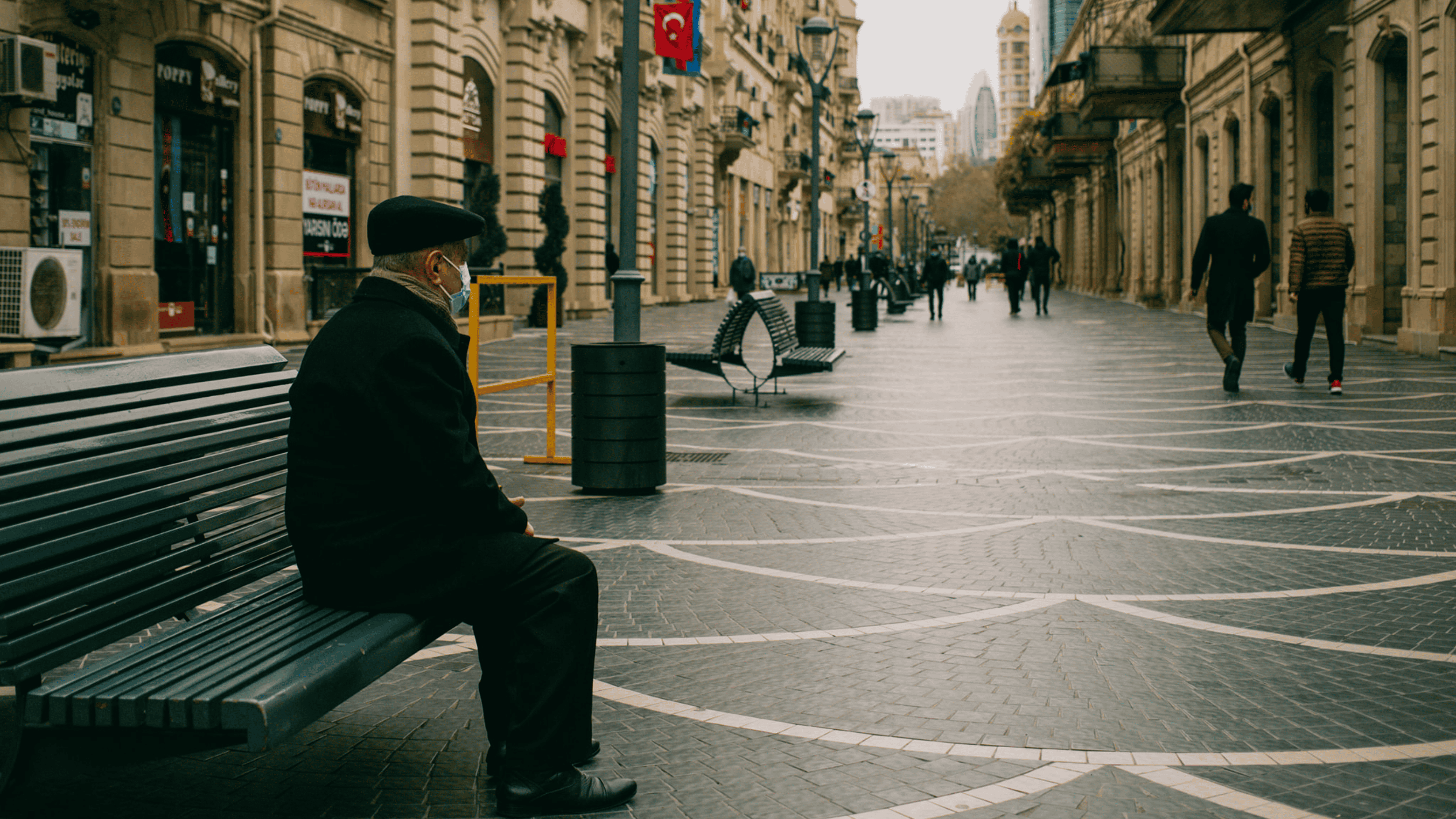
Officials’ salaries in Azerbaijan rise
A presidential decree signed on 19 March and effective from 1 January this year has led to a sharp increase in official salaries for senior officials in Azerbaijan.
According to official documents, new monthly salaries have been set for the prime minister, ministers and a number of senior executive officials. The same package also предусматривает salary increases for certain leadership positions in the прокуратура and the election administration.
The scale of the increase for the speaker of parliament and several other top positions has drawn particular attention.
Under amendments to the law “On the Status of Deputies of the Milli Majlis of the Republic of Azerbaijan”, the monthly salary of the parliamentary speaker has been raised from 3,550 manats (about $2,100) to 17,000 manats (about $10,000). The same changes set the monthly salary of ordinary MPs at around 9,000 manats (about $5,300).
In this context, the officially stated key figures are as follows:
- Speaker of the Milli Majlis – 17,000 manats (about $10,000),
- Prime Minister – 17,160 manats (about $10,100),
- Ministers – 13,750 manats (about $8,100),
- Ordinary MPs – about 9,000 manats (about $5,300),
- Minimum wage – 400 manats (about $235), in effect since 1 January 2025 and unchanged at the start of 2026,
- Average monthly nominal salary – 1,102.9 manats (about $649), according to official data for 2025.
The relationship between these figures has become a subject of debate. The parliamentary speaker’s salary is about 15.4 times higher than the average wage and 42.5 times higher than the minimum wage.
The issue of wealth inequality is also frequently raised in discussions. According to the World Inequality Report, around 10% of Azerbaijan’s population holds approximately 56% of the country’s total wealth.
While the decision is presented as a move towards a more unified and stable wage system, it has also raised concerns over a widening income gap.
Salaries before and after increase
| Position | Before (USD/month) | After (USD/month) | Growth rate | After / average salary | After / minimum wage |
|---|---|---|---|---|---|
| Speaker of the Milli Majlis | 2 100 | 10 000 | ~4,8 times | ~15,4 times | 42,5 times |
| Prime Minister | 6512 | 10 100 | ~1,6 times | ~15,6 times | 42,9 times |
| Minister | 4 500 | 8 100 | ~1,8 times | ~12,5 times | 34,4 times |
| Ordinary MP | 1 462 | ~5 300 | ~3,62 times | ~8,2 times | 22,5 times |
| Head of local executive authority | 1 993 – 4500 | 5 177 – 7 942 | ~2,6 – ~1,76 | ~8 – ~12,3 | 7,3 – 12,3 times |
| Prosecutor General | 1 918 | 8 100 | ~4,2 times | ~12,5 times | 34,4 times |
Argument in favour of a unified system
Sahib Mammadov, head of the Citizens’ Labour Rights Protection League, says that salaries in the civil service were previously based on a model of “base pay + allowances + bonuses”, whereas the new approach changes these mechanisms. He describes it as more transparent and more incentive-based.
“Allowances largely depended on length of service and authority, and did not apply to all civil servants, but only to certain categories of officials. As a result of legislative changes, some gaps are being eliminated, the wage system is being optimised, and there is a transition to a more stable pay structure.
Under the amendments, bonuses and allowances are being replaced by higher base salaries. In future, all civil servants will receive fixed pay. The main goal of the reform is to ensure that future increases apply to all public sector employees. This is also a fairer approach, as newer employees had less experience.
This contradiction will therefore be removed. It should also increase young people’s interest in public service. There were sectors where salaries were low. For example, court clerks and judicial assistants earned less than other civil servants. This gap will now be eliminated.”
This position is often framed as follows: salaries for senior officials should be competitive in order to attract professionals to public administration and reduce “hidden incentives” such as informal sources of income.
“High salaries to attract talent”: the Singapore analogy
During a previous round of salary increases in 2022, lawyer Akram Hasanov referred to the “Singapore model”. The idea is to move away from a system marked by corruption and lack of transparency by raising officials’ salaries while simultaneously introducing strict oversight mechanisms. In this view, higher pay can help attract the most qualified specialists to public service.
“In Azerbaijan, the salaries of officials, MPs, judges — in fact, all public sector employees — should be high. In that case, there will be no corruption.
However, salary increases must be accompanied by other measures. All public officials — including MPs — should declare their income and expenditure. They should do so annually, including information about family members. Financial data on officials, their spending and acquisitions should be openly available on the websites of state institutions.
Let MPs earn 15,000 or even 20,000, but we must see how this money is spent. Otherwise, it may turn out that their assets and expenses do not match their declared income. This would indicate either corruption or незаконная предпринимательская деятельность. This applies not only to MPs, but to all public officials.
Everyone knows that 99% of officials do not live on their salaries alone. Sometimes the cost of their suits exceeds their annual official income, not to mention their cars, houses, holiday homes, family assets and foreign travel. Where does all this come from?
It is obvious that they either take bribes or engage in illegal business. This also creates monopolies in the country. Why should a public official be involved in business activity? By using their position, they create monopolies. Therefore, let their salaries be high, so that they have fewer incentives to seek unofficial income. I also believe that responsibility in this area should be strict. In Azerbaijan, corruption should be punishable by life imprisonment.”
What is the main issue?
Public dissatisfaction is driven less by the absolute figures than by the scale of the gap and a sense of unfairness in the context of everyday life. In a country where the average monthly salary is 1,102.9 manats, the parliamentary speaker’s salary of 17,000 manats far exceeds both average and minimum wage levels.
Are there international comparisons?
For example, the study Members’ Pay: An International Comparison, published in February 2025, compares MPs’ salaries across different parliaments. It finds that:
- In Germany’s Bundestag, annual income is €134,726.
- In Norway’s Storting, annual salary is 1,171,000 Norwegian kroner.
These figures suggest that high salaries for lawmakers are common in some countries. However, the key difference lies not only in pay levels, but also in factors such as tax burdens, mandatory income declarations, conflict-of-interest regulation and the effectiveness of public oversight.
What sets Azerbaijan apart?
The main difference lies above all in the ratio between high official salaries and the country’s average wage.
| Country | Salary (approx.) | Average salary | Ratio |
|---|---|---|---|
| Azerbaijan | Speaker: $10,000/month | Average: $649/month | ~15.4 times |
| Germany | MP: €134,726/year | €55,000/year | ~2,45 раза |
| Norway | MP: 1,171,000 NOK/year | 800,000 NOK/year | ~1,46 раза |
The question of whether this level corresponds to “global standards” becomes secondary. The central issue is how it affects the country’s socio-economic balance.
The World Inequality Report makes the debate over salary increases for officials and MPs even more sensitive.
As a result, a key question remains: if high salaries in Azerbaijan are indeed seen as a tool to retain qualified personnel and improve governance, why is this step not accompanied by the introduction of income declarations, independent audits and mechanisms of public accountability?
Officials’ salaries in Azerbaijan rise
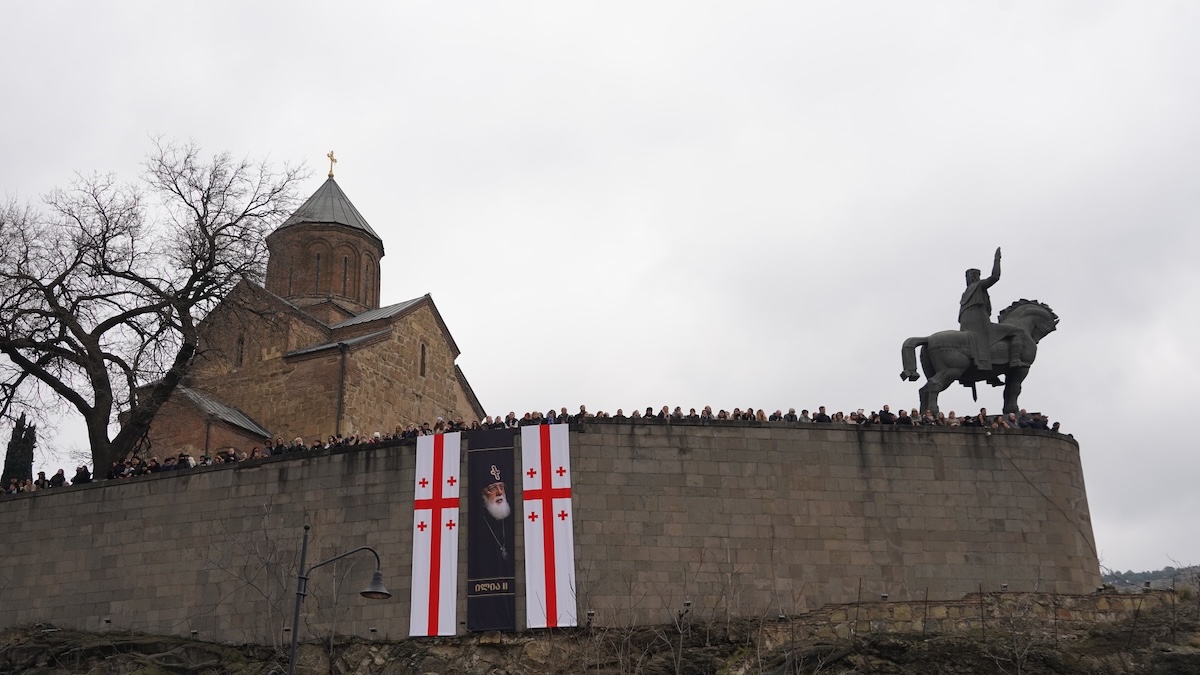
Who will become Georgia’s new Patriarch
Following the funeral of Ilia II, the Georgian Orthodox Church has entered a transitional period. A system that for nearly 50 years revolved around a single figure is now shifting towards collective decision-making. Within the next two months, the Church must elect a new Patriarch. While the process is formally строго regulated, in practice it is far more complex and multi-layered.
A Church without a Patriarch: who is in charge now?
The Church is currently led by Metropolitan Shio Mujiri of Senaki and Chkhorotsku. This is not a temporary arrangement or political compromise, but a pre-established mechanism. Ilia II himself appointed Shio Mujiri as locum tenens of the Patriarchal throne in 2017. Following the Patriarch’s death, his authority took effect automatically.
Formally, all members of the Church are required to obey the Throne. In practice, however, this marks the beginning of a phase that will test how unified the internal structure of the Church remains.
How the Patriarch is elected: a complex but regulated process
The election of a Patriarch does not take place in a single session or through a single decision. The process is divided into two stages and involves several bodies.
Stage one: the Holy Synod nominates candidates
The first stage involves a session of the Holy Synod, which currently consists of 39 hierarchs.
Each member of the Synod has the right to nominate one candidate, including themselves. A secret ballot is then held to select the three candidates who receive the highest number of votes.
Stage two: an expanded Church vote
The second stage involves a broader vote attended by all members of the Synod, as well as representatives of the clergy and laity invited from dioceses, along with delegates from monasteries and theological schools.
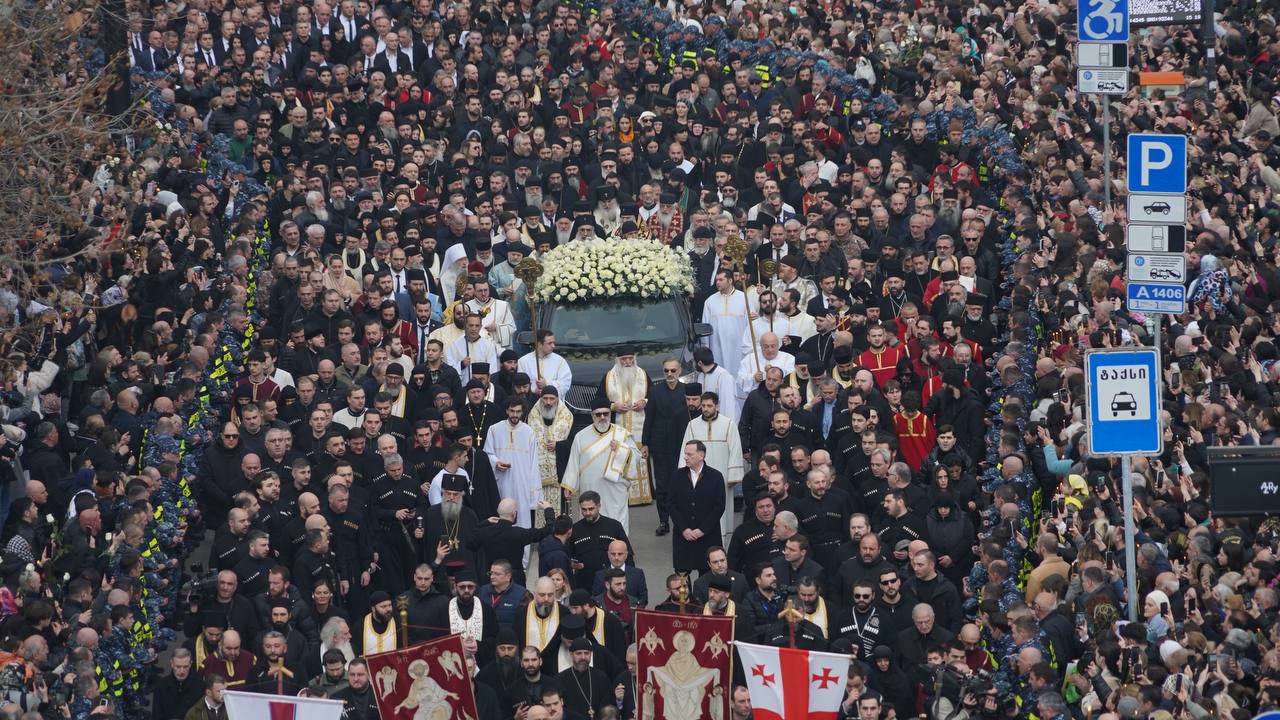
They take part in the discussion, but only members of the Holy Synod have voting rights. This means the final decision remains in the hands of the same 39 individuals.
A candidate who secures more than half of the votes — at least 20 — will be elected Patriarch. If no candidate reaches that threshold, a second round will be held between the two leading contenders.
Timeline: when will the Church have a new leader?
Under Church rules, the process is strictly time-bound.
The expanded vote must take place no earlier than 40 days after the Patriarch’s death and no later than two months.
This means that within a maximum of two months, the Georgian Orthodox Church will have a new Patriarch.
The enthronement will traditionally take place at Svetitskhoveli Cathedral.
A will no one has seen
One of the key documents shaping the process is the Patriarch’s will. However, it has not been officially published, and there is no information about when or whether it will be made public.
Andria Jagmaidze, head of the Georgian Patriarchate’s press service, has said that the appointment of Shio Mujiri in 2017 should be seen as reflecting the Patriarch’s “will”. According to him, Ilia II had stated that everything that needed to be included in the will had already been said publicly.
Who could become Patriarch?
The most likely candidate for the post, reportedly backed by the ruling Georgian Dream party, is Shio Mujiri.
No other specific candidates have been publicly identified.
According to Church rules, the criteria for a Patriarch are strictly defined:
- must be an ethnic Georgian;
- must be a serving bishop;
- must have a theological education;
- must be a monk;
- must be aged between 40 and 70;
- must have experience in Church administration.
Formally, the process is clear. In practice, however, the key questions go beyond procedure. Who controls the votes within the Synod? How consolidated is support for any given candidate? Will there be competition within the Church?
Over 49 years of Ilia II’s leadership, the Church developed into a strong, centralised system. The Patriarch’s authority was so significant that internal Church conflicts rarely became public. After his death, that balance may begin to shift.
What is known about the frontrunner, Shio Mujiri?
Metropolitan Shio Mujiri of Senaki and Chkhorotsku is currently seen as the most realistic contender for the Patriarchal post.
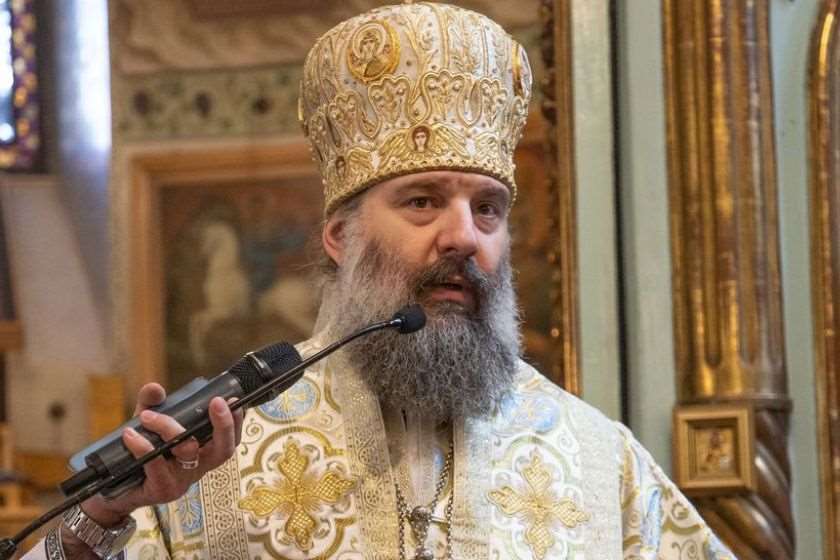
Metropolitan Shio, born Elizbar Mujiri, is 57. He studied at Tbilisi School No. 53 before continuing his education at the Tbilisi State Conservatoire, where he specialised in cello.
His church life began in 1993, when he took monastic vows and received the name Shio. Shortly afterwards, he was ordained as a deacon and then as a priest. Since the 1990s, he has been actively involved in church life, serving as rector of several churches, including St George’s Church in Kldisubani and St Nicholas Church at Narikala Fortress.
He received theological education at Batumi Theological Seminary and later continued his studies at the Moscow Theological Academy and St Tikhon’s Theological Institute.
In 2003, the Holy Synod appointed him head of the newly established Senaki and Chkhorotsku diocese. His career progressed rapidly in the following years: he became an archbishop in 2009 and was elevated to the rank of metropolitan in 2010. Shio Mujiri also oversees parishes of the Georgian Orthodox Church in Australia and New Zealand.
He was a childhood friend of former president Giorgi Margvelashvili and businessman Levan Vasadze.
Who controlled the final day of the Patriarchate?
The Patriarch’s funeral raised another key issue — the relationship between the Church and the state.
On the day of Ilia II’s funeral, access to the Holy Trinity Cathedral and the farewell ceremony was restricted to those with special passes.
These passes were largely issued to representatives of the ruling party, their families, as well as public figures and celebrities seen as close to Georgian Dream.
Among lay speakers, only government representatives were allowed to deliver farewell speeches, including the president, the prime minister and the honorary chairman of Georgian Dream, Bidzina Ivanishvili.
Opposition representatives — including non-parliamentary parties and former presidents Giorgi Margvelashvili and Salome Zourabichvili — were denied entry to the cathedral.
The funeral was organised by a joint commission involving both government and church representatives. However, it remained unclear who decided, and on what basis, who would be allowed inside the cathedral.
Theologian Shota Kintsurashvili described the process as “uncomfortable and unfair”, while political analyst Archil Gamzardia said it appeared to be an attempt to turn religious authority into political capital.
Who will become Georgia’s new Patriarch
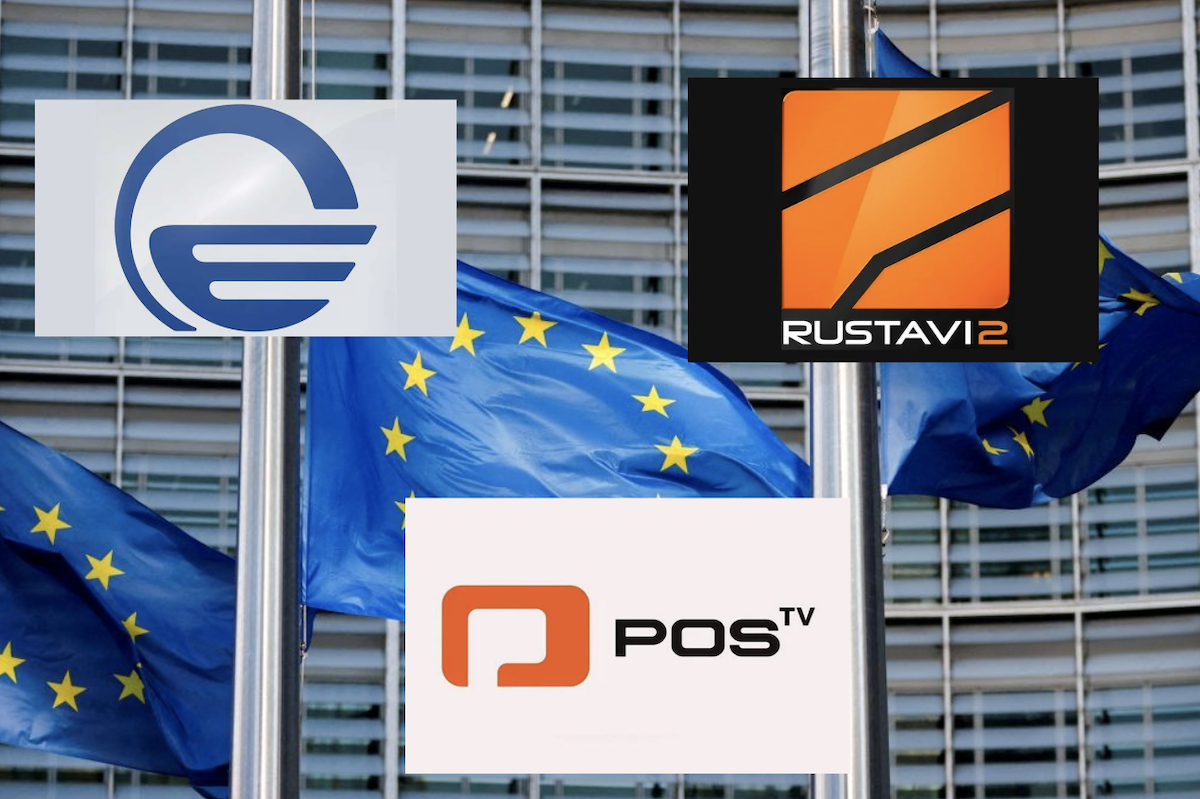
Sanctions against Georgian TV channels
According to the TV channel Pirveli, representatives of the European People’s Party (EPP) have submitted an amendment calling for the privatisation of three Georgian broadcasters — Imedi, POSTV and Rustavi 2.
The channel reports that the initiative has already been formally introduced in the European Parliament, and its fate now depends on support from other MEPs. If the amendment gains sufficient backing, it will be included in the final report on Georgia, a document that could influence EU policy.
A final vote in the European Parliament is scheduled for the end of May.

Pirveli also named the authors of the initiative as Polish MEPs Krzysztof Brejza, Michał Szczerba and Andrzej Halicki. According to the lawmakers, the broadcasters in question systematically spread disinformation and take part in propaganda campaigns which, they argue, serve the interests of the ruling Georgian Dream party rather than independent journalism.
According to the published text, MEPs “strongly condemn” the activities of these outlets, accusing them of “spreading Russian disinformation”, defamation and deliberate manipulation of public opinion.
The text also stresses that such actions cannot be regarded as fair journalism operating within the bounds of free speech, but rather constitute political propaganda which, in the authors’ view, serves to consolidate authoritarian control and steer Georgia away from its European path.
It remains unclear how much support the amendment will receive in the European Parliament. However, the very emergence of the initiative suggests that parts of the Georgian media have become a key target of criticism on the EU’s political agenda.
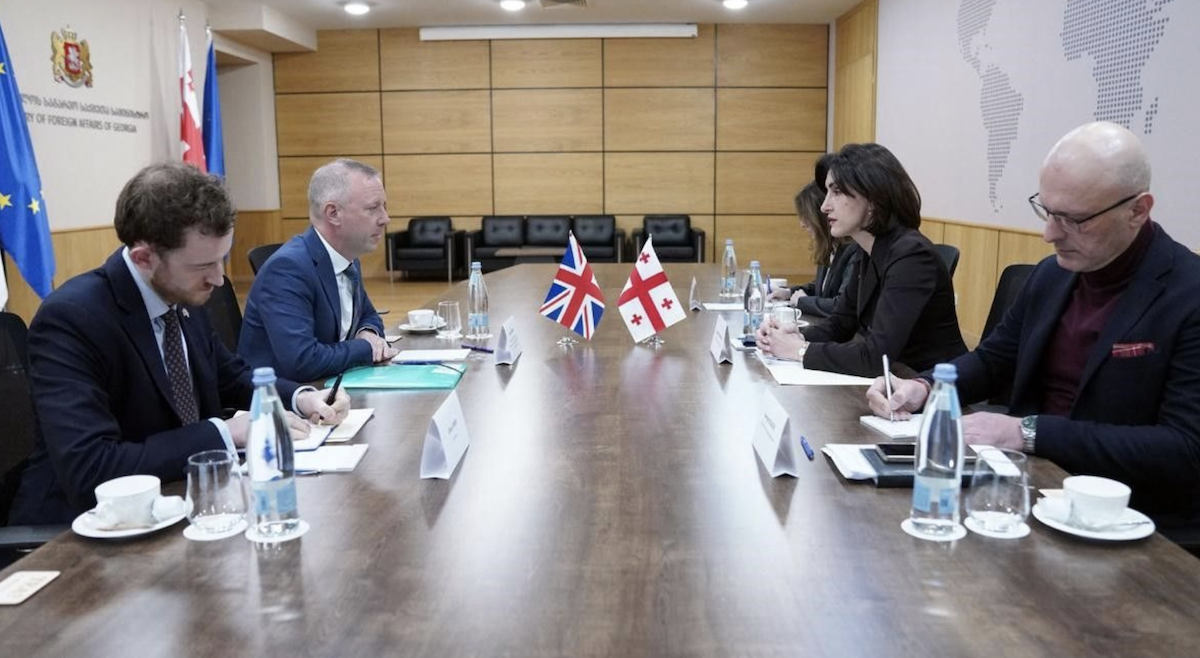
On 24 February 2026, the United Kingdom imposed sanctions on the Georgian TV channels Imedi and POSTV as part of its sanctions package against Russia.
According to the sanctions document, the measures against Imedi and POSTV include restrictions on the use of trust services and asset freezes, as well as director disqualification sanctions, which limit an individual’s right to hold a managerial position for a specified period. Violating the sanctions is considered a criminal offence.
Prime Minister Irakli Kobakhidze of the ruling Georgian Dream party described the decision to sanction pro-government media as “reckless and shameful”. He said that in London “nothing is valued anymore”, including freedom of speech.
Kobakhidze said the sanctions amounted to a violation of media freedom, but added that they would have no practical impact. He also said the government would take full responsibility to ensure that the situation of journalists at any television company does not worsen.
“Of course, all state and non-state companies must continue to cooperate with Imedi and POSTV,” he added.
Sanctions against Georgian TV channels
Elene Khoshtaria, leader of the opposition Droa party, was sentenced to 1.5 years in prison after the court found her guilty in a “property damage” case launched over her writing protest messages on Tbilisi Mayor Kakha Kaladze’s campaign banner in September. Tbilisi City Court judge Giorgi Arevadze delivered the ruling on March 24.
Khoshtaria was detained on September 15, 2025, for writing protest messages on Tbilisi Mayor Kakha Kaladze’s campaign banner in solidarity with activist and student Megi Diasamidze, who has been on trial over a similar act.
She was charged with “damaging or destroying another person’s property which has resulted in substantial damage,” a charge carrying a punishment of a fine, community service, corrective labour, house arrest for a term of six months to two years, or imprisonment for a term of one to five years. Prosecutors said Khoshtaria damaged three campaign banners, causing total damage of GEL 570 (USD 210).
On September 17, she was granted bail but remained in custody as she refused to post it, saying it would not mean freedom and she did not want to “take part in lies and a farce.”
Her arrest and prosecution drew backlash, with critics seeing it as disproportionate and politically motivated.
Khoshtaria has been among several opposition figures arrested over the past year in separate cases. Some have since been released after serving sentences for defying a Georgian Dream parliamentary commission, while others, including Ahali’s Nika Melia and former defense minister Irakli Okruashvili, have seen their prison terms extended through new convictions.
Khoshtaria, along with seven other opposition party leaders, also faces separate charges in a “sabotage” case opened in November. She has been charged with sabotage, the provision of material resources for sabotage, and aiding a foreign state in hostile activities, offenses punishable by 7 to 15 years in prison.
Khoshtaria’s Droa is among the nine opposition parties that united in an “Opposition Alliance” early in March, pledging to work together towards “preserving national independence and statehood” and “peaceful dismantling of Bidzina Ivanishvili’s Georgian Dream’s autocratic, criminal regime.”
On March 12, the European Parliament adopted a resolution titled “The Case of Elene Khoshtaria and Political Prisoners under the Georgian Dream Regime,” demanding, among others, the release of Khoshtaria and “others detained for politically motivated reasons or for the peaceful exercise of their fundamental rights.”
Also Read: