
Categories
South Caucasus News

Ethereum Spot ETF Inflows Hit 5-Day Streak Near $2,200 Price


Ethereum Spot ETF Inflows Hit 5-Day Streak Near $2,200 Price

You are here: Home / News / Ethereum (ETH) / Ethereum Spot ETF Inflows Hit 5-Day Streak Near $2,200 Price

Ethereum Spot ETF Inflows Hit 5-Day Streak Near $2,200 Price

Ethereum spot exchange-traded funds have seen five consecutive days of net inflows, indicating rising institutional interest in the digital currency as it trades close to the $2,200 mark. This is amid rising sentiment in the market and increasing confidence in investment products based on ETH.

For the first time since January, Ethereum Spot ETFs have seen 5 straight days of positive inflows.

🔹 5 consecutive days of net positive inflows
🔹 ETH price stabilizing around $2,200

The last time we saw sustained ETF inflows like this, ETH ran from $2,500 to $4,000+.

Not… pic.twitter.com/3svCriJs7m

— Leon Waidmann (@LeonWaidmann) March 17, 2026

ETH Spot ETFs Record 5-Day Inflow Streak

Ethereum spot ETFs have witnessed continuous capital inflows in the last five trading sessions. This is an indication that investors are interested in the digital currency.

The streak indicates the ongoing accumulation even in a volatile market, increased investor sentiment towards Ethereum as a long-term store of value, and improved ETF participation compared to previous weeks. It is worth noting that this is one of the most consistent periods for ETH spot ETFs since they were launched.

Also Read: Ethereum Dominates $200 Billion Tokenized Market With Unmatched Strength

ETH Price Holds Near $2,200 Amid Rising Demand

In spite of the overall crypto market’s instability, the price of Ethereum is stable at the $2,200 mark. This is due to the support received from both ETFs and on-chain movements.

The key points to note are the formation of support at current prices, the reduced volatility in prices during ETF inflows, and the correlation between ETFs and the stability in prices. It is important to note whether the continued ETF inflows can take the prices to higher resistance levels.

Institutional Interest Drives Momentum

The constant inflow of investments into the ETF suggests that institutions are increasingly engaging with the Ethereum ecosystem. Spot exchange-traded funds are an attractive option for traditional investors as they offer a regulated way for institutions to enter the crypto space.

Factors indicating the demand for ETH among institutions are that it is a regulated form of investment, facilitates easier allocation of assets for institutions, and increases awareness of the potential use cases of Ethereum in decentralized finance. This trend aligns with broader adoption patterns seen across digital asset markets.

Market Outlook for ETH ETFs and Price Action

If this trend continues, there is a possibility that ETH could experience further upward momentum with support from capital inflow trends.

Potential implications are that there could be increased liquidity in ETH markets, better price support levels, and increased participation by institutional investors. However, there is a possibility that macroeconomic factors could affect the price movements.

This article contains market analysis and price predictions. These are not guarantees. Crypto markets are volatile. Always DYOR. Not financial advice.

Also Read: Ethereum Reclaims Strength Above $2,200 as Bulls Eye $2,400 Breakout

Read More

The post Ethereum Spot ETF Inflows Hit 5-Day Streak Near $2,200 Price appeared first on azeritimes.com.

Categories
South Caucasus News

Europeans seek clarity about Trump’s Iran war aims before agreeing to his warship demands


Categories
South Caucasus News

Иранцы плачут на руинах Тегерана после обстрела США


Categories
South Caucasus News

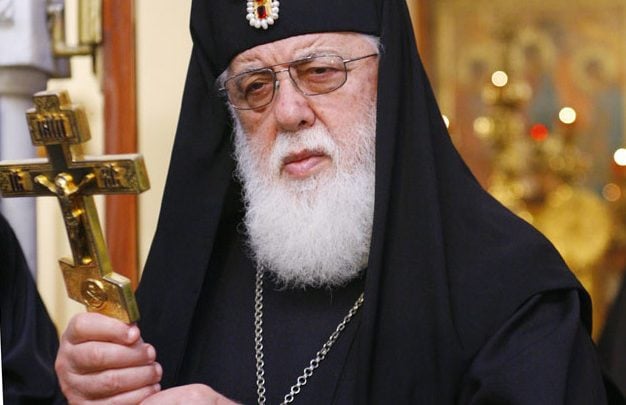
Catholicos-Patriarch of Georgia Ilia II has passed away


Patriarch of Georgia Ilia II has died

On the evening of March 17, Catholicos-Patriarch of the Georgian Orthodox Church Ilia II passed away at the age of 93. He had led the Church for 49 years.

Patriarch of Georgia Ilia II has died

His death was confirmed to journalists by Metropolitan Shio Mujiri, who had conducted the Patriarch’s enthronement.

“It is very difficult for me to say what I must tell you now. A few minutes ago, Catholicos-Patriarch of Georgia, His Holiness and Beatitude Ilia II, passed away.

He was an epoch-making figure, a tremendous loss for the Orthodox Church worldwide.

I would like to express my condolences to every citizen of Georgia, to the entire country, our Church, and all of Christianity,” Shio Mujiri said.

Illness and death of Ilia II

The Patriarch’s deteriorating health became known on the morning of March 17. It was reported that late on March 16, he had been taken to the Chapidze Cardiology Center in Tbilisi due to a drop in blood oxygen levels.

Later, internal stomach bleeding was discovered, and he was transferred to the Caucasus Medical Center.

The Patriarch’s condition was critical. He was in intensive care and was intubated.

Throughout the day, clergy of all ranks, as well as representatives of the government and opposition, remained at the clinic. Many parishioners gathered outside.

It was reported that a resuscitation team from Turkey was expected to arrive late in the evening.

After Ilia II’s death, the only government official to comment to journalists was Health Minister Mikheil Sarjveladze. He said the Patriarch had developed multiple organ failure, including failure of the lungs, kidneys, and heart.

He added that, unfortunately, these developments had been expected, and the medical council had warned about this since the morning.

Biography of Ilia II

Ilia II, born Irakli Shiolashvili, was born on January 4, 1933, in Vladikavkaz (North Ossetia, Russian Federation), to Giorgi Shiolashvili and Natalia Kobaidze.

After finishing school, he continued his studies at the Moscow Theological Seminary and later at the Theological Academy. On April 16, 1957, at the age of 24, he took monastic vows and received the name Ilia.

On December 23, 1977, he was elected Catholicos-Patriarch of All Georgia.

According to a Synod decision of December 21, 2010, his full title was defined as: His Holiness and Beatitude Ilia II, Catholicos-Patriarch of All Georgia, Archbishop of Mtskheta-Tbilisi, and Metropolitan of Bichvinta and Tskhum-Abkhazia.

Ilia II was the 141st Primate of the Georgian Church.

What happens next

In the event of the death of the Catholicos-Patriarch, the Church is governed by the Patriarchal Locum Tenens until a new Patriarch is elected.

During his lifetime, Ilia II appointed Metropolitan Shio Mujiri as Locum Tenens.

The decision on the new Patriarch will be made by the Holy Synod and the Expanded Council of the Georgian Church. The Synod will select three candidates, and the new Patriarch will be elected from among them at the Council. The candidate receiving more than half of the votes of participating bishops will be considered elected.

The Council must be held 40 days after the Patriarch’s death, but no later than two months.

Who can become the new Catholicos-Patriarch?

According to media reports, a candidate must:

  • Be a citizen of Georgia
  • Be a bishop of the Georgian Orthodox Church
  • Have theological education and sufficient administrative experience
  • Be between 40 and 70 years old
  • Be a monk

The enthronement of the new Patriarch takes place at Svetitskhoveli Cathedral in Mtskheta.

Mourning in Georgia

A period of mourning has been declared in Georgia following the death of Ilia II. By government decree, state flags will be lowered at administrative buildings across the country.

Funeral procedures will begin tomorrow at the Holy Trinity Cathedral in the Avlabari district of Tbilisi. Details about the time and place of the funeral are expected to be announced on March 18.

News in Georgia

Patriarch of Georgia Ilia II has died


Categories
South Caucasus News

Ilia II, patriarch who led Georgian Church out of the Soviet Union, dies at 93 – Reuters


Ilia II, patriarch who led Georgian Church out of the Soviet Union, dies at 93  Reuters

Categories
South Caucasus News

Иран ударил по базам США на Ближнем Востоке ракетами


Categories
South Caucasus News

В Казахстане приняли новую конституцию


Categories
South Caucasus News

Иран ударил по Иерусалиму – ракеты в метрах от офиса Нетаньяху


Categories
South Caucasus News

Who is Ali Larijani?


Over several decades, he has held a wide range of key positions, from media leadership to national security policymaking and parliamentary authority. His career reflects both the internal dynamics of Iran’s political system and the broader strategic direction of the country’s governance, News.Az reports.
***
Ali Larijani is an Iranian conservative politician, intellectual, and former high ranking official who has played a central role in Iran’s political system since the 1990s. He is best known for serving as Speaker of the Iranian Parliament for over a decade and for his involvement in nuclear negotiations and national security strategy.
Larijani is often described as a pragmatic conservative someone who operates within the ideological framework of the Islamic Republic while advocating for flexibility in diplomacy and governance.
When and where was Ali Larijani born?
Ali Larijani was born on June 3, 1957, in Najaf, Iraq. At the time, many Iranian clerical families lived in Najaf, which is a major center of Shia Islamic scholarship.
His family later returned to Iran, where he grew up and built his academic and political career.
What is his family background?
Larijani comes from a prominent religious and political family. His father, Ayatollah Mirza Hashem Amoli, was a respected cleric. The Larijani family has produced several influential figures in Iran’s political and judicial systems.
His brothers include Sadeq Larijani, a former head of Iran’s judiciary, Mohammad Javad Larijani, a senior advisor and diplomat, and Fazel Larijani, a political and academic figure. This family network has contributed to Ali Larijani’s deep connections within Iran’s ruling establishment.
What is his educational background?
Ali Larijani studied physics at Sharif University of Technology, one of Iran’s top institutions. He later pursued graduate studies in philosophy at the University of Tehran, where he earned a PhD.
His academic background is relatively unusual among Iranian politicians, combining scientific training with philosophical inquiry. This dual expertise has shaped his analytical and strategic approach to politics.
How did Ali Larijani enter politics?
Larijani’s political career began after the 1979 Islamic Revolution. Like many figures of his generation, he became involved in the newly established institutions of the Islamic Republic.
His early roles included positions within the Islamic Revolutionary Guard Corps and later in cultural and media institutions. He gradually rose through the ranks, gaining a reputation as a disciplined administrator and strategic thinker.
What roles did he hold in Iranian media?
One of Larijani’s most notable early roles was as head of Iran’s state broadcasting organization IRIB from 1994 to 2004.
During his tenure he oversaw national television and radio programming, played a key role in shaping public messaging and political narratives, and managed media during a period of political tension between reformists and conservatives.
His leadership at IRIB strengthened his visibility and influence within the political system.
What was his role in national security?
Ali Larijani served as Secretary of the Supreme National Security Council from 2005 to 2007. In this capacity he was responsible for coordinating Iran’s security and foreign policy decisions.
He also acted as Iran’s chief nuclear negotiator during a critical phase of tensions with Western countries over Iran’s nuclear program.
Although he eventually resigned from the position reportedly due to disagreements with then President Mahmoud Ahmadinejad, his tenure established him as a key figure in strategic policymaking.
What is Ali Larijani best known for politically?
Larijani is most widely known for his role as Speaker of the Iranian Parliament, a position he held from 2008 to 2020.
During this period he oversaw legislative processes and parliamentary debates, acted as a mediator between different political factions, and played a stabilizing role during periods of political tension.
His long tenure as Speaker reflects both his political skill and his ability to navigate Iran’s complex power structure.
What are his political views and ideology?
Ali Larijani is generally categorized as a conservative politician, but his approach is often described as pragmatic or moderate within that spectrum.
He supports the core principles of the Islamic Republic while also advocating for strategic engagement with the international community. He emphasizes institutional stability and governance and has sometimes aligned with more moderate positions on diplomacy and economic policy.
What role did he play in the Iran nuclear deal?
Although Larijani was not the chief architect of the 2015 Iran nuclear deal, he played an important supporting role.
As Speaker of Parliament he facilitated legislative approval of the agreement, supported diplomatic efforts to reduce tensions with Western countries, and acted as a bridge between hardliners and moderates.
His position helped ensure that the deal could move forward within Iran’s political system.
Why did he leave the position of Speaker?
Larijani stepped down as Speaker of Parliament in 2020 after deciding not to run for re election.
His departure marked the end of a significant era in Iranian parliamentary politics and coincided with a shift toward a more hardline dominated parliament.
Has Ali Larijani run for president?
Ali Larijani has been considered a potential presidential candidate on multiple occasions. However he did not run in some elections despite speculation and in 2021 he was disqualified from running by Iran’s Guardian Council.
His disqualification was widely seen as a significant political development and raised questions about factional dynamics within Iran’s leadership.
Why was he disqualified in 2021?
The exact reasons for Larijani’s disqualification were not officially detailed.
However analysts suggested several possible factors including his relatively moderate stance compared to hardline candidates, internal political rivalries, and concerns about his policy positions.
The decision was notable because Larijani had long been considered a loyal figure within the system.
What is his current role?
Ali Larijani continues to hold advisory roles within Iran’s political system. He has served as an advisor to the Supreme Leader on various issues including strategic and international affairs.
Although he is not currently in an elected position he remains an influential voice in policymaking circles.
How is he viewed within Iran?
Larijani is seen as a complex and sometimes polarizing figure.
Supporters view him as experienced and pragmatic, capable of balancing competing interests and acting as a stabilizing force in governance. Critics argue that he represents the entrenched political elite and that his positions lack clear ideological consistency.
What is his influence on Iran’s foreign policy?
Larijani has had a significant impact on Iran’s foreign policy particularly in relation to nuclear negotiations, relations with Western countries, and regional diplomacy.
His approach tends to emphasize strategic calculation and long term interests rather than ideological confrontation alone.
How does he compare to other Iranian politicians?
Compared to more hardline figures Larijani is often seen as more flexible and pragmatic. Compared to reformists he remains firmly within the conservative framework of the system.
This positioning has allowed him to act as a bridge between different factions although it has also limited his appeal to more polarized constituencies.
What is his relationship with the Supreme Leader?
Larijani is generally considered to have a close and respectful relationship with Iran’s Supreme Leader. His appointments to key positions and advisory roles suggest a high level of trust.
This relationship has been a crucial factor in his political longevity.
What controversies has he faced?
Like many long serving political figures Larijani has faced various controversies including political disagreements with other leaders, criticism over economic policies, and debates about transparency and governance.
However he has largely avoided major scandals that could significantly damage his reputation.
What is his legacy?
Ali Larijani’s legacy is still evolving but several key themes stand out including long term institutional leadership, influence on national security and diplomacy, and a role in bridging political factions.
He represents a generation of Iranian politicians who have shaped the country’s post revolutionary trajectory.
Could he return to a major political role?
It is possible. Despite setbacks such as his disqualification in 2021 Larijani remains a prominent and experienced figure.
Future scenarios could include a return to electoral politics, continued influence as an advisor, or a role in diplomatic or strategic initiatives.
Why is Ali Larijani important today?
Ali Larijani remains important because he reflects the balance between continuity and adaptation within Iran’s political system.
His career provides insight into how power is structured in Iran, how different factions interact, and how the country navigates domestic and international challenges.
For observers of Middle Eastern politics Larijani remains a key figure for understanding both the past and future direction of Iran.
Conclusion
Ali Larijani is not just a politician but a central figure in the institutional and strategic evolution of the Islamic Republic of Iran. His career spans media, security, diplomacy, and legislative leadership making him one of the most multifaceted figures in Iranian politics.
While his public role has shifted in recent years his influence endures. Whether as a policymaker, advisor, or potential future leader Larijani continues to shape the narrative of Iran’s political development in subtle but significant ways.

The post Who is Ali Larijani? appeared first on azeritimes.com.


Categories
South Caucasus News

Израиль убил верхушку властей Ирана