Categories
South Caucasus News

China donates 2 mln USD to help drought-hit Somalis


Chinese Ambassador to Somalia Wang Yu, who handed over the donation on Sunday to the Somalia Disaster Management Agency (SoDMA), pledged support to the Somali government’s drought response efforts, News.az reports, citing Xinhua.
***
“Our hearts are with the Somali people. In December 2025, the Chinese government provided 1 million dollars in cash assistance for drought relief in Awdal. At the time, China was the first major country to offer relief support to Somalia,” Wang said. “Today I would like to announce that the Chinese government will provide a new batch of humanitarian assistance, 2 million U.S. dollars in cash assistance to support the water supply, health facility, and humanitarian aid delivery projects in some affected-disaster regions.”
The ambassador said Beijing will continue to support the Somali people, particularly in drought response efforts and disaster prevention initiatives.
He also emphasized the importance of strengthening cooperation between the two countries, especially in humanitarian assistance and social development.
SoDMA Commissioner Mohamud Moallim Abdulle thanked China for the support, saying the financial aid will help assist drought-affected communities across 72 districts, including 45 facing severe emergency conditions, with priority given to children, women, and vulnerable families. 

The post China donates 2 mln USD to help drought-hit Somalis appeared first on azeritimes.com.


Categories
South Caucasus News

Trump reviews options to lower energy prices amid Iranian strikes


According to two sources, U.S. President Donald Trump is expected to review a range of options as soon as Monday to address rising oil prices, which have surpassed $100 a barrel due to the ongoing war in Iran.
The effort reflects White House worries that the surge in oil prices will hurt US businesses and consumers ahead of the November midterm elections, when Trump’s fellow Republicans are hoping to retain control of Congress, News.Az reports, citing foreign media.
***
US officials in Washington have been discussing with counterparts from the Group of Seven major economies a possible joint release of crude oil from strategic reserves as one of several measures currently under discussion, the sources said.
Other options include restricting US exports, intervening in oil futures markets, waiving some federal taxes, and lifting requirements under a US law called the Jones Act that domestic fuel move only on US-flagged ships, among others, the sources said, speaking on condition of anonymity.
Analysts have said that US policy options will have little sway over global oil markets as long as the fighting blocks Middle East oil exports, accounting for a fifth of global supply through the Strait of Hormuz.
“The White House is in constant coordination with the relevant agencies on this important issue, as it is a top priority to the president. President Trump and his entire energy team have had a strong game plan to keep the energy markets stable well before Operation Epic Fury began, and they will continue to review all credible options,” White House spokesperson Taylor Rogers said in a statement, using the Trump administration’s name for the US-Israel military operations targeting Iran.

The post Trump reviews options to lower energy prices amid Iranian strikes appeared first on azeritimes.com.


Categories
South Caucasus News

Will Azerbaijan Join the War Against Iran?


Will Azerbaijan Join the War Against Iran?

Foreign Affairs

Neoconservatives see Iran’s Azerbaijanis as a chance to promote sectarian strife.

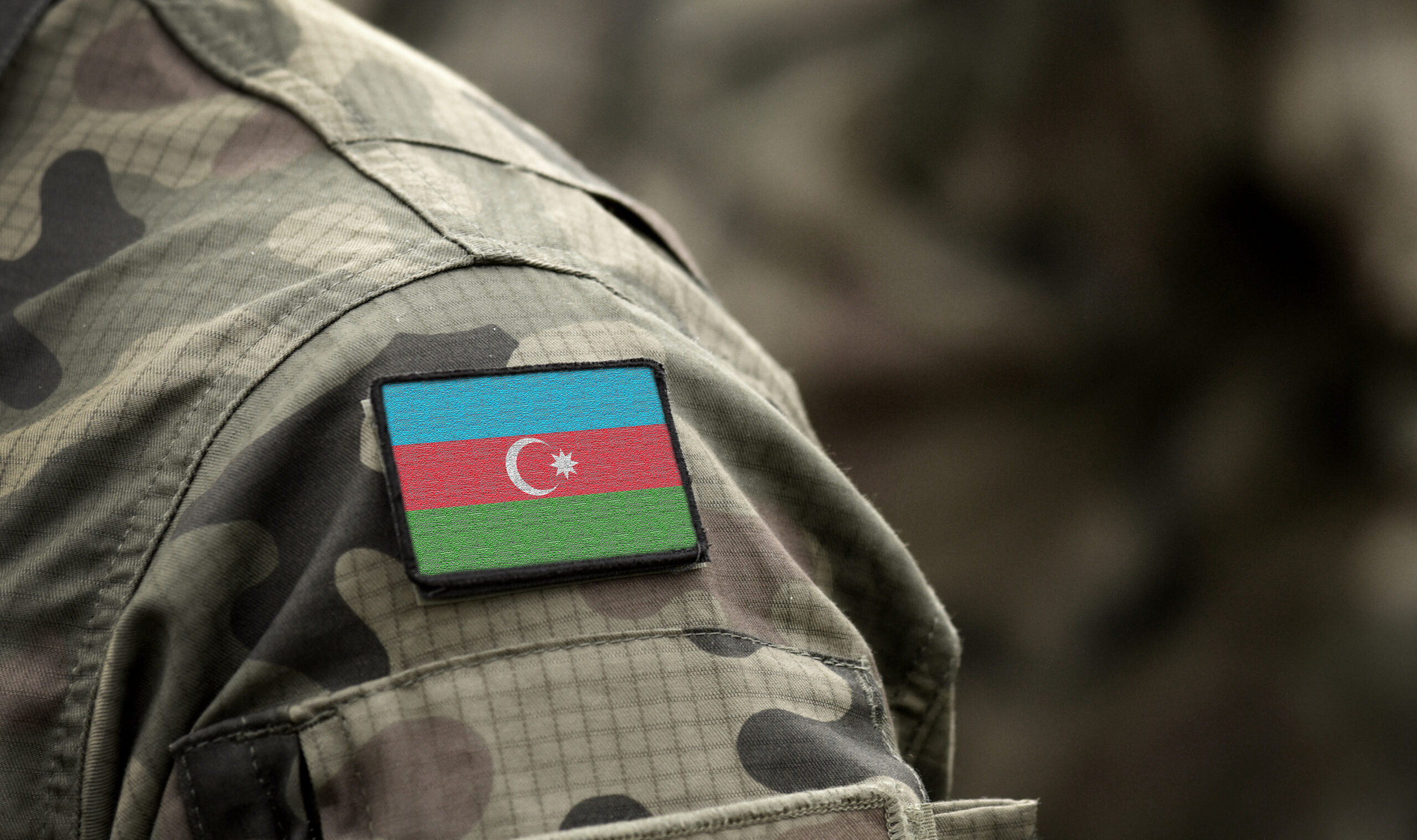
Flag,Of,Azerbaijan,On,Military,Uniform.,Azerbaijani,Army,,Armed,Forces,

https://www.shutterstock.com/image-photo/flag-azerbaijan-on-military-uniform-azerbaijani-1822511873

As Iran lashed out at neighboring countries to raise the costs of the U.S.-Israeli war against it, on Thursday Azerbaijan joined the list of apparent targets. 

One unmanned aerial vehicle slammed into the terminal building of Nakhchivan Airport in the Azerbaijani exclave surrounded by Turkey, Armenia, and Iran. 

Another crashed near a school in the village of Shakarabad. Four civilians were reportedly wounded. Baku confirmed that four UAVs from the armed forces of the Islamic Republic of Iran were directed toward the region—one neutralized by Azerbaijani forces, while the others reached their marks.

By any measure, it was a brazen and unprecedented act in relations between Iran and Azerbaijan, explainable only by the context of the ongoing U.S.-Israeli war on Iran. The airport sits roughly ten kilometers from the Iranian border. And the exclave, already isolated by the cancellation of bus services through Iran days earlier, suddenly found its last remaining link to the Azerbaijani mainland—air travel—frozen.

Azerbaijan’s President Ilham Aliyev called the strike “an act of terror.” Iran’s response was swift and categorical. The foreign ministry and general staff of the armed forces declared that Iranian forces had launched no drones toward Azerbaijan, emphasizing that Tehran respects the sovereignty of all nations, “especially the neighboring and Muslim ones.”

Iranian officials suggested that the cause of the incident was a false flag operation by Israel aimed at goading Azerbaijan into opening a northern front in a war with Iran. Azerbaijan is Israel’s ally, a key supplier of oil, a foothold for Israeli intelligence, and a buyer of Israeli weapons which it used in conflict with its arch-rival Armenia.

Baku, predictably, found these explanations insufficient. Aliyev convened an emergency meeting of the Security Council and demanded an immediate apology, an explanation, and criminal accountability for those responsible. “The people of Azerbaijan must be confident that any evil force will have to face our iron fist,” he declared.

But it was what Aliyev said next that caught attention. Slamming reports in the Iranian media that Azerbaijan provided its territory and airspace for Israeli attacks against Iran during the 12-Day War last year, he accused Tehran of trying “to change the sentiments of our compatriots” living in Iran. He also cast the Republic of Azerbaijan as “a place of hope for many Azerbaijanis living in Iran.”

He was referring to Iran’s Azerbaijani population, which some estimate to amount to 15–20 million of the total of more than 90 million Iranians. That’s substantially more than the population of Azerbaijan itself: around 10 million. 

While Baku does not officially endorse Iran’s ethnic disintegration as a matter of policy, it has increasingly emphasized the protection of ethnic Azerbaijanis abroad, criticizing Tehran over language education and cultural rights. Such criticisms reliably increase during the moments of bilateral tensions.

Aliyev’s language finds enthusiastic support in Washington, where a small network of neoconservative hawks has spent years promoting Iran’s ethnic fragmentation. Most prominent among them is Brenda Shaffer, who is associated with the Atlantic Council and the Foundation for Defense of Democracies and has advocated for Azerbaijani interests while failing to disclose her ties to the state oil company SOCAR. The fantasy of Iran’s “Balkanization” along ethnic lines, including through the secession of “South Azerbaijan,” has become a recurring theme in neoconservative circles.

What these armchair strategists never address is what happens to everyone else—including Iran’s ancient Christian Armenian communities—as a result of the sectarian strife in Iran they are promoting.

Aliyev’s speech, whatever its domestic political utility, plays directly into this narrative. It positions Azerbaijan not merely as a victim of alleged Iranian aggression, but as the potential vanguard of a project to redraw borders and dismember a neighboring state.

For all the tough talk from Baku, however, Azerbaijan’s options are severely constrained. Four civilians are already wounded as a result of the drone attack—survivors only by luck. Escalation with Iran would likely lead to casualties. 

The country’s energy infrastructure—the oil and gas platforms and pipelines that fund the state budget and underpin the entire economy—sits within easy reach of Iranian drones and missiles. The Gulf states are confronted with a similar dilemma—and, cognizant of their vulnerabilities, they chose not to escalate matters with Tehran.

Thus far, Azerbaijan’s response has been largely symbolic. The Iranian ambassador has been summoned to the foreign ministry in Baku and handed a formal protest note. The government has announced that forces are preparing “retaliatory measures.” 

But preparing measures and executing them are two different things, and the gap between rhetoric and action is the space where diplomacy does its work. In practical terms, so far Baku has closed vehicle crossings to trucks, including transit traffic, disrupting cross-border trade, but not much more.

The truth is that neither Baku nor Tehran has a genuine interest in escalation. Iran is fighting for its survival on multiple fronts. The last thing its remaining military leadership needs is a distraction that could become a second active front.

Azerbaijan, for its part, has everything to lose. Aliyev knows that the “iron fist” that crushed Armenian forces in Karabakh would be of limited use against a country that can severely damage his economy without committing a single soldier to ground combat. He also knows that encouragement from the Washington think-tank hawks does not amount to American security guarantees. 

Subscribe Today

Get daily emails in your inbox

This is why, despite the heated rhetoric and the genuine outrage over the drone strikes, the most likely outcome in the coming days is deescalation. Iran will continue to deny responsibility. Azerbaijan will continue to demand an apology. Some face-saving formula will be found—perhaps an offer of compensation for the wounded, perhaps a joint investigation. The border closures may persist for a time, causing economic pain on both sides, but tensions probably will not spiral into open warfare.

And yet.

The longer-term picture is far less reassuring. The drone strike on Nakhchivan did not occur in a vacuum. It came just days after the United States and Israel launched coordinated strikes on Tehran, killing Iran’s Supreme Leader Ayatollah Ali Khamenei and plunging the region into chaos. 

What Washington has not explained is what comes next. The plan, insofar as there ever was one, appears to have ended with the assassination of Iran’s leader. There doesn’t seem to be a coherent strategy for managing the war’s aftermath or even the next phases of fighting, for containing the blowback, including American casualties, and for preventing the kind of escalation that could draw neighboring states—many of them, like Azerbaijan, America’s partners—into a conflict they never asked for. 

The unfolding catastrophe makes the misbegotten 2003 Iraqi adventure look like an example of smart planning by comparison.


Read More

The post Will Azerbaijan Join the War Against Iran? appeared first on azeritimes.com.


Categories
South Caucasus News

Petro’s leftist group tops Colombia’s Congress


The Historic Pact won 22.88% of the vote for the 103-seat Senate, increasing its representation to 25 senators from 20 and adding more than 1 million votes compared with the 2022 elections, News.Az reports, citing foreign media.
***
In the 183-seat House of Representatives, the coalition secured 42 seats.Despite the gains, the results confirm a divided legislature in which no political force holds an outright majority. Petro called the outcome a “resounding victory,” but acknowledged that fragmentation will require the next president to govern through coalitions, Infobae reported.
The conservative Democratic Center party, founded by former President Álvaro Uribe, placed second with 15.61% of the Senate vote. The party increased its representation to 17 senators from 13, but failed to secure a Senate seat for Uribe, who served as president from 2002 to 2010.
Although voter abstention declined slightly, turnout remained below 50% of the more than 41 million registered voters eligible to cast ballots.
Voters also participated in interparty primary elections to select three candidates who will compete in Colombia’s presidential election scheduled for May 31. The mechanism allows citizens to choose a single candidate from within the same political bloc.Sen. Paloma Valencia won her primary and will represent the right in the presidential race, El Colombiano reported.
While the list of presidential contenders became clearer after the vote, the final number of candidates could change depending on formal registrations by independent movements.
Between 10 and 16 candidates are expected to appear on the first-round ballot. Colombia’s National Civil Registry will publish the official list and ballot design in the coming weeks after legal deadlines for candidate registration and modifications expire, El Tiempo reported.
Current polling places Sen. Iván Cepeda of the Historic Pact at about 35% support, reflecting his coalition’s status as the largest bloc in Congress.
Among opposition figures, Paloma Valencia of the Democratic Center and Abelardo de la Espriella of the National Salvation movement are polling near 34%, setting up what analysts describe as a tight race that could advance to a runoff scheduled for June 21.

The post Petro’s leftist group tops Colombia’s Congress appeared first on azeritimes.com.


Categories
South Caucasus News

Merz: Iran is the centre of international terrorism


“The soon the mullah regime stops, the sooner this war will end,” Merz argued in Berlin. “It is solely up to this regime and the so-called Revolutionary Guards to cease hostilities,” News.Az reports, citing foreign media.
***
Until that happens, Merz said he assumes that Israel and the United States will continue “their defence” against Iran, because its threat extends far beyond the country and the Middle East region.

The comments came on the 10th day of the spiralling conflict, which began when the US and Israel launched a large-scale offensive against Iran.

Hundreds of people have been reported killed in Iran due to airstrikes, while other countries have seen a handful of people killed from retaliatory Iranian attacks.
Merz said he had spoken with leaders from the region over the weekend.
“However, it is not currently possible to predict when the mullah regime will be prepared to cease hostilities against its neighbours,” Merz stated.
He warned that the threat to Israel and the Gulf states from Tehran continues and is demonstrated daily by attacks on civilian buildings and military facilities.
“Iran is the centre of international terrorism, and this centre must be shut down,” Merz added. “And the Americans and Israelis are doing that in their own way.”

The post Merz: Iran is the centre of international terrorism appeared first on azeritimes.com.


Categories
South Caucasus News

War creates crisis: Financial markets are shaken, fuel prices hit record, queues at gas stations


Categories
South Caucasus News

«Шахеды» закошмарили американские базы: Зеленский отправил войска


Categories
South Caucasus News

What gold investors should do on the eve of a Middle East war


When wars or major geopolitical tensions erupt, investors often shift capital away from risk assets such as stocks and into stores of value such as gold, US Treasuries, and sometimes the US dollar, News.Az reports.
***
The possibility of a major war in the Middle East can significantly influence global markets, particularly energy prices, currencies, and commodities. For gold investors, such periods often create both opportunities and risks.
Below is a practical explainer on how investors typically approach gold markets during the early stages of war.
Why gold usually rises during wars
Gold tends to benefit from geopolitical uncertainty for several reasons.
First, it is widely perceived as a store of value during crises. When investors fear market instability, they often move money into assets that historically preserve wealth.
Second, war can disrupt global trade, increase inflation, and weaken currencies. Gold is often used as a hedge against these risks.
Third, geopolitical shocks can trigger volatility in stock markets. During such periods, investors may rebalance portfolios toward defensive assets.
Historically, gold prices rose during many major conflicts including the Gulf War, the Iraq War, and the early stages of the Russia Ukraine conflict.
How Middle East conflicts affect gold markets
The Middle East plays a crucial role in the global energy system. The region accounts for a significant portion of the world’s oil production and includes strategic chokepoints such as the Strait of Hormuz.
If conflict threatens oil supply, energy prices often surge. Higher oil prices can increase inflation worldwide, which tends to support gold prices.
Markets also react to the risk of escalation. If investors believe a conflict could expand to multiple countries or disrupt global shipping routes, demand for gold usually increases.
However, price reactions can be unpredictable and sometimes temporary.
What gold investors should consider before a war
Before making investment decisions during a geopolitical crisis, investors usually assess several factors.
These include the scale of the conflict, the likelihood of escalation, central bank policies, and global economic conditions.
Short term market reactions often differ from long term trends.
Understanding these dynamics can help investors avoid emotional decision making.
Avoid panic buying
One of the most common mistakes investors make during geopolitical crises is rushing into gold after prices have already surged.
When war fears dominate headlines, gold prices often spike quickly. Buying at the peak of panic can expose investors to sudden corrections if tensions ease.
Instead of reacting emotionally, investors typically monitor price movements and broader market trends.
Disciplined investment strategies tend to perform better than impulsive reactions.
Focus on long term strategy
Gold often plays a role as part of a diversified portfolio rather than a short term speculation.
Financial advisors frequently recommend allocating a portion of investment portfolios to gold as a hedge against uncertainty.
During geopolitical crises, maintaining a balanced strategy may be more effective than attempting to time the market.
Long term investors often benefit from gradual accumulation rather than large sudden purchases.
Watch the US dollar and interest rates
Gold prices are closely linked to movements in the US dollar and global interest rates.
If the US dollar strengthens significantly during a crisis, it can sometimes limit gold’s upside.
Similarly, higher interest rates can reduce the appeal of gold because the metal does not generate income.
Investors therefore monitor central bank policy decisions alongside geopolitical developments.
Monitor oil markets
Energy markets often act as a signal during Middle East conflicts.
A sharp rise in oil prices may increase inflation expectations and support gold demand.
If oil supply disruptions appear severe or prolonged, the impact on gold could become more pronounced.
For this reason many commodity traders watch both oil and gold markets simultaneously.
Consider different ways to invest in gold
Investors have several ways to gain exposure to gold.
Physical gold such as coins and bars remains a traditional option for those seeking a tangible store of value.
Exchange traded funds that track gold prices provide a more liquid and convenient alternative.
Gold mining stocks are another option, though they tend to be more volatile because their prices depend on both gold prices and company performance.
Each approach carries different risks and benefits.
Expect volatility
While gold often rises during geopolitical crises, its price movements can still be volatile.
Markets may react strongly to news headlines, diplomatic developments, or sudden changes in military activity.
For example, if a ceasefire or diplomatic breakthrough occurs, gold prices may decline quickly.
Investors should therefore be prepared for rapid fluctuations.
Pay attention to central bank demand
Central banks around the world have been increasing their gold reserves in recent years.
During periods of geopolitical tension, central bank purchases can influence global gold prices.
Countries seeking to diversify away from foreign currencies sometimes increase gold holdings during uncertain times.
This structural demand can provide additional support to the gold market.
Diversification remains essential
Even during periods of conflict, financial experts emphasize the importance of diversification.
Gold can act as a hedge within a broader investment strategy, but relying entirely on one asset can increase risk.
Balanced portfolios that include a mix of commodities, equities, bonds, and other assets are generally more resilient during market shocks.
The bottom line
Gold often becomes one of the most watched assets during geopolitical crises, particularly when conflict threatens to spread across strategically important regions such as the Middle East.
While rising tensions can increase demand for safe haven assets, markets can also react unpredictably to new developments.
For investors, the most effective approach usually involves maintaining discipline, avoiding panic driven decisions, and viewing gold as part of a long term diversified strategy rather than a short term reaction to war headlines.
As global tensions evolve, gold will likely remain at the center of financial markets as investors seek stability amid uncertainty.

The post What gold investors should do on the eve of a Middle East war appeared first on azeritimes.com.


Categories
South Caucasus News

Novo Nordisk strikes deal for Hims to sell Wegovy and Ozempic​


The Danish drugmaker sued Hims in February over compounded versions of the Wegovy weight-loss pill that Hims launched and then pulled two days later, as well as compounded versions of Novo’s injectable GLP-1s. The U.S. Food and Drug Administration had also planned legal action against Hims over the unauthorized drugs, News.az reports, citing BBC.

***

Shares of the telehealth company jumped more than 40% on Monday.

Novo has been grappling with telehealth firms selling cheaper compounded copycat versions of its obesity treatments, while Hims has been faced with the high cost of its personalized GLP-1 offerings, which it said is raising product costs.

Under the agreement, Hims will offer approved Ozempic and Wegovy injectables, as well as the Wegovy pill, to U.S. consumers on its platform at Novo’s self-pay prices. Hims had a short-lived agreement with Novo in 2025 to sell branded Wegovy.

Hims will no longer advertise compounded GLP-1 drugs, though it will continue offering them when providers deem it clinically necessary. U.S. regulations allow companies to sell compounded versions of drugs in personalized doses not available in the branded forms, or with special ingredients.

“Glad to see HIMS will stop advertising unapproved compounded drugs and instead sell FDA-approved products through its new partnership with Novo Nordisk. Importantly, they will keep them affordable (no increase in price) and limit compounded GLP-1s for rare (FDA compliant) cases,” FDA commissioner Marty Makary wrote in a post on X.

“I’d like to congratulate both parties on this deal following our recent action.”

The FDA last month said it would take decisive steps against companies mass-marketing illegal copycat drugs, including Hims, spurring the company to reverse course on selling a copy of Novo’s pill.

COMPETITION DRIVES PRICE CUTS

Novo Nordisk CEO Mike Doustdar said the Wegovy pill had generated more than 600,000 prescriptions since its launch two months ago, with telehealth partnerships accelerating uptake.

The Danish company faces stiff competition from U.S. rival Eli Lilly, which has become the weight-loss drug market leader. To boost sales, Novo cut prices for its weight-loss drugs from about $1,000 per month to $149 to $299 on its websites.

Doustdar said lower pricing was a key part of the partnership, adding that “authentic products are now very similarly priced as the compounded ones”.

The deal followed a warning last week from U.S. regulators to 30 telehealth companies over misleading promotions of compounded GLP-1 drugs. The FDA said some firms falsely equated compounded products with approved medications.

Hims CEO Andrew Dudum said the partnership with Novo followed his company’s decision to shift its U.S. weight-loss business away from compounded GLP-1 drugs and toward branded, FDA-approved treatments, reflecting what he said was rising demand for a wider range of lower-cost options.

“That’s where we see growth in the business,” Dudum said in an interview.

Dudum, during a call to discuss financial results, said most subscribers accessing GLP-1s were using branded options.

“While both parties lack trust, they remain bound by mutual necessity,” said Jailendra Singh, an analyst at Truist.

In light of the agreement, Novo Nordisk said it was withdrawing the patent infringement lawsuit “while reserving the right to refile”.

Novo ended a similar agreement last year over concerns about compounded drug marketing and sales.

The post Novo Nordisk strikes deal for Hims to sell Wegovy and Ozempic​ appeared first on azeritimes.com.


Categories
South Caucasus News

Trump, Putin discuss Iran war in phone call​


The Kremlin stated that President Trump had a call with President Putin to discuss the war in Iran and other matters.

The conversation was “businesslike, constructive, and frank,” according to the Russian readout, which was released before any corresponding statement from the White House, News.Az reports, citing foreign media.

***

Putin used the call to present proposals for a swift diplomatic resolution to the conflict in Iran, where the United States and Israel have been conducting sustained military operations since launching coordinated strikes on Feb. 28. Trump, for his part, reiterated his interest in a rapid ceasefire and a long-term settlement in Ukraine, according to the Kremlin’s account.

The two leaders also discussed Venezuela, among other topics, and expressed their readiness for continued regular communication, Moscow said.

The post Trump, Putin discuss Iran war in phone call​ appeared first on azeritimes.com.