
Categories
South Caucasus News

Georgian Dream Backs UK-Sanctioned Channels Amid Uncertainty Over Impact


Georgian Dream leaders, including Prime Minister Irakli Kobakhidze, have expressed support for Imedi TV and POSTV, the two major pro-government channels sanctioned by the United Kingdom on February 24 over “Russian disinformation,” as uncertainty persists over what specific effects the sanctions may have on the broadcasters.

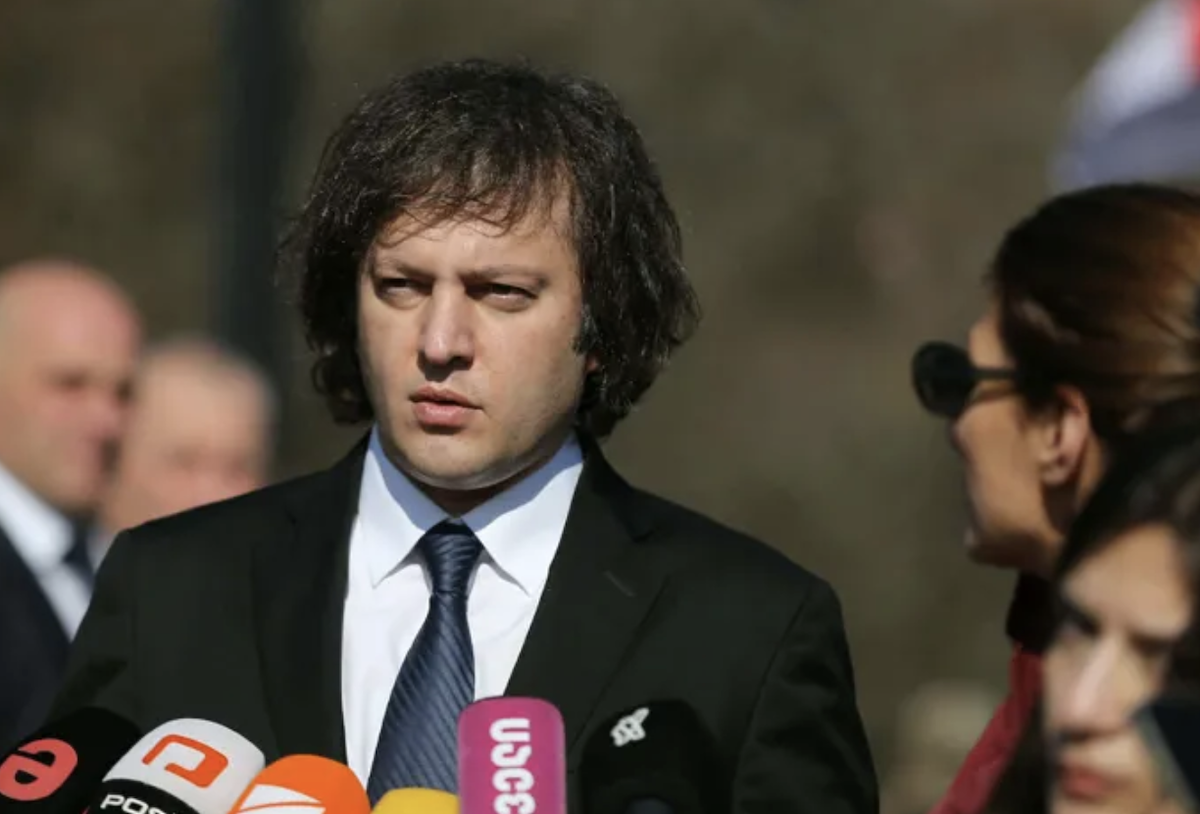
Calling the UK’s decision to sanction the two channels “unserious,” “shameful,” and “tragic,” Georgian Dream PM Irakli Kobakhidze pledged that the press freedoms of journalists at Imedi and POSTV would be “protected,” saying the GD government will take “full responsibility.”

“No journalist at any [sanctioned] TV company will face worse conditions,” Kobakhidze told reporters on February 25. “On the contrary, they will have full opportunity to exercise their fundamental right to press freedom and provide information to the public,” he added, stressing that the government “is fully responsible for press freedom.”

Describing the reactions triggered by the sanctions announcement as “empty hype,” PM Kobakhidze reiterated that “every necessary action will be taken to ensure that Imedi and POSTV in Georgia do not face any violations of their journalists’ fundamental press freedoms.”

“All state and nonstate companies should naturally continue cooperating with both [TV] companies,” Kobakhidze further said.

The UK sanctioned the two channels for spreading “deliberately misleading information” about Russia’s full-scale invasion of Ukraine that “destabilizes” Ukraine or “undermines or threatens” the country’s territorial integrity, sovereignty, or independence.

According to the sanctions notice, the measures include an asset freeze, trust services sanctions, and director disqualification sanctions.

The entities subject to asset freezes are restricted from accessing “funds and economic resources,” per the UK Financial Sanctions General Guidance.

According to the guidance, “the trust services measure limits the ability of persons designated for the purpose of this measure, and persons connected with Russia, from accessing the U.K.’s trust services,” while director disqualification sanctions “ban directly or indirectly” those under them from “being a director of a UK company, being a director of a foreign company that has sufficient connection to the UK, even if it is not registered there.”

Local experts have suggested what the UK sanctions may mean in practical terms for the two channels.

Roman Gotsiridze, former president of the National Bank of Georgia, believes the sanctions will lead to an “inability” for the channels to attract advertising revenue, pay salaries, make foreign transactions, or use any bank that relies on Visa and Mastercard services.

Shota Dighmelashvili, editor of Georgian Forbes, said the sanctions mainly target “UK persons,” but he predicted the effects could still be far-reaching. According to him, that includes Bank of Georgia and TBC Bank, the country’s two largest commercial banks, which must comply as they are listed on the London Stock Exchange. Other banks may still avoid dealing with the sanctioned entities for fear of indirect consequences, including through intermediary international banks, he further suggested.

Meanwhile, Imedi said the UK sanctions “hold no value” and that it “will continue to serve Georgia and the freedom of speech even more energetically to fully justify the trust placed in us by the Georgian public.”

Nearly three weeks before the sanctions were announced, Imedi TV owner Irakli Rukhadze gave up his shares. POSTV’s dominant shareholder, GD spinoff People’s Power MP Viktor Japaridze, had similarly stopped being listed as a manager of his stakes, though he continues to own 52%.

Imedi TV and POSTV ranked first and third, respectively, in advertising revenue in 2025, amid what many describe as a significant gap between pro-government and critical channels. Imedi TV alone received GEL 45 million (about usd 17 million) in ad revenue, roughly 45% of the total revenue for TV channels.

Meanwhile, several reports said the pro-government channels, especially Imedi TV, are carrying large debts, allegedly covered through preferential loans from companies linked to the ruling Georgian Dream party and its founder and billionaire honorary chairman, Bidzina Ivanishvili.
Categories
South Caucasus News

Putin speaks at plenary session of “Forum of Future Technologies”


Categories
South Caucasus News

Тед Круз допустил удары США по Ирану в ближайшие дни


Categories
South Caucasus News

Georgia’s prime minister calls UK sanctions on Georgian TV channels ‘shameful’


Kobakhidze on TV sanctions

Kobakhidze on TV sanctions

Georgian Prime Minister Irakli Kobakhidze has described the United Kingdom’s decision to impose sanctions on pro-government Georgian television channels TV Imedi and POSTV as “unserious and shameful”. According to the prime minister, “nothing is valued anymore” in London — including media freedom.

Kobakhidze characterised the sanctions as an attack on press freedom, but added that they would have no practical effect. He said the Georgian government would take full responsibility for ensuring that the situation of any journalist at any television company does not worsen.

“Of course, all state and private companies must continue cooperating with TV Imedi and POSTV. Do not expect that the fundamental right to media freedom and entrepreneurship will be undermined in Georgia,” he said.

Kobakhidze also said the government would “take absolutely all measures to protect these broadcasters’ fundamental right to freedom of speech”.

“What Britain has tried to trample on, we will defend to the end,” Kobakhidze said.

Speaking to journalists, Kobakhidze said the UK’s decision reflected what he called the “tragic condition” of the European bureaucracy. According to him, a country historically regarded as a birthplace of human rights is now itself ignoring media freedom and other fundamental rights.

The prime minister also argued that before 2012 — prior to the current ruling Georgian Dream party coming to power — Georgia had a “complete monopoly” in the media sector, while since 2012 media freedom has been ensured by the state.

Commenting on Kobakhidze’s remarks, economist Roman Gotsiridze said TV Imedi could not be saved through what he described as “artificial respiration”. He noted that the broadcaster already has multimillion debts.

“The government’s call for state and private companies to continue cooperating with these channels effectively means maintaining these two pro-Russian broadcasters with public money — that is, taxpayers’ money,” he said.

The economist also said he believes European and US sanctions could follow the British measures.

On 24 February, the United Kingdom imposed sanctions on Georgian broadcasters TV Imedi and POSTV under its Russia sanctions regime.

According to the UK government, the channels regularly promoted narratives portraying the Ukrainian authorities and president as illegitimate, describing Ukraine as a “Western puppet”, and claiming that Kyiv and its Western partners were attempting to destabilise Georgia.

Asset freezes, a ban on trust services and director disqualifications will be applied to TV Imedi and POSTV.

This means:

  • Any bank accounts, property or assets held by the broadcasters within UK jurisdiction will be frozen. Banks connected to the United Kingdom — including branches operating in other countries — are required to stop servicing these companies.
  • A ban on the provision of trust services (the management of assets through trustees or funds). This prevents the concealment of company ownership through British jurisdictions. Shareholders will not be able to transfer shares into trusts in order to avoid confiscation or asset freezes.
  • An official prohibition on specific individuals holding senior management positions. This bans not only British citizens from managing these companies, but also prevents sanctioned directors themselves from occupying similar roles in any businesses connected to UK law. Violating this restriction constitutes a criminal offence.

Kobakhidze on TV sanctions


Categories
South Caucasus News

Иранские ракеты долетят до США?


Categories
South Caucasus News

Russia’s railway grip casts long shadow over Zangezur corridor


The opening of the Zangezur Corridor, also known as the Trump Route for International Peace and Prosperity (TRIPP), envisioned as a direct land connection between mainland Azerbaijan and its exclave Nakhchivan, remains delayed, despite repeated political commitments. At the center of the issue lies not only infrastructure, but control.

Categories
South Caucasus News

President Aliyev inspects Khojavend reconstruction progress – Latest news from Azerbaijan


President Aliyev inspects Khojavend reconstruction progress  Latest news from Azerbaijan

Categories
South Caucasus News

What Is an Economy and How Does It Function? Understanding Supply and …


An economy is a system through which individuals, businesses, and governments produce, distribute, and consume goods and services. It reflects the collective activities that determine how resources—such as labor, capital, and land—are allocated to meet the needs of a population.

Categories
South Caucasus News

US aircraft carrier USS Gerald R. Ford docked at naval base on Greek island of Crete


Categories
South Caucasus News

President Ilham Aliyev, First Lady Mehriban Aliyeva, inspect work done in Khanabad village, Khojaly


President of the Republic of Azerbaijan Ilham Aliyev, First Lady Mehriban Aliyeva, and their daughter Arzu Aliyeva reviewed the work done in the village of Khanabad, Khojaly district, on February 25, AzerNEWS reports.