
🇦🇲Pashinyan raises the possibility of transferring Armenia’s railway concession from #RZD to a third party — linking the issue to regional transport routes and investment under #TRIPP.
A technical project has become a geopolitical debate.
#Armenia #SouthCaucasus
— News.Az (@news_az) Feb 18, 2026
Day: February 18, 2026
The European Committee for the Prevention of Torture and Inhuman or Degrading Treatment or Punishment (CPT), a monitoring body of the Council of Europe, has published a new report on Georgia following periodic visits carried out on November 18-29, 2024, and January 21-22, 2025.
The report did not cover December 2024, when anti-government protests in Tbilisi intensified, and numerous allegations of excessive force and ill-treatment by law enforcement were reported.
The report raised “serious concerns,” Secretary General of the Council of Europe Alain Berset wrote on X, “including allegations of police ill-treatment during the late-2024 demonstrations.”
“Ill-treatment can never be justified,” he added, pledging to raise the findings with Georgian Dream Foreign Minister Maka Botchorishvili at the Human Rights Council, saying that the Council of Europe “stands ready to support reforms.”
During its November visit, the CPT examined the treatment and safeguards afforded to persons in police custody, conditions in several prisons and three psychiatric hospitals, as well as progress in implementing previous recommendations. The January visit focused on detainees held at Prison No. 8 in Gldani (Tbilisi) in connection with demonstrations that had erupted on November 28, 2024, when Georgian Dream said it would suspend the EU integration process.
The delegation also met with the representatives of the Special Investigation Service (SIS) to discuss investigations into alleged police ill-treatment. The body was abolished in May 2025 and absorbed into the Prosecutor’s Office, a move which the CPT expressed concern about, describing it as “alarming.”
Police Establishments
The CPT noted a sharp contrast in detainees’ accounts before and after November 29.
“Throughout the visit, until and including 28 November 2024, the overwhelming majority of interviewed detained persons who were or had recently been in police custody stated that the police had treated them in a correct manner,” the report said.
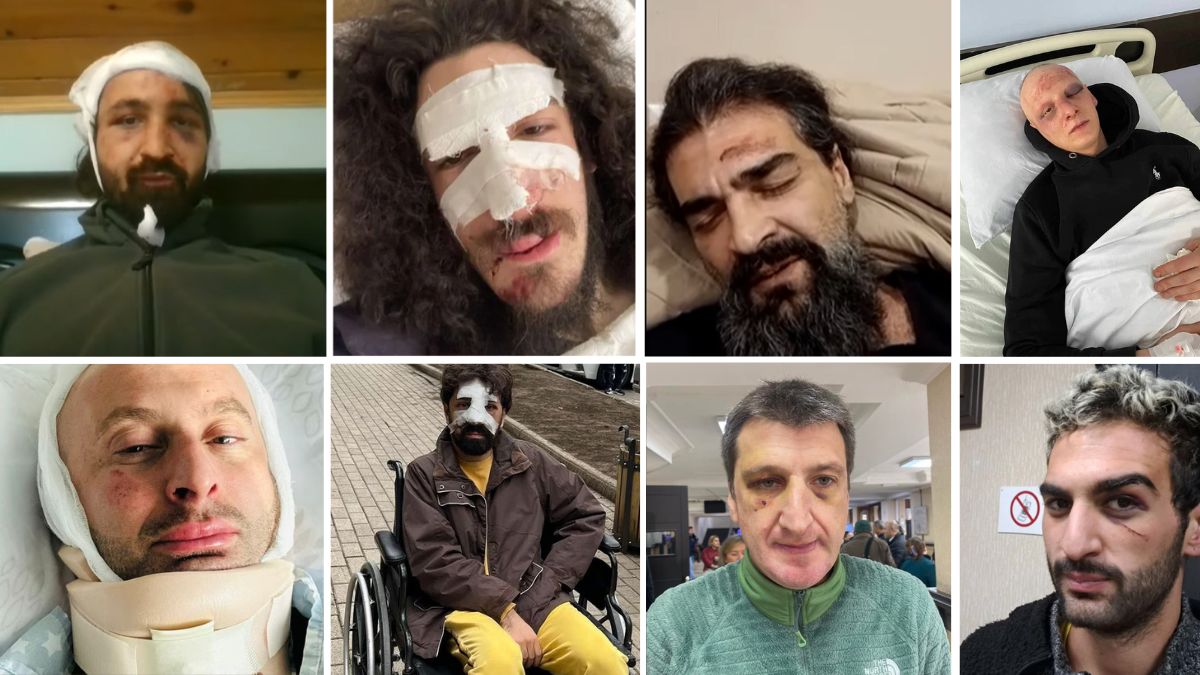
By contrast, after the November 29 demonstration, the delegation reported being “inundated with allegations of ill-treatment.” Most detainees interviewed in connection with the protests had “visible injuries, some of them severe and having necessitated urgent medical attention.”
The report described a “clear pattern of police behavior” during demonstrations. According to testimonies, masked officers without visible identification carried out arrests in groups, “punching and kicking detained persons indiscriminately,” swearing at and threatening them even when they were not resisting and were already “fully under the control of the police.” Beatings were reportedly carried out repeatedly, and sometimes while detainees were handcuffed.
In “almost all of the cases,” the report said, ill-treatment stopped once detainees were transferred to non-masked patrol or criminal police officers. However, the delegation also heard allegations that some detainees were later questioned without a lawyer present to force confessions or obtain information.
The CPT reiterated its recommendation to the Georgian authorities to ensure that police only use force that is “absolutely necessary and proportionate” when apprehending people. The CPT stressed that “there can never be any justification” for violence against individuals already under police control. The CPT called on authorities to ensure that all masked or hooded officers deployed during demonstrations wear visible identification.
Lawyers and Medical Access
The delegation found that the notification of custody was generally carried out “quickly and systematically.” Most detainees reported having access to a lawyer, privately hired or state-appointed. However, in many cases, this right became effective sometimes only two or three days after detention. The CPT stressed that access to a lawyer must be fully effective “from the very moment” a person is required to remain with the police.
The Committee called for clearer oral information on rights at apprehension and for “systematic full, unaltered electronic recording of all police interviews” to safeguard persons in police custody from ill-treatment, and recommended improved training for officers conducting interviews.
Although detainees formally had the right to see a doctor, the CPT found that in practice, such access did not exist during the early stages of custody at police stations. Medical examinations were systematically performed only upon arrival at temporary detention isolators (TDIs), either by TDI medical staff or ambulance doctors, and included injury recording.
Examinations conducted by TDI doctors were generally of “good quality,” unlike many carried out by ambulance doctors, the report said.
The CPT said it is “very concerned” about the abolition of the Special Investigation Service (SIS) and the transfer of its functions back to the Prosecutor’s Office. It recalled that the creation of an independent body to investigate allegations of ill-treatment by law enforcement has long been recommended due to the “perceived lack of efficiency” of investigations conducted by the Prosecutor’s Office.
Prison Establishments
The delegation visited several penitentiary facilities, including Prisons No. 1 (Laituri), No. 2 (Kutaisi), No. 8 (Gldani), No. 15 (Ksani), and the Prison Hospital (No. 18).
The report said the prison system was no longer overcrowded, but “localized overcrowding persisted.” Refurbished TDIs have been described as good, and “even excellent” in new facilities. However, only administrative detainees had access to outdoor exercise and showers. In older TDIs, “there was almost no access to natural light and multiple occupancy cells still had only partially screened sanitary annexes.”
No allegations of physical ill-treatment by prison staff were received, the report said. Inter-prisoner violence was rare in closed prisons but more common in semi-open Prison No. 15, where low staffing and an open-cell regime persisted.
The CPT criticized what it called “persistent influence of informal prisoner hierarchies” in semi-open facilities (“zonas”), citing overcrowding, intimidation, informal prisoner hierarchies, lack of activities, and very low staff levels. It urged authorities to take “decisive steps” to close and replace them with smaller, more manageable institutions.
The Committee identified the lack of meaningful prison regimes as its “greatest concern.” In most prisons, inmates had no organized out-of-cell activities and were confined for up to 23 hours a day, the report said, noting that some prisoners spent months or years in solitary confinement with limited human contact and permanent CCTV surveillance.
The report assessed health care as good, particularly for initial screening. However, mental health care remains problematic, and addiction treatment is largely limited to detoxification, without broader maintenance therapy options.
All prisons visited were described as “severely understaffed.” At Prison No. 15 (Ksani), staff shortages led to reliance on certain prisoners “to assist them in performing custodial tasks,” a practice the CPT described as “totally unacceptable.”
While disciplinary placements were not excessive, the frequent use of “de-escalation cells” appeared at times to function as a de facto punishment. The CPT stressed that they should be used only for agitated prisoners, for the shortest time, under medical authority. It reiterated that all prisoners should receive at least one hour of visiting time per week.
Psychiatric Establishments
The delegation visited the Tbilisi Mental Health Centre for the first time and carried out follow-up visits to psychiatric hospitals in Khelvachauri (Batumi) and Kutiri (Khoni). No allegations of physical ill-treatment by staff were reported, and inter-patient violence did not appear to be a “major problem.”
Kutiri Hospital had undergone “comprehensive renovation” and offered “generally good living conditions,” while “major refurbishment” had taken place in Khelvachauri. In contrast, conditions at Tbilisi Psychiatric Hospital were described as “very poor,” with patients living in “extremely dilapidated rooms” and “degrading” conditions, requiring urgent improvement.
Treatment remained predominantly medication-based, relying largely on first-generation antipsychotics, which may cause serious side effects. The CPT recommended reviewing prescribing practices and gradually shifting to newer-generation medications where appropriate.
Psychosocial rehabilitation opportunities were very limited due to staff shortages. The Committee called for significantly increasing staffing levels, including psychologists, occupational therapists, nurses, and auxiliary staff, and improving access to outdoor exercise and activities.
Although few “civil” patients were formally subject to involuntary placement, many “voluntary” patients were not allowed to leave locked wards unaccompanied and were sometimes subjected to restraints. The CPT concluded that many were de facto deprived of liberty without benefiting from the legal safeguards applicable to involuntary patients and called for urgent corrective action.
Regarding compulsory psychiatric treatment for persons found to be criminally irresponsible, the CPT said legal provisions were generally respected, but recommended that reviews of forensic placements always include an independent expert opinion separate from the holding hospital.
The CPT stressed that all psychiatric patients must be able to give free and informed consent to treatment and that authorities should systematically provide patients and families with information brochures on rights upon admission.
“On a positive note,” the executive summary said, “the arrangements for patients’ contact with the outside world did not seem to pose any particular problems in practice, especially as regards family visits.”
Georgian authorities provided information and outlined measures taken in response to the CPT’s report.
Also Read:
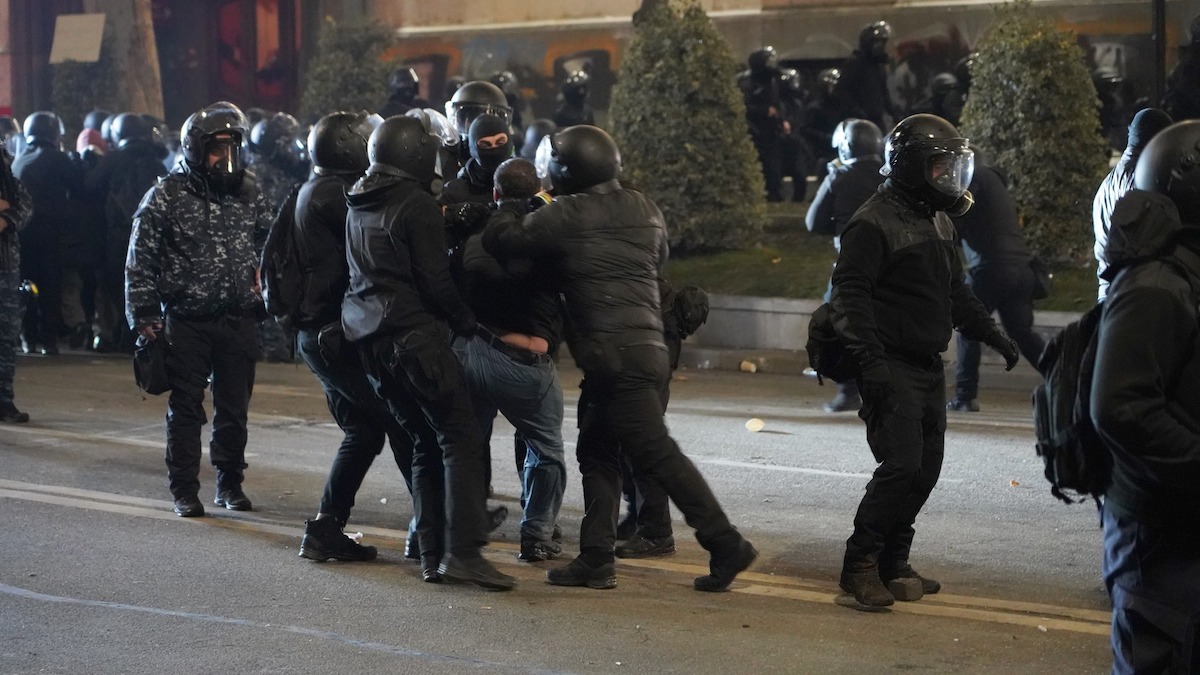
Report on violence at protests in Georgia
The Council of Europe’s Committee for the Prevention of Torture has published a report on Georgia, saying its delegation was “concerned by allegations of ill-treatment” of people detained during protests in Tbilisi on 29 November 2024.
The report is based on the committee’s visits to Georgia in November 2024 and January 2025. The delegation examined conditions in pre-trial detention centres, prisons, and psychiatric clinics, but paid particular attention to the treatment of detainees during the pro-European protests that began on 28 November 2024.
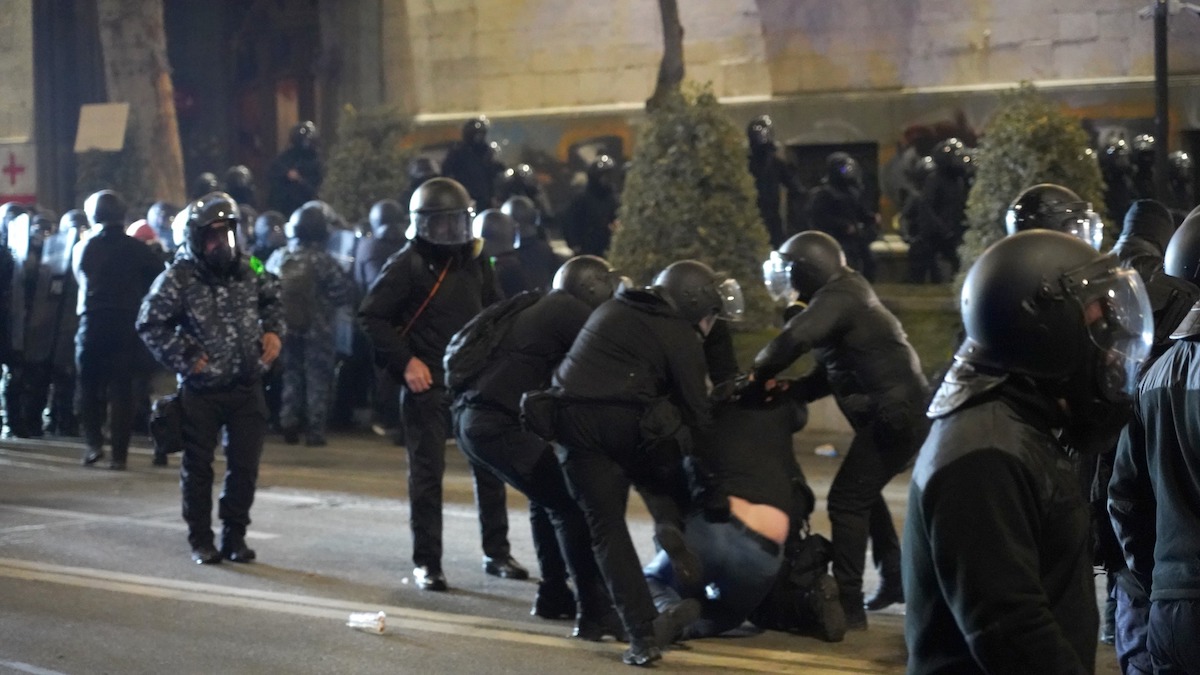
“The committee received numerous allegations of ill-treatment”
According to the report, testimonies from people detained during the 29 November protests in Tbilisi present a consistent picture: demonstrators were detained by police officers in masks and helmets, sometimes from special operations units, who had no visible identification.
During the arrests, the report says, detainees were punched and kicked, including to the head and face. They were also insulted and threatened, including with rape. The violence usually stopped once masked officers handed the detainees over to patrol or regular police officers.
It noted that the injuries — both those directly observed and documented by the delegation and those recorded by doctors working in temporary detention centres — were fully consistent with the detainees’ accounts.
The Committee for the Prevention of Torture concluded there were no grounds for the use of force against people who were already in custody and under police control.
Committee recommendations
The committee urged the Georgian authorities to ensure that police use only strictly necessary and proportionate force during arrests. The report also stresses the need for officers policing protests to wear clear identification, such as personal numbers on their helmets or uniforms.
It also discusses what it describes as the “excessive and unprofessional” use of water cannon and tear gas. The committee recommended that the authorities pay particular attention to training police in crowd control methods, especially officers from special operations units.
The committee joined the Georgian Public Defender’s Office in calling for effective and independent investigations into all allegations of violence, and noted that during the reporting period no police officers had been charged with excessive use of force or ill-treatment.
Dimitri H. case: ‘Medical evidence consistent with the allegations’
The report also examines a separate case from 22 November 2024, unrelated to the protests. It concerns a man identified as Dimitri H., who said that during police questioning he was slapped and punched and kicked in an attempt to obtain information, and was threatened with rape using a baton.
The Committee for the Prevention of Torture delegation recorded medical evidence consistent with the victim’s account. Although in March 2025 the Georgian authorities provided the committee with information on investigative steps taken, including interviews, forensic examinations, and the review of video footage, the letter did not contain any conclusions or information on possible outcomes. The committee continues to call for the full disclosure of the investigation’s results.

Abolition of independent investigative body “a step in the opposite direction”
The report expresses particular concern over the abolition of the Special Investigation Service and the transfer of its functions to the прокуратура. The Committee for the Prevention of Torture recalled that the creation of an independent body to investigate alleged ill-treatment by law enforcement officers has for many years been a recommendation of both the committee and the European Union, given that the effectiveness of such investigations when handled by the prosecution service is often questioned.
The committee asked the Georgian authorities to explain how abolishing an independent body would improve the effectiveness of investigations.
The report also notes that, during meetings with senior officials from Georgia’s Interior Ministry, the delegation was told that any disciplinary proceedings against police officers — in the context of alleged ill-treatment of detainees — conducted by the ministry’s General Inspectorate would be automatically suspended once a criminal investigation was opened against the officer, and would resume only after the criminal process was completed.
In addition, the Interior Ministry had no mechanism to automatically suspend from duty — or even reassign to a post without direct public contact — an officer who was under criminal or disciplinary investigation for alleged abuses against detainees.
The Committee for the Prevention of Torture said such a system did not provide proper prevention of potential violations or an effective response to them, and recommended amendments to the relevant legislation.
Context
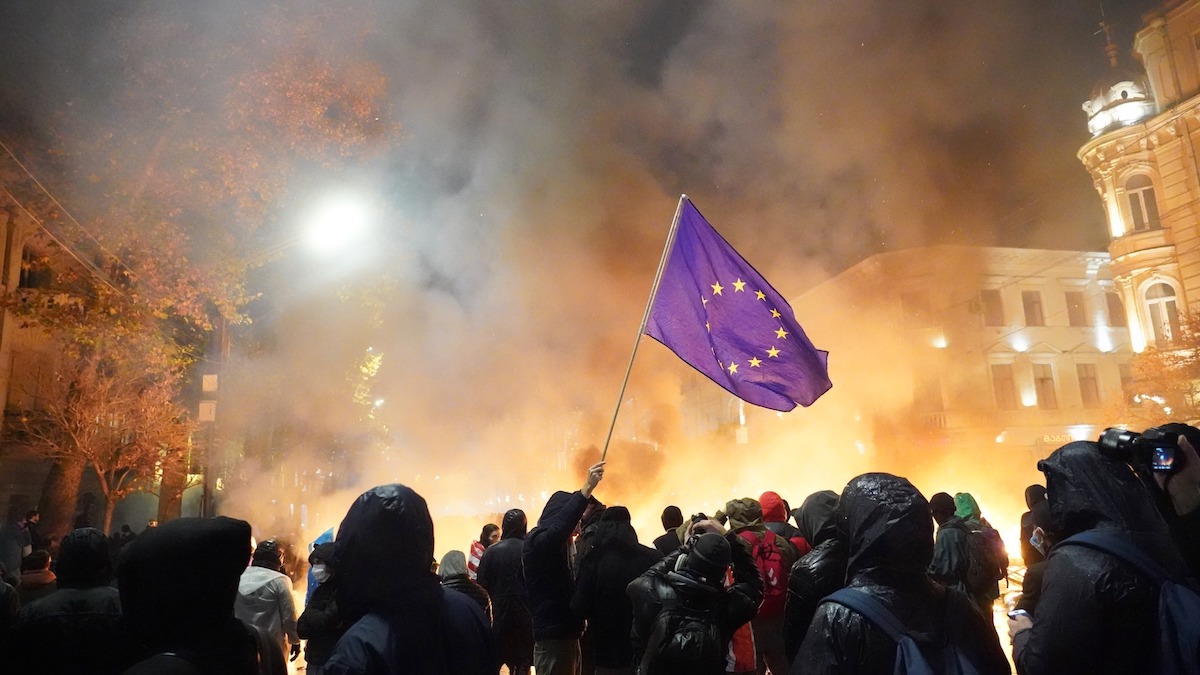
The pro-European protests that began in Georgia in November 2024 sparked broad public and political debate. International observers and local human rights organisations have repeatedly raised concerns about the use of excessive force by law enforcement and possible violations of detainees’ rights.
The Committee for the Prevention of Torture’s report adds international weight to the discussion. The committee is an independent monitoring mechanism of the Council of Europe that regularly assesses detention standards and the treatment of detainees in the law enforcement systems of member states. Its findings are not legally binding, but they carry significant political and reputational pressure.
Report on violence at protests in Georgia