
Day: February 16, 2026
Armenian–Azerbaijani experts’ third meeting
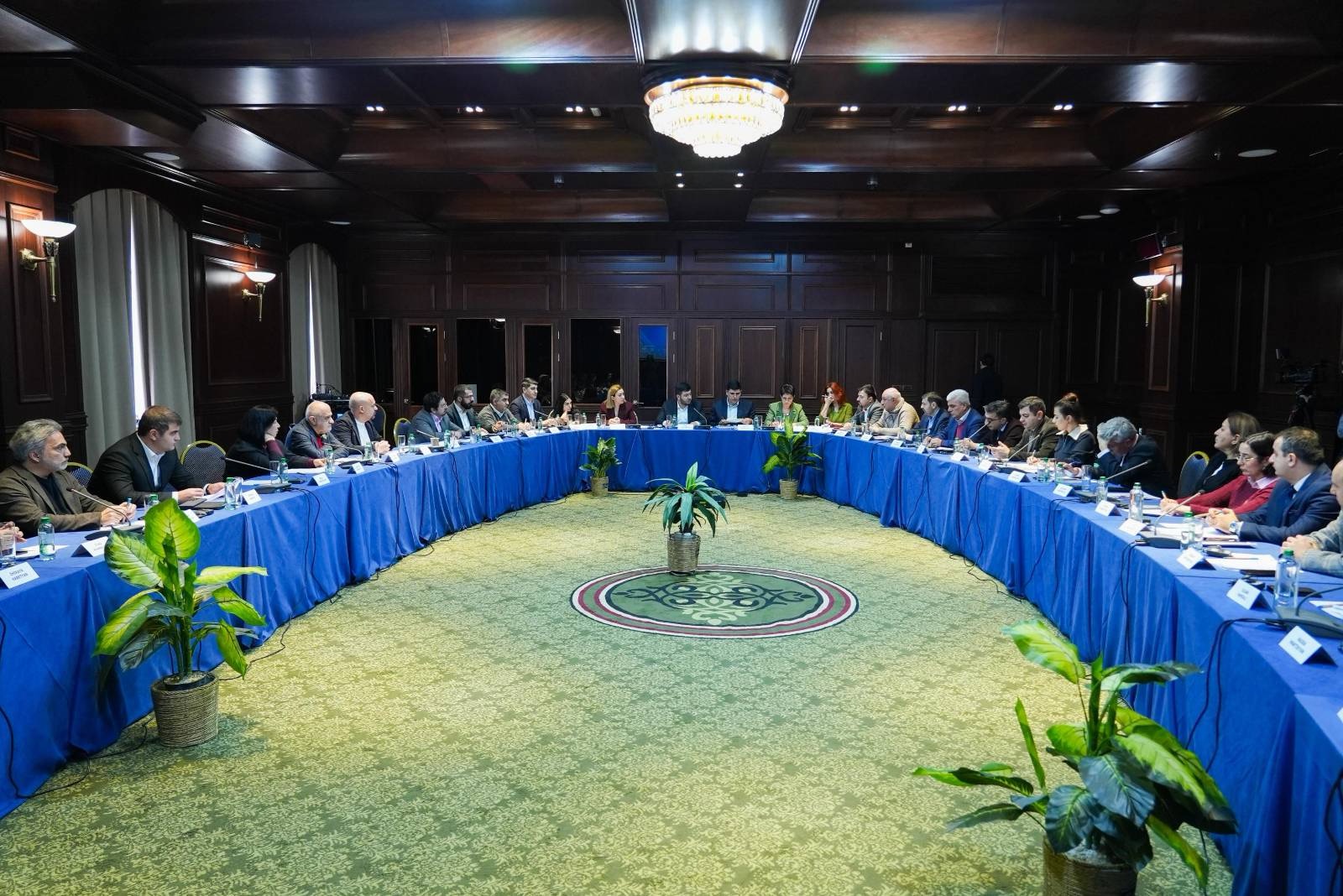
The implementation of the peace agenda endorsed at the Washington summit on 8 August 2025, its impact on the region, and cooperation across a wide range of fields — from the economy to culture — were among the topics discussed by Armenian and Azerbaijani civil society representatives at the third round table of the Bridge of Peace initiative.
As JAMnews previously reported, the meeting took place in the Armenian resort town of Tsaghkadzor on 13–14 February. Twenty experts from the Armenian side and 19 from Azerbaijan took part in the discussions.
“In Yerevan and Baku, we have essentially made the first attempts to break the iron curtain. From the very first meeting, neither side had any difficulty raising the issues that concern them. All the topics being discussed in our societies are also voiced at this table,” said political analyst Areg Kochinyan, head of the Armenian Council analytical centre.
Participants summed up the two days of discussions at a press conference. The coordinators of the Bridge of Peace initiative, Areg Kochinyan and Farhad Mammadov, stressed the importance of the meeting’s expanded format, which included representatives of the expert community and the media.
“This expansion is not an end in itself. It is aimed at bringing in new participants who share our views or hold completely different ones,” Kochinyan said.
Mammadov said the initiative operates in two parallel directions: work with Armenian and Azerbaijani societies, and the development and implementation of joint projects. He added that ideas for future initiatives had already been outlined.
“We have launched specific projects that we are now working on. These include joint articles, research and other initiatives, whose implementation will determine the progress of our effort,” Kochinyan added.
The organisers also shared details of the round-table discussions, meetings with Armenian officials, assessments of the two-day talks and the future prospects of the initiative.
- ‘Armenia breaks free from Russian-Turkish grip’: reaction to JD Vance’s visit
- Pashinyan and Aliyev receive the Zayed Prize for Peace Efforts: why it matters
- ‘Military escalation unlikely, but risks remain’ — Armenian Foreign Intelligence Service report
The first meeting between civil society representatives from Armenia and Azerbaijan took place in Yerevan in October 2025. A month later, Armenian experts travelled to Baku. Each side is represented by five permanent experts.
After the second meeting, it was announced that the sides had agreed to continue working contacts and reciprocal visits. By then, the initiative had been named the Bridge of Peace.
Representatives of civil society from the two countries discuss all the issues on the agenda of the official negotiations between Armenia and Azerbaijan, from the signing of a peace treaty to the unblocking of regional communications.
“An important precedent”: Azerbaijani experts cross the land border
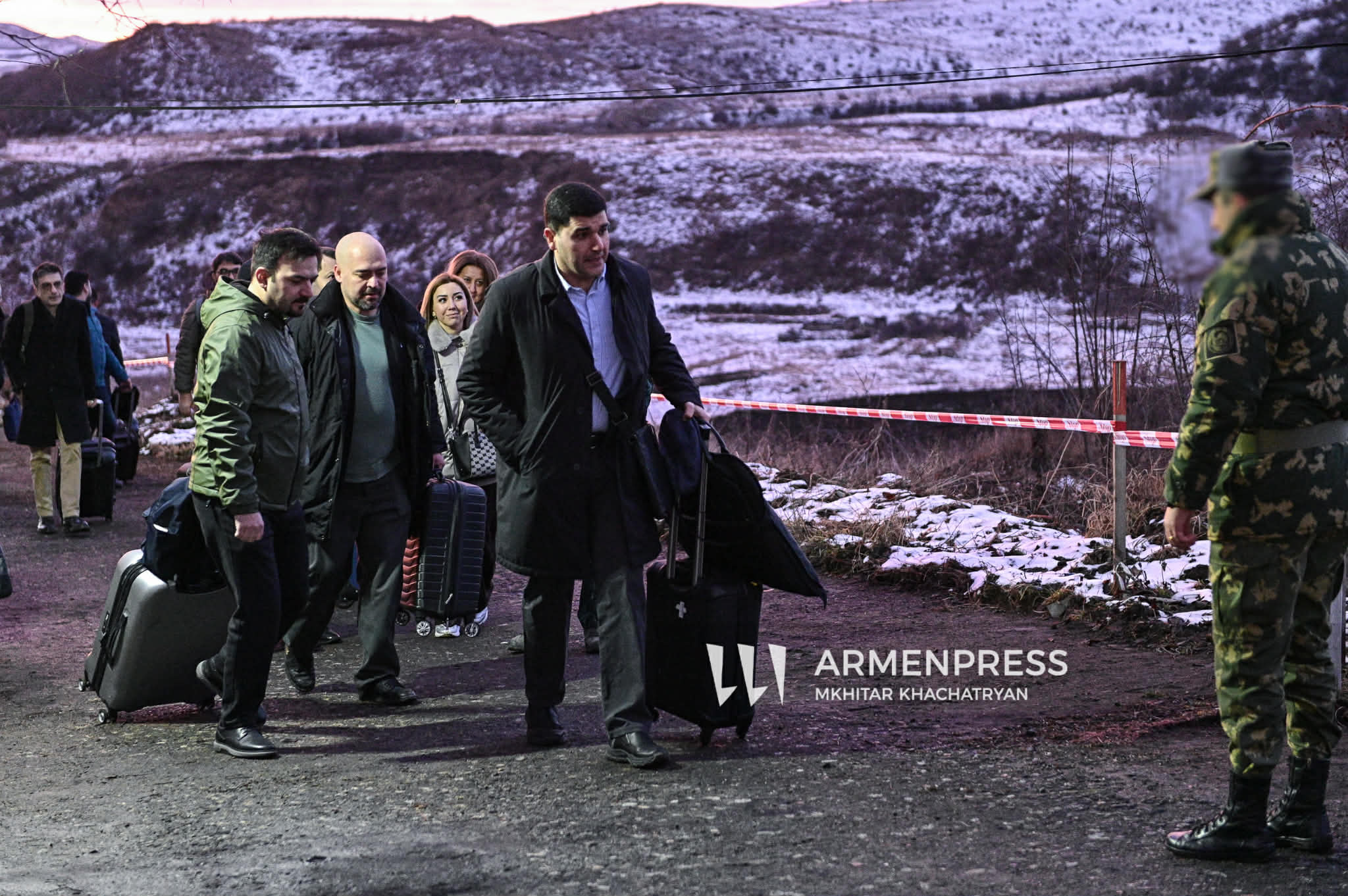
The Azerbaijani delegation arrived in Armenia by land, not by plane as it did in October 2025. Nineteen Azerbaijani experts crossed the interstate border at the Tavush–Gazakh section. They walked through the area near the Azerbaijani village of Ashagi Askipara and the Armenian village of Voskepar. This part of the border has been delimited and demarcated.
The Azerbaijani delegation returned home the same way. Participants in the initiative called it “another practical step to build trust”.
“We are living through a historic period. Our crossing of the border was a symbolic step. For the first time in many years, civil society representatives are crossing the border on foot, through a delimited and demarcated section. This is not only a logistical move. It is also a psychological milestone, both for us and for our societies,” said Kamala Mammadova, editor-in-chief of the online outlet 1news.az and a participant in the round table from Azerbaijan.
According to Boris Navasardyan, honorary president of the Yerevan Press Club, the crossing set an important precedent.
“Our Azerbaijani partners crossed the border. It was a brave step on their part to be the first to do so, and to walk through a demarcated section of the frontier,” he said.
Main topics of discussion
Participants in the initiative say they spent two days discussing the current stage of Armenian–Azerbaijani relations and future prospects. In that context, the experts addressed:
- Economic opportunities that have emerged during the peace process and as a result of changes in the regional security environment;
- The delimitation of interstate borders and the reopening of transport links;
- The opportunities that a lasting peace could create, as well as the social and economic benefits of closer ties between the two societies;
- Public expectations in both countries and the steps needed to deliver tangible results from the peace process for their citizens.

Round-table participants
“A separate session focused on cooperation among the participants in the dialogue. They discussed ideas for joint programmes, communication strategies and mechanisms for interaction between the two societies,” the organisers said.
They paid particular attention to trust-building, people-to-people diplomacy and encouraging contacts between the societies.
“Regular contacts within this format can make a significant contribution to building mutual trust, expanding professional cooperation and gradually normalising Armenian–Azerbaijani relations,” participants in the Bridge of Peace initiative said.
Meetings with officials
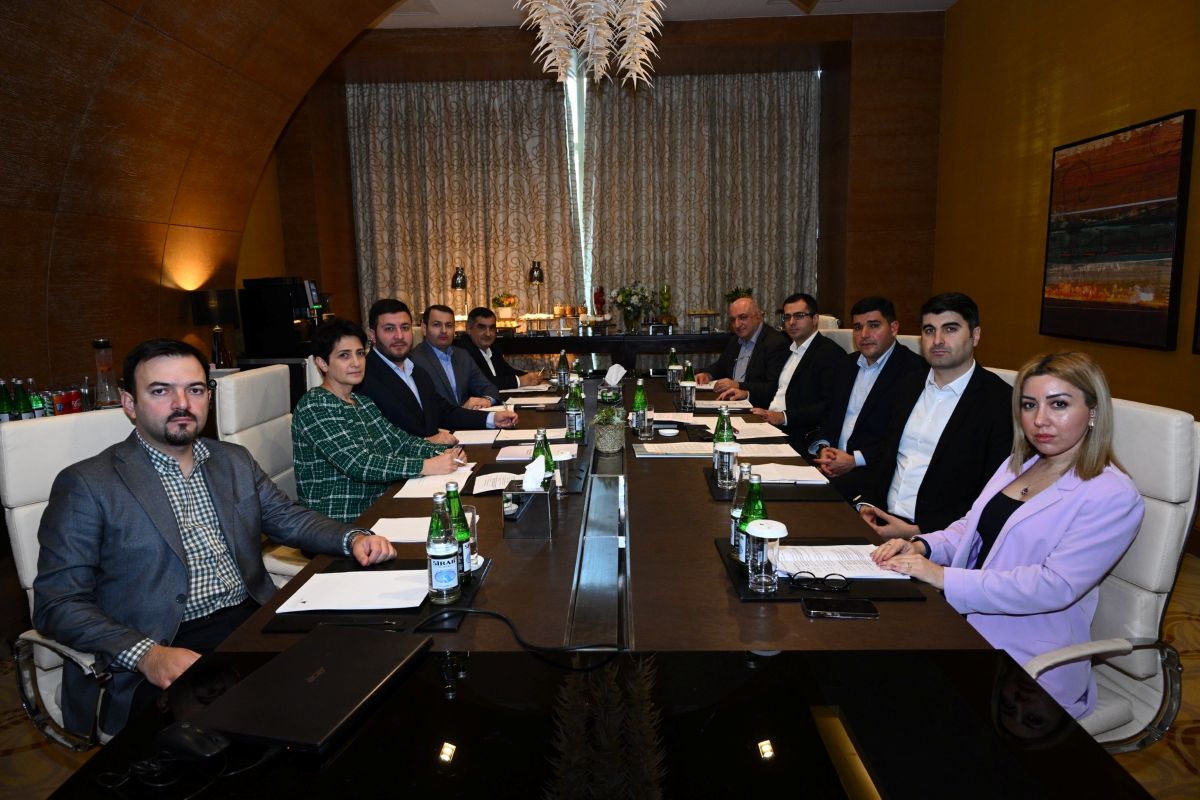
Participants in the Bridge of Peace initiative also met senior officials. The organisers said they held an open discussion and exchanged views with Deputy Foreign Minister Vahan Kostanyan and Security Council Secretary Armen Grigoryan.
Meeting with Deputy Foreign Minister Vahan Kostanyan and Security Council Secretary Armen Grigoryan
The foreign ministry did not disclose details of the meeting. However, some information emerged about the participants’ talks with the Security Council secretary. Armen Grigoryan welcomed the Azerbaijani civil society representatives who had arrived in Armenia. He stressed that bilateral contacts in this format play an important role in building mutual trust and developing good-neighbourly relations.
“Armen Grigoryan briefed his interlocutors on progress in the peace process. He also discussed the economic opportunities created by the reopening of regional communications, as well as the current dynamics in Armenian–Azerbaijani relations,” the Security Council said.
Participants’ views
Boris Navasardyan, honorary president of the Yerevan Press Club:
“I would say that sincerity is growing and deepening within this format of dialogue. First of all, we are beginning to understand each other better. Understanding also means recognising what is possible and what is not in this process.
I think the agenda we are shaping will be useful for decision-makers. This initiative serves as a platform for additional dialogue, of which the authorities in both countries are fully aware. They can build their work on the basis of the product we create.”
Farhad Mammadov, director of the South Caucasus Research Centre:
“Everyone understands that peace must follow war. We have been moving towards this path for quite some time. The Azerbaijani government has spoken about a peace treaty and a peace agenda for several years. This forms part of its policy.
The parameters of peace are what matter — what kind of peace it will be. These are very important elements, because we often encounter scepticism in public opinion. The parameters of peace remain unclear. It will not be like in Soviet times; it will be something new.
Economic interaction between the countries is already taking place. There is high-level dialogue between the governments and the leaders. At the same time, the geopolitical environment is changing — and not for the better. Society sees new wars and threats emerging. Yet between Armenia and Azerbaijan, peace is strengthening. This creates favourable conditions for society to accept the peace agenda.”
Narek Minasyan, political analyst:
“Our task is to try, despite the тяжёлое наследие прошлого, to find points of contact that will allow us to move forward and make this peace process irreversible. I attach great importance to forming realistic expectations around this initiative.
Observations on the ground after recent meetings show two main categorical approaches.
The first is an overestimation of the initiative’s capabilities, which leads to inflated expectations. Some believe this format obliges us to discuss issues that are not actually within our competence but fall under the responsibility of governments. For example, border delimitation. We raised this issue and voiced our concerns during the meeting, but the decision-making process lies with the government.
The second approach is the belief that the initiative is pointless and cannot change anything. At least from our experience, we can say with confidence that it does have an impact and a positive effect — both in terms of changing narratives and generating new ideas.”
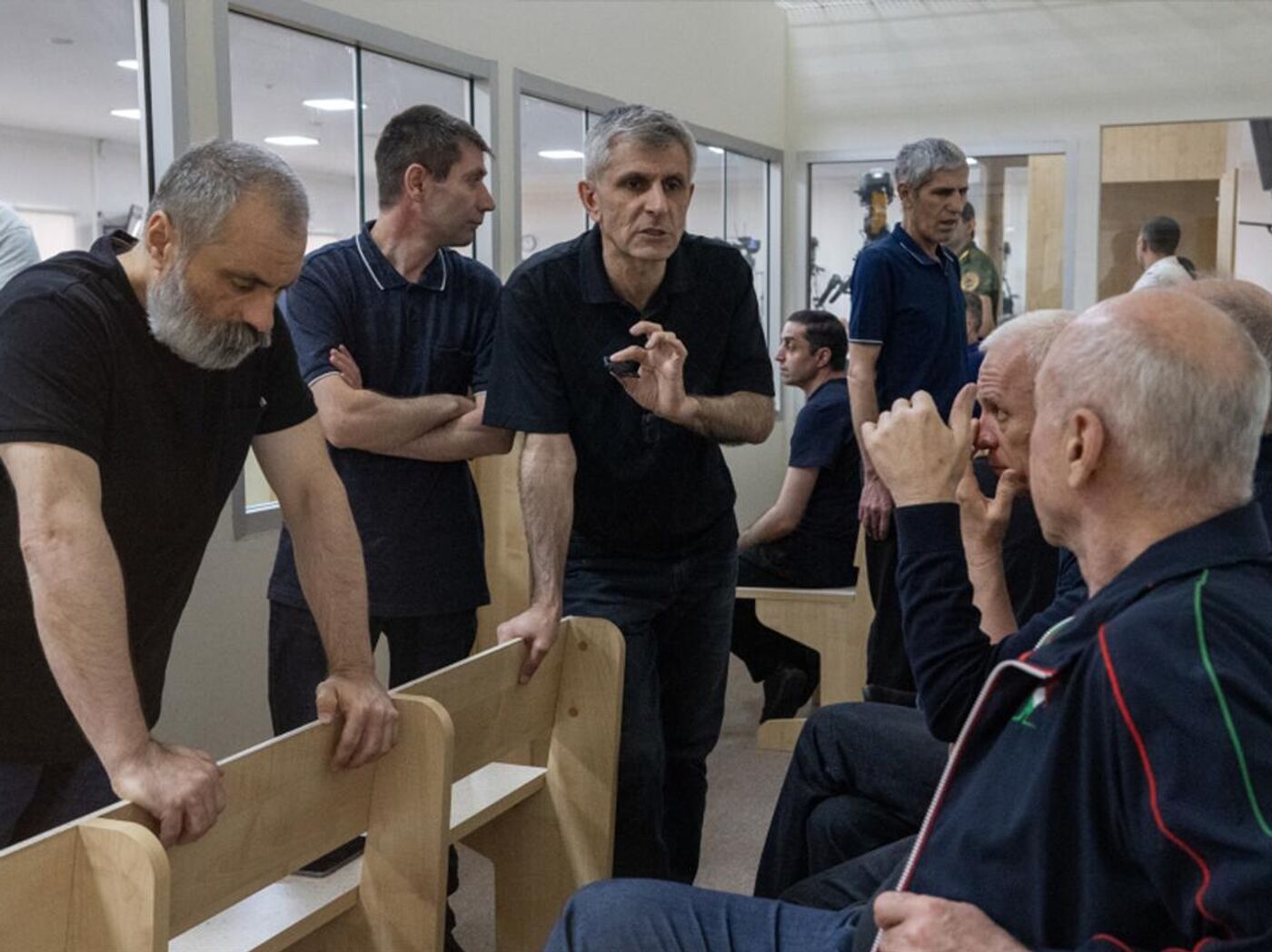
“Inside view”: impressions of a JAMnews editor
Naïra Martikyan, JAMnews editor for Armenia, also took part in the round table. She later shared her impressions with colleagues in the Armenian newsroom:
“A very important process of normalising relations between Armenia and Azerbaijan is under way. The Bridge of Peace initiative is one of its components, though its role may not yet be clear to everyone. That was my impression when I read comments on social media about this first expanded meeting of Armenian and Azerbaijani experts.
In short, I would like to assure everyone that the conspiracy theories voiced by some politicised circles have no basis in reality.
The initiative is trying to become a bridge between the two societies. It aims to build economic ties and promote joint work among scientists, researchers, cultural figures, artists and journalists.
I will not dwell on the meeting’s agenda, as there have already been detailed reports and press conferences by the Bridge of Peace participants. Instead, I will share my personal impressions.
First of all, I want to thank the organisers. They planned everything down to the smallest detail and scheduled it minute by minute. That allowed us to discuss a wide range of important issues that concern both sides.
Most importantly, we had an open conversation without any censorship. Participants could speak frankly, hear honest answers and see each other’s faces and emotions.
That is extremely important when trying to build dialogue and cooperation between societies that have decades of conflict behind them.
We also discussed various joint projects that could help our societies understand each other better. As it seemed to me, my Azerbaijani colleagues showed interest in my proposal. There is no final decision yet, but I hope JAMnews will be able to carry it out together with our Azerbaijani partners. Without revealing details, I can say it will be a unique project even for our outlet, where joint Armenian–Azerbaijani materials have never been unusual.
A return visit by the Armenian participants is also planned within the Bridge of Peace initiative. I hope to share equally positive impressions after the meeting in Azerbaijan.”
Armenian–Azerbaijani experts’ third meeting
Armenian–Azerbaijani experts’ third meeting
Armenian–Azerbaijani experts’ third meeting
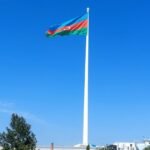
The event is scheduled to take place in Baku from June 26 to June 28, bringing together young engineers, students, and technology enthusiasts from different countries, News.Az reports, citing AZERTAC.
The announcement was made by Rahman Rasulzade, head of AREA Group of Companies and founder of the Azerbaijan Robotics Engineering Academy (AREA). He said the competition is expected to support the development of new technology products under the “Made in Azerbaijan” brand.
***
According to Rasulzade, AREA has been working in the fields of engineering and robotics in Azerbaijan for around 10 years. The organization focuses on helping young people gain not only theoretical knowledge but also practical technical skills.
AREA runs projects aimed at developing expertise in robotics, engineering, artificial intelligence, and drone technologies. The broader goal is to help strengthen Azerbaijan’s national technology ecosystem and prepare young specialists for future high-tech industries.
Organizers say the competition will provide participants with a platform to present their ideas, prototypes, and innovative projects. The event is also expected to encourage collaboration between students, researchers, and technology professionals.
The World Robot Caspian Cup is seen as part of Azerbaijan’s wider push to invest in digital transformation, innovation, and youth development, while promoting the country as a regional hub for technology and engineering.
The post Azerbaijan to host first World Robot Caspian Cup appeared first on azeritimes.com.
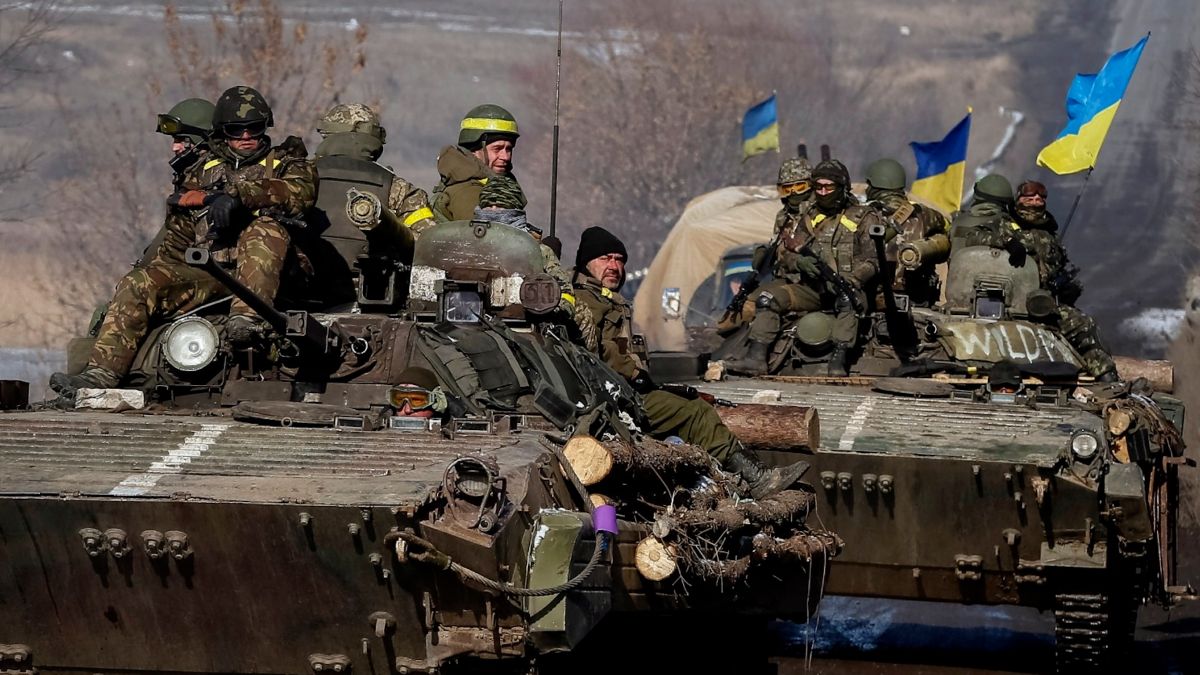
Hungary’s foreign minister said the request comes after oil flows through the Druzhba pipeline were halted following an attack in Ukraine on January 27. Ukrainian officials said the disruption was caused by a Russian strike on pipeline infrastructure, while Hungarian officials have accused Kyiv of failing to restore transit for political reasons, News.Az reports, citing Reuters.
Budapest says it wants Croatia to allow Russian oil shipments to reach Hungary and Slovakia via the Adria pipeline. Hungarian officials argue that existing sanctions exemptions allow the countries to import Russian oil by sea if pipeline deliveries are interrupted.
***
Ukraine has not publicly responded to the latest accusations. State-owned energy company Naftogaz also did not immediately comment on the situation.
Croatia signaled it could help address the supply disruption. Croatian officials said any assistance would comply with European Union rules and U.S. sanctions regulations.
The dispute highlights deep divisions within Europe over energy dependence on Russia. Hungary and Slovakia remain heavily reliant on Russian oil and gas and have resisted some European Union efforts aimed at cutting energy revenues linked to Russia’s war in Ukraine.
Hungarian Prime Minister Viktor Orban has maintained relatively close relations with Moscow since the start of the war and has also opposed Ukraine’s potential future membership in the European Union.
The issue is unfolding amid broader diplomatic activity in the region. U.S. Secretary of State Marco Rubio is scheduled to meet Orban, with energy security among the expected topics of discussion.
The situation also reflects the wider geopolitical impact of the war in Ukraine, where energy supply routes have become a major point of political and economic tension across Europe.
The post Hungary seeks Croatia help after Russian oil disruption appeared first on azeritimes.com.