Categories
South Caucasus News

Kremlin: Key Ukraine issues to be discussed in Geneva


Negotiations involving Russia, Ukraine, and the United States are expected to be held on Tuesday and Wednesday, at a time of intensified diplomatic pressure to move toward a potential settlement. The talks come as Washington continues urging Kyiv to work toward an agreement, while Moscow maintains its demand that Ukraine recognize Russian control over the entire Donbas region, News.Az reports, citing Reuters.
According to Kremlin officials, the Russian delegation will be led by presidential aide Vladimir Medinsky. Kremlin spokesperson Dmitry Peskov said the negotiations will address what Moscow calls the “main issues,” including territory and other key demands previously outlined by Russia.
***
Russian military intelligence chief Igor Kostyukov is also expected to participate in the talks. In parallel, a separate working group focusing on economic matters will include Kirill Dmitriev, President Vladimir Putin’s special envoy.
Despite renewed diplomatic activity, major disagreements remain between Russia and Ukraine. These include territorial control, the future status of the Zaporizhzhia nuclear power plant, and potential security arrangements, including the possible role of Western forces in post-war Ukraine.
U.S. President Donald Trump has said he wants to help bring an end to the conflict, which he has described as a devastating and unnecessary war. However, with both sides maintaining firm positions on key issues, the Geneva talks are expected to be complex and closely watched by the international community.

The post Kremlin: Key Ukraine issues to be discussed in Geneva appeared first on azeritimes.com.


Categories
South Caucasus News

Greenland’s west coast sees record warm January


According to the institute, Nuuk registered an average temperature of 0.1°C (32°F) for the month — a striking 7.8°C above the January average calculated over the past three decades. The figure also surpassed the city’s previous January record set in 1917 by 1.4°C, News.Az reports, citing AFP.
On the warmest day of the month in Nuuk, temperatures climbed to an unseasonably mild 11.3°C.
***
The record warmth was not limited to the capital. From Greenland’s southern tip along the entire west coast — spanning more than 2,000 kilometers (1,243 miles) — January temperatures reached new monthly highs, DMI reported.
In Ilulissat, located in Disko Bay, the average temperature for January was recorded at -1.6°C. That was 1.3°C warmer than the previous record set in 1929 and approximately 11°C above the long-term January norm.
While brief periods of warmer air occasionally move across Greenland, bringing milder conditions for short stretches, the widespread and sustained nature of this month’s temperature records signals a broader trend, DMI climate researcher Martin Olesen said.
“Such an extended heat record across such a large area is a clear indication that something is changing,” Olesen noted. “We know and can clearly see that global warming is well underway, which, as expected, leads to more records at the warm end of the temperature scale and gradually fewer records at the low end.”
The Arctic remains one of the regions most affected by climate change. Since 1979, it has been warming at roughly four times the global average rate, according to a 2022 study published in the scientific journal Nature.

The post Greenland’s west coast sees record warm January appeared first on azeritimes.com.


Categories
South Caucasus News

‘Tehran’ producer found dead in Athens hotel


The producer, identified as 52-year-old Dana Eden, was discovered after relatives were unable to reach her and raised concerns about her wellbeing. Authorities have launched an investigation to determine the exact circumstances surrounding her death, News.Az reports, citing Reuters.
Greek police said the case is currently being examined based on available evidence and witness statements. Officials have not released further details as the inquiry continues.
***
In a statement, international production company Donna and Shula Productions expressed deep sadness over the loss, offering condolences to Eden’s family, friends, and colleagues. The company also urged the public and media outlets to avoid spreading unverified speculation about the incident.
According to Israeli media reports, Eden had been in Greece working on production related to the fourth season of the TV series Tehran, a show that has gained international recognition for its political and espionage-focused storyline.

The post ‘Tehran’ producer found dead in Athens hotel appeared first on azeritimes.com.


Categories
South Caucasus News

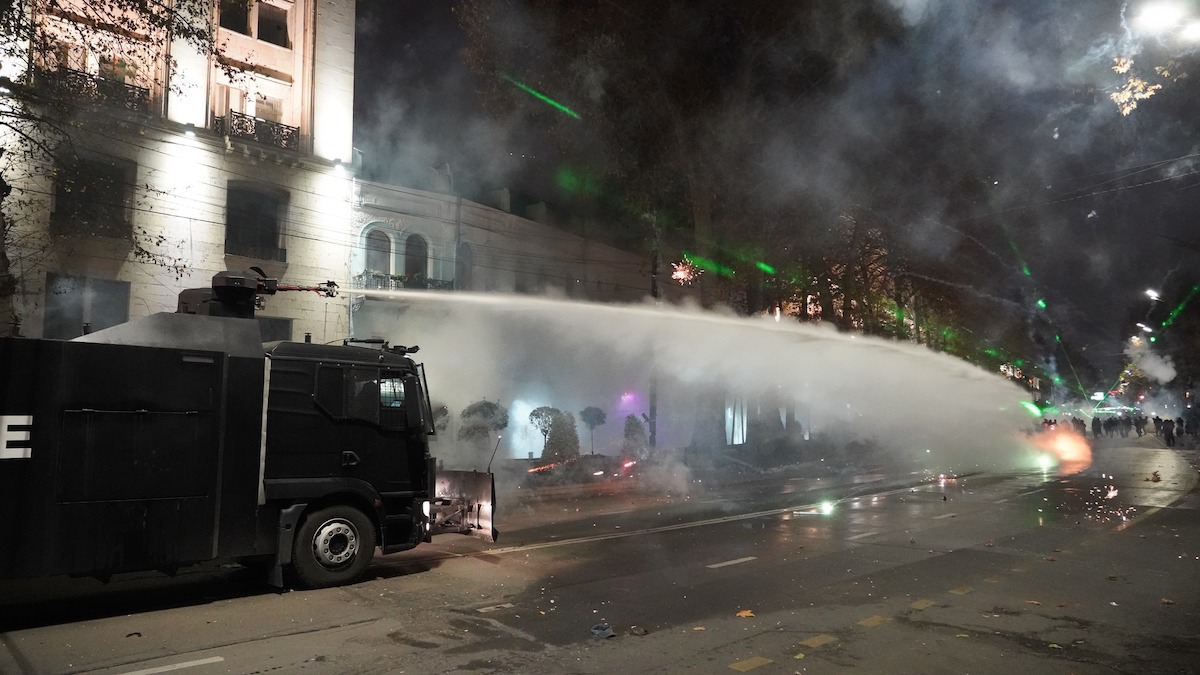
Lawyers to present water cannon chemical exposure victims in Georgian court


Georgia water cannon chemicals case

Georgia water cannon chemicals case

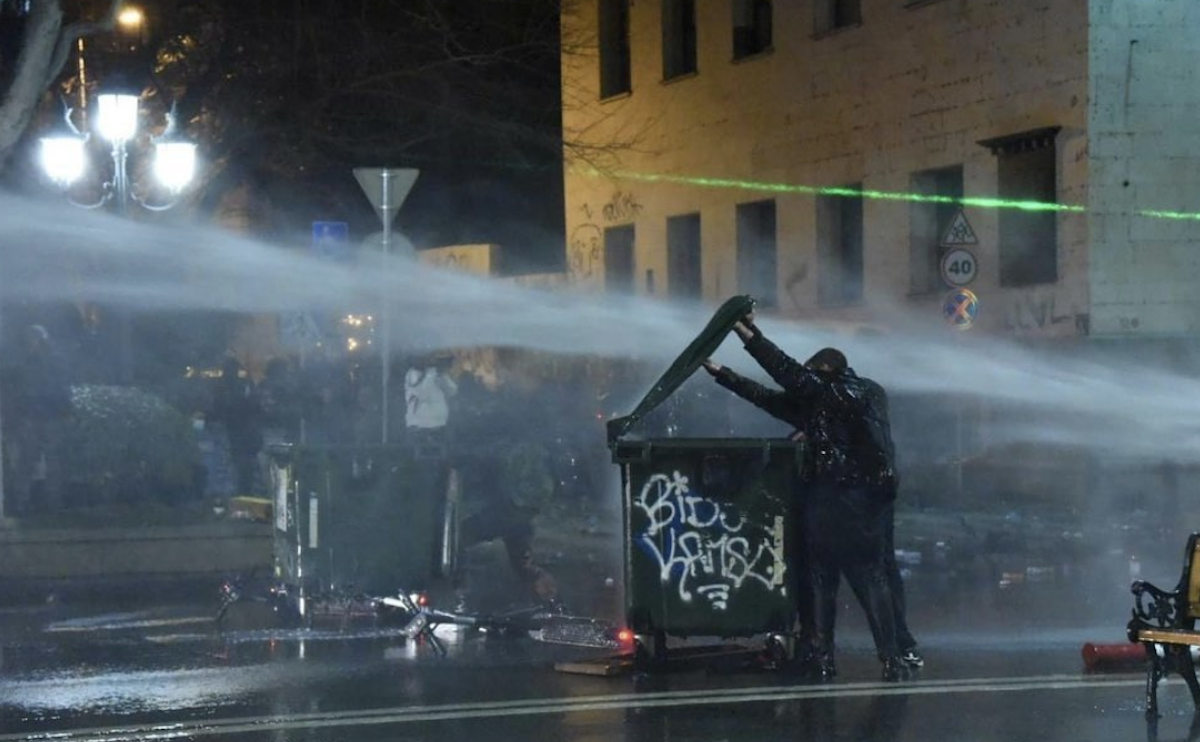
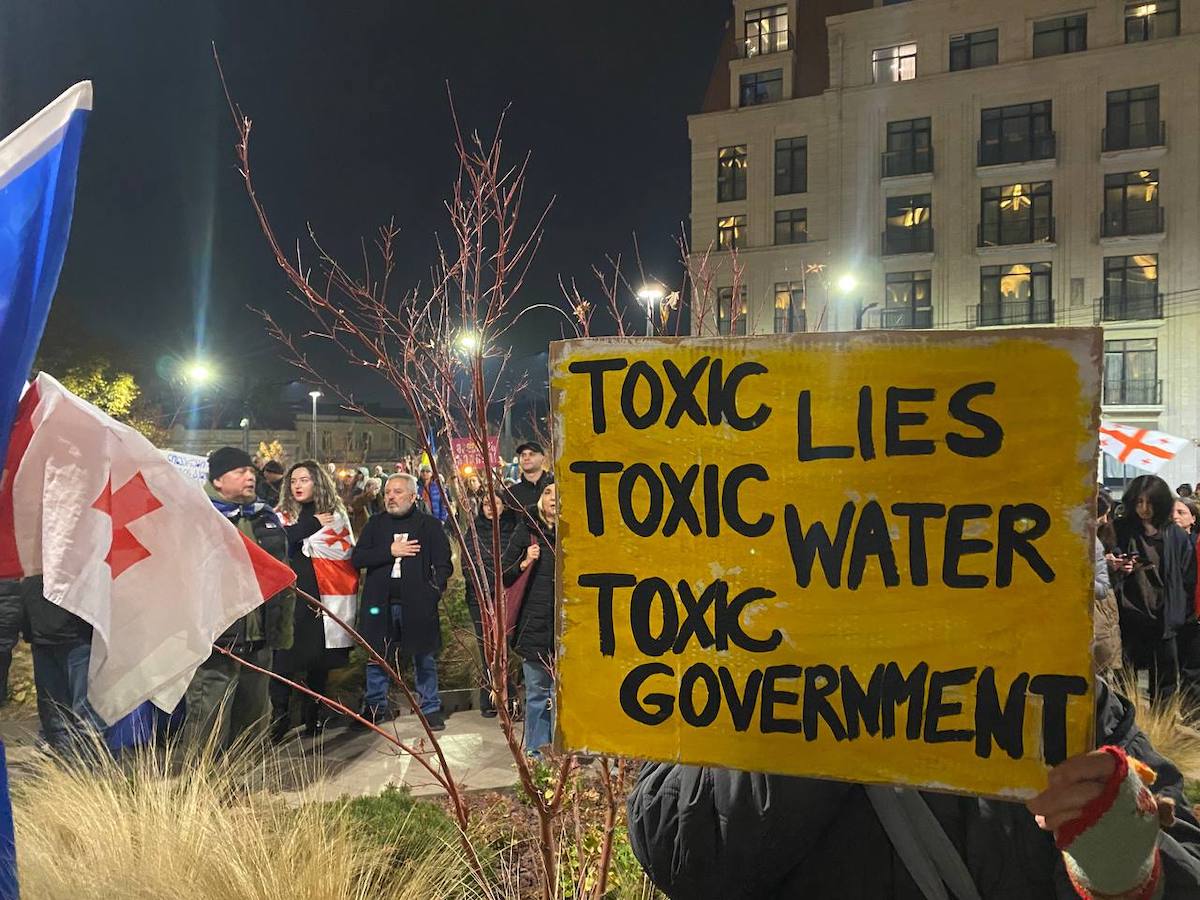
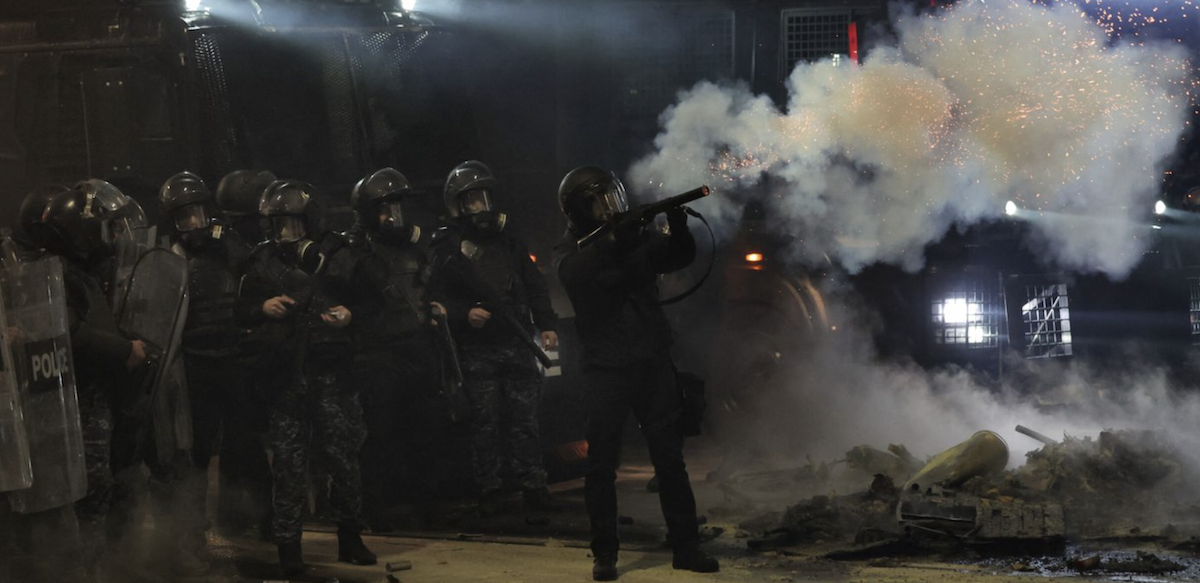
The Georgian Young Lawyers’ Association has announced the start of legal proceedings on behalf of citizens who say they were harmed by chemicals used in water cannons during the dispersal of protests in Georgia in November and December 2024.

The organisation has appealed to the prosecutor general’s office, calling for an effective and independent investigation, the recognition of the victims’ legal status, and the prosecution of those responsible.

What the lawyers are demanding

The organisation is calling for:

  • Information on the progress of the investigation;
  • Interviews with those affected;
  • An assessment of the use of chemicals in water cannons under the criminal code;
  • All necessary investigative steps to identify those responsible;
  • Official recognition of seven people whose health was harmed as victims.

At this stage, the association is representing seven citizens in court who say the special means used during the protests caused serious and lasting harm to their health.

Legal and generally accepted standards

The Georgian Young Lawyers’ Association says the issue of adding chemicals to water cannons is poorly regulated under the Law on Police. There are no provisions that directly authorise such a practice.

The organisation notes that an earlier version of the law, adopted in 2015, prohibited the simultaneous use of water cannons, rubber bullets and tear gas. However, this restriction was later removed from the current text without the introduction of additional safeguards.

According to the association, a water cannon filled with chemical irritants cannot be considered a legally defined or proportionate means of crowd control. It says the practice contradicts both national standards and European conventions on the legality, necessity and proportionality of the use of force.

Questions over the independence of the investigation

The association also criticised the fact that the investigation is being carried out by the same agency that questions whether any violations took place. It says this creates a conflict of interest and runs counter to widely accepted standards of effective and independent investigations.

The organisation also warned of possible intimidation against those who publicly speak about the alleged abuses.

Investigation into chemicals in water cannons

On 1 December 2025, the BBC published an investigation claiming that the Georgian government may have used a chemical agent dating back to the First World War to disperse anti-government protests at the end of 2024.

The report said British journalists spoke to chemical weapons experts, sources in Georgia’s police special units and doctors, and found that a substance known as bromobenzyl cyanide, or “camite”, may have been used in water cannons during the crackdowns.

Georgia’s State Security Service launched an investigation. It later confirmed that a chemical substance had indeed been used, but said it was not “camite” but chlorobenzylidene malononitrile, known as CS gas. The agency added that “camite” had never been purchased by the interior ministry.

The statements further intensified questions about transparency and access to information. In January 2025, the Georgian Young Lawyers’ Association requested public information from the interior ministry but received no response. The health ministry said it also had no information about the composition of the substances used and that such data had not been requested from the interior ministry.

Background

The protests in Georgia in November and December 2024 took place amid heightened political tensions. In recent years, the use of force to disperse demonstrations has repeatedly drawn sharp criticism from the public and the international community.

Water cannons and chemical agents are widely used in law enforcement, but under international law their use must meet clear criteria: it must be lawful, necessary and proportionate. Adding chemical agents to water cannons is a rare and particularly sensitive practice that requires strict regulation and transparency.

In Georgia’s case, the dispute is not only about identifying the specific substance. It also concerns the legality of the use of force, the independence of the investigation and public trust in state institutions.

Georgia water cannon chemicals case


Categories
South Caucasus News

Rubio says Iran nuclear deal ‘not easy’ as US steps up pressure


U.S. Secretary of State Marco Rubio said Monday that reaching a new agreement with Iran will be challenging, citing deep ideological differences between Washington and Tehran, AzerNEWS reports, citing foreign media.

Categories
South Caucasus News

Iran holds naval drill amid tensions with U.S.


Categories
South Caucasus News

Варшава усиливает оборонную стратегию


Categories
South Caucasus News

Кличко бьет тревогу: Киев на грани, конфликт с Зеленским — в разгаре


Categories
South Caucasus News

What Is XRP? A complete overview


Since its launch it has been praised for speed low transaction cost and cross border payment efficiency while also criticized for its centralized origins and ongoing regulatory debates, News.Az reports.
***
Unlike many crypto assets that position themselves as alternatives to traditional finance, XRP was designed to work with banks, payment providers and financial institutions rather than replace them.
This faq explainer provides a comprehensive overview of xrp for readers who want a clear and structured understanding of what xrp is how it works why it was created and how it fits into the broader digital finance landscape. The goal is not promotion but explanation. By the end of this article you should have a solid grasp of xrp technology its use cases risks governance model and long term outlook.
What exactly is xrp
Xrp is a digital asset created for fast efficient value transfer across borders. It operates on a distributed ledger known as the xrp ledger and is primarily used as a bridge currency that enables instant exchange between different fiat currencies.
Unlike many crypto assets xrp does not rely on mining. All units of xrp were created at inception which makes it fundamentally different from proof of work systems. The asset was designed to move value in seconds with minimal fees and predictable transaction finality.
Xrp is closely associated with the company Ripple which builds payment solutions that use the xrp ledger for settlement and liquidity management. However xrp itself is an open source digital asset that exists independently of any single company.
Why was xrp created
The motivation behind xrp was to solve inefficiencies in the global financial system. Traditional cross border payments rely on correspondent banking networks that are slow expensive and opaque. Transactions can take days to settle and often involve multiple intermediaries.
Xrp was designed to address these pain points by enabling near instant settlement between currencies without the need for pre funded nostro accounts. This makes it attractive for banks remittance providers and payment companies that operate internationally.
The creators envisioned xrp as a neutral bridge asset that could connect different financial systems in real time reducing cost and complexity.
How does the xrp ledger work
The xrp ledger is a decentralized database that records all transactions involving xrp and other issued assets. It uses a unique consensus mechanism rather than mining or staking.
Consensus mechanism explained
Transactions on the xrp ledger are validated through a consensus protocol where a network of independent validators agree on the order and validity of transactions. This process typically completes within a few seconds.
Validators do not receive block rewards. Their incentive is network reliability and trust rather than direct financial gain. This model allows the ledger to operate with very low energy consumption compared to proof of work systems.
Speed and cost
The xrp ledger can process thousands of transactions per second with settlement finality in a few seconds. Transaction fees are extremely low and are burned rather than paid to validators which helps prevent spam.
Is xrp centralized or decentralized
This is one of the most frequently asked questions about xrp.
Xrp exists on a decentralized ledger with multiple independent validators. Anyone can run a validator and participate in consensus. However critics argue that the network has a degree of centralization because Ripple has historically influenced recommended validator lists and holds a significant amount of xrp.
Supporters counter that validator diversity has increased over time and that the ledger can continue operating even if Ripple were to cease operations.
The reality lies between extremes. Xrp is more centralized than some permissionless networks but more decentralized than private blockchain systems.
How is xrp different from bitcoin
Xrp and bitcoin serve fundamentally different purposes.
Bitcoin was created as a decentralized store of value and censorship resistant payment system. It relies on mining and proof of work to secure the network.
Xrp was created for fast settlement and liquidity management in payment systems. It does not rely on mining and prioritizes speed efficiency and integration with existing financial infrastructure.
Bitcoin emphasizes monetary sovereignty. Xrp emphasizes payment efficiency.
What are the main use cases of xrp
Cross border payments
Xrp is most commonly used as a bridge asset in international payments. It allows financial institutions to convert one currency into another instantly without holding multiple foreign currency accounts.
On demand liquidity
Payment providers can use xrp to source liquidity in real time. This reduces capital requirements and operational costs.
Remittances
Xrp can be used for consumer remittance services where speed and low fees are critical.
Tokenization and issued assets
The xrp ledger supports issued tokens including stablecoins and other digital representations of value. This expands its potential use cases beyond xrp itself.
How is xrp supplied and distributed
All xrp units were created at launch. There is no inflation through mining or staking.
A large portion of xrp was placed into time locked escrow accounts to provide predictable supply release. Each month a fixed amount becomes available and unused portions return to escrow.
This mechanism was designed to provide transparency and limit sudden supply shocks.
Is xrp deflationary
Xrp is technically deflationary because transaction fees are destroyed rather than redistributed. Over time this reduces the total supply very slowly.
However the effect is minimal in the short term and should not be viewed as a primary value driver.
What is the relationship between xrp and ripple
This question often causes confusion.
Xrp is a digital asset that exists on the xrp ledger. Ripple is a company that builds financial software and payment solutions.
Ripple uses xrp in some of its products but xrp can exist and function independently. Ownership of xrp does not grant ownership or equity in Ripple.
Is xrp used by banks
Some banks and payment institutions have tested or implemented solutions that use xrp for settlement or liquidity. Adoption varies by region and regulatory environment.
Many institutions use Ripple software without using xrp. Others explore xrp specifically for cross border settlement where it offers cost and speed advantages.
What are the regulatory issues surrounding xrp
Xrp has been at the center of significant regulatory debate particularly in the United States.
The core question has been whether xrp should be classified as a security or a digital commodity. This debate has influenced exchange listings investor sentiment and institutional adoption.
Regulatory clarity remains one of the most important factors shaping xrp future.
Is xrp a good investment
This article does not provide investment advice. However it is important to understand the factors that influence xrp value.
Potential positives
Strong focus on real world payments Fast and low cost transactions Existing institutional relationships
Risks
Regulatory uncertainty Competition from other payment focused networks Market volatility
Investors should evaluate xrp based on their own risk tolerance and understanding of the asset.
How does xrp handle scalability
The xrp ledger was designed for high throughput from the beginning. Its consensus model allows it to scale without the bottlenecks seen in some older blockchain systems.
This makes it suitable for enterprise level payment flows.
What is the long term vision for xrp
The long term vision of xrp is to become a standard bridge asset for global value transfer. This would mean seamless movement of money across borders currencies and systems in real time.
Achieving this vision depends on regulatory clarity institutional adoption and continued technical development.
Frequently asked questions
Can xrp be mined
No xrp cannot be mined. All units already exist.
Does xrp use proof of stake
No xrp uses a consensus protocol based on validator agreement.
Is xrp environmentally friendly
Yes compared to proof of work systems xrp uses very little energy.
Can individuals use xrp or is it only for banks
Individuals can buy hold and transfer xrp just like other digital assets.
What wallets support xrp
Many software and hardware wallets support xrp including institutional grade custody solutions.
Can xrp transactions be reversed
No once validated transactions are final.
Is xrp anonymous
Xrp transactions are pseudonymous meaning addresses are visible but not directly linked to identities.
Conclusion
Xrp occupies a unique position in the crypto ecosystem. It is neither purely grassroots nor fully institutional. It sits at the intersection of traditional finance and blockchain innovation.
Its design prioritizes speed efficiency and real world integration. This makes it fundamentally different from many other digital assets. At the same time regulatory debates and centralization concerns continue to shape its narrative.
Understanding xrp requires moving beyond headlines and taking a balanced view of its technology use cases and limitations. Whether xrp ultimately fulfills its ambition as a global bridge asset will depend on factors far beyond price movements including regulation infrastructure and institutional trust.

The post What Is XRP? A complete overview appeared first on azeritimes.com.


Categories
South Caucasus News

Grossi, Araghchi meet ahead of US-Iran talks


In a message posted on social media, Grossi said he had met with Seyed Abbas Araghchi as part of preparations for the talks scheduled for Tuesday in the Swiss city, News.Az reports, citing Xinhua.
According to a statement from Iran’s Foreign Ministry, Araghchi arrived in Geneva on Sunday accompanied by a delegation of diplomatic and technical officials. The delegation is participating in the second round of indirect negotiations between Iran and the United States.
***
U.S. officials have confirmed that American representatives will also attend the discussions. The delegation is expected to include special envoy Steve Witkoff as well as Jared Kushner, the son-in-law of U.S. President Donald Trump.
The Geneva meetings mark the continuation of diplomatic efforts aimed at addressing issues related to Iran’s nuclear program through indirect engagement between Tehran and Washington.

The post Grossi, Araghchi meet ahead of US-Iran talks appeared first on azeritimes.com.