
Russia Still Armenia’s Top Partner Despite Sharp Fall In Trade Ազատություն Ռադիոկայան
Day: January 12, 2026
Categories
New York Post
Some believe the phrase has been our undoing. Others will say it’s the one thing that has carried us through all these years of darkness. Whatever one’s opinion of it, there are moments in daily conversations in Georgia, moments of uncertainty, moments of doom, when you just can’t help it. The phrase – “ragatsa ikneba” (რაღაცა იქნება)- simply pronounces itself. It announces itself.
The most literal translation of ragatsa ikneba is “there will be something.” There are versions of closer, prettier English translations: “something will turn up,” or “it will be all right,” or “we’ll manage,” or “it will be fine,” or “we’ll be fine.” But one must be careful with these: each smallest deviation from the original meaning, or original meaninglessness, each small certainty the translation brings, every pronoun it adds, every action it invokes, and every bit of new hope it introduces is enough to compromise the mystery, or even mysticism, the universal phrase carries.
We know there will be something, but we don’t know what that something will be. Is it something “good,” or simply something not too bad? Does “someone” bring that something, or is it meant to unfold on its own? Do we look outside, look up, or look inside to find that something? We can only guess. And yet, every word comes with its imagery. So what do we see when we say something?
This is Nini and the Dispatch newsletter, writing from Georgia’s protracted political crisis in search of that “something” that could deliver us from this ordeal.
Something Divine
It could be God. Quite often, the phrase “there will be something” is automatically followed by the mention of the Lord: “God will not abandon us,” it goes, as a joke or in all seriousness. There is no hope, nothing seems to work in our favor, but we’ve been through worse, and yet here we are. God must have helped us then, and God will help us now.
But we speak about God not abandoning us in moments when we feel most abandoned by God. We remember times we were saved precisely because there were many times when we weren’t. It’s hard to say why God won’t do anything about it. Probably because he, or she, is no fan of explicit divine interventions. You want peace and rapture, wait for the afterlife. This world is for tests and suffering. Or God may simply be busy attending to other global events, in places where people might be more desperate or more extreme in getting heaven’s attention. Or God may be angry with us, giving us all these chances only to watch us waste them over and over again.
But what if God actually wants to save us one last time? It’s not a Greek theater – no one will be descending from above through a deus ex machina to save the day. To save us, God would still need some kind of medium, some earthly event to grant our desperate wish. Something worldly, something global.
Something Foreign
Something big must happen internationally for things to radically change in Georgia, you’ll sometimes hear the argument. Those always looking outside have a point. Look at history: none of the country’s breakthroughs, whether gaining or regaining independence, came as isolated events. They all coincided with greater shifts in the world, the collapse of empires. The war in Ukraine must end, Russia must fall, the West must reassert itself, and the U.S. must use its brazen dominance for good deeds. You see something happened in Syria, something happened in Venezuela, and something is happening in Iran. Something will happen here, too.
It is for a reason that every time things shake internationally, we find ourselves in a frenzy. But it may be nothing more than an outdated instinct. Not so long ago, Western pressure did work magic in Georgia in terms of a democratic push. But the past months and years have proved that this is no longer the case, and Georgians have become increasingly self-critical and wary of constantly looking for external help that is not coming. Worse, that foreign “something” may well work against us, should it end up re-legitimizing the logic of spheres of influence.
Something Domestic
No help is coming until we take matters into our own hands. Indeed, this can’t go on like this forever. For over a year, the country has been stuck in a circle of repression and resistance. It looks like a frozen conflict, but with new victims every day. Something radical will, at some point, happen inside the country. It must shift to one side or another; either the regime crushes the resistance, or the resistance wins. But for that, something must happen. Someone must think of something.
Someone indeed thought of something for October 4, 2025. But it was apparently not a good something, and not many wanted to take part in that something, whatever it was. We want something different, something purer, something more legitimate – peaceful, risk-free, but also effective enough to force a government that doesn’t really care about peaceful pressure to back down. Hitting the streets again in the hundreds of thousands would be something, but would it be enough? What is that something that would bring back faith and fighting spirit to the masses?
Someone must do something. Someone must snap. Who’s that someone?
Something Inside
Maybe that someone is you. When we say “there will be something,” we may simply be looking inwards, looking for something inside ourselves to move, to ignite, looking for some new courage or, even better, new ideas. After all, Georgia is a country of heroes, of individual sacrifice. That’s what we’ve been told, at least. There is no shortage of remarkable examples of individual courage these days, either. If others could find that fire, so can you.
But will that change anything? What if we have many heroes simply because we’ve had so few victories? The country’s record of successful revolts is not rich, and the tales of heroes could be merely the consolation prizes for battles we could not win. The bravery of one only confirms the cowardice of the masses. And there is, again, no consensus of what that one-person act must look like, what’s the right balance of risk and consequences: when, recently, news broke that one prominent politician tried (and failed) to do “something” like that, to set the court chancellery on fire, some refused to sympathize, while others refused to believe he was actually plotting it, despite the suspect’s confession.
There is no beating desperation by desperation, apparently.
Something is Everything
But if one person’s acts may not be enough, they can still inspire larger groups. If larger groups continue their struggle and do so consistently, it may or may not push a larger “something” to happen, but may at least contain worse from happening. It can delay the doom before help arrives, before things change internationally, and, if God is willing, those things change in our favor.
“Something” does not have to be a one-time event that upends the status quo. It can be everything and everyone at the same time, many people doing many small things over longer periods of time. It could be collective labor, countless variables constantly moving and interacting, before somehow, even if through a random sequence of events, a change appears. “There will be something” is thus not an excuse for the lazy who sit and do nothing and wait for change to come on its own. It can be the readiness to embrace the complexity of the battle as you continue to fight your share, and expect others to do the same.
Something is Nothing
Or it can be nothing.
We often say “there will be something” when we have nothing else to say. When we meet a friend who is as worried about the fate of the country as we are. When we tell them how bad everything is, and they also tell us how truly bad everything is. And then we tell them how there is no hope, and they, too, tell us how nothing makes sense anymore. But we are at a rally, and we need to come back here tomorrow, so we can’t go on forever in these mutual affirmations of doom.
You need an exit – not good enough to promise salvation, but good enough to bring you back to the same spot at the same time the next day. Good enough to continue your Sisyphean, possibly an absurd battle, even if nothing suggests you will ever win it, or that a “victory” as such exists in a life that has no happy ending, precisely because it imminently ends.
And then you say: “There will be something” – and come back tomorrow to say it over and over again.
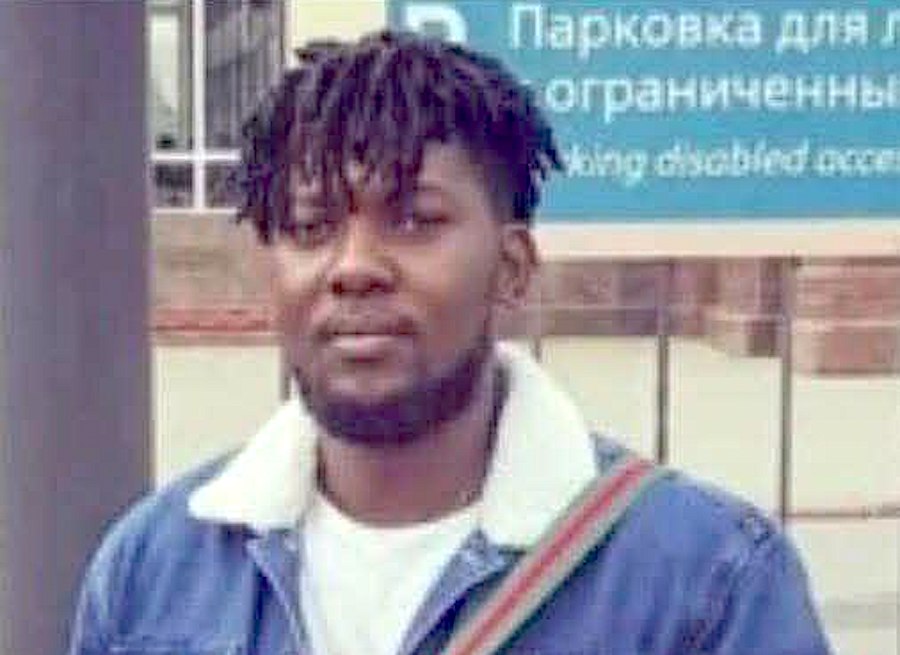
African student dies in Abkhazia
Developments are unfolding in Abkhazia following the tragic death of a student from the Democratic Republic of the Congo, who was studying in Russia and had travelled to Abkhazia for work.

Jeremy Mekanda was working as a labourer at a cement plant in the town of Ochamchira.
The Ministry of Internal Affairs of Abkhazia said the death was the result of an industrial accident, citing “lacerations and head bruising with damage to the skull bones and brain tissue” as the cause.
Some local media have gone further, claiming he was “effectively decapitated”.
It later emerged that Mekanda died on 24 December, but the case became public only now, after his relatives and friends began staging protests in Kinshasa, the capital of the Democratic Republic of the Congo.
The family says the death may have been violent and is demanding an independent investigation and financial compensation.
- ‘We can do everything’ – stories of labor migrants in Abkhazia
- In Abkhazia, migrants will be banned from working as taxi driver
According to local media reports, Jeremy Mekanda was studying marketing at a university in the Russian city of Bryansk. After his visa expired, he travelled to Abkhazia to begin the process of obtaining a new one.
This practice is fairly common among African students studying in Russia. Returning home is often too expensive, so they choose to wait for their visas in countries neighbouring Russia. Abkhazia has become a relatively popular destination in such cases.
The waiting period for a visa typically stretches over several months. During this time, foreign students arriving in Abkhazia usually find work — on construction sites, in restaurants and cafés, or as taxi drivers.
Mekanda took a job at the Ochamchira cement plant. The plant belongs to United Cement Group (UCG), one of the largest cement holdings in Central Asia, with operations in Uzbekistan, Kyrgyzstan and Kazakhstan.
The Abkhazia plant is not listed among UCG’s production sites on the company’s official website. Nevertheless, it exists and is operational.
Mekanda’s family says that regardless of the cause of his death, it occurred during his work shift and on company premises. They argue that the owning company is therefore obliged to pay financial compensation.
Abkhaz authorities have so far not commented on the incident. The family is raising funds to transport Mekanda’s body back to the Democratic Republic of the Congo.
Toponyms, terminology, views and opinions expressed by the author are theirs alone and do not necessarily reflect the views and opinions of JAMnews or any employees thereof. JAMnews reserves the right to delete comments it considers to be offensive, inflammatory, threatening or otherwise unacceptable.