
Azerbaijan National History Museum has hosted the presentation of the project “Ethnographic Map of the Iravan Fortress-City” and its dedicated website, organized by the Baku Art Center Experimental Creativity Public Union, Azernews reports.
Day: December 19, 2025
Georgia’s real gross domestic product (GDP) grew by 6.4% year-over-year in the third quarter of 2025, reaching GEL 27.9 billion, according to preliminary data released by the National Statistics Office (Geostat).
Geostat said the highest growth rate was recorded in the information and communication sector, which expanded by 21.1%, followed by education at 20.7%. Financial and insurance activities increased by 14.7%, while arts, entertainment, and recreation grew by 13%.
Public administration and defense, as well as compulsory social security, rose by 9.7%. Transportation and storage increased by 8.1%, while wholesale and retail trade, including repair of motor vehicles and motorcycles, grew by 3.0%.
Several sectors experienced declines, with mining and quarrying dropping by 8.7%, agriculture, forestry, and fishing down 5.4%, and electricity, gas, steam, and air conditioning supply falling 3.3%.
By share of GDP, trade remains the largest sector at 15%, followed by manufacturing (9.4%), real estate activities (8.8%), construction (8.4%), information and communication (7.4%), agriculture, forestry, and fishing (7.3%), public administration (6%), and education (5.4%).
Geostat noted that the revised data will be published by November 16, 2026.
Also Read:
- 01/12/2025 – Georgia’s GDP Up by 6% in October 2025
- 18/09/2025 – Georgia’s GDP Up 7.3% in Q2 2025
- 19/06/2025 – Georgia’s GDP Up by 9.8% in Q1’25
- 19/12/2024 – Georgia’s GDP Up by 11% in Q3’24
U.S. Secretary of State Marco Rubio has sanctioned Gocha Lortkipanidze, the former Georgian justice minister who is serving as a judge at the Hague-based International Criminal Court (ICC), over his involvement in ICC proceedings targeting Israeli nationals, the U.S. State Department’s statement said on December 18.
According to the statement, Lortkipanidze and another judge, Erdenebalsuren Damdin of Mongolia, “directly engaged in efforts by the ICC to investigate, arrest, detain, or prosecute Israeli nationals without Israel’s consent,” including by supporting a majority decision that rejected Israel’s appeal on December 15.
“The ICC has continued to engage in politicized actions targeting Israel, which set a dangerous precedent for all nations,” Rubio said in a statement. “We will not tolerate ICC abuses of power that violate the sovereignty of the United States and Israel and wrongly subject U.S. and Israeli persons to the ICC’s jurisdiction.”
The statement emphasized that neither the United States nor Israel are parties to the Rome Statute, the treaty that established the ICC, and therefore rejects the court’s jurisdiction. “We will continue to respond with significant and tangible consequences to the ICC’s lawfare and overreach,” Rubio said.
The sanctions follow ICC probes over alleged war crimes committed by individuals amid the Gaza conflict, including arrest warrants issued last November for Israeli Prime Minister Benjamin Netanyahu, former defence minister Yoav Gallant, and Hamas commander Mohammed Deif.
The two judges were designated pursuant to section 1(a)(ii)(A) of Executive Order (E.O.) 14203, which was issued on February 6, 2025, by Donald Trump and accuses ICC of engaging “in illegitimate and baseless actions targeting America and our close ally Israel.” The particular section foresees freezing U.S.-tied assets for those designated to “have directly engaged in any effort by the ICC to investigate, arrest, detain, or prosecute a protected person without consent of that person’s country of nationality.”
The International Criminal Court responded to the sanctions, calling the move “a flagrant attack against the independence of an impartial judicial institution which operates pursuant to the mandate conferred by its States Parties from across regions.”
“Such measures targeting judges and prosecutors who were elected by the States Parties undermine the rule of law,” the ICC said. “When judicial actors are threatened for applying the law, it is the international legal order itself that is placed at risk.”
In contrast, Israel’s Foreign Minister Gideon Sa’ar welcomed the decision, writing under Rubio’s post on X, “Thank you, Secretary Rubio for this moral clear stance.”
Lortkipanidze was elected to the ICC in December 2020 for a nine-year term, becoming the first-ever Georgian judge to serve on the court. Prior to his election, he held several senior positions in Georgia’s justice system. From 2012 to 2020, he served as deputy Justice Minister, and he briefly served as Justice Minister under Giorgi Gakharia’s tenure. From 2005 to 2009, he served as an adviser to the Prime Minister on international law and foreign affairs.
Also Read:
- 10/03/2021 – Georgia’s Lordkipanidze Sworn In as ICC Judge
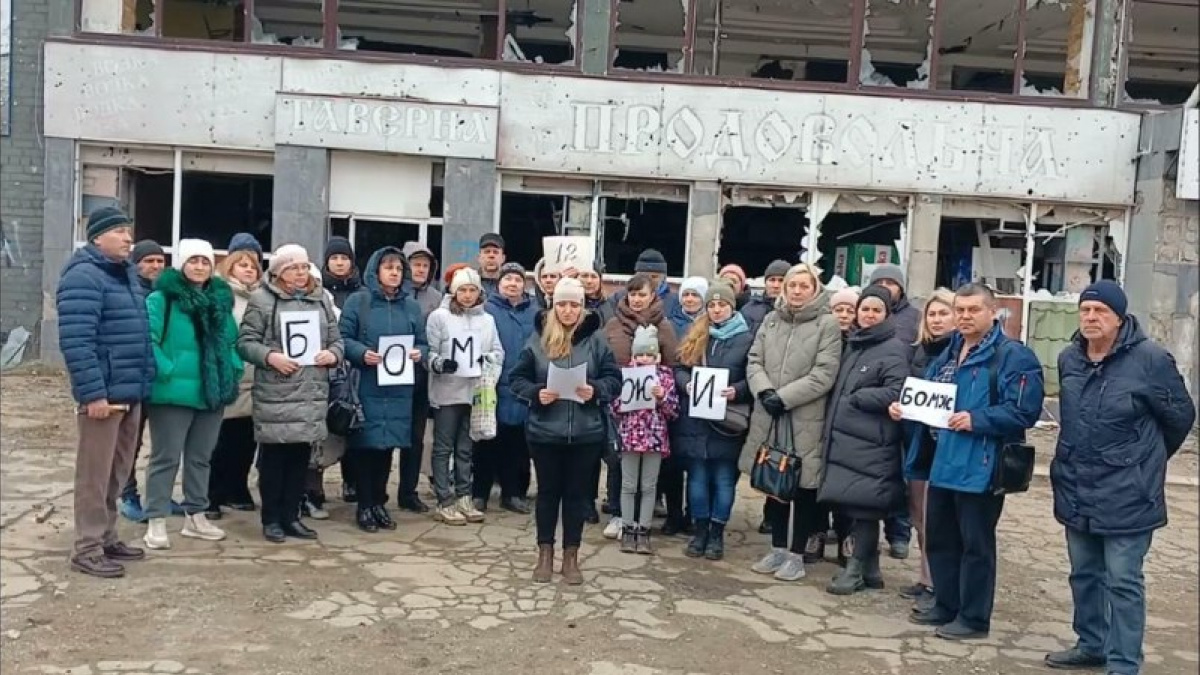
Russia seizes apartments in Ukraine
According to the Ukrainian outlet Novosti Donbassa
The Russian State Duma has passed a new law allowing the state to take ownership of private property belonging to Ukrainians who failed to register their assets under Russian legislation.
In practice, the law formalizes what has been happening in the occupied territories since 2022, following Russia’s invasion of Ukraine. It will remain in effect until 2030 and permits the official expropriation of apartments and houses.
For three years, residents of Donetsk, Luhansk, Kherson, and Zaporizhzhia regions personally petitioned Putin, calling him the “source of ultimate justice” and “the last hope.” Many deceived themselves into believing that the destruction of their property rights was a local administrative error, not a deliberate act by Russia, and that “saintly Putin” would intervene if they explained their plight.
Now, there is no one left to turn to. With the new expropriation law, the Kremlin has effectively given the green light for further theft of people’s property.
Journalists from Novosti Donbassa, Primorka.City, and Kavun.City investigated what is currently happening with housing in the occupied territories and how the new Russian law is affecting the lives of residents.
Donetsk region
On 9 December, the leader of the self-proclaimed ‘Donetsk People’s Republic’, Denis Pushilin, directly urged residents to report neighbors who, for various reasons, had not re-registered their Ukrainian property documents under Russian rules.
The occupation authorities have been granted expanded powers to declare such properties “ownerless.”
A note accompanying the law explicitly states that its aim is to accelerate the “integration” of the occupied territories and bring the properties “into economic circulation.”
The absence of ownership information, or the inability to verify documents, will not prevent property from being transferred to the occupying state.
The beneficiary of this measure will be the “Territorial Development Fund,” which will have the right to rent out and sell the properties.
These officially expropriated apartments will primarily be allocated to Russian security forces and staff of subordinate institutions, including teachers and medical workers.
Anyone could lose their right to their home in the occupied territory, including Ukrainians who remain and have received Russian passports. They must complete the re-registration under Russian law in time — a process that is extremely difficult.
How property seizure works in Mariupol
In occupied Mariupol, more than 13,000 apartments have already been declared “ownerless.”
To retain their rights, owners must:
- physically return to the occupied territory;
- hold a Russian passport;
- register their property in the Russian database.
For many people who fled the war, even a short visit home is impossible or too risky. As a result, they lose the chance to protect their property.
But even meeting these requirements does not guarantee protection from arbitrary decisions. The most common obstacles include:
- Long queues at property offices – Residents must prove their ownership to the occupiers. Offices operate for just four hours a day, forcing people to line up overnight.
- Destroyed or altered addresses – To prove ownership, Mariupol residents must visit addresses that no longer exist because the buildings were destroyed in shelling. To prevent them from claiming replacement housing, the occupiers change legal addresses. At these new addresses, the properties no longer exist, and owners effectively lose any right to claim them.
A high-profile case
Former residents of houses at 130 and 130A Artem Street appealed directly to Vladimir Putin over the housing situation. They say that in 2023, the ‘DPR’ authorities demolished their homes, annulled the addresses, and promised compensation.
Those promises were never fulfilled. Now, instead of compensation, residents are offered the option to take out a mortgage.
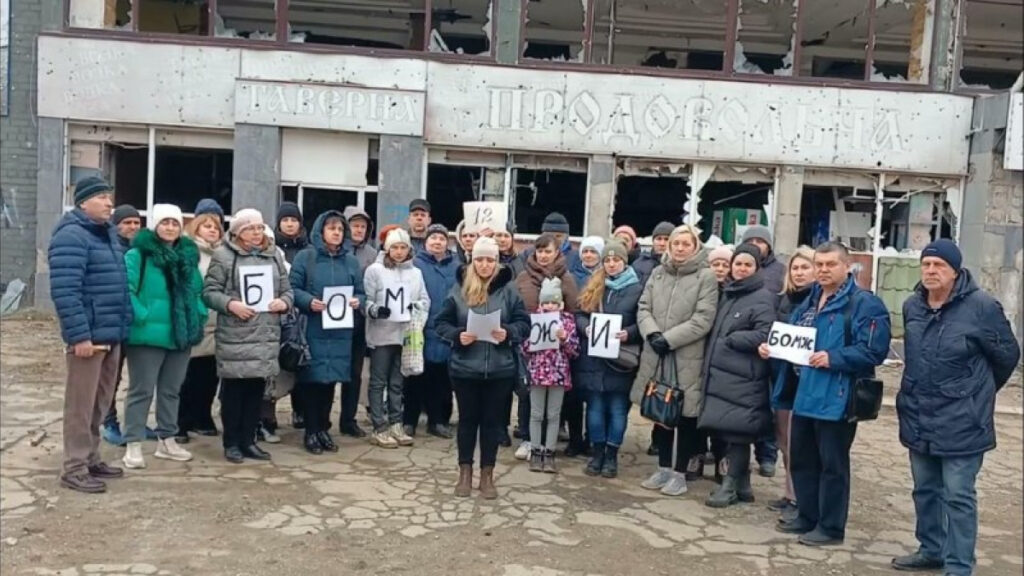
For over a year, Mariupol residents have been filming video appeals to Putin against the backdrop of ruined buildings and empty lots. But the Kremlin’s leader appears to have other priorities..
Berdiansk
According to an investigative report by Hromadske, between August 2022 and October 2025 more than 4,000 properties in Berdiansk — including businesses, residential, and commercial premises — were registered as “ownerless.” This illustrates a large-scale, systematic campaign to “redistribute” property on the occupied territories.
The occupation authorities systematically went door to door. Residents who were at home were required to present documents. If no one was home, the apartments were recorded and added to the official “registries.”
In some cases, for example at the beginning of 2024, the occupants attempted to declare eight entire apartment blocks in Berdiansk as “ownerless.”
Some of these decisions were later overturned due to local resistance or administrative technicalities. However, the very attempt indicates the scale of the authorities’ intentions.
In the summer of 2024, collaborationist authorities in the region began publishing lists of properties with specific addresses. Journalists documented numerous notices, sealed apartments, and registration orders for properties where no residents supposedly lived.
Once these “registries” were created, the authorities began re-registering and redistributing the housing.
Private property was simply handed over to accommodate soldiers or “Russian specialists,” and sometimes as a reward for people loyal to the occupation authorities.

Kherson region
The issue of the “nationalisation of ownerless property” in the occupied part of Kherson region has been promoted by Russian authorities since the first months of the occupation. As early as September 2022, they began issuing “orders” and “decrees” that effectively authorised them to seize other people’s property.
The occupiers claim they are “nationalising” assets belonging to those allegedly “involved in aggression against the population of Kherson region”.
They define such individuals as:
- members of the Ukrainian armed forces and volunteer units, as well as their relatives;
- anyone said to have “assisted” Ukrainian forces — including volunteers or people who “spread information”, effectively meaning anyone with a pro‑Ukrainian position.
A separate clause allows the seizure of property belonging to the families of fallen Ukrainian servicemen if it was “obtained as a result of participation in hostilities” — in practice, almost any property.
The documents are drafted in a way that allows virtually anyone with a pro‑Ukrainian stance to be labelled as involved in “aggression”, any property to be classified as subject to “nationalisation”, and Ukrainians’ legal rights to their assets to be eliminated.
The first attempts to seize property in the occupied Kherson region began when Russian forces needed housing for their troops. They were accommodated in holiday resorts, sanatoriums, and other facilities whose owners had mostly fled. The rules were later extended to private property belonging to civilians.
In 2024, the occupation administration adopted a so‑called “law” allowing it to operate with “ownerless items” located within real estate.
Under this “law”, virtually any property to which the owner does not have immediate access is automatically considered “abandoned”.
The procedure is deliberately designed to make seizure as simple as possible:
- someone reports that a property is “ownerless”;
- a “commission inspection” is carried out — a formal process during which the property is described, photographed, and a notice is posted demanding ownership documents within a short deadline;
- if no one “proves ownership” within 14 to 30 days, the property is declared ownerless;
- it is then entered into the Russian “Kherson Region Property Register” and may be sold at auction, transferred to Russian federal bodies, the military or security services, or redistributed among occupation authorities and enterprises.
Proceeds from sales are transferred to the budget of the occupation administration.
This is not a law in any legal sense. It is a mechanism for the appropriation of Ukrainian property, the corporate raiding of businesses, the legalisation of already stolen equipment, and the transfer of assets to Russian companies, the military and security services.
How Russians search for “ownerless” housing in Kherson region
The scheme, first developed in the occupied parts of Donetsk and Luhansk regions and in Crimea since 2014, operates as follows:
- Monitoring utility payments: If a resident does not pay for utilities, this can be used as a formal reason to declare the property “ownerless.”
- Checking Russian property registries: The absence of a record in the Russian ownership registry is interpreted as indicating an “undefined owner.”
- Reports from so-called “yard inspectors,” neighborhood officers, and utility workers: They report on residents who have left their homes; sometimes neighbors do the same.
- Apartment inspections during “elections” and “censuses”: Empty apartments are recorded and entered into the database as potentially “ownerless.”
Ukraine’s official position
The Ukrainian Ministry of Foreign Affairs has issued an official statement regarding the Russian State Duma’s adoption of a law that effectively legalises the appropriation of Ukrainian property in Russia.
“This is yet another illegal act aimed at the mass deprivation of Ukrainian citizens’ property in temporarily occupied territories. Russia has effectively declared itself a ‘thief state’,” the ministry said.
As an occupying power, the Russian Federation is legally obliged under international humanitarian law to respect private property and refrain from confiscation. Article 46 of the Regulations Respecting the Laws and Customs of War on Land, annexed to the 1907 Hague Convention IV, explicitly prohibits the appropriation of private property in occupied territories.
Ukraine’s MFA regards these actions as part of a deliberate Russian policy to alter the demographic composition of the occupied territories, displace the local population, and settle Russian citizens — further violating Article 49 of the Fourth Geneva Convention, which forbids the occupying power from transferring its population into occupied areas.
The ministry called on the international community to condemn these repeated breaches of international humanitarian law and to continue supporting mechanisms to hold Russia and its military-political leadership accountable, including considering these acts as war crimes under the Rome Statute of the International Criminal Court.
Ukraine will document all cases of illegal property seizure and guarantee the restoration of rights to lawful owners after the de-occupation of Ukrainian territories. Any unlawful decisions by the occupying state will have no legal force and will be annulled, the ministry concluded.
Russia seizes apartments in Ukraine
The completion of the test phase of the Baku–Tbilisi–Kars (BTK) railway in 2025, alongside improvements in customs procedures, is expected to significantly expand Azerbaijan’s ability to fully utilize rail transportation through Georgia, according to an assessment by international rating agency S&P Global Ratings, Azernews reports.