
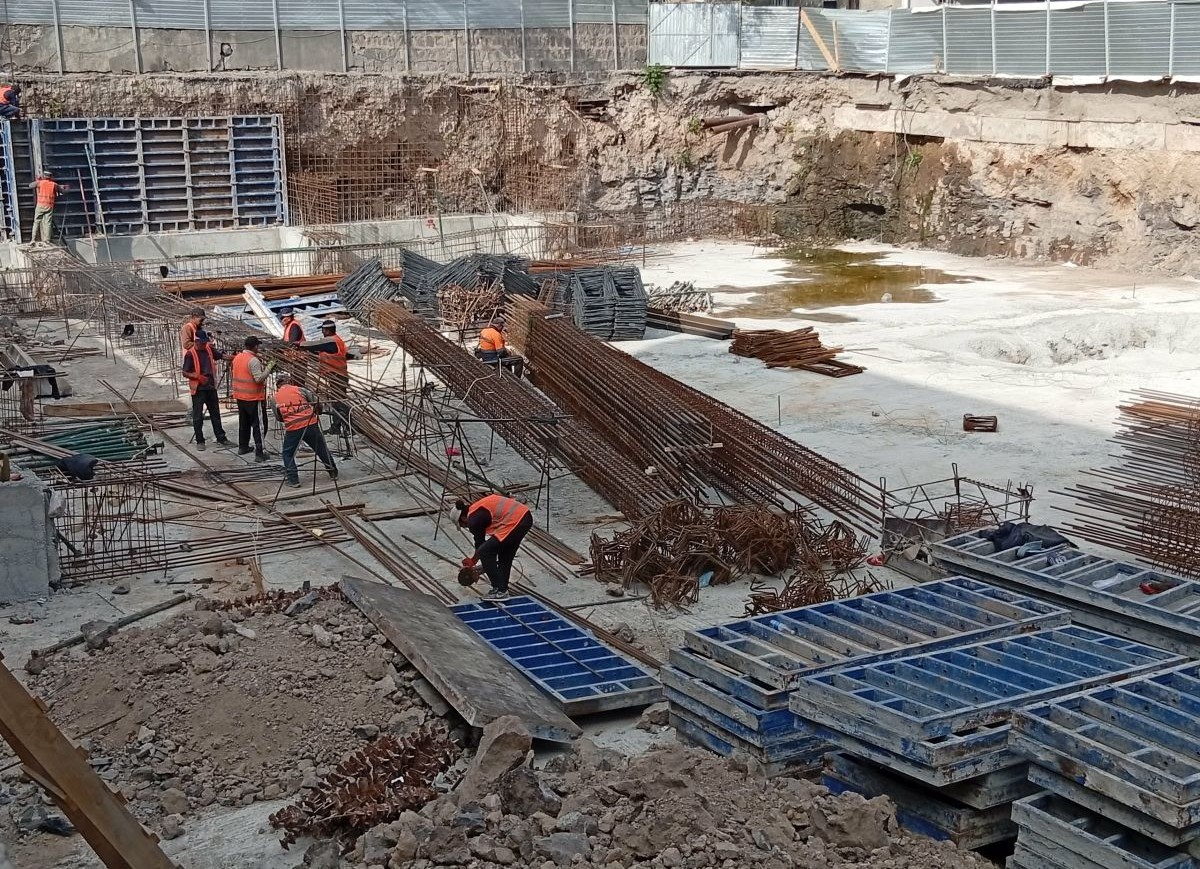
Air pollution in Yerevan
Experts warn that Armenia’s capital is facing a serious environmental challenge, as air quality continues to deteriorate. A construction boom, growing industrial activity and the loss of green spaces are among the main drivers of pollution. Environmentalists say these changes could have serious health consequences and are urging the authorities to take urgent action to tackle air pollution.
- Modernization of old buildings in Armenia: energy savings and modern design
- Debed – Armenia’s first SMART village
- Armenia faces growing power outages amid calls for energy security, infrastructure investment
Air pollution levels exceed permissible limits.
Air in Yerevan is more polluted than in any other city in Armenia. Residents often complain about smog and the smell of burning.
The Hydrometeorology and Monitoring Center regularly releases data on air quality in the capital. The figures vary, but most of the time air pollution levels exceed acceptable limits. Concentrations of nitrogen dioxide, sulfur dioxide and dust particles are particularly high.
Nitrogen dioxide is a toxic gas with a sharp odor, produced by fuel combustion. At high concentrations, it leads to smog formation. The gas is harmful to the respiratory system and can cause bronchitis and emphysema.
Sulphur dioxide is a toxic, colourless gas widely used in industry. It irritates the respiratory system and is linked to cardiovascular and cancer-related diseases.
Excessive dust can lead to respiratory and cardiovascular diseases, as well as allergies.
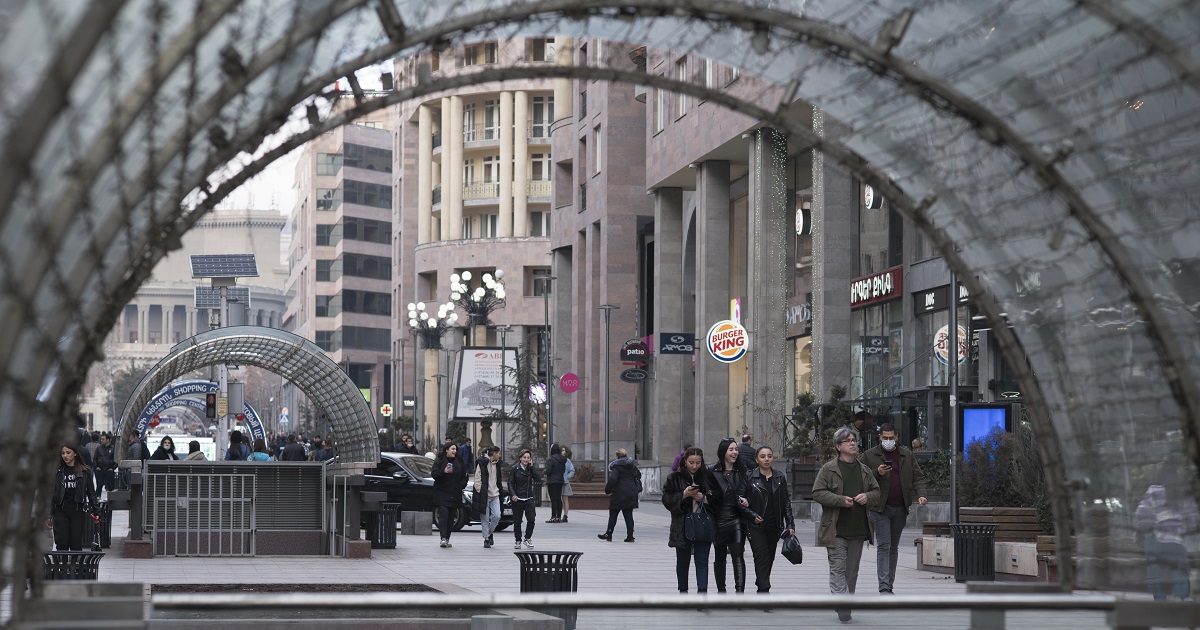
Sources of air pollution in Yerevan
Experts identify several major sources of air pollution in Armenia’s capital: large-scale construction across all districts, excessive traffic, industrial facilities, and the Nubarashen landfill.
Yerevan is Armenia’s main industrial hub, home to enterprises in the food, light, engineering, metallurgy, chemical, and construction material sectors.
According to the Ministry of Territorial Administration and Infrastructure, around 17 non-metallic mineral deposits operate near the city, extracting basalt, gypsum, and clay. These sites are located in the Nor Nork, Ajapnyak, Erebuni, and Avan districts. Of all the quarries, only the one in Avan uses a closed extraction method.
Official data suggest that about 400 organizations have a negative impact on air quality. In early 2025, parliament held hearings on the issue with experts in attendance.
Participants concluded that the main cause of air pollution is the construction boom. Other contributing factors include the operation of sand quarries, vehicle emissions, and industrial production. The city’s geography — Yerevan lies in a valley — further worsens the problem.
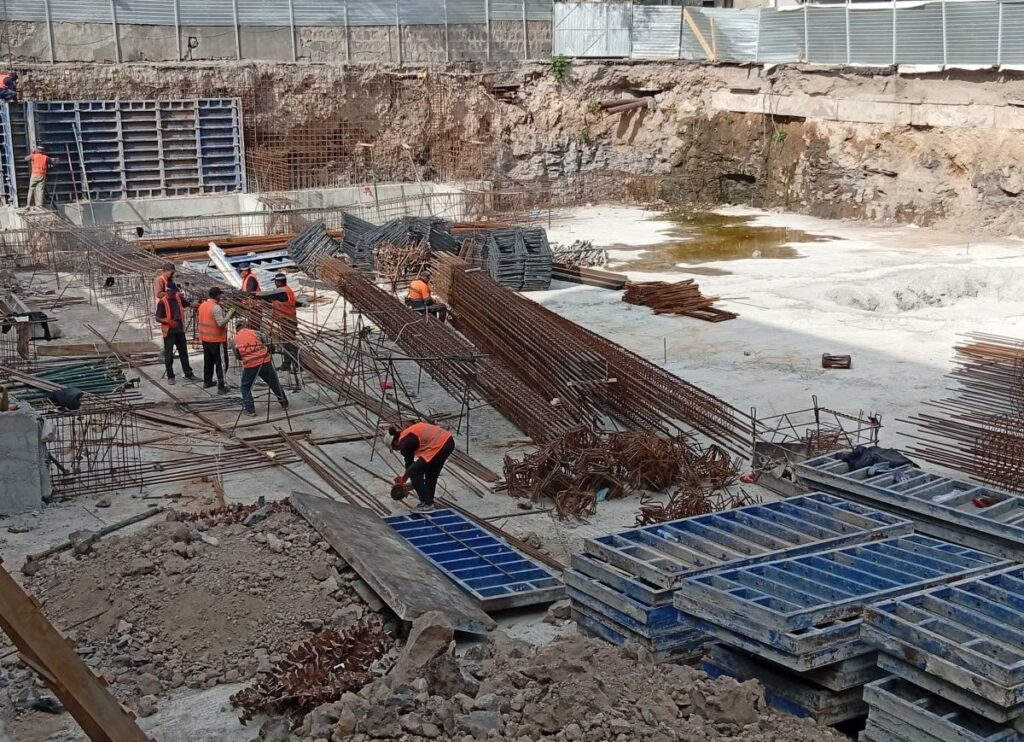
Experts have identified dust as Yerevan’s main air pollutant. City officials presented data showing that dust levels at the time exceeded permissible limits by 1.1–3.4 times, which they described as “an unfavourable level, but not dangerous or extremely dangerous to health.” Levels 20 times above the norm are considered dangerous, while 50 times above is classed as extremely dangerous.
Meanwhile, the World Health Organization is tightening air quality standards. For fine particulate matter (PM2.5), which penetrates deep into the lungs and is considered the most harmful to health, recommended 2025 limits are:
- Daily average concentration: no more than 15 µg/m³
- Annual average concentration: no more than 5 µg/m³
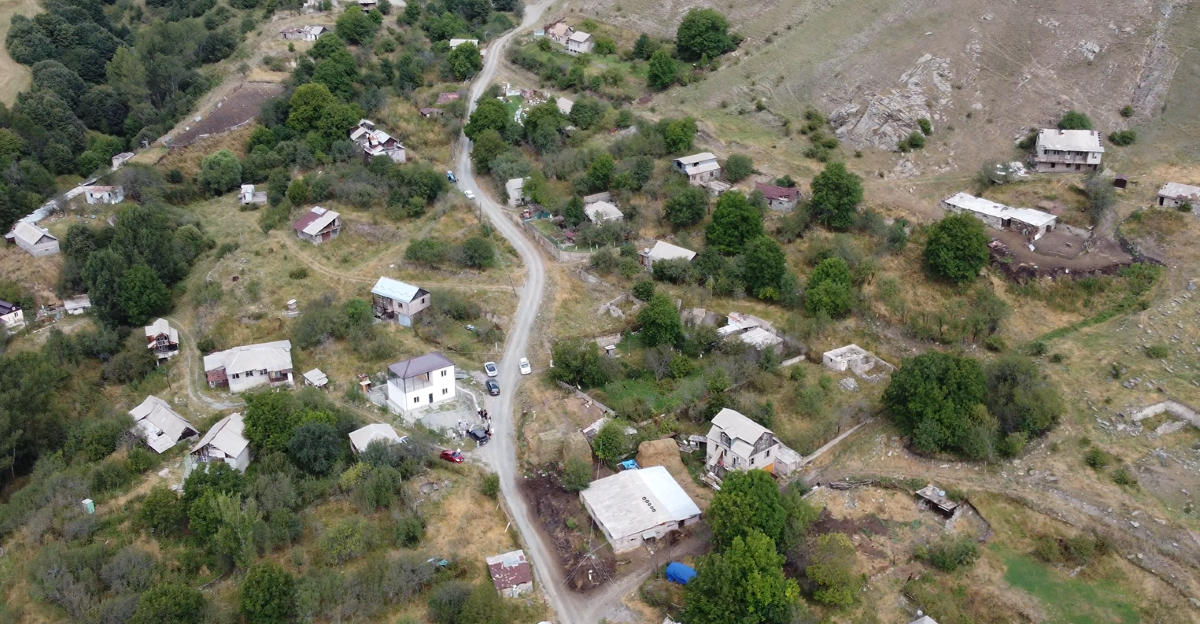
Construction dust and vanishing green spaces
Ecologist Naira Vardumyan also believes that construction is the main source of air pollution in Yerevan.
Fine particles released during stone crushing, drilling, and unloading of bulk materials from construction sites enter the atmosphere. These particles can easily penetrate neighbouring homes, even with windows closed.
High dust levels in Yerevan are also linked to a shortage of green spaces. According to the city administration, green areas cover around 30% of the city (approximately 906.8 hectares), including all types of vegetation such as lawns. This amounts to an average of 8.3 m² per person, far below the WHO standard of 50 m² per person.
Kristina Vardanyan, an ecologist and member of Yerevan’s Council of Elders, noted that the construction of around 300 high-rise buildings is happening alongside a reduction in green spaces.
“This has a negative impact on air quality. Significant ecological damage was already done during the Soviet era, when about 500 hectares of forest in the Nork district were destroyed. The forest helped clean the air, but high-rise buildings were built in its place,” she said.
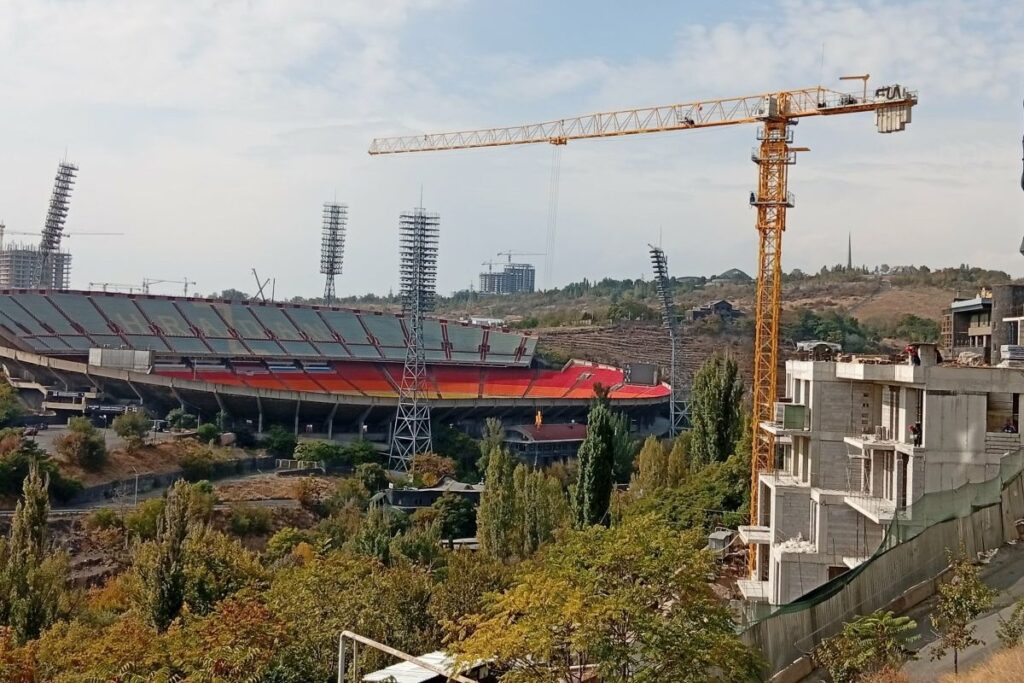
Architect David Araratyan considers the destruction of the Nork forest a major mistake:
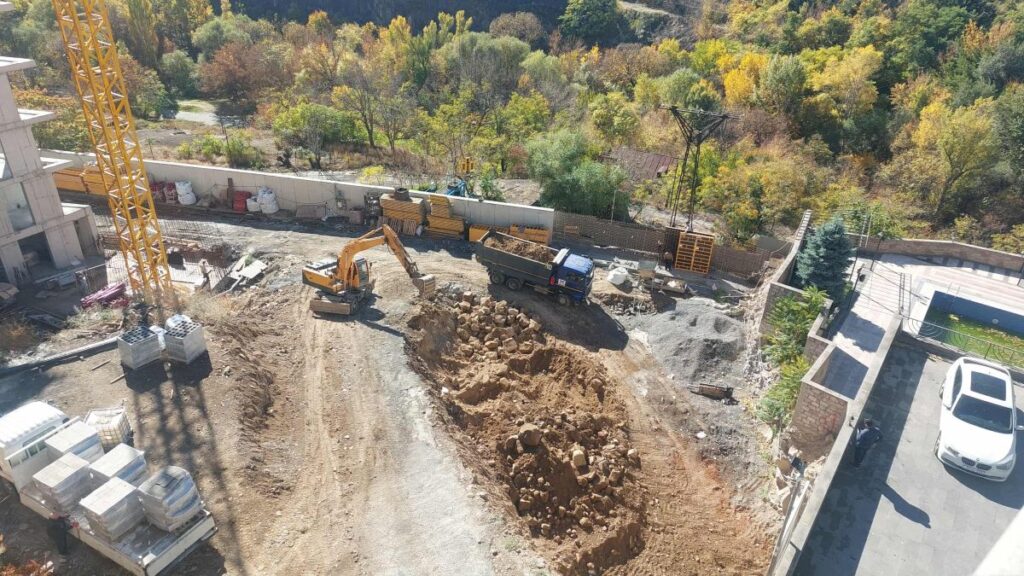
“The forest stretched from the TV tower to the city centre, up to Antaraine Street. It existed until the early 2000s. Now the city keeps expanding continuously. Construction turned Verin Antaraine Street into a zone with no trees. The same situation affects Nork. Construction sites spread across the city, and excavation work inevitably produces dust. Even with tarps, vacuums, filters, and watering, workers cannot eliminate dust completely.
The city administration monitors pollution levels, and developers try to follow the rules, but the budget remains limited. Protective nets tear and crews do not always replace them on time. Sometimes authorities fine construction companies or suspend their work, but this does not solve the problem — the wind spreads the dust. Yerevan sits in a semi-desert area with strong winds that help disperse dust.”
Araratyan calls for a comprehensive approach: regulating construction permits, following the master plan to preserve green spaces, and replacing harmful asbestos roofing, which poses a cancer risk, with eco-friendly roofs.
“This approach would help clean the air. But these measures cost a lot and prove difficult to implement. The city could also use the Getar River, which flows through the centre, to support humidity. However, authorities channelled it into a concrete conduit to hide pollution instead of cleaning it. It now flows underground, worsening the environmental situation.”
Monitoring of construction sites
On major construction sites classified as high-risk, workers install hundreds of devices to measure air dust levels. The municipality provides the data from these devices online on its official website and updates it every 10 minutes. When dust concentrations exceed 35 µg/m³, the indicators on the map turn red. In such cases, city officials inspect the sites and fine the construction company if they confirm violations.
City authorities also place similar devices along the main roads, where they track dust and concentrations of various gases.
According to the municipality, monitors recorded the highest levels of air pollution in the Erebuni, Kentron, and Shengavit districts, while residents in Avan and Davitashen enjoy the cleanest air.
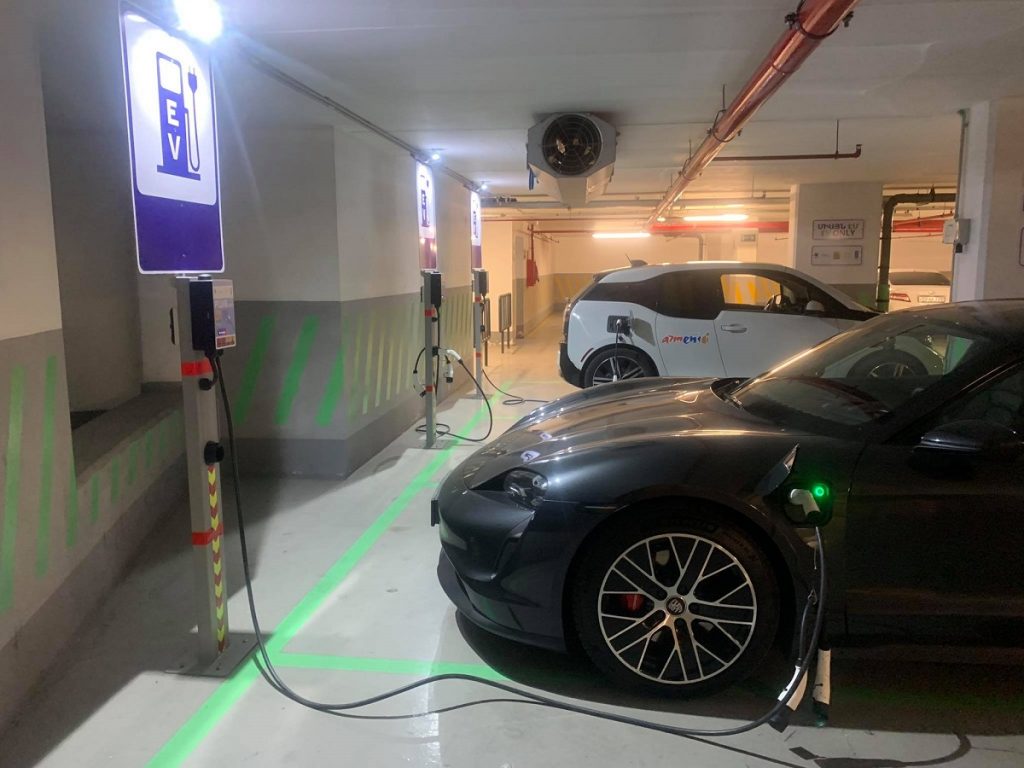
Switch everyone to electric vehicles
As of 1 September 2024, Armenia had 953,965 registered vehicles, including 343,220 in Yerevan. In 2025, Mayor Tigran Avinyan reported that the number of cars had grown by 11,000.
Vehicles emit harmful gases into the atmosphere every day, including carbon monoxide, nitrogen oxide, carbon dioxide, fine soot particles, and sulphur dioxide — and that is not the full list.
To tackle the problem, the municipality plans to update its own fleet first, replacing diesel buses with electric ones. In addition, city authorities will continue encouraging residents to switch to electric vehicles.
Residents fight dust in their apartments
Adrine Mnatsakanyan lives in the Arabkir district. Her building stands on the third line, so no main road runs immediately nearby.
“Even so, dust constantly settles in the apartment. In summer, I can’t get rid of it, even with daily wet cleaning. In such heat, I had to keep the windows closed. I only opened the window with a mesh screen, but dust still drifted inside. I can still hear it rustling on the floor, even though I vacuum the entire apartment every day, sometimes several times a day.”
Another Yerevan resident, Lusine Beglaryan, lives in the city centre. She also struggles to keep her home clean:
“Dust gathers on every surface. When the wind blows, it carries all sorts of debris into the apartment. I installed an air conditioner so I wouldn’t need to open the windows at all. But even with the AC, I can’t keep the dust under control. It feels like someone scattered flour all over the apartment.”

Fires at the landfill
The Nubarashen landfill frequently sparks fires. Even after authorities extinguish them, the flames often smoulder for weeks, sending toxic substances and dust into the air. Residents from districts far from the site also report coughing, allergies, and breathing problems.
Covering 52 hectares, the landfill receives 290,000–320,000 tonnes of household waste every year since the 1950s. According to a report by the NGO Ecolur, it fails to meet international environmental and sanitary standards and often ignites spontaneously.
In mid-October, a major fire broke out, and 248 vehicles battled the blaze for two days.
Mayor Tigran Avinyan said monitors recorded the highest levels of air pollution in the city centre.
“In the short term, air quality does not pose a serious danger. But people with respiratory conditions should limit time outdoors and avoid exercising outside,” he said.
“I woke up to the smell of smoke and thought something was burning in my home. I checked all the electrical appliances — they were fine. I went to the window and almost suffocated. I took my child to school, returned home, and couldn’t eat or drink all day. I still remember that smell. It was so strong it burned my throat. I spent the whole day suffering from headaches and nausea,” said Yerevan resident Manushak Avtandilyan.
Experts warn that air pollution in Yerevan poses a serious health threat to residents. They urge the authorities to restore and expand green spaces within the city and establish buffer forest areas around the capital to improve the situation.
Air pollution in Yerevan