Day: November 11, 2025
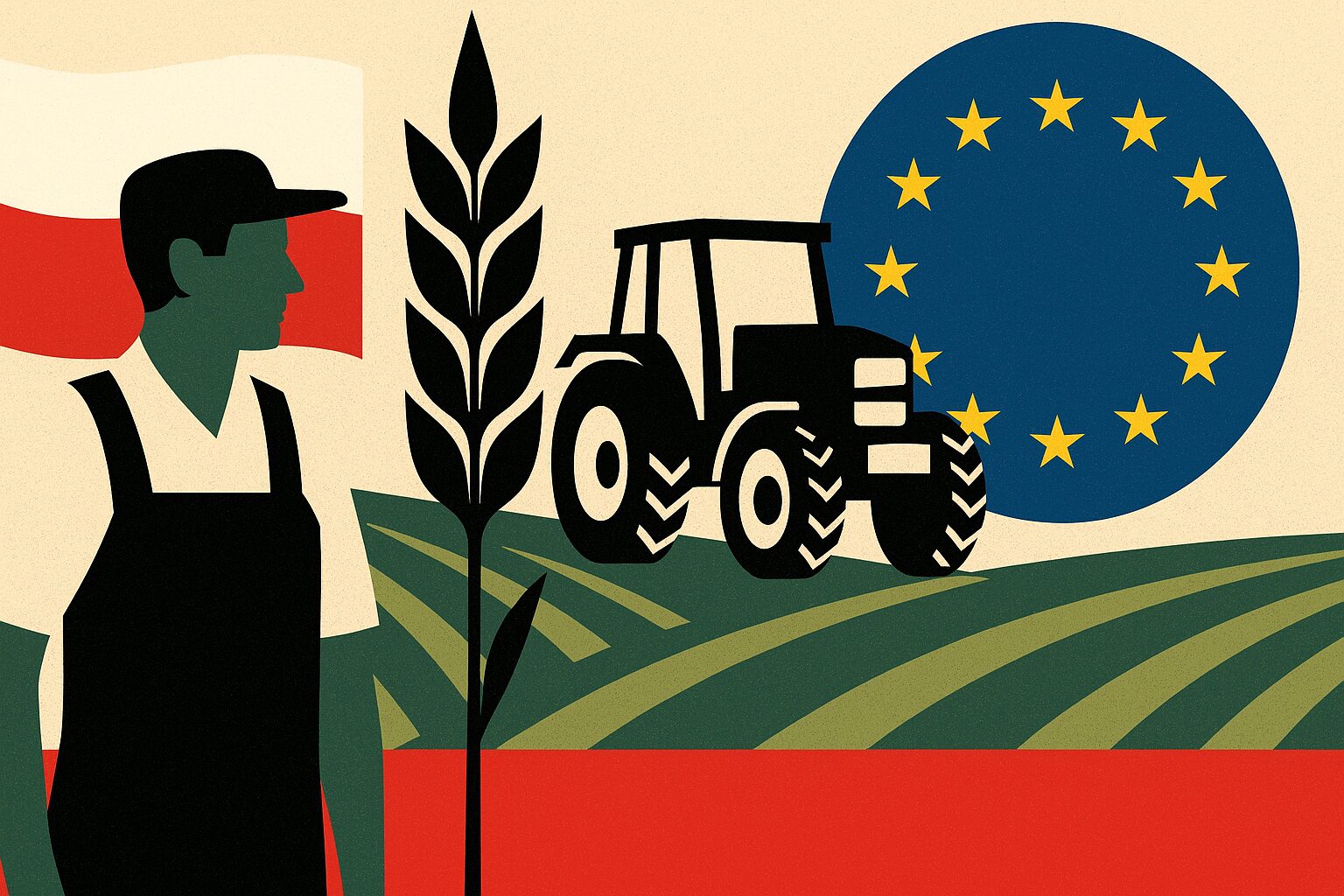
Poland in European Union
Polish journalist Milosz Szymanski has analysed how and why Polish farmers were once the biggest sceptics of EU integration — and yet, twenty years after Poland joined the bloc, it turned out that they benefited more than anyone else.
When Poland joined the European Union, hopes were sky-high. Beyond the promise of “returning to the West” and “joining the European family” — as the slogans of the time proclaimed — Poles expected rapid economic growth, falling unemployment, rising wages and an overall leap in living standards. The country dreamed of smoother roads, less corruption and a Poland that looked a bit more like Germany or the Netherlands. On top of that came the prospect of open borders, easier labour migration and an influx of foreign investment. Yet among all groups, farmers remained the most sceptical — fearing they would lose out. Ironically, they turned out to be the biggest winners of EU membership.
More than two decades on, it’s possible to draw some conclusions. Poland did join the “European family”, and its voice in Brussels is sometimes louder, sometimes quieter — largely depending on the skill and stance of its politicians. But there’s no doubt about the economic results: between 2004 and 2024, Poland’s GDP quadrupled. GDP per capita in purchasing power terms rose from 47% of the EU average in 2004 to 79% today. By this measure, Poland has overtaken Greece (70%) and is closing in on Portugal (82%). The minimum wage, meanwhile, has jumped from 824 zloty gross to 4,666 zloty — the equivalent of €168 in 2004 and €1,095 today.
Unemployment in Poland has dropped from 19% to just 5%. The total length of expressways and motorways has grown from 441 to 1,850 kilometres. On top of that, 1,000 kilometres of local roads have been repaired, hundreds of bridges and viaducts have been built, and hundreds of railway stations have been renovated. The transformation is so striking that watching films shot twenty years ago feels surreal — the same places now look completely different.
During this period, some 2.5 million Poles — nearly 7% of the population — have emigrated, most of them of working age. Initially, their departure helped to reduce unemployment, but over time it led to a phenomenon previously unknown in Poland: labour migration to the country, primarily from Ukraine, Belarus, Moldova and Georgia.
Public support for EU membership remains high, though it has dipped slightly in recent years. The record high came in June 2022, when 92% of Poles expressed support; today, that figure stands at 77% — exactly the same as in the 2003 referendum on joining the bloc. Over the past two decades, support has fallen below the 2003 level only once — in 2013, when it hit 72%. Overall, Poles remain satisfied with their country’s EU membership, though not equally across all groups: those with higher education and urban residents tend to be the most supportive, while scepticism is more common among older Poles and among young people aged 18–24.
Yet one group stands out for its persistent scepticism — farmers. For the past 20 years, their support for EU membership has remained roughly 20 percentage points lower than the national average. It has never fallen below 50%, but has never risen above 70% either. This is particularly paradoxical given that farmers have been the biggest beneficiaries of EU membership. Spending on the Common Agricultural Policy has long been the largest single item in the EU budget — in the 1980s, it even accounted for more than half.

Before Poland joined the EU, opponents of accession put forward numerous arguments — particularly concerning agriculture — which can be divided into several main themes. First, joining the EU was said to be a cover for Western capital to seize control of Poland’s economy. Critics warned that Polish companies would be taken over and farmland bought up by wealthy foreign investors. Others feared that accession would dismantle Poland’s “traditional rural model” and make the country dependent on food imports from abroad.
But what exactly was meant by “the traditional model of the Polish countryside”? Agriculture evolves like any other industry, and it is simply impossible to run farms today as they were run fifty or a hundred years ago and still remain profitable.
In the 1930s, two-thirds of Poland’s population lived in rural areas, and the vast majority survived thanks to small household farms. This model was based on subsistence, not profit. Over the following decades, industrialisation and urbanisation steadily reduced the rural population and the share of those working in agriculture. As a result, the cultural importance of the countryside declined, giving way to a more urban mindset aligned with global trends.
Depopulation of the countryside is inevitable. One person operating a combine harvester can do the work of dozens of manual labourers — more efficiently and at a lower cost — making those extra hands redundant. With no jobs left in villages, people move to cities. In developed countries, only a small share of the population works in agriculture: 3.8% in Italy, 3% in Japan, 2.5% in France and just 1.2% in Germany.
When Poland joined the EU, 18% of its population worked in agriculture. That share has since fallen to 8% — still double the EU average, but far below the 27% seen today in Moldova, which is roughly where Poland stood in 1990. Both Poland and Moldova are likely to see this share continue to decline. It may never fall to Western European levels, but even 8% or 28% remains a high figure.
The extent of foreign ownership in the Polish economy is difficult to assess. On the one hand, foreign companies control most major supermarket chains — a visible sign of external influence. On the other, many Polish firms compete successfully with Western companies, especially in food production and construction. Moreover, some of Poland’s largest developers are technically based in Luxembourg, taking advantage of lower taxes, but remain owned by Poles.
Census data from 2002 and 2020 show clear trends: the number of farms in Poland has fallen dramatically, while the total area of agricultural land has only slightly decreased. In 2002, there were 2.93 million farms cultivating 19.3 million hectares. By 2020, the number of farms had halved to 1.32 million, working 18.4 million hectares. The average farm size grew from 8.3 to 12.4 hectares. Twenty years ago, a third of all farms were smaller than one hectare — too small to generate a real income. Another 32% occupied just 2–5 hectares, which also made profitability difficult.
Consolidation, therefore, was inevitable. Yet fears that foreign investors would buy up Polish farmland have not materialised: 98% of agricultural land remains in Polish hands, and 91.3% belongs to individual farmers. Large farms have emerged, but the sector continues to be dominated by medium-sized family holdings.
After 20 years in the EU, Poland’s food security has strengthened significantly. In 2004, agricultural exports totalled €5.2 billion, while imports stood at €4.4 billion — a modest surplus. Today, exports have risen tenfold to €53 billion, or about 10% of all Polish exports. Imports have grown eightfold to €35 billion. Poland remains a net food exporter, covering 150% of its domestic food needs and leaving a healthy margin for export.
Moldova could learn much from Poland’s experience. The two countries share similar histories and cultures, and it is likely that Moldovans would respond to EU membership much as Poles did. Moldova’s number of farmers and farms would likely decline, but productivity and living standards would rise. Agriculture would become more specialised, consolidated and mechanised.
Having watched the transformation of rural Poland since 2004, I can only wish Moldovans a similar kind of change.
Poland in European Union
Deputy Justice Minister Irakli Khmaladze and Deputy Interior Minister Giorgi Butkhuzi were dismissed from their posts under Georgian Dream Prime Minister Irakli Kobakhidze’s November 10 decrees.
Another decree by Kobakhidze appointed Giorgi Sakhokia as a new deputy to Georgian Dream Interior Minister Geka Geladze.
Irakli Khmaladze, 43, has served as Deputy Justice Minister under Georgian Dream’s Paata Salia for six months, since May 15, 2025. Since 2017, he has been Tbilisi’s vice mayor. His career in the public sector began in 2008.
A 2024 journalistic investigation by Studio Monitor alleged that Irakli Khmaladze failed to declare high-value properties. His latest asset declaration, filed in May 2025 as Tbilisi’s former vice mayor, lists no residential property in the capital but includes one car and two motorcycles valued at more than USD 30,000.
Giorgi Butkhuzi had served as Deputy Interior Minister since 2019, previously working under former Minister Vakhtang Gomelauri. Earlier this year, Georgian Dream–elected President Mikheil Kavelashvili awarded Butkhuzi and other sanctioned Interior Ministry officials the Order of Honor for their “special contribution to strengthening law and order.”
Butkhuzi is under the Baltic sanctions. Lithuania, Latvia, and Estonia sanctioned him over his role in the violent crackdown on peaceful pro-EU demonstrations in November and December 2024.
Giorgi Sakhokhia, the newly appointed Deputy Interior Minister replacing Giorgi Butkhuzi, has served as rector of the Interior Ministry Academy and as director of the Defense Ministry’s Defense Volunteer Agency.
Between 2021 and 2025, Giorgi Sakhokhia served as an adviser to the Director of the State Care and Assistance Agency for Victims and Persons Affected by Trafficking under the Ministry of Health. He had previously held senior administrative positions in the Government Administration.
Also Read: