
Apple Inc. is significantly scaling back production of its iPhone Air due to weaker-than-expected demand outside of China, Nikkei Asia reported on Wednesday, citing sources familiar with the matter, Azernews reports, citing foreign media.
Day: October 22, 2025
Former Georgian Prime Minister Irakli Garibashvili has been questioned at the State Security Service and “admitted to the fact of receiving illicit income throughout the years,” Emzar Gagnidze, the head of the SSSG’s Anti-Corruption Service, said at an October 22 briefing, noting that Garibashvili “fully cooperated with the investigation.”
“Accordingly, in the coming days, based on the existing and newly obtained evidence, the investigation will decide both on the legal qualification of his actions and on the issue of selecting a preventive measure against him, which will also be communicated to the public,” Gagnidze added.
The State Security Service statement followed an earlier briefing at the Prosecutor General’s Office, which announced the arrest of Koba Khunadze, an associate of former SSSG chief Grigol Liluashvili. The Office said USD 1.32 million was seized from Khunadze’s home and that he has been charged with laundering a particularly large amount of money.
The developments come after the October 18 announcement by the State Security Service that it had searched the homes of Garibashvili, Liluashvili, former Prosecutor General Otar Partskhaladze, and eight of their associates. Authorities said they seized millions of dollars in cash and valuables during the searches.
The investigation follows a series of resignations, followed by prosecutions, arrests, and incidents involving former Georgian Dream officials and business allies. While authorities have justified the crackdown as part of their anti-corruption efforts, critics have described it as an internal purge and an act of personal retribution by Bidzina Ivanishvili, Georgian Dream’s billionaire founder.
Georgia bans mask wearing
In central Tbilisi, police are carrying out raids targeting people wearing medical masks. Dozens of videos have appeared on social media showing officers stopping passersby in masks, demanding identification, and forcing them to remove the masks.
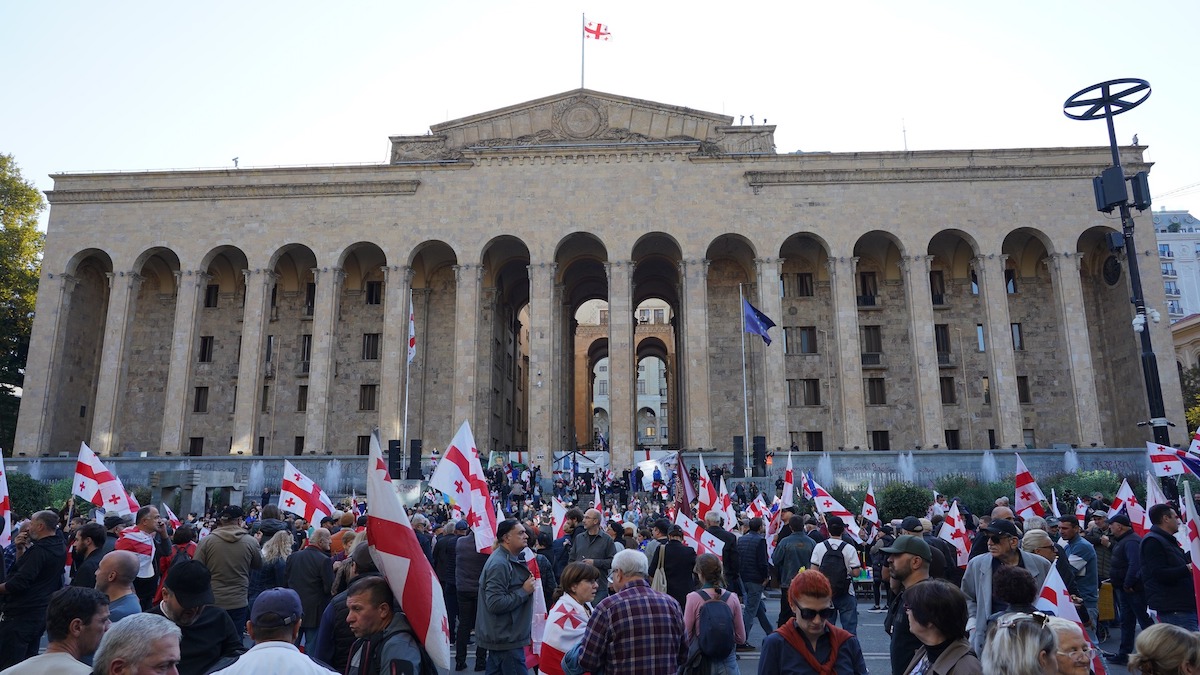
Authorities say the checks are aimed at identifying participants in protests that have been ongoing in Georgia for nearly a year.
What do masks have to do with it?
Such “raids” became possible after a law came into force in Georgia on 19 October banning the wearing of masks at rallies.
Police have started detaining protesters for blocking roads or covering their faces at demonstrations, punishable by up to 15 days of administrative arrest.
However, people wearing masks for medical reasons—many of whom do not support the protests—often become the victims of these raids.
‘Show your mouth’
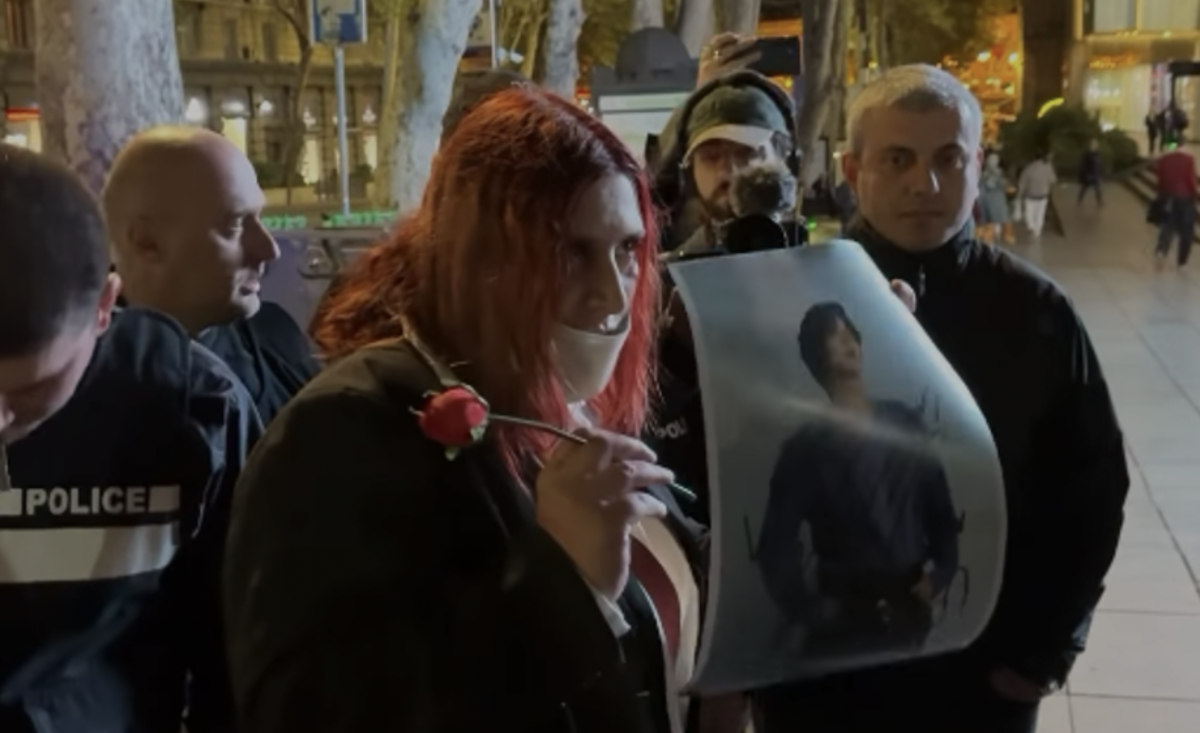
On 21 October, near a central Tbilisi metro station, police stopped two women, one of whom was wearing a medical mask.
The women said they had no connection to the protests and were simply returning from a K-pop concert. The masked woman explained that she had recently had several teeth removed. Police didn’t believe her and forced her to remove the mask and show her mouth. Nearby journalists filmed the incident, and the video quickly went viral on social media.
“This absurdity is the face of Georgia,” one social media user commented, highlighting the tragicomic situation: in a country that just a few years ago fined people for going without masks during the COVID pandemic, people are now being stopped for wearing them.
‘This is our job’
The video also captures a dialogue between a police officer and the woman in a mask.
She asks why they are stopping her, and the officer replies: “This is our job.”
The phrase quickly became a meme and a source of online sarcasm, symbolizing what Georgia’s law enforcement is seen to be doing today.
Social media also widely shared the story of 71-year-old Abkhazian refugee Aza Chilachava, against whom the Interior Ministry filed a case for wearing a mask and sent it to court.
Doctors issue warning
The situation has also drawn the attention of medical professionals.
Infectious disease specialist Maya Butsashvili wrote on Facebook that banning medical masks during flu and respiratory virus season is a serious mistake:
“Prohibiting the use of medical masks in public, especially during this season when respiratory infections are on the rise, is wrong. This is particularly dangerous for people with chronic illnesses, for whom the flu and other respiratory viruses can cause serious complications,” Butsashvili wrote.
Social media users are sharing their own stories. One person wrote about a relative who cannot go to the city centre, fearing arrest for wearing a mask, yet feels unsafe taking the bus without one.
“When will the Centre for Disease Control and Prevention make a statement?” the user asked the centre’s head, Paata Imnadze.