
On October 22, President of the Republic of Azerbaijan Ilham Aliyev received Margus Tsahkna, …
Day: October 22, 2025
Armenian Prime Minister Nikol Pashinyan stated that he welcomes the statement by Azerbaijani President Ilham Aliyev on lifting restrictions on the transit of goods from Azerbaijan to Armenia.
According to Armenpress, Nikol Pashinyan made this statement during the 5th “Silk Road” forum held in Tbilisi.
“This is a very important statement, and I want to appreciate and welcome the Azerbaijani president’s step. An event that seemed incredible a few months ago is now happening: grain from Kazakhstan is being imported to Armenia via Azerbaijan and Georgia.”
President Ilham Aliyev stated on October 21 that Azerbaijan has lifted all existing restrictions on the transit of goods to Armenia. The first transit shipment, a batch of Kazakh wheat, will be delivered to Armenia.
Nikol Pashinyan emphasized that politically, they are ready to ensure transit from Nakhchivan to the main part of Azerbaijan and vice versa via Armenia, but due to technical reasons, this is not possible because the infrastructure is lacking.
“From today, we are ready to facilitate the transit of trucks from Turkey to Azerbaijan through Armenian territory and vice versa,” Pashinyan added.
The normalization process between Azerbaijan and Armenia
Azerbaijan’s Foreign Minister Jeyhun Bayramov, at a joint press conference in Baku with Estonia’s Foreign Minister Margus Tsahna, stated that there is progress in the normalization process between Azerbaijan and Armenia. He highlighted the significance of the joint initiative regarding the initialing of the peace agreement in Washington and the dissolution of the OSCE Minsk Group:
“Since August 8, we have observed positive outcomes from this process. As the President noted in Washington, peace has already become a reality for us. Recent events confirm this. The Minsk Group is expected to be fully dissolved by December 1.”
The minister also noted that the second line of the Middle Corridor could turn Armenia into a transit country.
The conflict between Armenia and Azerbaijan began in 1988.

In September 2020, after a long-term ceasefire, a 44-day Second Karabakh War took place between Azerbaijan and Armenia. Azerbaijan regained control over part of Karabakh and seven surrounding districts.

On September 19, 2023, Azerbaijan conducted a local military operation in Karabakh.

On October 15, President Ilham Aliyev raised the Azerbaijani flag in Stepanakert and stated that Azerbaijan had fully restored its sovereignty, that the Karabakh issue was resolved, and that the conflict had ended.

On August 8 of this year, the foreign ministers of Azerbaijan and Armenia initialed a peace agreement in Washington.
Representatives of civil society from Azerbaijan and Armenia meet in Yerevan
On October 21, a plane operated by Azerbaijan Airlines (AZAL) landed in Yerevan, the capital of Armenia.
Military expert Edalat Verdiyev shared this information on his Facebook account.
According to reports, the plane carried Azerbaijani experts traveling to Yerevan for a meeting with representatives of civil society from Armenia and Azerbaijan.
Armenpress reported on October 21 that civil society representatives from Armenia and Azerbaijan would hold a bilateral roundtable discussion in Yerevan on October 21–22. Citing the press service of the Center for Security Policy Studies, the agency stated that the discussion would focus on the agenda formed during the August 8 meeting in Washington, measures to strengthen mutual trust between the two societies, potential paths for stable economic cooperation in the South Caucasus, and the prospects for establishing direct and long-term connections between civil society representatives of both countries.
The post Normalization between Azerbaijan and Armenia: Pashinyan praises Aliyev, meeting held in Yerevan appeared first on MEYDAN.TV.
Today’s event marks a new stage in strengthening economic partnerships between Azerbaijan and the business communities of Latvia, Estonia, and Finland, said Ziya Hajiyev, Secretary General of the National Confederation of Entrepreneurs (Employers) Organizations of Azerbaijan, during a conference held as part of B2B meetings between entrepreneurs from the four countries, Azernews reports.
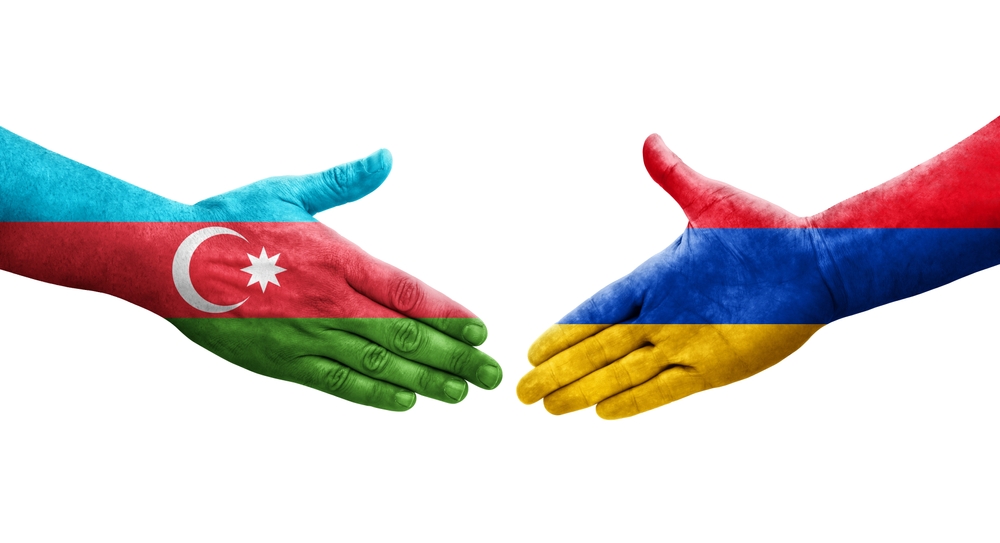
Azerbaijani NGOs in Yerevan
A roundtable is underway in Yerevan, bringing together representatives of civil society from Armenia and Azerbaijan. The discussions began on 21 October, but information about them only surfaced this morning.
The Center for Security Policy Research says the talks focus on four key areas:
- the peace agenda developed after the Washington meeting on 8 August;
- steps to build mutual trust between the two societies;
- opportunities for stable economic cooperation in the South Caucasus;
- and prospects for direct and long-term links between civil society groups from both countries.
“It is quite likely that the discussion will touch on Armenia’s constitutional reforms and the link between signing a peace deal and changing the constitution. Baku sees this as a precondition for the agreement. Other issues usually discussed at the official level may also come up,” political analyst Robert Gevondyan told JAMnews.
Gevondyan noted that experts are meeting in Armenia or Azerbaijan for the first time, not in a third country. He also said the next round could take place in Baku, “if both sides agree.”
- PEACE Act or “Armenian lobby”? A bill has been introduced to US Congress to sanction Azerbaijan if it attacks Armenia
- US embassy staff ‘where possible’ attend trials of Armenians in Baku
- For the first time, Armenian National Security Service delegation visits Baku: what Yerevan expects
Attempts to bring together Armenian and Azerbaijani experts are not new. In 2022, talks on normalising relations took place in Moscow, initiated by Russian Deputy Foreign Minister Andrey Rudenko.
IIn 2022 and 2023, expert groups met in Georgia and the Netherlands. LINKS Europe organised the meetings with support from the European Union.
According to reports, the Armenian side included Stepan Grigoryan, Taron Ovannisyan, Gevorg Melikyan, Johnny Melikyan, and Beniamin Poghosyan. The Azerbaijani participants were Ahmed Alili, Mekhman Aliyev, Shahla Ismail, Samir Mamedov, Ramazan Samedov, and Anar Veliev.
What’s being discussed behind closed doors: JAMnews uncovers the details
Political analyst Robert Gevondyan didn’t name the NGOs that sent representatives to Yerevan or clarify who represented Armenia. He only said the participants were “people who can negotiate cooperation in different areas.”
He noted that Azerbaijan recently lifted its restrictions on cargo transit to Armenia and reminded that experts had already discussed this issue before:
“Yesterday something unprecedented happened — Azerbaijan announced that wheat will be delivered to Armenia through its territory. A few months ago, during a debate with an Azerbaijani expert, I suggested that Baku open a transit route. I said this could become a positive example of cooperation. And now it has happened.”
Gevondyan said the roundtable in Yerevan focuses on several key topics in Armenia-Azerbaijan relations, including reopening transport routes, marking the border, and boosting economic ties.
When JAMnews asked where real progress could happen, he replied: “In every area of the negotiation process — transport, borders, economic cooperation, and more.”
If the talks go well, he added, the participants may even form a permanent working group.
Gevondyan agreed that Armenian and Azerbaijani NGOs differ in approach and working style but rejected claims that all Azerbaijani peace advocates are in prison:
“There are people in Azerbaijan who cooperate closely with the authorities but still talk about peace and better relations with Armenia. Maybe they can do so because the government allows it, or maybe they find their own way to speak. But the main thing is that such people exist. We can talk to them about how to advise our governments and move the peace process forward — on both sides.”
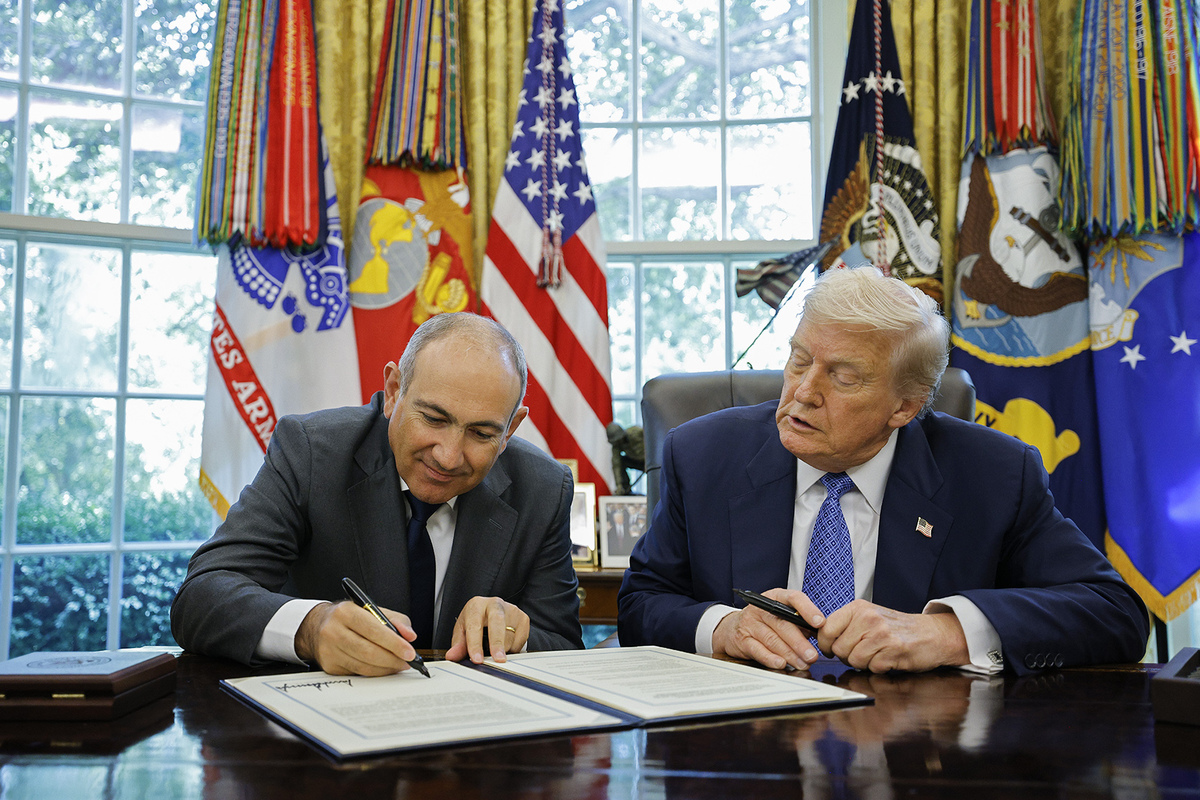
Armenia-Azerbaijan relations progress
Azerbaijani President Ilham Aliyev announced that his country has lifted all restrictions on cargo transit to Armenia. The first shipment — wheat imported from Kazakhstan — will pass through Azerbaijani territory.
“This is a clear sign that peace between Azerbaijan and Armenia is no longer just an idea on paper — it’s becoming reality,” Aliyev said at a joint press conference with Kazakhstan’s president.
Yerevan welcomed the move. Speaking at the 5th Silk Road Forum in Tbilisi, Armenian Prime Minister Nikol Pashinyan said: “What seemed impossible a few months ago is now happening — grain from Kazakhstan is reaching Armenia through Azerbaijan and Georgia.”
Deputy Prime Minister Mher Grigoryan called the decision “a major step toward reopening regional trade routes, strengthening mutual trust, and advancing the peace agenda.”
Economy Minister Gevorg Papoyan added that the first wheat shipment will travel by rail from Aktau to Baku, and then continue through Azerbaijan and Georgia to Armenia.
Mzia Amaghlobeli, a jailed Georgian journalist and founder of the Batumelebi and Netgazeti online media outlets, has been awarded the Sakharov Prize for Freedom of Thought, alongside Belarusian journalist Andrzej Poczobut.
The Sakharov Prize, the European Union’s top human rights award, has been granted annually since 1988 to dissidents, political leaders, journalists, lawyers, and civil society activists. The EU Parliament bestows the prize, which carries a EUR 50,000 endowment, at a formal plenary session in Strasbourg each year.
“By awarding this year’s Sakharov Prize for Freedom of Thought to Andrzej Poczobut from Belarus and Mzia Amaglobeli from Georgia, we honour two journalists whose courage shines as a beacon for all who refuse to be silenced,” European Parliament President Roberta Metsola said as she announced the laureates on October 22.
“Both have paid a heavy price for speaking truth to power, becoming symbols of the struggle for freedom and democracy. The Parliament stands with them, and with all those who continue to demand freedom,” she added.
Mzia Amaghlobeli was arrested in January after slapping police chief Irakli Dgebuadze during tense protest scenes in the western Georgian city of Batumi. She is serving a two-year prison sentence after being found guilty in August. Her conviction has drawn strong local and international condemnation and is widely viewed as politically motivated.
EU Commissioner for Enlargement Marta Kos has welcomed the European Parliament’s decision as an “excellent choice” for the 2025 Sakharov Prize, writing on X, “Strong leaders do not fear independent journalists. When journalists are silenced, repression and corruption thrive. We need more independent voices like Andrzej Poczobut and Mzia Amaglobeli.” She stressed, “They must be set free. Immediately.”
Georgia’s fifth president, Salome Zurabishvili, congratulated Amaghlobeli in an X post, saying, “This recognition honors not only her voice, but the spirit of a free and dignified Georgia – a nation determined to carry on its fight for a European future.”
Mzia Amaghlobeli has already received multiple awards, including the Free Media Award from Norway’s Fritt Ord Foundation and Germany’s Zeit-Stiftung. In early October, she also received the Forum 2000 International Award for Courage and Responsibility.
Also Read:
The Central Bank of Azerbaijan (CBA) forecasts that the national economy will grow by 2.2% in 2025 and 2% in 2026, CBA Governor Taleh Kazimov announced during a press briefing today on interest rate corridor parameters, Azernews reports. He also noted stronger growth expectations for the non-oil and gas sector, projecting an expansion of…