Categories
South Caucasus News

Hop Lun


We are excited to announce our recent acquisition of Rainbow West Apparel (“RW Designs”), a woman and minority-owned swimwear company based in Los Angeles. This strategic partnership represents a significant step forward for us as we continue to expand and better serve our retail partners in the US market. With RW Designs’ extensive experience in swimwear, outerwear, intimates, activewear, and …

Categories
South Caucasus News

cdn3.pixelcut.app


wOF2 ±À ü0 ±a ˆ …–h º@ ` Éf ˆ @†ê$ 6 $ Û8 Û Ž6 þx[ó{´Ý^Ù»;3}²8ºÇh‹iCÀ:( FÜt~~_2ºk˜©ú—Mçá c¾ ¤ )—Y›²¹Ù1ÂÅ ¨ªöÆ;¨^7#ç tÞ %#ú $ýÿÿÿÿÿÿÿÿÿÿÿÿÿÿ OÉ Â6ûÿMòf& ’ pœ‚( T…¢xÑzÖc[íáºu…b õâ“ &5/ ÎhLF˜ ™X©‡Z^æ*© ›F3PZÒî¸n¯(¤ bØ„ý4•”U>†‰ 2 ÊF™çy§ Qü‚Œ57™ þ`²å¶9 …

Categories
South Caucasus News

Heydar Aliyev Center to open ‘My Seas, My Oceans’ exhibition for first time


On October 31, the Heydar Aliyev Center will host the opening of the exhibition “My Seas, My Oceans”, which carries a strong message about the protection of water resources, Azernews reports. The exhibition aims to emphasize the importance of preserving one of the most vital resources of our planet — water sources — in an era marked by climate change, global warming, and vulnerable ecosystems.

Categories
South Caucasus News

Наргизтепе – прямой свидетель древней истории Азербайджана


Categories
South Caucasus News

Over 1,500 buildings in liberated territories equipped with solar power


More than 1,500 individual homes, public, and social buildings across Azerbaijan’s liberated territories have been equipped with solar panels, collectively generating over 5,000 kilowatts (kW) of clean energy.

Categories
South Caucasus News

Gakharia’s Party to Take Up Parliament, Ending Yearlong Boycott


Former Prime Minister Giorgi Gakharia’s opposition For Georgia party members will take their seats in Parliament, ending a nearly yearlong boycott, party member Giorgi Sharashidze announced at a briefing on October 20.

The end of the parliamentary boycott comes after Georgian Dream MPs, sitting alone in the one-party legislature since the disputed October 26, 2024, elections, approved the credentials of twelve new For Georgia members in September, following the termination of the initial twelve members’ mandates in July due to the continued boycott.

“Unfortunately, we have to admit that this form of political protest,” Sharashidze said of the parliamentary boycott, “failed to stop Georgian Dream’s machinery of evil and to prevent the de facto government from making decisions harmful to the country such as halting Georgia’s European integration, adopting anti-democratic and rights-violating laws, tightening the autocratic regime, using violence against peaceful citizens, stealing free and fair elections, and committing many other criminal, anti-national and anti-state acts.”

“The parliamentary boycott, which evolved into a boycott of the entire political process,” Sharashidze claimed, “effectively removed the opposition from the political arena.” He added, “As a result, Georgian Dream was able to act very quickly, without any resistance, and further entrench authoritarianism, which led us to the October 4 provocation,” he added, referring to the unrest in Tbilisi on local election day.

He said the party blames no one but itself for failing, after the October 26 general elections, to convince the opposition and the public that the revoking of the parliamentary mandates was a “mistake,” adding, “Today we no longer intend to remain captive to our own mistakes or to illusions.”

Citing, among other things, what he described as “irresponsible” and “provocative” events on October 4 – which, he said, gave Georgian Dream a chance to “justify tightening authoritarianism ” – as well as the new laws restricting protests and the imprisonment of demonstrators, he said, “We have to admit that removing the opposition from the political arena left people defenseless in the face of the regime.”

“That is why our main goal is to fight for the survival of free thought. There is another truth in this country, and we must bring that truth to light,” he said, adding, “We are therefore beginning the process of returning all political instruments and platforms intended for the people back to the service of the people, because Georgia’s representative bodies – municipal councils at the local level and Parliament at the national level – do not belong to Georgian Dream, but solely to the Georgian people.”

He said that refusing to use the platforms of local councils and Parliament is “not only a mistake, but also a crime against the country and its people,” adding, “The voice of Georgian citizens and dissenting opinions must be heard in the Parliament of Georgia.”

“It is time to respond to lies with truth, and to the language of hatred and hostility with wise, calm, measured, and consistent steps,” Sharashidze concluded.

The party leader, Giorgi Gakharia, who is in exile due to two ongoing investigations into his 2019 tenure as interior minister, said as the GD Parliament’s fall session reconvened that the parliamentary boycott was a “mistake.” Following his remarks, several members quit the party.

The former prime minister’s party, one of four opposition groups to clear the 5% threshold in the disputed 2024 parliamentary elections, had joined the opposition’s boycott of the one-party legislature but, unlike the other three alliances, stopped short of formally renouncing its mandates.

Unlike other mainstream opposition groups, For Georgia also ran in the October 4 local elections in cooperation with another major opposition group, Lelo/Strong Georgia, which remains in a parliamentary boycott after the Georgian Dream Parliament terminated its mandates following the party’s decision to revoke them. Gakharia’s For Georgia did not take that step, leaving the door open to enter Parliament if it changed its mind.

Also Read:


Categories
South Caucasus News

Opinion: When education becomes a party project in Georgia


Georgia Education Reform

Georgia Education Reform

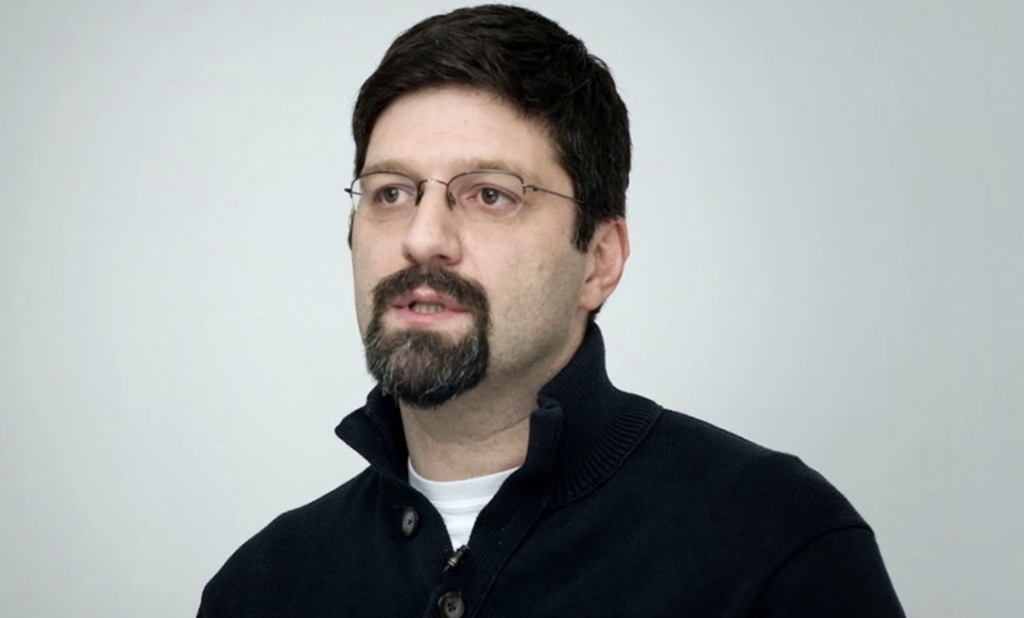
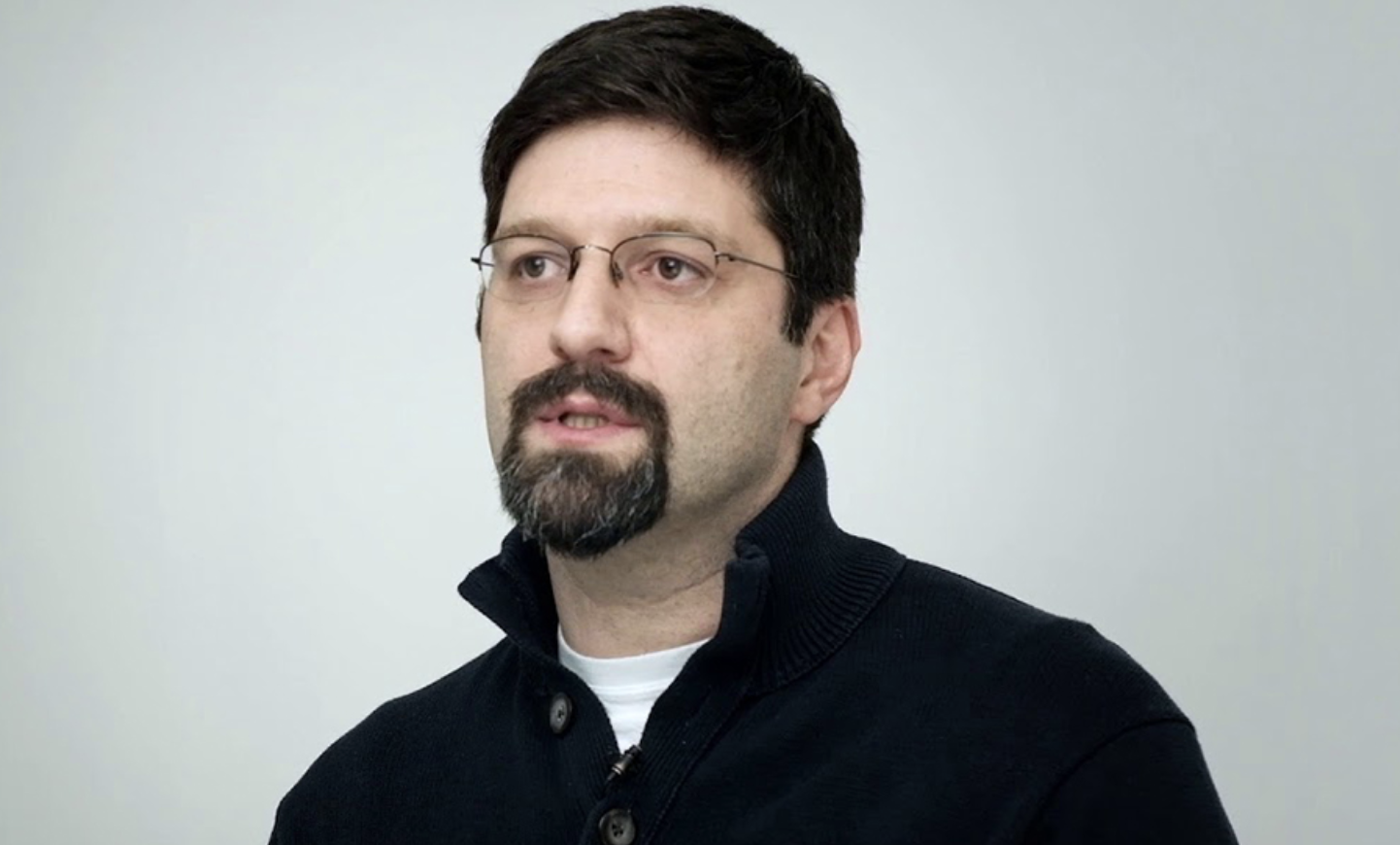
Former director of the National Centre for Curriculum and Assessment, Simon Janashia, has commented on Prime Minister Irakli Kobakhidze’s proposed education reform. Janashia said the ruling Georgian Dream party aims to strengthen political control over universities and schools through the reform.

According to him, the initiative is “a highly risky move” that could alienate even the party’s own supporters.

The expert believes that the planned changes in higher education are designed to restrict both funding and institutional autonomy of universities.

On 16 October 2025, Georgian Dream Prime Minister Irakli Kobakhidze announced a sweeping education reform in Georgia.

“The current education system does not meet modern challenges and standards. We must set an ambitious goal to ensure that students in Georgia receive the same quality of education as abroad,” the prime minister said.
Read more about the new education reform in our report.

Opinion on Georgia’s education reform. Simon Janashia

Simon Janashia: “Georgian Dream realises that students and professors represent a force it cannot yet control. The government has no direct influence over them because universities retain a degree of autonomy. Only part of their funding comes from the state, which means the authorities cannot manipulate students and academics through financial pressure.”

Kobakhidze announced plans to replace the existing grant-based model with a state-funded system — meaning the government would decide which universities receive funding and which do not.

A key source of autonomy for state universities comes from admitting foreign students, who often pay ten times higher tuition fees. This revenue stream has been crucial to maintaining financial independence — and with that, academic freedom. “The more autonomous a university is, the more freedom its professors have to express their political views,” says Janashia.

According to him, Kobakhidze wants to ban state universities from admitting foreign students — effectively cutting off a major source of income and redistributing funds to private institutions. “The problem is that a large part of the [state] medical university’s income comes from foreign students. But since its administration is loyal to the ruling party, the government doesn’t see that as an issue. So Kobakhidze decided to allow exceptions — but only for those who serve the party’s interests.”

Janashia argues that such selective exceptions reveal the underlying intent of the reform: “If you serve the party, you’ll get an exception. But if you’re at Ilia University, where professors and students freely express their opinions and join protests, you’ll be stripped of funding and made dependent on the party’s goodwill.”

The reform also includes a proposal to ban duplicate faculties across public universities. This could have serious financial implications, as popular departments — such as business schools — are major revenue sources. “Under this system, only Tbilisi State University or the Technical University would be allowed to run a business programme. The rest would lose a large share of their income,” Janashia warns.

Another measure, he adds, is reducing bachelor’s degrees from four years to three — a change that would create “a financial crisis,” forcing universities to rely more heavily on state funding to survive.

The shift to an 11-year school system, meanwhile, would exclude around 50,000 politically active pupils from education. “These are young adults — the same people we’ve seen at protests. The state struggles to deal with them, especially since minors can’t easily be detained,” says Janashia.

He believes the elimination of the 12th grade will make studying abroad far more difficult. “The authorities openly say their goal is to keep as many young people as possible in Georgia — a goal justified by so-called patriotic motives.”

The same “patriotic” reasoning, Janashia adds, is used to argue that foreign students should be redirected to private universities. “It’s fairly obvious that the government’s interest in private universities stems from the fact that many of them are linked to decision-makers,” he says.

“For example, the Black Sea University was sold during the tenure of former Education Minister Giorgi Amilakhvari. There were even reports that he may have had a personal stake in the institution and was directly involved in its sale.”

It’s about hundreds of millions in profits that will go to private universities instead of public ones. This will inevitably weaken state institutions — despite claims by the reform’s authors to the contrary.

The shift to an 11-year secondary education system poses problems not only for those planning to study abroad but also within Georgia itself. The introduction of a 12-year system years ago was driven by the need to ease an overloaded curriculum and distribute subjects more evenly.

Another key argument back then was that the later students choose their profession, the more thoughtful and deliberate that choice becomes. The 12-year structure also gave rise to general education courses during the first year of university — helping students make a more informed decision before specialising from the second year onwards.

If one year is cut from the four-year bachelor’s programme, interest in these general courses will decline. Students will finish school earlier, choose their professions earlier, and begin specialising immediately — often without the maturity or perspective to make such a choice.

The foundation for developing professional skills lies in broad knowledge, which allows people to adapt and acquire new competencies throughout life. Stripping that foundation from young people will leave them with fewer opportunities to change professions or careers later on.

In short, what’s happening today can be summed up in one phrase: Georgian Dream wants people to study less — and for the education system to serve the party’s interests, not society’s.

Georgia Education Reform


Categories
South Caucasus News

High-speed internet, digital services reach thousands in Azerbaijan’s liberated territories


As of September 30, 2025, more than 6,000 subscribers—including households, businesses, and farms—are now using the services of AzTelekom LLC in the territories recently liberated from occupation, Azernews reports, citing AzTelekom.

Categories
South Caucasus News

Пятая годовщина освобождения Зангилана | В Газе снова неспокойно


Categories
South Caucasus News

Humanitarian demining efforts advance with significant land cleared for reconstruction


Between October 13 and 19, humanitarian demining operations in Azerbaijan’s liberated territories resulted in the discovery and neutralization of 69 anti-tank mines, 61 anti-personnel mines, and 2 unexploded ordnance (UXO) items, Azernews reports.