
Azerbaijan continues to be one of the major destinations for Georgia’s automobile re-exports, though the number of imported cars declined by 3,840 units, or about 37.6 percent, compared to the same period last year. Experts note that the decline may be linked to new customs and environmental regulations, as well as growing domestic supply and diversification of import sources.
Day: October 20, 2025
Categories
Кушнер об увиденном в Газе
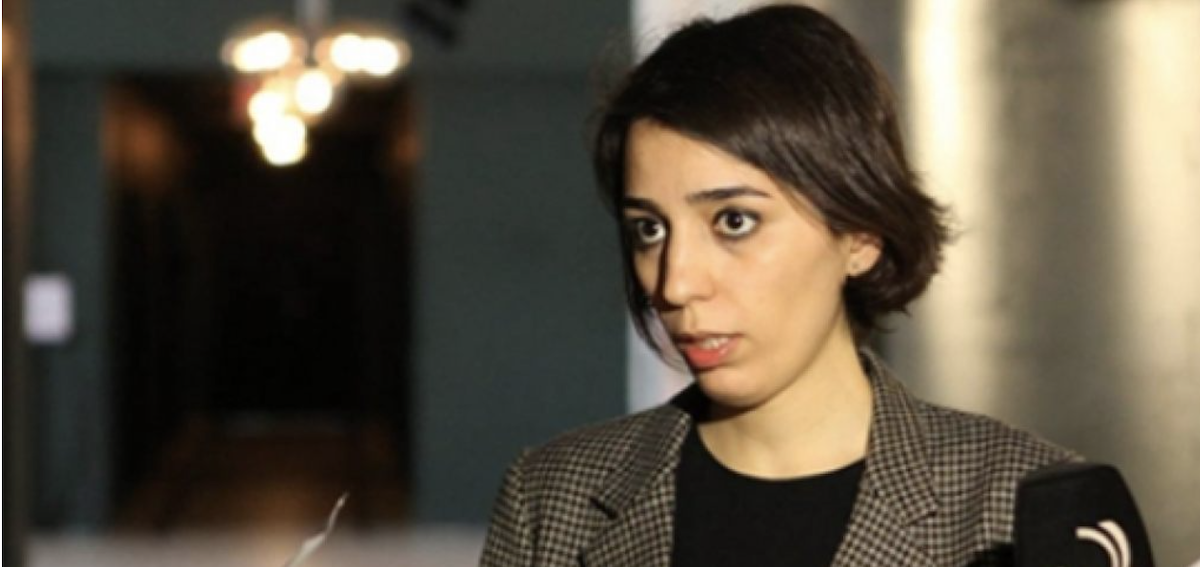
About protests in Georgia
“I understand that political groups are weakened and exhausted, but we need to look for strategic and unconventional solutions,” says Tamta Mikeladze, director of the Centre for Social Justice, commenting on current events in Georgia.
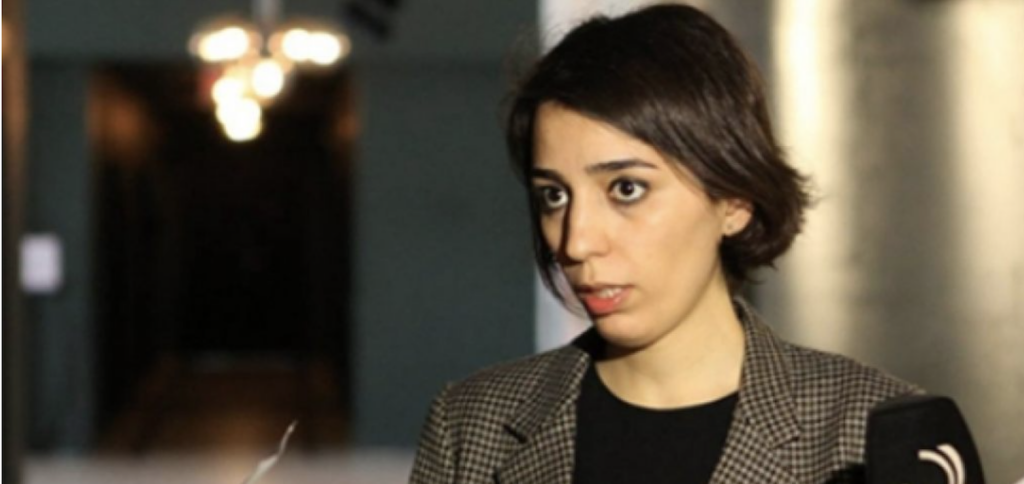
Tamta Mikeladze: “What has been happening in our country over the past two to three years is a rise in authoritarianism, but we can also view this situation through the lens of political conflict.
In this context, we have a government that has usurped power, completely ignores the principles of the rule of law, and commits mass violence against citizens, while, it must be admitted, maintaining a stable electorate. We also have an opposition and a decentralized protest society that has been active over these two years, morally weakening the regime and fostering social discontent among both regime supporters and neutral citizens.
It is precisely against the backdrop of these protests and the accompanying processes that the Georgian Dream party faces a serious legitimacy problem abroad. The protests continue even under pressure; the external crisis has created, at the very least, internal problems within the party, and the regime has completely lost its sole argument—that they are supposedly milder than previous authorities. As a result, despite its own claims of victory in the 2024 parliamentary and 2025 municipal elections, Georgian Dream cannot genuinely boast of a win.
Of course, there are also structural and historical factors that make it difficult for the regime to shift toward more aggressive forms of authoritarianism: a weak and dependent economy, the anti-colonial character of Georgian nationalism, a significant share of opposition-minded voters among the population, the societal unacceptability of overt violence, and so on. This should be discussed more often, as it offers hope.
But it is clear that, under the massive and unprecedented use of violence by Georgian Dream, opposition forces could be irreversibly weakened. We are approaching a point where the remaining levers available to the opposition will be completely neutralized, and the balance of power will become too unequal.
Against this backdrop, very serious work is required from the political class.
In my view, political parties still do not coordinate on this issue and offer almost no vision of how to prevent the current political conflict from escalating into outright political violence, at a time when the agency of parties and active citizens is completely eroded and they become mere objects of violence.
I believe it is necessary to return to the approach proposed by former President Salome Zurabishvili—uniting the opposition, even if it has not succeeded in the past. It is also crucial to involve representatives of new political movements in this process and, more broadly, to give space to new social and political leaders.
But these people must be capable of creating a new and convincing vision for change. After all, that is the purpose of politics: to reduce harm, identify new factors within a crisis-ridden and hopeless reality, generate new dynamics, and ultimately instill hope in people. Otherwise, politics in our country will simply vanish.
In the long term, it is clear that the political process must include activating neutral citizens, building trust, reorienting opposition forces, attracting supporters in the wake of Georgian Dream’s mistakes, strengthening grassroots movements, and, as a result, establishing a new democratic process. But action must be taken ‘here and now’ so the country can preserve this potential for the future. Politics should not rely on hypothetical opportunities that may arise later, or on a lifeline thrown from the West.
I understand that political groups are weakened and exhausted, but we must seek strategic and unconventional solutions, even if these strategies are unpopular or require previously unacceptable compromises.
We all probably need to reflect on such solutions and remain open to different approaches.”
About protests in Georgia