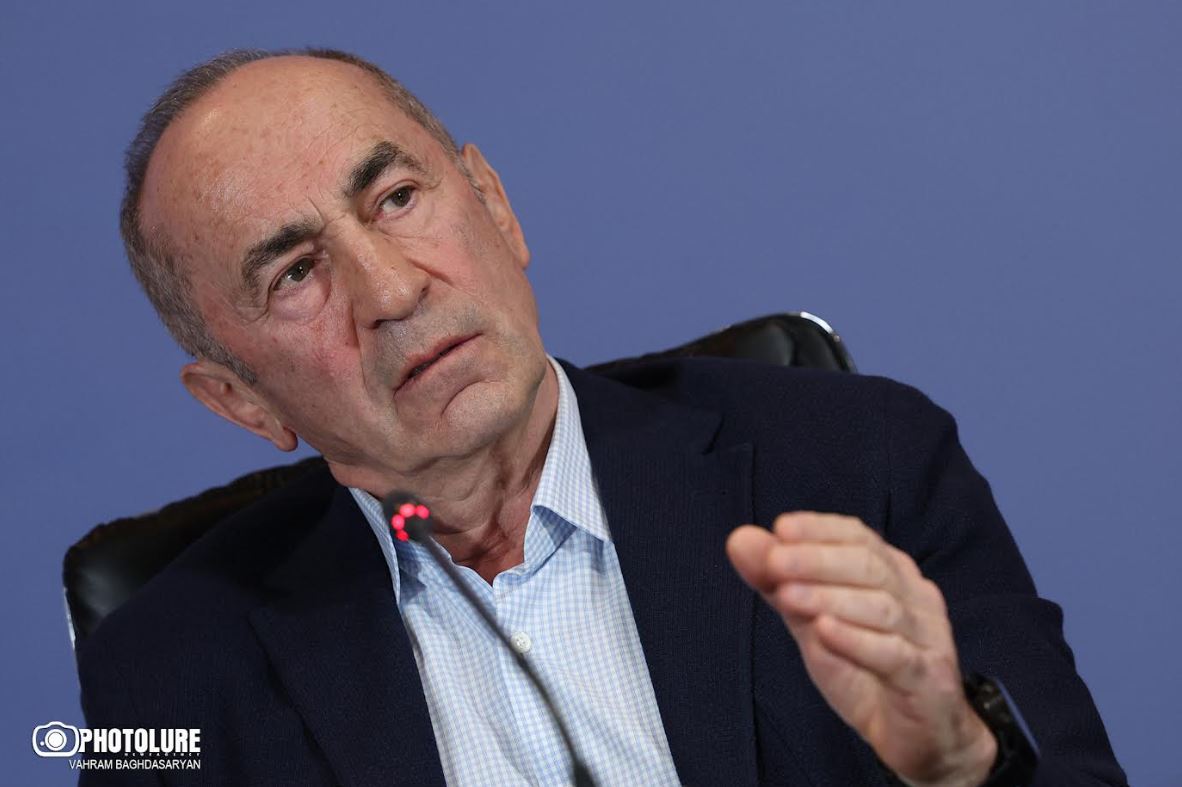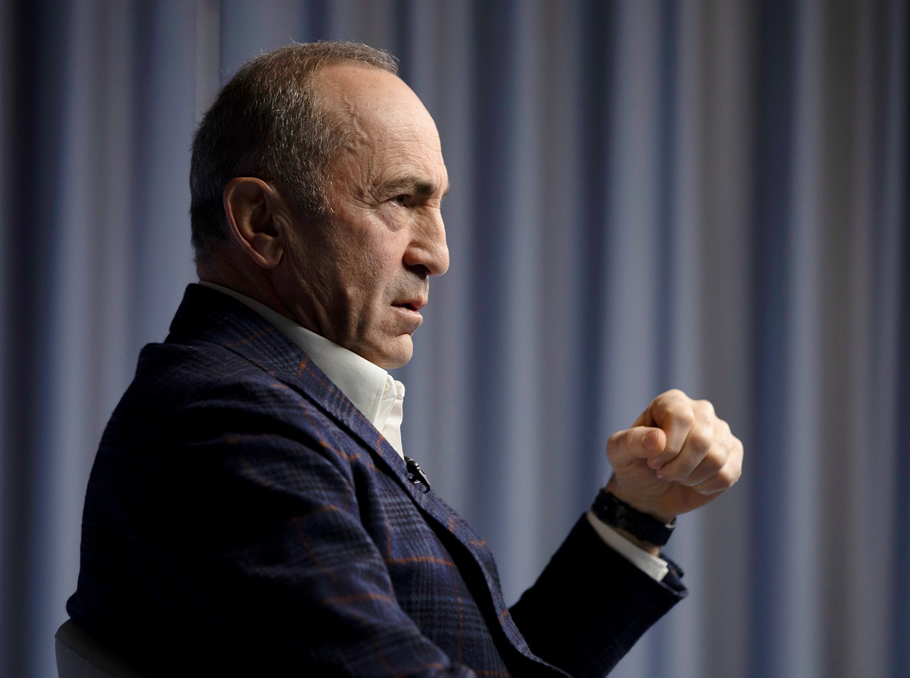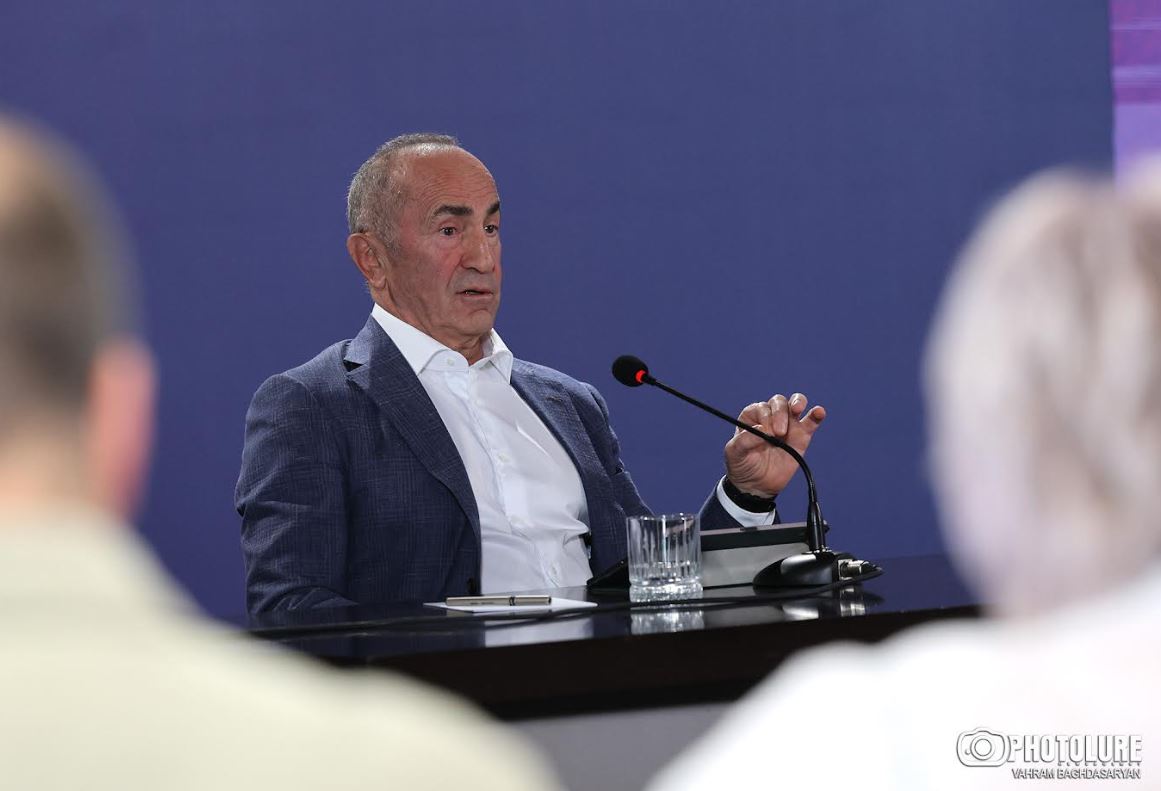
Ex-president Kocharyan’s press conference
“Unlike Azerbaijan and the United States, Armenia gained nothing from the documents signed in Washington on 8 August,” former Armenian President Robert Kocharyan said at a press conference.
According to him, the statement of 9 November 2020 — which marked Armenia’s defeat in the Second Karabakh War — could now be called a “dream document” compared with the agreements reached in the White House. He explained this by noting that the document signed under Russia’s mediation “at least envisaged the existence of Artsakh.” The former president also criticised the agreements concerning the “Trump Route” project on the unblocking of regional communications.
Kocharyan also touched on domestic political issues, announcing that his team would take part in the 2026 parliamentary elections. He assessed Prime Minister Nikol Pashinyan’s chances of re-election — that is, of his party winning — as “zero.”
The day before the press conference, the pro-government Armenian outlet Civic.am reported that the ex-president’s office was organising the event. The publication emphasised that only “friendly, selected or loyal” media were invited. It also noted that the press conference was being held just a few days after Kocharyan’s visit to Moscow, where he reportedly met with Sergei Kiriyenko — a well-known Kremlin crisis manager with experience in Abkhazia, South Ossetia, Moldova, and Transnistria, who was recently appointed responsible for relations with Armenia.
Commenting on these rumours, Kocharyan said he had travelled to Russia a month ago for personal matters:
“I was there for just two days, and it was the weekend. I returned on Monday afternoon. If I had planned any official meetings, I would probably have chosen other days of the week. But I understand that whenever I appear in Moscow, such rumours immediately start to spread,” he said.
What Armenia, US and Azerbaijan gained from Washington talks
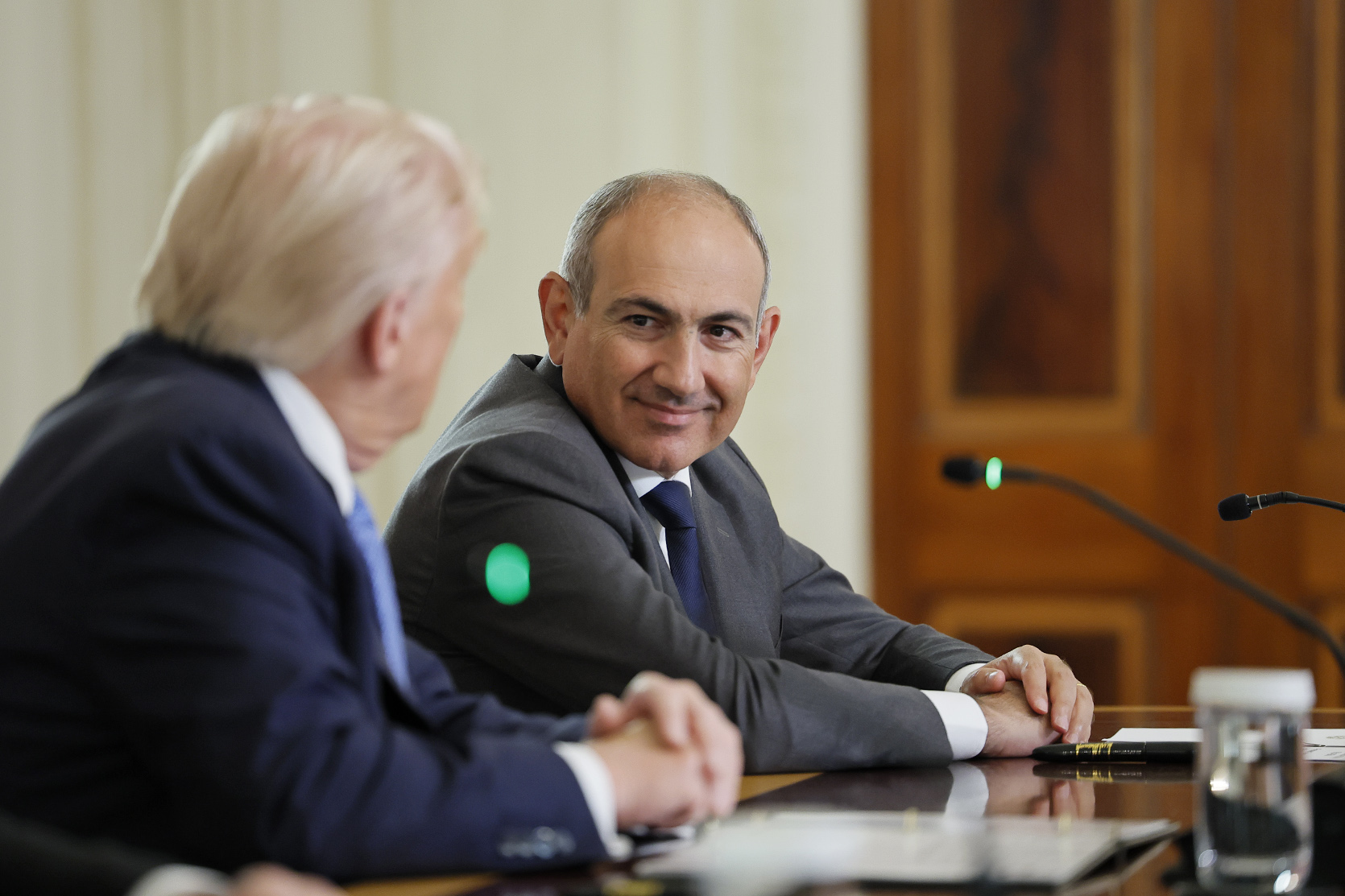
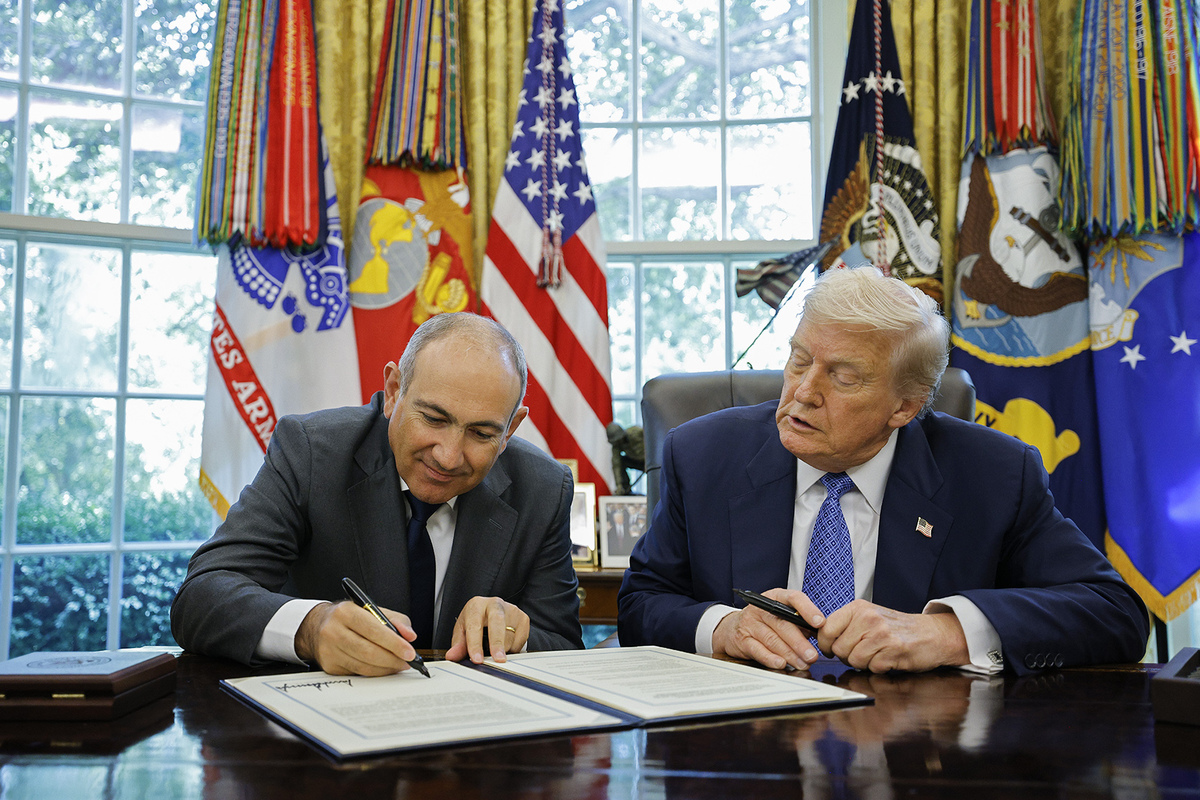
“What did Armenia get? I tried to find at least some specifics in these documents — but nothing. Only problems. What did Pashinyan get? He got a photo with Trump’s signature and a piece of paper with no legal force, which allows him to deceive the Armenian people once again. Pashinyan was in the White House merely as decoration,” Kocharyan said.
According to him, by signing the documents in Washington, the United States gained “control over the corridor that will be formed in the future, the de facto ability to oversee Armenia’s border with Iran, and Donald Trump — the opportunity to claim the Nobel Peace Prize.”
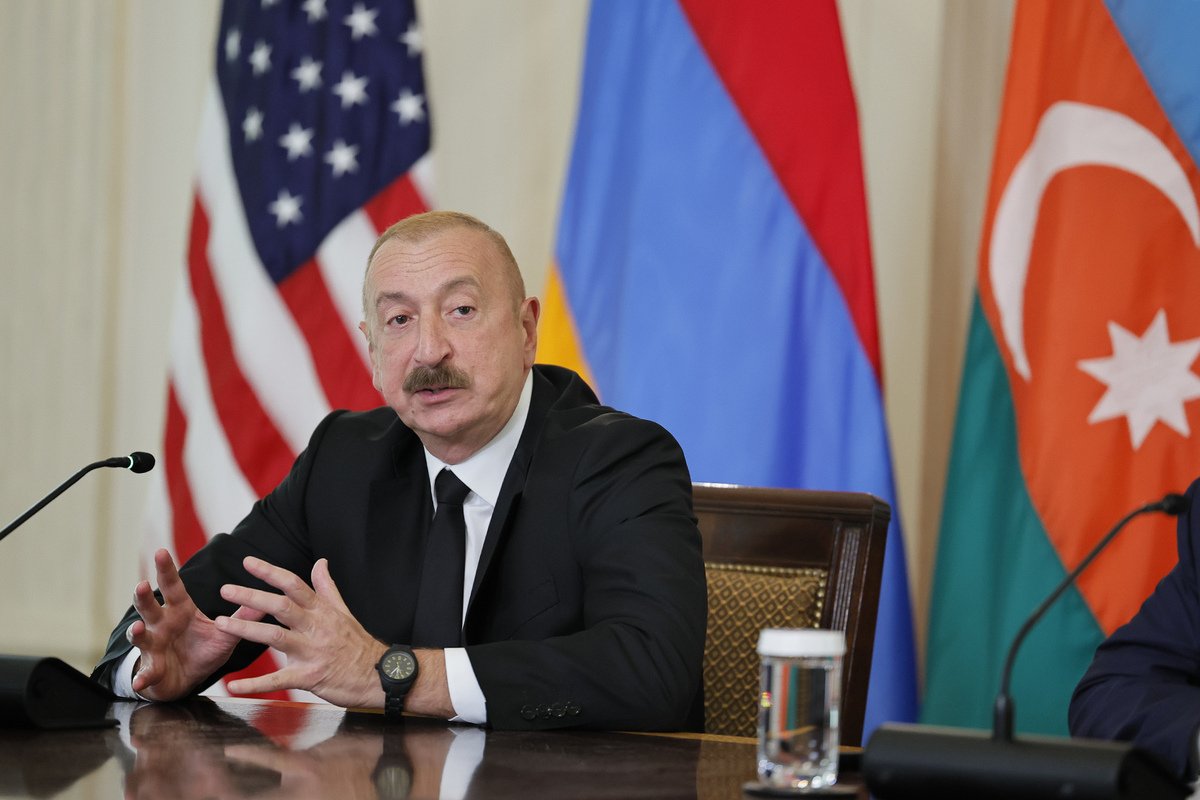
At the same time, Azerbaijan, the former president noted, obtained the much-desired “corridor” through Armenia’s territory. He also described as a success for the Azerbaijani president the dissolution of the OSCE Minsk Group — which had been working on resolving the Karabakh conflict — and the repeal of Section 907 of the Freedom Support Act.
Since 1992, Section 907 has prohibited the US government from providing direct aid to Azerbaijan, including military assistance. From 2002 onwards, all US presidents signed annual decrees suspending the amendment’s effect for one year. It remained in force only in 2024. On 8 August 2025, Donald Trump once again signed a decree temporarily suspending Section 907.
What else Kocharyan wished Armenia had secured at US talks
The former president believes Armenia could have insisted that the length of the “Trump Route for International Peace and Prosperity” be not 42 km, but four to five times longer. This road is intended to connect Azerbaijan with its exclave Nakhichevan and was named after the mediator who helped settle this long-standing dispute between Armenia and Azerbaijan — the Trump Route for International Peace and Prosperity (TRIPP). Baku had demanded an extraterritorial corridor, referring to it as the “Zangezur Corridor,” while Yerevan refused to relinquish its sovereign rights over this territory.
However, in Kocharyan’s view, the route should have been extended to Yeraskh — and under equal conditions for both sides. He argued that, in that case, responsibility for ensuring the road’s smooth operation would have fallen on the United States:
“Would it have been difficult to achieve? No, because US interest here is obvious. Then Aliyev would have had to either postpone or abandon the project. In that case, Ilham Aliyev would have been the one serving as decoration.”
According to Kocharyan, Prime Minister Pashinyan did not pursue this option because he was thinking not of Armenia’s interests but of the photo he could later use to boost his ratings.
“By the way, I also have a photo from the White House — with Clinton, and with an autograph. But I didn’t have to give anything away for that picture,” he stressed.
What solutions former president sees to current situation
Robert Kocharyan believes that the Trump Route does have transit potential, but its significance is somewhat exaggerated. He is convinced that launching the project with the United States is a “very risky” endeavour — and that neighbouring Iran is “not pleased” about it:
“Iran has seven borders with different countries, and the Americans will appear only on the Armenian one. Aren’t you [the Armenian government] ashamed? You’re handing over the most attractive part of Armenia to the US, creating risks in relations with Iran, and telling fairy tales about a project worth a billion dollars when you could build this road yourself in two or three years.”
Yerevan rejects the idea of transferring control over the Trump Route to any third party. Under preliminary agreements, an Armenian-American consortium will be established to build the infrastructure and manage the project’s business operations. The Armenian authorities maintain that border and customs control along the reopened route will remain in the hands of Armenian agencies.
Kocharyan insists that the TRIPP project could be beneficial for Armenia only if it were expanded. Therefore, he suggests either broadening joint projects with the US or rejecting them altogether — while expressing confidence that Ilham Aliyev would refuse any expansion:
“And we could thank Washington and say: ‘We’ll build the road ourselves. It will still be called the Trump Route, but Armenia will control it independently.’”
When asked whether his political bloc would annul the Washington agreements if it came to power, the former president replied that the US is not a country with which one can simply sign a document and then cancel it months later:
“There’s a diplomatic way — not to say, ‘We don’t accept this,’ but to expand the project, to show US interest in a larger initiative that also takes our interests into account and reduces the risks linked to the United States. In reality, a situation could arise where, for example, the Yeraskh section is never built by Azerbaijan towards the Armenian border. And the US would have no leverage to make it happen, since it’s not secured by any agreements. Trump would simply say: ‘I’m disappointed in Aliyev.’”
Pashinyan’s announced peace ‘depends on Aliyev’s mood’
Kocharyan also commented on Prime Minister Nikol Pashinyan’s claims that peace between Armenia and Azerbaijan has already been achieved. He stressed that the “peace” Pashinyan refers to is in fact merely a ceasefire:
“And this ceasefire largely depends on Aliyev’s mood. There are no guarantees — not in these documents nor anywhere else — no guarantors, no mechanisms defining what would happen if it were violated. This declared peace depends on the conscience of a single person. Maybe one day that person will have a bad dream, maybe something bad will happen — and perhaps one day this ‘Zangezur question’ will be settled in this chaotic world [referring to a potential seizure of the Zangezur corridor by force].”
The former president said that he and his political team propose a peace that would include enforceable mechanisms:
“There must be guarantors who are responsible for the implementation of the agreements — not just witnesses. There is no US guarantor. So this is simply a trick to deceive people once again. There’s an English saying: ‘If someone deceives you once, shame on them; if they deceive you twice, shame on you.’ I don’t know how many times the majority of the Armenian people can be deceived. This is yet another attempt.”
Kocharyan calls Armenia’s EU accession process ‘imitation’
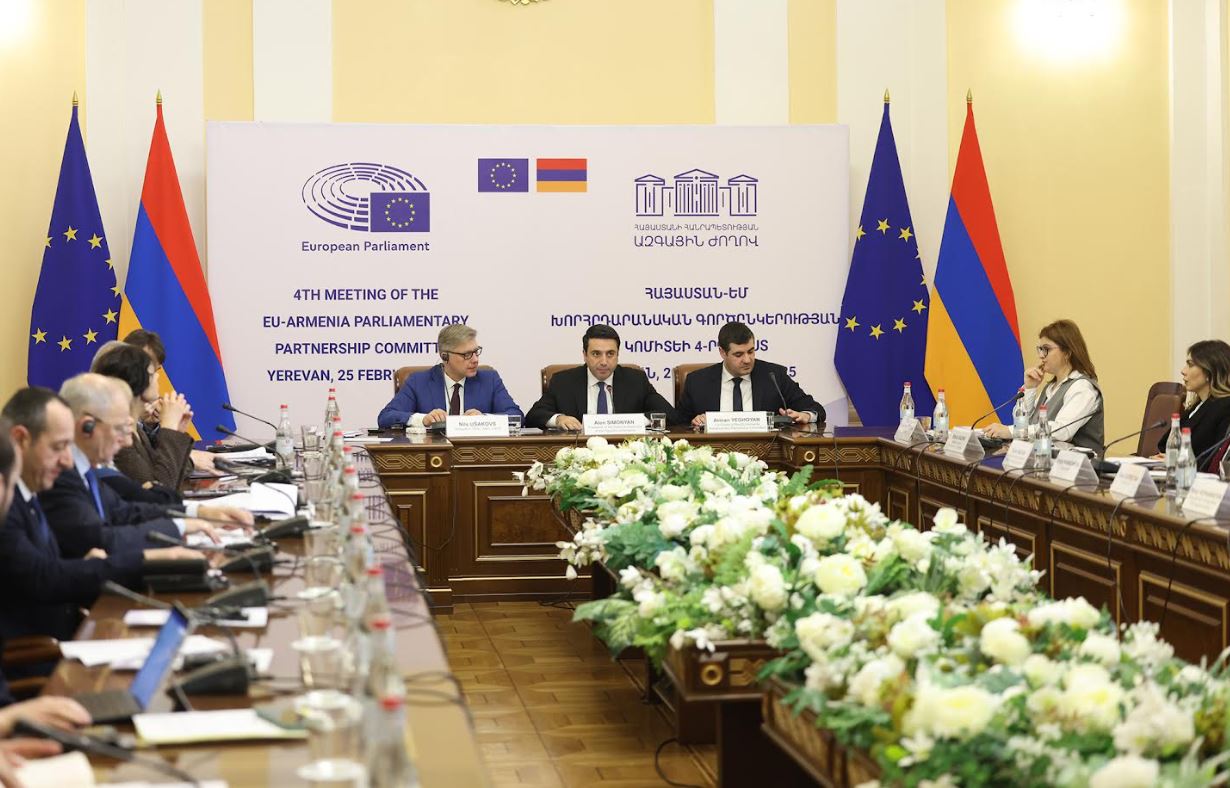
According to Robert Kocharyan, the foreign policy pursued by Armenia’s authorities has nothing to do with rational geopolitics. He said it lacked any clear logic and called the government’s statements about joining the EU an “imitation”:
“Why imitation? Because it’s merely a declaration. There are very clear rules for EU membership. Isn’t it curious that the Foreign Ministry has created a department for reintegration into the EU, yet there is no integration? I see no rational explanation for these moves. There is no sign of membership — only a wish, an imitation. But there is an urge to distance oneself from Russia.”
Kocharyan’s team to run in elections: ‘Pashinyan will not be re-elected’
The former president announced that his team would take part in the upcoming 2026 parliamentary elections. He described as odd the statements by some local politicians suggesting that former presidents should no longer engage in political processes. He added that he did not necessarily need to lead the team himself:
“If someone in our team emerges who can win more votes, I’ll be glad. This is not a matter of principle but of studying the political landscape and public opinion.”
Kocharyan noted that the snap parliamentary elections of 2021 showed he still had influence among the people and the potential for political consolidation:
“Would the number of votes be sufficient if I ran? No, not enough. Would we like to see other forces whose cooperation could change the situation? Yes, we would — and we are expressing this wish very clearly.”
According to Kocharyan, the likelihood of Pashinyan being re-elected “tends towards zero.” He said opinion polls confirm this and stressed that Pashinyan would enter the elections campaigning on the idea of peace — “but in reality, there is no peace.”