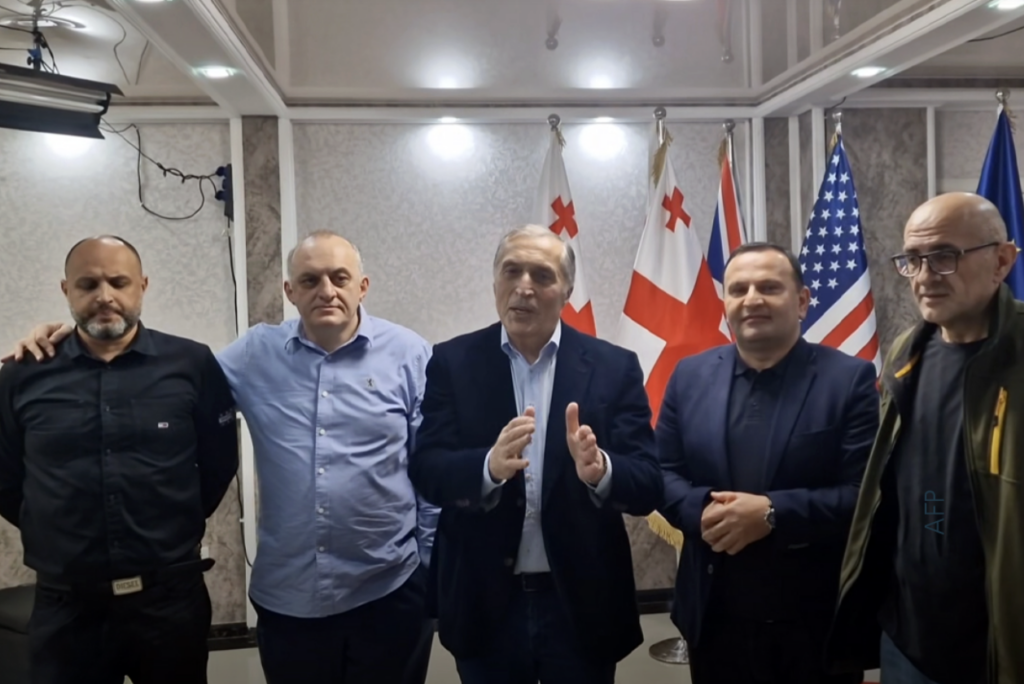
Gia Nodia on the protests and elections in Georgia
“Criticizing people in prison is wrong, but what we saw in Tbilisi on October 4 was at best an example of incompetence and naivety, and at worst – irresponsibility. For the first time, the propagandist narrative about an alleged ‘coup’ being prepared by the opposition gained real justification,” political analyst Gia Nodiawrote on social media.
According to the expert, criticizing the October 4 protest does not mean everything is lost. In his view, in the current situation, the main weapon is principled action on concrete issues.
The mass anti-government protest held on October 4 on Rustaveli Avenue, parallel to the municipal elections, ended with an attempted storming of the presidential palace and police intervention. Around a dozen people, including political leaders, were arrested, and several were injured.
In the elections boycotted by the opposition and much of the public, the ruling Georgian Dream party won by a wide margin.
Gia Nodia: “I know that criticizing people in prison, whose patriotism I do not doubt, sounds wrong.
But staying silent would also be wrong. What we saw last night – and what we all, in one way or another, took part in – was at best an example of extreme incompetence and naivety, and at worst, irresponsibility.
Still, it would be unfair to blame only those who took the initiative. A part of society had a demand for revolution – and that was entirely understandable.
If you believe that (1) this government cannot be changed through elections, and (2) it is impossible to coexist with it (and much of the opposition-minded public has accepted both), then what remains?
Many of us were rightly proud that the continuous protest in Georgia had lasted more than 300 days, but the same situation naturally led to frustration: ‘How much longer?’ ‘Let’s do something!’
Everyone I spoke with at the rally came for a peaceful protest and viewed the organizers’ talk of “ousting the government” with irony. Some believed it, but they were relatively few.
In any case, many people showed up – they were hoping for something, even if most didn’t quite know what.”
First, it brings depression and a sense of defeat: the same day showed that neither elections nor ‘revolutions’ achieved anything. So what now?
Second – and perhaps more dangerously – the organizers of the rally gave the authorities a legitimate pretext for a new wave of repression, which has already been announced.”
On October 5, Georgia’s Interior Ministry issued the following statement: “Any gathering held on the territory of Georgia today or in the coming days will be considered a continuation of yesterday’s attempt to overthrow the government. We urge everyone to take this into account and refrain from any actions that could serve as grounds for legal measures.”
“One could say that the authorities already had fabricated, baseless accusations.
But now their propagandist narrative about a ‘coup attempt’ has, for the first time, gained real ground — and the government will likely push the repressions further.
That does not mean everything is lost.
In the current situation, our main weapon is principled action on concrete issues and moral rejection of the regime.
This alone will not bring a change of power, but it is necessary to preserve the foundation on which, someday – I don’t know when, but it will happen – a more dignified Georgia must be built.”
European Central Bank (ECB) President Christine Lagarde said the eurozone is “in a good place” with respect to its 2% inflation target and emphasized that the ECB remains committed to doing “whatever it takes” to maintain price stability, Azernews reports, citing foreign media.
The State Security Service of Georgia (SSSG) announced on October 5 that it had traced “large quantities” of firearms, ammunition, and explosives with a detonator, alleging they were intended for “subversive acts” during the October 4 unrest in Tbilisi and linking them to a “military unit” in Ukraine.
The agency said the arms were discovered in a “special hiding place” in a forest near Tbilisi, releasing footage of officers digging out large packages from the ground at night. Officials added that they will be launching a search for the suspect, a Georgian citizen identified by the initials B. Tch.
Citing “numerous pieces of evidence,” the agency alleged that B. Tch. had purchased large quantities of firearms, ammunition, and explosives “on the instructions of a Georgian representative of a military unit active in Ukraine.” According to the SSSG, the materials were intended for “subversive acts parallel to the organized group violence and the attempted seizure of the presidential palace in Tbilisi on October 4.”
The SSSG said it had “neutralized the circle of persons” who had “presumably” been planning to transport the arms and explosives to downtown Tbilisi. Officials added that a phone seized from B. Tch.’s home contained video recordings “in which “B. Tch. is showing” to an individual, so far unidentified by the investigation, the firearms and ammunition he had purchased, and “sort of reporting back” to him.
The agency said it also identified and brought to the SSSG an individual who, at B. Tch.’s order, manufactured a remote control device for a detonator. The investigation is ongoing under Article 236-3 of the Criminal Code, which covers the illegal purchase or storage of firearms, ammunition, and explosives. The SSSG added that efforts are continuing to identify others involved in the case.
The announcement comes a day after election-day tensions in downtown Tbilisi, when, following calls from mass rally organizers, a group of protesters attempted to occupy the presidential palace. Police repelled and dispersed the crowd, later arresting five rally organizers and vowingto identify and apprehend others. Georgian Dream officials described the events as a foreign-orchestrated coup attempt and pledged a harsh response.
Georgian security services have referenced Ukraine in connection with the October 4 rally before, notably weeks earlier, when they arrested two Ukrainians, alleging they had brought powerful explosives into the country on instructions from Kyiv.
Meta Platforms, Inc. is reportedly nearing an agreement with Pembina Pipeline Corp. to build a new artificial intelligence data center in Alberta, Canada, according to a report by The Logic on Friday, Azernews reports.
Ukrainian President Volodymyr Zelensky revealed on Sunday that Russia’s latest overnight assault involved the launch of 50 missiles and 500 drones targeting multiple regions across the country, Azernews reports.
On 4 October, Georgia held local self-government elections, once again placing the country at the centre of a political crisis.
A mass anti-government protest that gathered on Rustaveli Avenue on election day ended with an attempted storming of the presidential palace and police intervention.
Around ten people were detained, and several were injured.
The ruling party won a convincing victory in the elections, which were boycotted by much of the opposition and the public.
In the 2025 local elections, 1,438,116 citizens voted — a turnout of 40.93%. In Tbilisi, where anti-government protests continue, participation was even lower, at 31%.
This marks the lowest voter turnout in Georgia since independence.
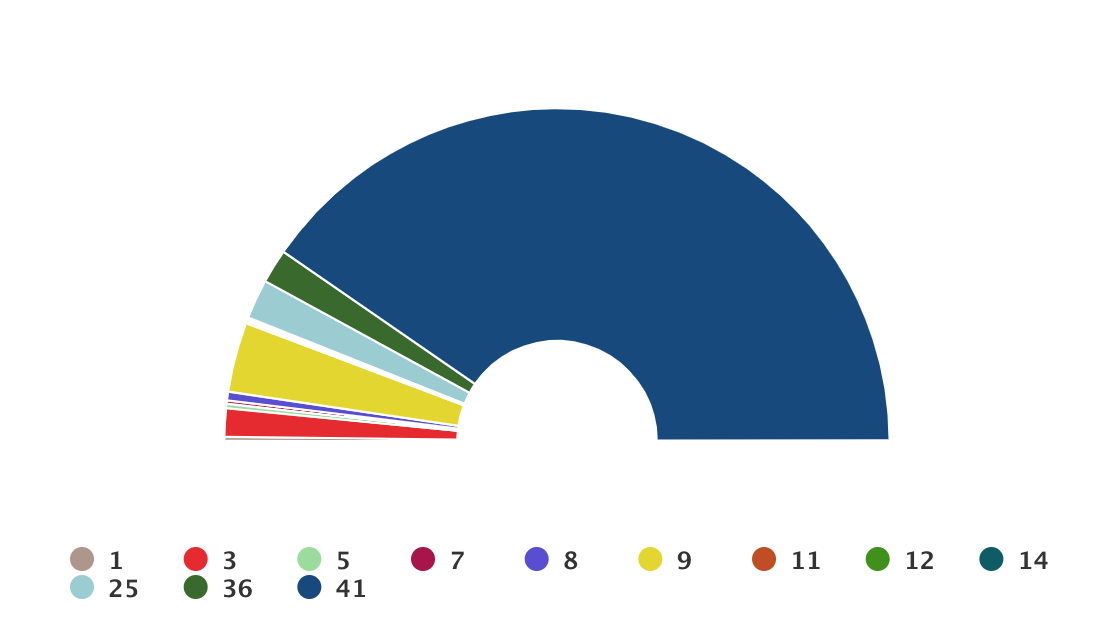
The ruling Georgian Dream party won 81.68% of votes nationwide, giving it control in every municipality.
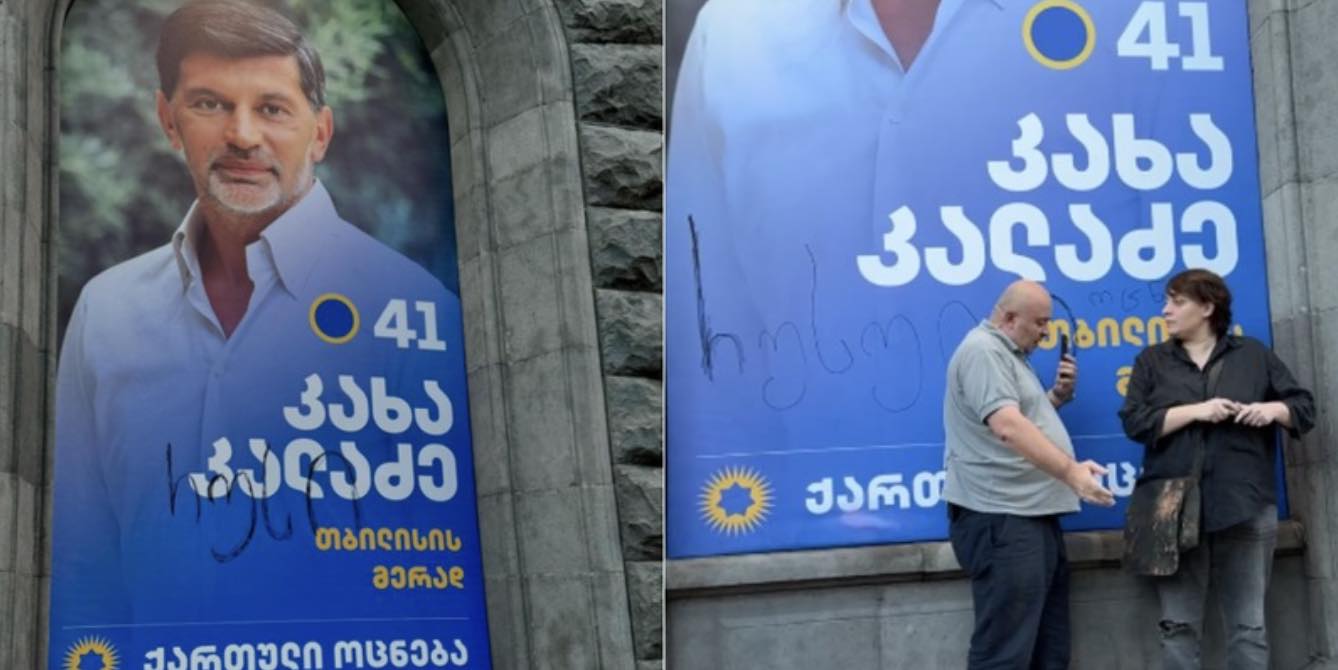
In the Tbilisi mayoral race, Georgian Dream candidate and incumbent mayor Kakha Kaladze came first with 71.5%, receiving a total of 214,872 votes.
Three pro-European opposition parties also took part in the elections, gaining the following results:
Lelo – 6.71% (9.93% in Tbilisi)
For Georgia – 3.68% (3.1% in Tbilisi)
Girchi – 2.96% (7.69% in Tbilisi)
According to official data from the Central Election Commission (CEC), Tbilisi has 1,043,482 registered voters. On 4 October, 324,281 people (31.08%) cast their ballots. Of these, Georgian Dream’s Kakha Kaladze received 214,575 votes.
“This means Kaladze is supported by just 20.56% of Tbilisi’s voters. Only one-fifth backing the current regime once again shows the capital’s resistance to it,” analysts said. Civil society groups also noted that the figures indicate Georgian Dream is steadily losing support in Tbilisi.
Prime minister Irakli Kobakhidze described the result as “a firm endorsement from the people,” while the opposition and civil society dismissed the outcome as meaningless, arguing the election was held without credible international or local observers, amid an opposition boycott and the use of administrative resources.
In Georgia’s five self-governing cities – Tbilisi, Rustavi, Kutaisi, Batumi and Poti – all mayoral races were also won by Georgian Dream candidates. In Poti, Georgian Dream’s candidate Beka Vacharadze received 100% of the votes. Rustavi’s incumbent mayor Nino Latsabidze won with 91.9% (30,962 votes), Kutaisi will be led by Davit Eremishvili with 85.6% (37,635 votes), and in Batumi Giorgi Tsintsadze triumphed with 80.6% (42,815 votes).
The CEC said the elections were held “in a peaceful and orderly environment.” “A total of 25 complaints were filed with district election commissions, mostly concerning violations of photo and video recording rules, polling station setup, and voter registration outside polling stations,” a CEC spokesperson said.
Political backdrop
Several major opposition parties, including former president Mikheil Saakashvili’s United National Movement, the Coalition for Change, and the political group Federalists, boycotted the 4 October elections.
The vote took place amid ongoing mass protests. Continuous demonstrations have been held in Georgia for nearly a year, beginning after the disputed parliamentary elections of October 2024. The opposition rejected the results as rigged, refused to take up its parliamentary mandates and walked out of parliament.
Soon after, on 28 November 2024, prime minister Irakli Kobakhidze openly announced that negotiations on EU membership would be postponed for four years — a statement pro-European voters saw as a declared shift in the country’s direction, triggering an unbroken wave of protest.
The 4 October elections were also held while several opposition leaders remain in prison — eight politicians have been jailed for refusing to testify before a parliamentary commission investigating alleged crimes committed during Saakashvili’s presidency.
The elections were also held amid unprecedented government pressure on democratic institutions. Several NGOs had their bank accounts frozen, while independent media have faced growing restrictions under recently adopted anti-democratic laws and new regulations on grant funding — measures that have effectively paralysed the work of civil society.
It is also worth noting that no international observers monitored the election. The OSCE, which traditionally sends the largest international mission to Georgia’s elections, said it had received the government’s invitation so late that it was “impossible to organise a meaningful mission.”
Citing the alleged falsification of last year’s parliamentary elections, local observer groups also refused to monitor the 4 October vote.
The “peaceful revolution” that never happened. Arrests
The main drama on election day played out not at the ballot boxes but on Rustaveli Avenue.
For weeks, several political leaders who organised the 4 October rally had been building up expectations, calling the date the day of a “peaceful revolution,” a “peaceful overthrow,” and “the final day of Georgian Dream.”
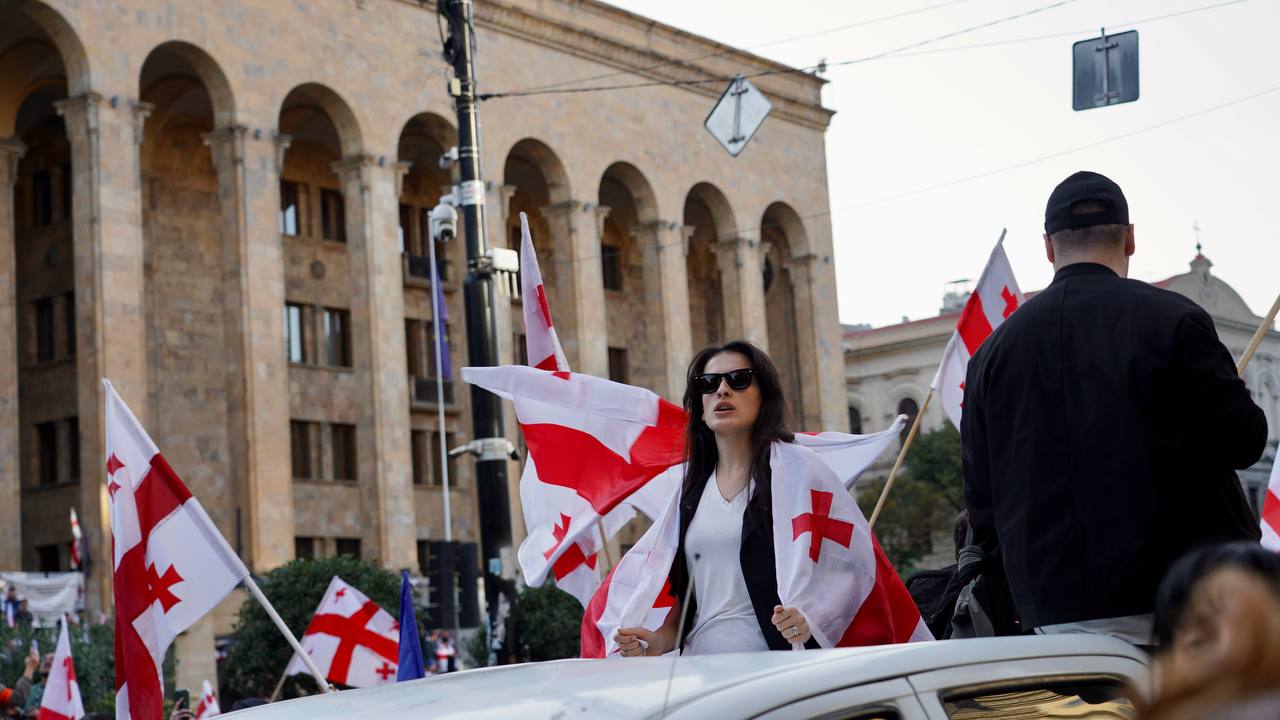
A large crowd gathered on Rustaveli Avenue. People began assembling around 4 p.m., and by evening the capital’s main boulevard and nearby streets were packed.
Most of the protesters were residents of Tbilisi, though many had also travelled from other regions to join the rally.
Many expected opposition leaders to present a clear plan for what would follow the rally.
In the evening, after polling stations closed, the organisers — former world-renowned opera singer Paata Burchuladze and United National Movement political council member Murtaz Zodelava — called on the crowd to march on and seize the presidential palace.
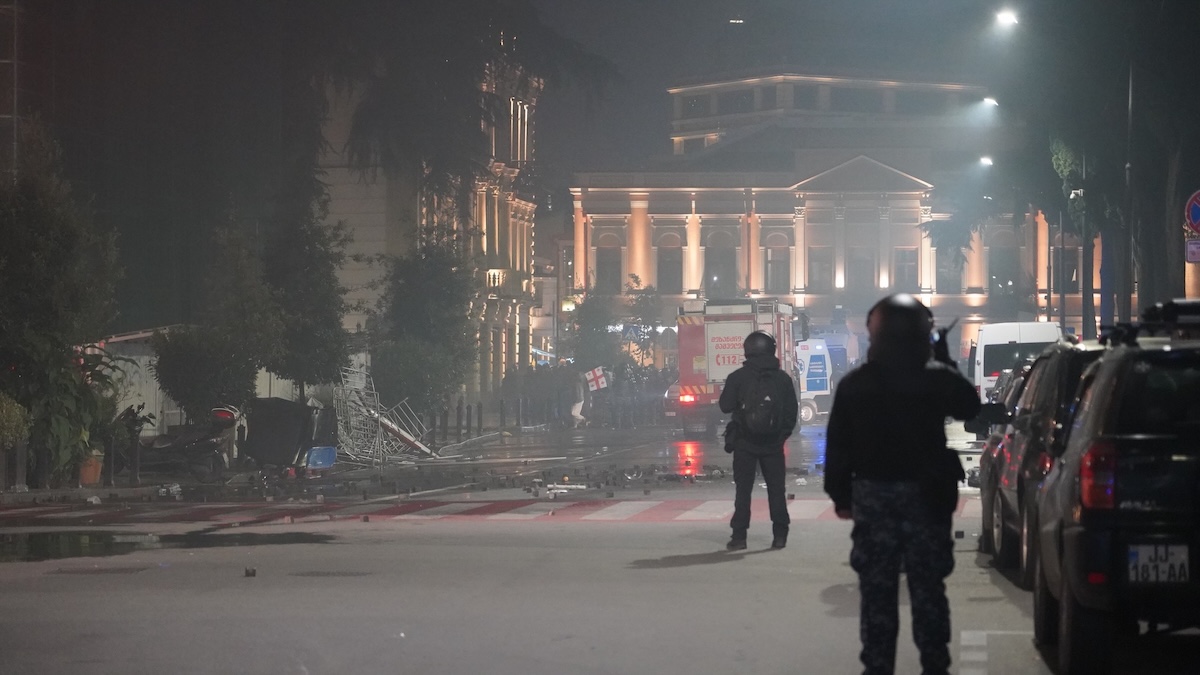
Part of the crowd moved from Orbeliani Square towards the presidential palace. They quickly broke through the gates, as the strategic site was guarded by only a few law enforcement officers. Within minutes, protesters were inside the palace grounds, and only then did special forces and police reinforcements arrive.
Photo: JAMnews
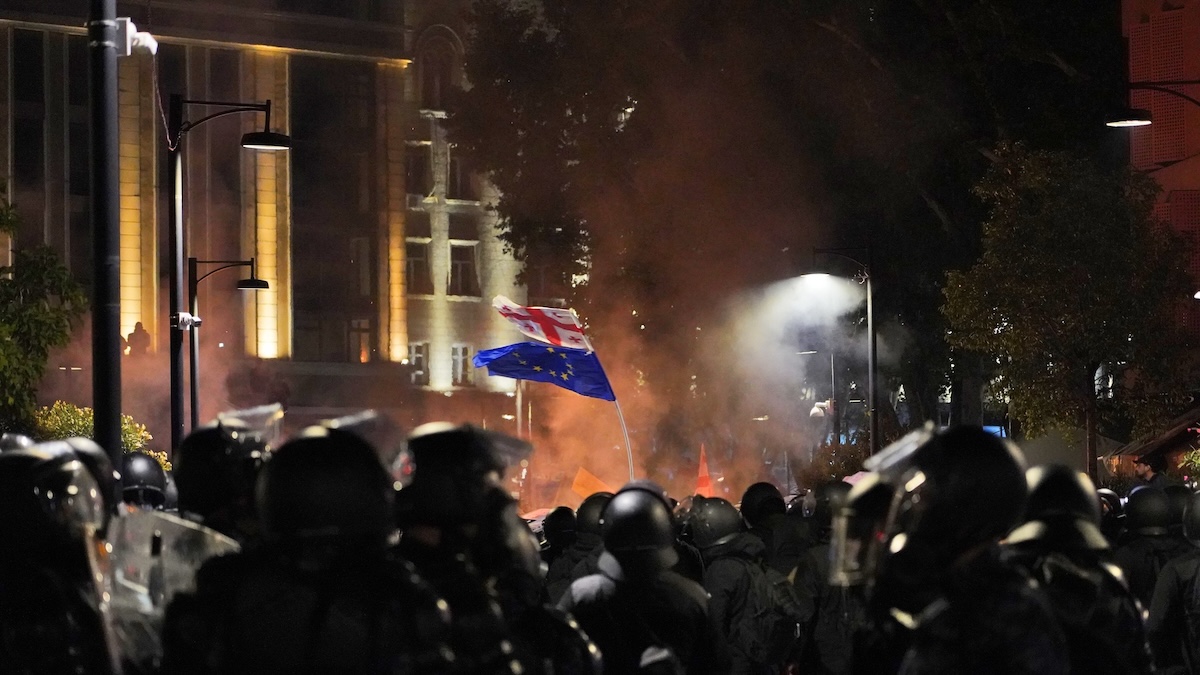
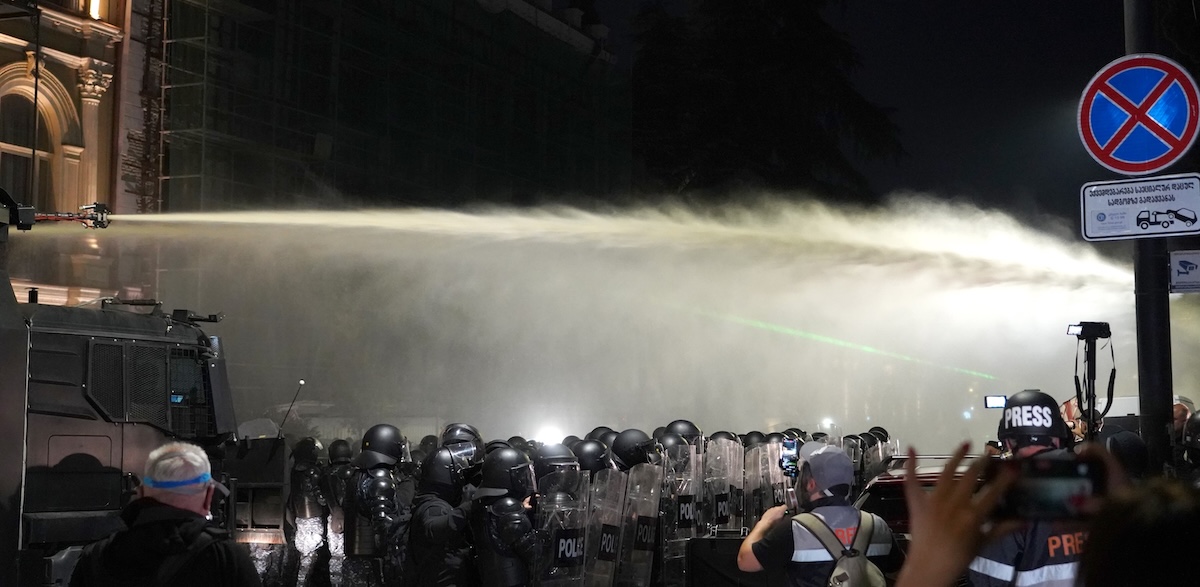
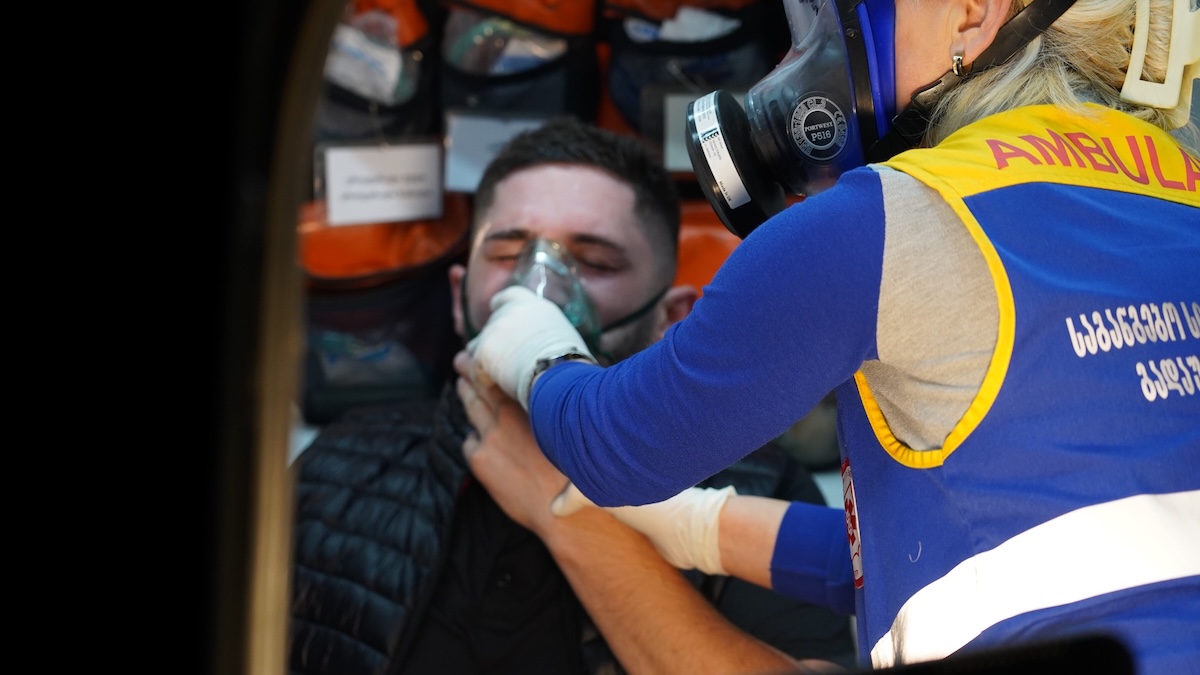
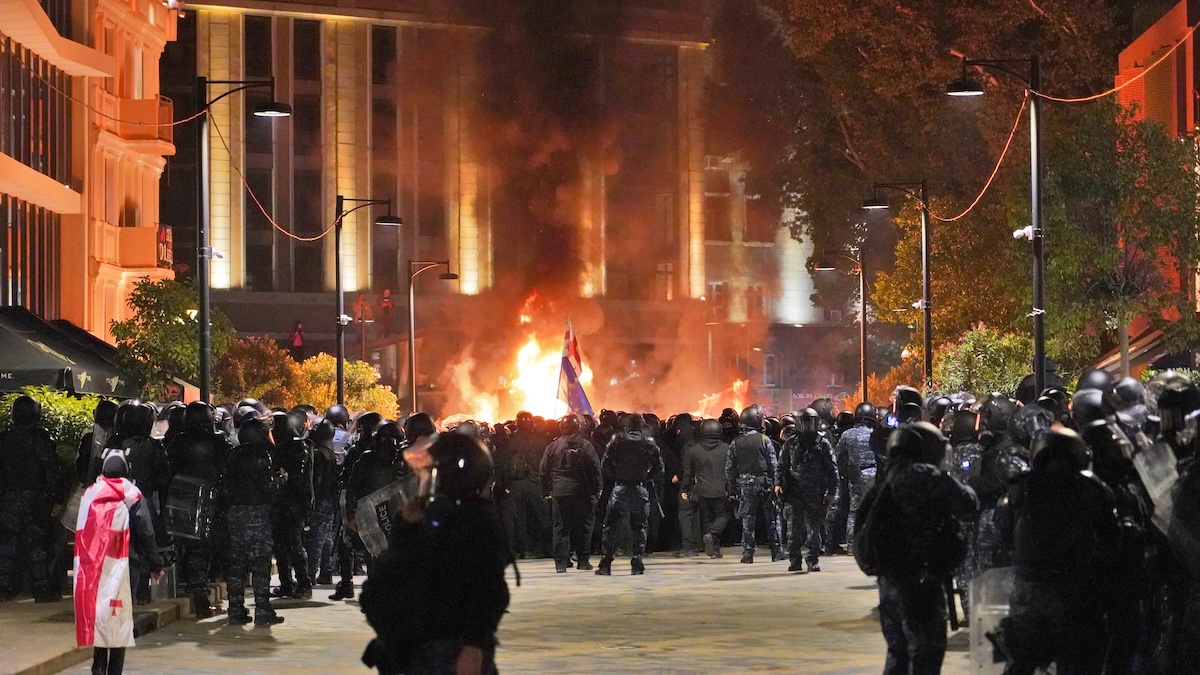
In response, police used water cannons and tear gas. Parts of the barricades erected by protesters caught fire.
Late last night, police detained members of the protest’s organising committee — opposition figures Paata Burchuladze, Murtaz Zodelava, Irakli Nadiradze, Paata Manjgaladze and Lasha Beridze.
According to the Interior Ministry, those detained are charged with calling for the violent overthrow of the constitutional order and organising and leading acts of group violence. These offences carry prison sentences of up to nine years.
The rally on Rustaveli Avenue gradually dispersed overnight. Police used water cannons and tear gas on the avenue as well.
Government announces new wave of repression
Georgian Dream prime minister Irakli Kobakhidze said that 4 October marked “the failure of a fifth attempt to stage a ‘National Maidan’ in Georgia” and warned that “many people should expect punishment”:
“Several people have already been arrested — first and foremost, the organisers of the attempted coup. I want to remind everyone that no one will go unpunished. We have more resources to identify the perpetrators than we did last year or the year before. Many people should therefore expect to be punished for the violence they committed against the state and law enforcement. The law will be applied to them very strictly,” Kobakhidze said.
Interior minister Gela Geladze also announced further arrests.
Kobakhidze commented on the election results as well, claiming that the ‘deep state’s’ plan to replace the United National Movement with Lelo and For Georgia had failed.
“These two parties are practically finished,” he said, pointing to their poor performance in the 4 October local elections and Georgian Dream’s “convincing victory.”
On 5 October, Kobakhidze told a press briefing that the government also planned to “neutralise” what he called members of the “collective United National Movement”, including:
“All foreign agents who are unsettling this country”;
“Extremist groups operating under the instructions and with the funding of foreign intelligence services, including one of the universities hijacked by Saakashvili’s family” (a reference to the University of Georgia, which Georgian Dream has accused of promoting radicalism);
Organisations such as Fari and Ertoba, which he also labelled “extremist groups.”
Political reactions
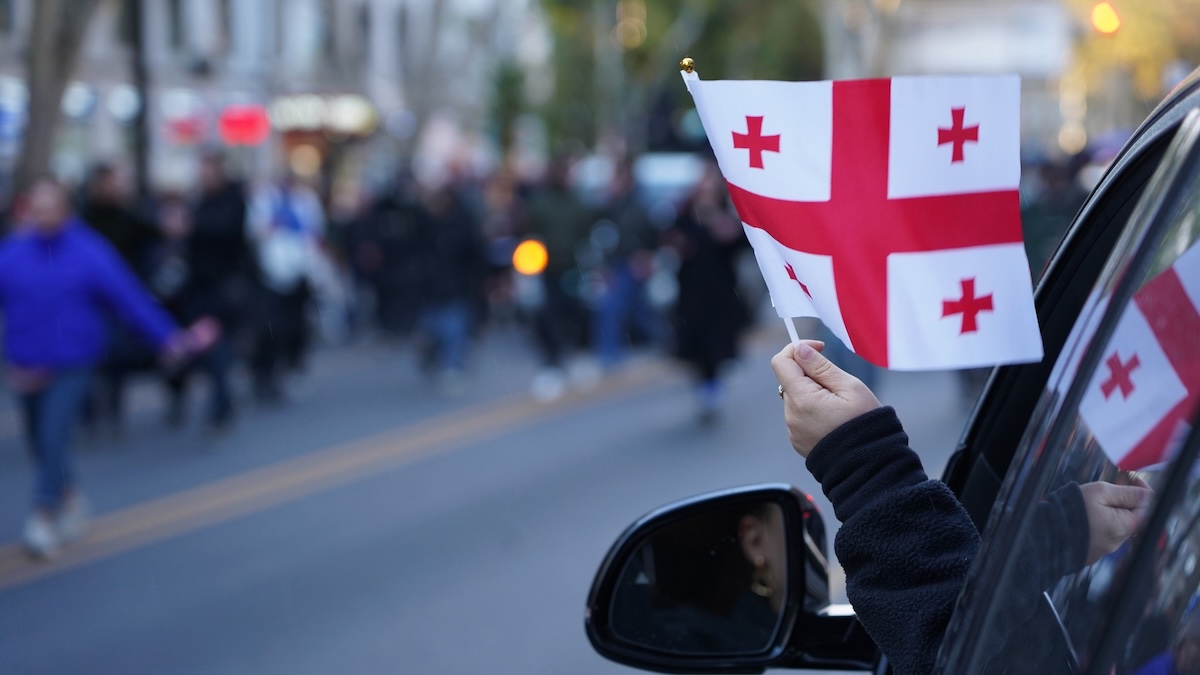
Opposition politicians announced that peaceful demonstrations on Rustaveli Avenue, where thousands gathered yesterday waving Georgian and EU flags, would continue today.
Former president Salome Zurabishvili, who has become a symbolic opposition figure, sharply condemned the incident at the presidential palace:
“This farce of storming the presidential palace could only have been staged by the regime itself, to discredit the Georgian people’s 310 days of peaceful protest,” she wrote on X.
The Coalition for Change said in a statement that it considered setting a “revolution deadline” unjustified and that the struggle must continue:
“We believe that victory lies in dismantling the regime, not in creating inflated expectations for a specific date. This dismantling will come through constant isolation of the authorities, non-cooperation, non-recognition, increased international pressure and, above all, continuous protest — including strengthening the protest base on Rustaveli Avenue. Today, as always, we’ll meet there at the usual time.”
The Federalists party also called on its supporters to join the demonstration:
“Tonight at 8 p.m., the Federalists will be on Rustaveli, at our usual spot. The protest continues,” wrote party leader Tamar Chergoleishvili on social media.
The political platform Freedom Square said the struggle must go on and that it had “a clear strategy” for continuing it. It criticised the 4 October organisers for “acting against the interests of the protest and endangering demonstrators.”
“We believe there is no place for irresponsibility in our shared resistance or in Georgian politics. Once again it has become clear that, for democratic resistance and protest to succeed, new civic and political organisations and leaders must take the lead. We are not afraid of Georgian Dream’s future repressions — we have a clear strategy for success and we believe in final victory,” the statement read.
Commentary
Political analysts agree that 4 October may deepen frustration among opposition-minded voters, intensify the crisis and lead to an escalation of government repression.
They note that a country once seen as a post-Soviet “success story” is now drifting further from Europe and facing growing internal isolation.
Georgian Dream retains full control of power but is losing public trust. With the opposition unable to fight through institutions, the streets have become the only remaining space where dissent can still be expressed.
Tamta Mikeladze, head of the Social Justice Center:
Tamta Mikeladze
“Opposition forces pursued two different political strategies — and both failed. That was predictable.
It was clear from the start that a fragmented opposition, with one part taking part in the elections while the other worked against it, would struggle to succeed even in the big cities.
The idea of a so-called ‘peaceful revolution’ launched and ended on 4 October by a few eccentric leaders was absurd, unserious and dangerous from the very beginning. These attempts were bound to trigger harsher repression, the marginalisation of the protest movement and a deeper sense of political nihilism — and it didn’t take great intellect or long political experience to foresee that.
A de-institutionalised, repressed, exhausted and fragmented opposition is now entering an even deeper crisis. Still, this may finally open space for a genuine discussion, as the lack of strategic thinking might push people to reflect and rethink their approach.
In short, everything ended badly — or rather, just as previous opposition efforts in Georgia have ended, until new and powerful political forces emerged.
Such forces could come from geopolitical developments or from major reconfiguration and renewal within our political spectrum. At this point, we have neither.
Now the political class, civil society and the media must think seriously about what kinds of strategies are needed for the future. We are entering a very harsh winter — one that, unfortunately, will not coincide with the calendar.
At the same time, it would be wrong to say the political regime is strong and confident. It remains deeply vulnerable — geopolitically, politically and morally.
Perhaps the most inspiring thing today was the resilience and endurance of our people, their ability to sustain peaceful resistance for so long.
This gives us hope that democratic energy and discipline among Georgians will not easily fade — but they must be protected from new waves of frustration.”