
Following the lead of the European Union and the United Kingdom, the Canadian government has also reduced the price cap on Russian crude oil to $47.60 per barrel in response to the ongoing conflict in Ukraine, Azernews reports.
Month: September 2025
Tbilisi’s responses to the EU on fulfilling conditions for retaining visa-free travel claim “strong loyalty to European integration,” Radio Free Europe/Radio Liberty’s Georgian Service reported, citing a Brussels source as saying that the progress report failed to address EU concerns.
Tbilisi had until August 31 to report to Brussels on progress regarding human rights and reform-related conditions set by the EU, which Georgia must meet to preserve the visa-free regime its citizens have enjoyed with the bloc since 2017.
According to RFE/RL, which said it had seen the 55-page document, Georgia’s Foreign Ministry sent its letter to the European Commission at the deadline. The sender was identified as Georgia’s Ambassador to the EU, Vakhtang Makharoblishvili, and the addressee as Beate Gminder, Deputy Director-General at the Commission’s DG Migration and Home Affairs.
“In addition to faithfully fulfilling the set criteria, the Georgian government has implemented several additional initiatives,” RFE/RL quoted the letter in Georgian, with the letter reportedly adding that the said steps were taken “together with reforms in rule of law, good governance, and anti-corruption, are recognized by international assessments.”
The letter reportedly claims that since the beginning of 2025, Georgia has carried out “a series of measures to ensure civic and political rights, including freedom of expression, access to information, equality, inclusive protection and development, as well as public order and the rule of law.”
RFE/RL said Georgian Dream claimed its progress and “positive results” using little-known international indexes, claiming, for example, that in the Good Governance Index, Georgia ranks 42nd out of 120 countries, ahead of several EU members, including Hungary, Bulgaria, and Romania.
The letter defends the two laws that the EU asked Tbilisi to repeal as part of visa-free conditions, including the Foreign Agents Law (Law on Transparency of Foreign Influence) and the anti-LGBT legislation (Law on Family Values and Protection of Minors), as a “sovereign right to regulate internal affairs.”
RFE/RL said the letter claims the two laws were “aimed at strengthening democratic accountability, protecting national identity, supporting social unity, and strengthening institutional transparency,” and that they “fully correspond to Georgia’s sovereign right to regulate its internal affairs in accordance with the constitution and democratic processes.”
The letter, as cited by the outlet, further contrasts “elite” NGOs with “sincere” NGOs. GD authorities reportedly argue that the former’s refusal to register under the “transparency registry” necessitated the adoption of another such law – the Georgian version of the Foreign Agents Registration Act (FARA), and pledge state support for the latter, “sincere” group of NGOs. The letter also claims FARA was adopted to counter the “malign use of foreign funds…in support of a revolutionary scenario.” Additionally, the letter reportedly highlights the GD government’s “protection of journalists.”
“They have failed to respond to the concerns we have expressed,” an anonymous source from Brussels told RFE/RL, adding that the claims in the letter are not supported with arguments.
Tbilisi’s claims follow turbulent months of protests and repression, during which the Georgian Dream’s one-party parliament passed a series of repressive laws against freedom of expression and association, targeted media and civil society with inspections and criminal probes, jailed protesters and opposition leaders, and left police violence against demonstrators and journalists – particularly in the early weeks of protests – unpunished.
NOTE: All quotes are based on RFE/RL’s Georgian Service report in Georgian and may not necessarily reflect the original English wording of the letter.
Also Read:
Tbilisi’s responses to the EU on fulfilling conditions for retaining visa-free travel claim “strong loyalty to European integration,” Radio Free Europe/Radio Liberty’s Georgian Service reported, citing a Brussels source as saying that the progress report failed to address EU concerns.
Tbilisi had until August 31 to report to Brussels on progress regarding human rights and reform-related conditions set by the EU, which Georgia must meet to preserve the visa-free regime its citizens have enjoyed with the bloc since 2017.
According to RFE/RL, which said it had seen the 55-page document, Georgia’s Foreign Ministry sent its letter to the European Commission at the deadline. The sender was identified as Georgia’s Ambassador to the EU, Vakhtang Makharoblishvili, and the addressee as Beate Gminder, Deputy Director-General at the Commission’s DG Migration and Home Affairs.
“In addition to faithfully fulfilling the set criteria, the Georgian government has implemented several additional initiatives,” RFE/RL quoted the letter in Georgian, with the letter reportedly adding that the said steps were taken “together with reforms in rule of law, good governance, and anti-corruption, are recognized by international assessments.”
The letter reportedly claims that since the beginning of 2025, Georgia has carried out “a series of measures to ensure civic and political rights, including freedom of expression, access to information, equality, inclusive protection and development, as well as public order and the rule of law.”
RFE/RL said Georgian Dream claimed its progress and “positive results” using little-known international indexes, claiming, for example, that in the Good Governance Index, Georgia ranks 42nd out of 120 countries, ahead of several EU members, including Hungary, Bulgaria, and Romania.
The letter defends the two laws that the EU asked Tbilisi to repeal as part of visa-free conditions, including the Foreign Agents Law (Law on Transparency of Foreign Influence) and the anti-LGBT legislation (Law on Family Values and Protection of Minors), as a “sovereign right to regulate internal affairs.”
RFE/RL said the letter claims the two laws were “aimed at strengthening democratic accountability, protecting national identity, supporting social unity, and strengthening institutional transparency,” and that they “fully correspond to Georgia’s sovereign right to regulate its internal affairs in accordance with the constitution and democratic processes.”
The letter, as cited by the outlet, further contrasts “elite” NGOs with “sincere” NGOs. GD authorities reportedly argue that the former’s refusal to register under the “transparency registry” necessitated the adoption of another such law – the Georgian version of the Foreign Agents Registration Act (FARA), and pledge state support for the latter, “sincere” group of NGOs. The letter also claims FARA was adopted to counter the “malign use of foreign funds…in support of a revolutionary scenario.” Additionally, the letter reportedly highlights the GD government’s “protection of journalists.”
“They have failed to respond to the concerns we have expressed,” an anonymous source from Brussels told RFE/RL, adding that the claims in the letter are not supported with arguments.
Tbilisi’s claims follow turbulent months of protests and repression, during which the Georgian Dream’s one-party parliament passed a series of repressive laws against freedom of expression and association, targeted media and civil society with inspections and criminal probes, jailed protesters and opposition leaders, and left police violence against demonstrators and journalists – particularly in the early weeks of protests – unpunished.
NOTE: All quotes are based on RFE/RL’s Georgian Service report in Georgian and may not necessarily reflect the original English wording of the letter.
Also Read:
The water level in the Caspian Sea is projected to continue falling over the next three to five years, according to Igor Shumakov, head of Russia’s Federal Service for Hydrometeorology and Environmental Monitoring (Roshydromet). He made the remarks at a session of the Coordinating Committee on Hydrometeorology of the Caspian Sea (CASPCOM), held in St. Petersburg.
EU-Georgia visa-free regime
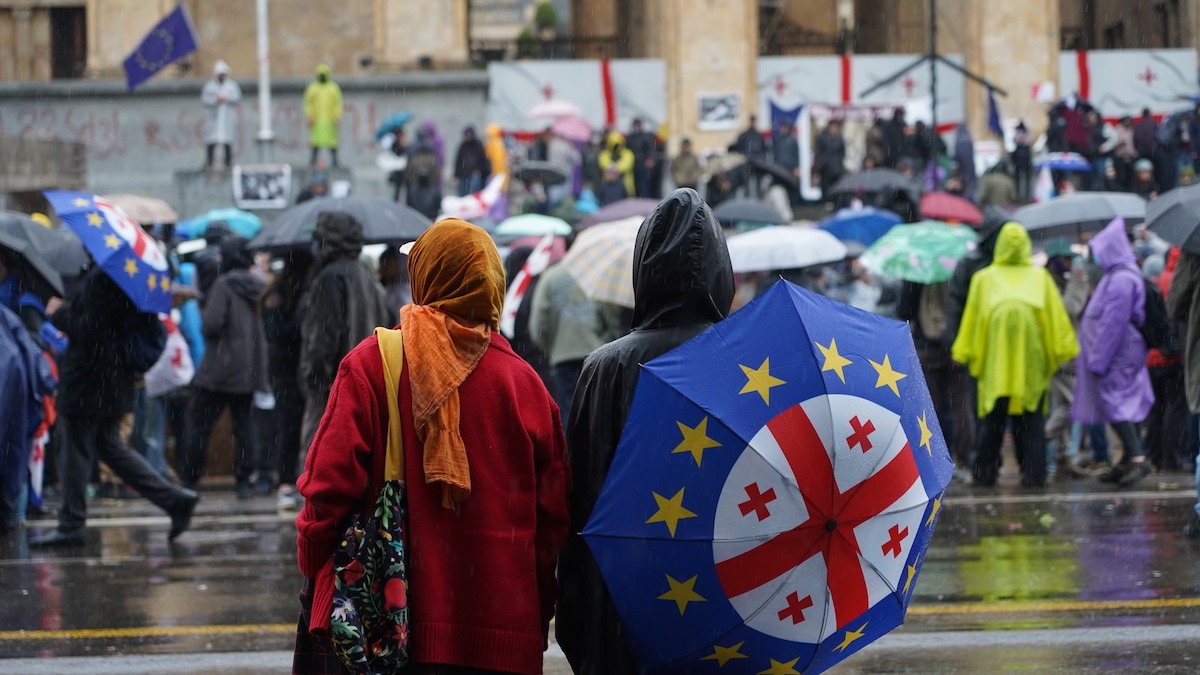
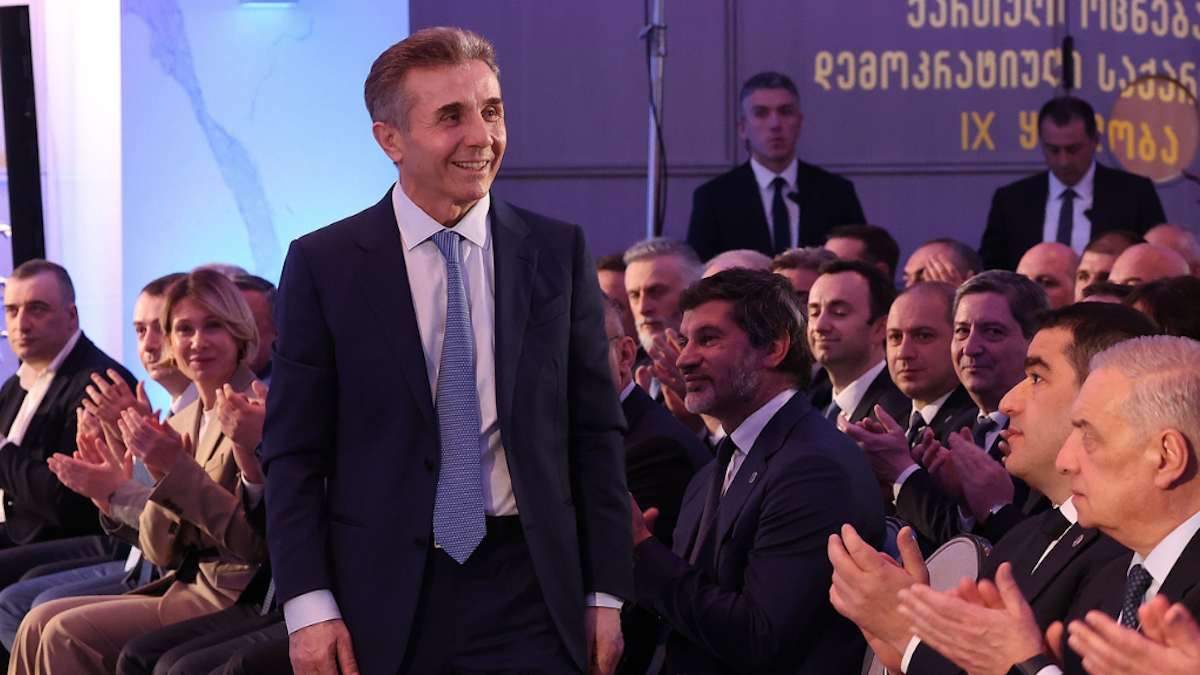
According to a survey by the Caucasus Research Resource Center (CRRC), if the EU scraps Georgia’s visa-free regime, 51% of respondents would blame Georgian Dream and its leader Bidzina Ivanishvili.
Only 13% would hold the EU responsible, while 5% would blame the opposition.
The poll also found that 78% of Georgians believe losing visa-free travel with the EU would harm the country’s citizens.
“Although young people, women and residents of the capital are more likely to say that ending visa-free travel would be a negative factor for Georgian citizens, public opinion on the issue is largely unanimous, with no major differences between demographic groups,” the survey noted.
According to the study, public support for Georgia’s EU membership remains high, with 78% of respondents in favour of joining the bloc.
Support is even stronger among young people aged 18–34, at 86%. Backing for EU integration is slightly lower in older groups but still overwhelming: 76% among those aged 35–54 and 71% among those over 55. Support is higher in the capital than in the regions, while views are almost identical between men and women.
The telephone survey was conducted by CRRC for the Civil Society Foundation with financial support from the EU to assess public attitudes towards the European Union and visa liberalisation.
The poll was carried out on 8–12 August 2025 using computer-assisted telephone interviews (CATI). A total of 1,333 respondents were interviewed through a randomly generated sample of phone numbers. The results are representative of Georgia’s adult Georgian-speaking population, with a margin of error of 1.56%.
EU-Georgia visa-free regime