
The upcoming international cargo airport, scheduled to open in 2027 as part of the Alat Free Economic Zone, is expected to transform Azerbaijan into one of Eurasia’s main logistics centers, Azernews reports.
Day: September 23, 2025
Уголовное дело против электорального аналитика Ивана Шукшина о клевете возбудили вскоре после того, как он опубликовал материал о рекордном вбросе голосов за Владимира Путина на президентских выборах 2024 года
smarturl.click/oVvdj— Радио Свобода (@SvobodaRadio) Sep 23, 2025
Georgian Dream–elected President Mikheil Kavelashvili, together with GD Minister of Foreign Affairs Maka Botchorishvili, is attending the 80th session of the United Nations General Assembly in New York, where they arrived on September 22.
Kavelashvili will deliver a speech to the General Assembly, expected to be in Georgian. He is also scheduled to meet with the UN secretary-general and hold several high-level meetings. In addition, Kavelashvili has been invited to attend an official dinner hosted by U.S. President Donald Trump and First Lady Melania Trump.
“Altogether, this week is extremely important,” Georgia’s Ambassador to the United States, Tamar Taliashvili, told Georgian reporters. “The key words throughout this week will be peace, international order, and stability.”
The Georgian delegation also includes Davit Bakradze, the country’s permanent representative to the UN, and Ketevan Kvinikadze, head of Kavelashvili’s presidential administration.
On September 22, Georgia joined 50 countries in condemning Russia’s violation of Estonian airspace in a joint statement delivered at a UN Security Council meeting.
Maka Botchorishvili’s Meetings
During the visit, Georgian Dream Foreign Minister Maka Botchorishvili held several high-level meetings, including with her counterparts from Slovakia, Vietnam, Greece, and the United Arab Emirates.
Meeting with the Slovak Foreign Minister
Botchorishvili met with her Slovak counterpart, Juraj Blanár, the Georgian Foreign Ministry reported on September 22, noting the two discussed cooperation in both bilateral and multilateral formats.
“The special attention was paid to the importance of friendly relations and political dialogue between the countries, as well as the perspectives of trade and economic cooperation,” the MFA press release said. It added that the ministers also discussed the regional security environment and challenges, with a focus on the situation in Georgia’s occupied territories.
The press release also said the talks touched on Georgia’s European and Euro-Atlantic integration, noting that “Maka Botchorishvili outlined Georgia’s foreign policy priorities and thanked her Slovak counterpart for his support.”
“On the sidelines of UNGA80, had a meaningful conversation with Georgia’s good friend Slovak FM Juraj Blanár. We discussed strengthening Georgia-Slovakia bilateral relations & the importance of Georgia’s EU path. Slovakia’s consistent and principled support for Georgia is deeply valued,” Botchorishvili posted on X:
Meeting with the Vietnamese Foreign Minister
Botchorishvili also met with Le Hoai Trung, acting foreign minister of Vietnam, the Georgian Foreign Ministry reported on Sept. 22.
“During the meeting, the sides discussed possible directions of cooperation in various fields, especially in trade, investment, tourism and logistics,” the ministry’s press release said. The ministry also stressed the planned opening of a Georgian Embassy in Vietnam “in the near future,” which it said would “support the development of relations between the two countries.”
“I had a productive meeting with my Vietnamese counterpart Le Huai Trung. We reaffirmed our commitment to advancing Georgia-Vietnam relations and explored new ways for cooperation in trade, economy, culture & beyond. I look forward to seeing our partnership grow stronger,” Botchorishvili wrote on X:
Meeting with the Greek Foreign Minister
Botchorishvili also met with her Greek counterpart, Giorgos Gerapetritis, the Georgian Foreign Ministry reported on Sept. 22, saying the sides “discussed cooperation between the two countries as well as their historic ties and emphasized the importance of strengthening political dialogue.”
“During the meeting, they discussed regional security challenges, including in the European security context, and highlighted the importance of cooperation,” the ministry’s press release said. “The talks also touched on Georgia-EU relations and the necessity of dialogue in the European integration process.”
Botchorishvili thanked her counterpart for “firmly supporting” Georgia, with both sides expressing readiness for future cooperation, according to the ministry.
“Delighted to meet Greece FM George Gerapetritis during UNGA80. We discussed key aspects of our bilateral relations rooted in millennia-old ties and deep cultural closeness. We underlined the importance of Georgia’s EU path and the essential role of dialogue in this process,” Botchorishvili wrote on X.
“On EU-Georgia relations, Greek FM stressed that Georgia’s European perspective must be secured, while emphasizing the importance of full respect of EU acquis,” the Greek Foreign Ministry wrote on X.
Meeting with UAE Foreign Minister
Maka Botchorishvili also met with Abdullah bin Zayed Al Nahyan, the United Arab Emirates foreign minister and deputy prime minister, though the Foreign Ministry has not yet issued an official press release about the meeting, which came days after she attended Bidzina Ivanishvili’s meeting with the UAE president in Tbilisi.
“Delighted to meet UAE Deputy PM H.H. ABZayed. We’re committed to developing strong relations with UAE, especially in the economic field. Attracting UAE investments will further strengthen cooperation between Georgia-UAE and benefit the broader region,” Botchorisvhili wrote on X.
No meetings have yet been reported involving Mikheil Kavelashvili.
More to Follow…
Also Read:
- 27/09/2024 – Georgian Delegation at the 79th UNGA Session – Key Takeaways
- 26/09/2024 – PM Kobakhidze’s UNGA Speech Does Not Mention Russia While Addressing Occupation
- 23/09/2023 – PM Garibashvili’s Speech at 78th UNGA Session
- 22/09/2023 – Georgian Delegation Headed by PM Garibashvili Attends UNGA Session
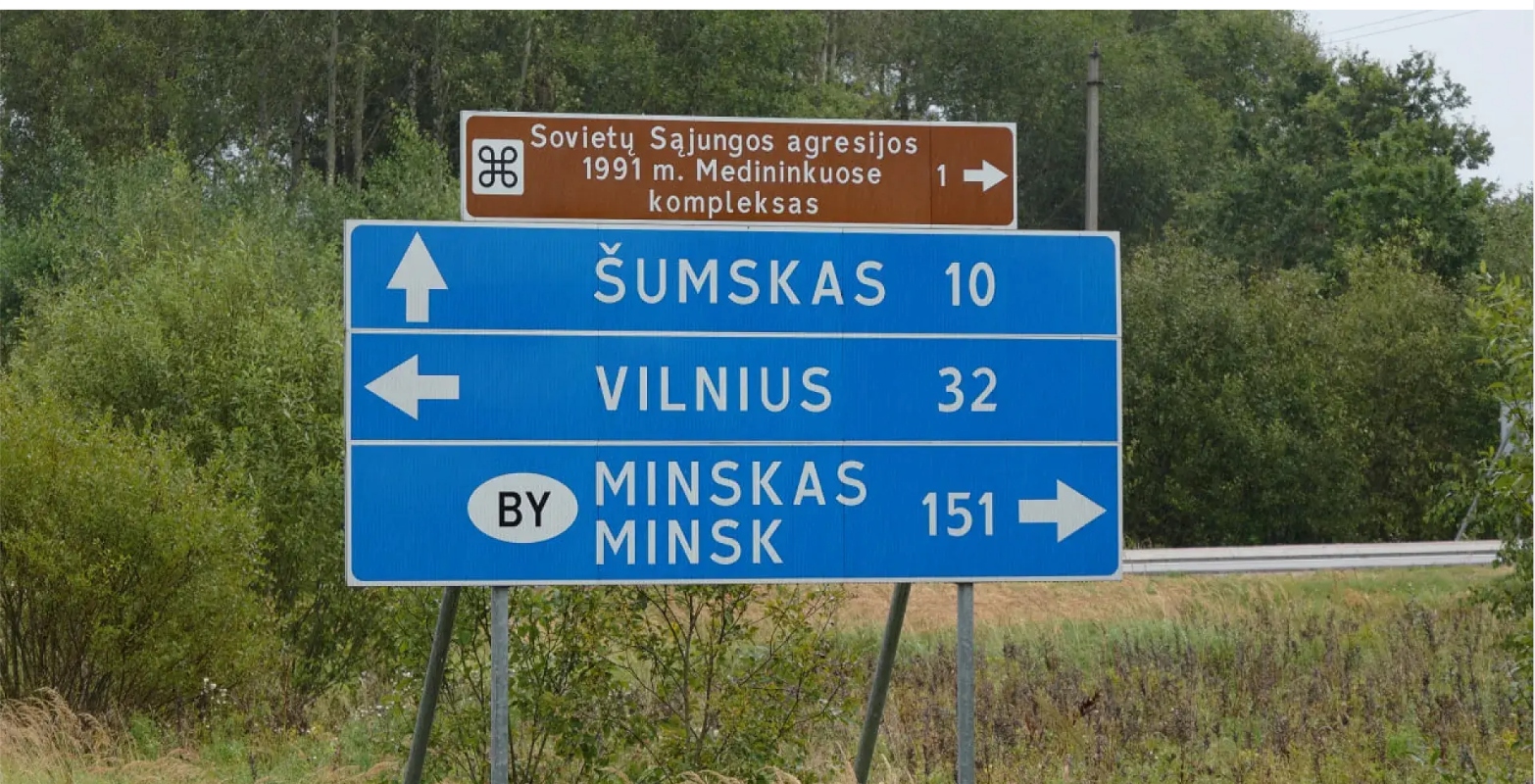
Reaction to Zapad drills in Lithuania
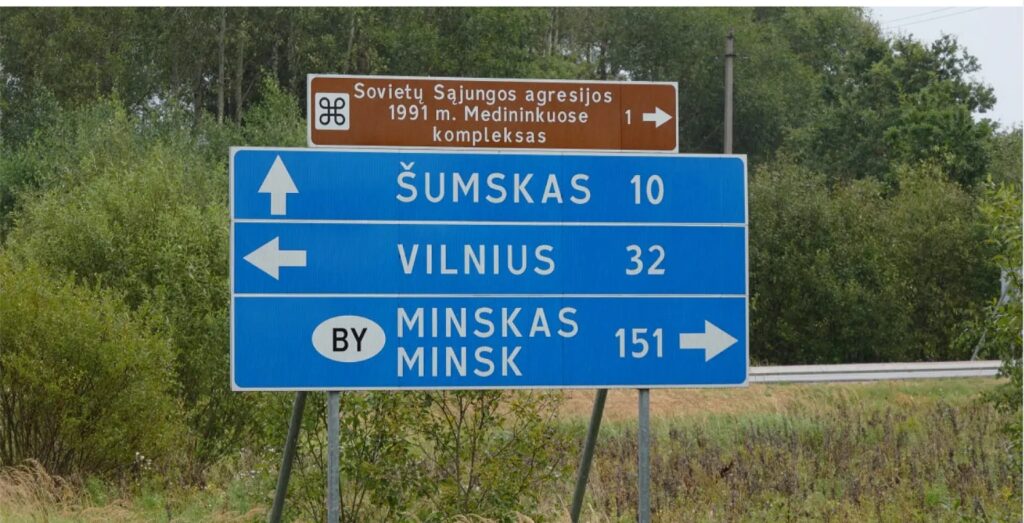
Yesterday I stood 600 metres from the Belarusian border — on the Lithuanian side. Google Maps said there should be a bar there, and I thought a border bar would be the perfect place to talk to locals about the military drills that had just begun in Belarus.
But there was no bar (if you’re ever in Lithuania — don’t follow the marker “Bar KFC”). Instead, we found only a small farmhouse. Its windows look straight out onto Belarus, less than a kilometre across the field — and no, the residents did not want to talk about war.
With no one to talk to at the “bar”, we turned the car towards the nearest shop. We weren’t the first to sour the shopkeepers’ mood with uncomfortable questions. Just before us, a passing Pole had brought up the war.
“He thought we were already being tortured and killed here. Said he imagined tanks were already standing nearby. But there’s nothing — it’s quiet and calm,” the shopkeepers assured us.
While we talked, our driver bought a slice of šokoladinė dešra — the Lithuanian version of Belarus’s chocolate salami.

“At home we make the same kind of salami,” I say. “Are there many Belarusians living here?”
“Half the village. There used to be no border. Some went to school in Belarus but lived here. Many still have families on the other side. Maybe that’s why no one panics.”
“They just try to scare people. But why?”
Why did we unsettle Lithuanians with questions about war?
Perhaps I should explain why we came to Lithuania with such awkward questions in the first place. The reason is deeply personal.
Three years ago, I was on a bus from Minsk to Kyiv. My seatmate was heading on from Kyiv to Dnipro. She was very talkative, as nervous people often are. And she was nervous indeed: Dnipro was too close to the Russian border, and the news was full of warnings that Putin might go to war. I tried to reassure her with the same arguments Euroradio experts used for our listeners, adding a few of my own.
At one point she even asked me suspiciously whose Crimea was — probably because my last argument was something like: “Well, he isn’t crazy, is he?” That was in early February 2022.
A couple of months before the Russian–Belarusian drills Zapad-2025, Ukrainian media were already writing about them as manoeuvres unlike anything since 2022. So, on the day they began, I went to the Lithuanian–Belarusian border — to bring a little of the anxiety I once tried to ease on that Minsk–Kyiv bus, a month before the war in Ukraine began.
But Lithuanians living by the border reassured us (and themselves) with the very same words I had used back then: from “it makes no sense” to “they’re not madmen”. To be honest, they thought I was the one being crazy.
“Don’t wind people up. Fighting Belarusians would be absurd”
At the petrol station nearest the border, no one wanted to talk about war either.
“We try to keep positive,” the cashier shrugged, and we filled up to drive on to Medininkai.
Locals call it “Medininkas”. It’s a small village right on Lithuania’s border with Belarus. There are two shops, a school that isn’t working at the moment, and a library that is also closed for now. The seniūnija (like a local council office) was empty too — everyone had gone off to the harvest festival. Others were in Vilnius at work. A few villagers we did manage to catch off guard with questions about the war were more open.
“These drills don’t bother me at all,” said one woman. “Are you worried?”
“No,” her friend replied. “We’ve lived another day, that’s good enough.”
“Everyone here has relatives in Belarus. I was born there myself, near Ashmyany.”
“I was born in Belarus too. But I married here and stayed in Lithuania.”
“And how do people treat Belarusians now?”
“Why would we fight? What would we fight over? We’re neighbours. We went to visit our relatives there, and everyone treated each other just fine.
There’s no need to wind people up, no need to fuel conflict. Fighting Belarusians would be absurd”.
On the way out of Medininkai we stopped at another little shop and put the blunt question to a local: will there be a war?
“There won’t! I live right there by the border. There won’t be any attack. He has nothing against Lithuania. That’s my opinion. And no one here expects an attack.”
From Medininkai it’s a 30-minute drive to Vilnius. Many commute to the capital for work. But that also means the Belarusian border is only half an hour from Lithuania’s capital. And in Vilnius, the mood is very different from Medininkai.
“At home we talk about who would leave and who would stay”
In Vilnius, the sun is shining and tourists stroll the old town. We stop one of them — he is from southern Europe. His company had 120 employees before the war in Ukraine.

“There are fewer of them now,” our interlocutor says. “You know what I mean?”
And he doesn’t believe that Russia’s ambitions end in Ukraine.
In the family of a young Lithuanian woman, Ramutė, they already talk about what to do if something starts. Who would leave Lithuania? Who would stay? These have become ordinary topics of conversation.
“I can only keep an eye on things, see what’s happening. But I can’t control what goes on around me. And if I can’t control the situation, why should I worry?”

“But I can make plans: what I should do, what my family should do. I think that’s sensible, and it helps me not to stress.”
In Vilnius’s old town, souvenirs have been sold from the same spot for many years. It’s still morning, and one of the vendors, Jonas, has just opened his stall. He lays out knitted socks and mittens — a traditional Lithuanian souvenir. He has been doing this for 33 years. Tourists from around the world walk past, and he insists that none of them are thinking about war.
“No, no,” he says. “People live their lives peacefully here, we’re not afraid. No one talks about war.”
“And when drones recently flew into Poland — did people here worry about that?”
“Not really, only in the media. But our city is actually very peaceful.”
A young Lithuanian, Dontas, sees things very differently. He is angry at his government, at Poland, and at NATO and Europeans in general.

And he is convinced that no one will help Lithuania if Russia attacks from Belarus — because, he says, people in Europe live too comfortably and won’t want to give that up.
“It makes me sad that we do everything so slowly. The government talks a lot but doesn’t do enough. And it sets the wrong example for people.
Just the other day there was a drone strike on Poland. What did the politicians do? They talked, and talked, and talked again. And in that case, what can ordinary people do if politicians don’t react the way they should?
The strike on Poland was serious. And so what? Just more talk, whatever Russia does.”
— What will you do if the war starts?
“You never know. Every day someone says the war might start in two years, in five, in ten. Which means it could be at any moment. My plan is just to live. What else can I change? If war begins here, it will continue in Poland and then, maybe, in Germany.”
We leave the old town and head down Gediminas Avenue, home to most of the brand-name shops. At a small cosmetics store, I’m invited in to look at a new face serum — but instead I ask about preparations for war.
“Oh no!” one of the staff laughs, pointing to her colleague. “She’s been talking all morning about the drills in Belarus. But it’s my birthday today, and if I have to hear about it again, I’ll just walk out!”
Then we stop a young Lithuanian mother with a pram — Marta. Some of her friends tried to leave Lithuania for the whole summer, thinking war might break out any moment.
“I have a very diverse circle of friends, and some of them simply refuse to think that war is possible at all. They say, we have NATO, we’re safe. Do I myself believe in NATO? Yes — it’s what I try to hold on to.”
But Inga doesn’t believe NATO would protect them.

“NATO?!” she exclaims, sounding almost surprised, as if it were odd I asked the question at all. “Come on, with or without it, we’ll be on our own. And to be honest, I don’t know if we Lithuanians are ready for the worst-case scenario.”
A puppy plays with the water fountain on the square. Its owner believes that for the holidays she should at least have five litres of drinking water at home, plus some long-lasting food. Just in case. She might also take out some cash.
“I worry because you never know what might happen with him [Vladimir Putin, — Euroradio]. I feel like he’s testing us, checking how prepared we are. So of course I worry, because we’re living in uncertainty.
“But what can I do? I leave it in the hands of the universe.”
A young Lithuanian man, Adam (name changed), has much the same approach. We talk in the park near Gediminas Tower. The weather feels far too good for war, but we’re so caught up in sketching dark scenarios that we both jump at the whistle of a child’s toy train passing by.

Adam works in film industry. He has no idea how he could be useful in wartime, but leaving the country feels wrong to him. What he would do if a real siren sounded, he doesn’t know.
“I have friends who volunteer in Ukraine, and they’re always talking about a possible invasion. Many others try to keep their distance. Some say you have to stay and defend the country, others say you should leave. I know some guys in IT who spend their weekends training with the Lithuanian Riflemen’s Union.
On the streets, there’s no sense that people are preparing for anything. But then you open your inbox and find an advert for a first aid course.“
Reaction to Zapad drills in Lithuania
“After the evacuation from Kyiv, I always keep a full tank in my car”
Belarusian photographer Vadim Zamirovski came to Vilnius from Kyiv in 2022. He lives here with his wife and two small children. Before leaving Vilnius, we visit him at home.
Vadim makes tea, moves children’s toys out of the frame, and we sit peacefully on the terrace. But some of his friends left Vilnius for the duration of the Russian–Belarusian drills.
“When I called you in early February 2022, you weren’t planning to leave Kyiv,” I remind him.
“I remember. On the morning of 24 February, a friend’s call woke me. My first thought was: oh no, they’re about to cut the internet and I haven’t handed in my work. I jumped up and started finishing it. Then I heard the explosion — and that was enough to make me realise what was happening.”

“At first I didn’t plan to leave — I was a journalist, and I felt I had to work. It soon became clear that my Belarusian passport was no help in my work. And when my bank account was blocked, I realised I had to go.
“I was lucky: my family was in Minsk at the time. If they had been with me in Kyiv, evacuation would have been impossible. We had no car, my younger daughter was a month old, and with the chaos at the stations, there was no way we could have got out.”
Now Vadim has a car, and he always keeps the tank full.
“Of course, if something happens tomorrow, you won’t be able to refuel or buy tinned food. Everything has to be ready in advance.
“I don’t think the war will start now — I don’t think it will start in six months. But, in my view, I do think it will come. Have you noticed that in Russia they’ve just published a book called The History of Lithuania, with a foreword by Sergei Lavrov? I think all this is laying the ground.
“But I’m not a military analyst — and even an analyst couldn’t say. We don’t know what’s going on in Putin’s sick mind.”
And who does know what is going on in his head? Vadim says he will watch the embassies. As soon as they start evacuating staff, he will begin evacuating his family.
“As soon as that happens, we’ll get in the car straight away. Because the situation in Vilnius could be worse than in Kyiv: if the Russians try to block the Suwałki Gap, we’ll all be trapped here.”
Feofania Lvova, with the support of Medianetwork
Reaction to Zapad drills in Lithuania
“Xebermen” saytının rəhbəri, jurnalist Polad Aslanov 23 gün davam edən aclıq aksiyasını dayandırıb. Bu barədə onun həyat yoldaşı Gülmirə Aslanova məlumat verib.
Aslanovanın sözlərinə görə, buna səbəb Penitensiar Xidmət rəhbərliyi ilə görüşdən sonra tələblərinin yerinə yetiriləcəyinə dair vədlərin verilməsi olub.
Daha ətraflı: shorturl.at/LE36Q
— AbzasMedia (@AbzasMedia) Sep 23, 2025
Как заявила Санду, Москва тратит “сотни миллионов долларов”, пытаясь купить голоса молдавских граждан. Она также отметила, что в случае победы пророссийских сил Молдова может стать плацдармом для российских операций в Одесской области Украины
smarturl.click/5ZxDO— Радио Свобода (@SvobodaRadio) Sep 23, 2025