Day: September 20, 2025
Azerbaijan’s territorial defence
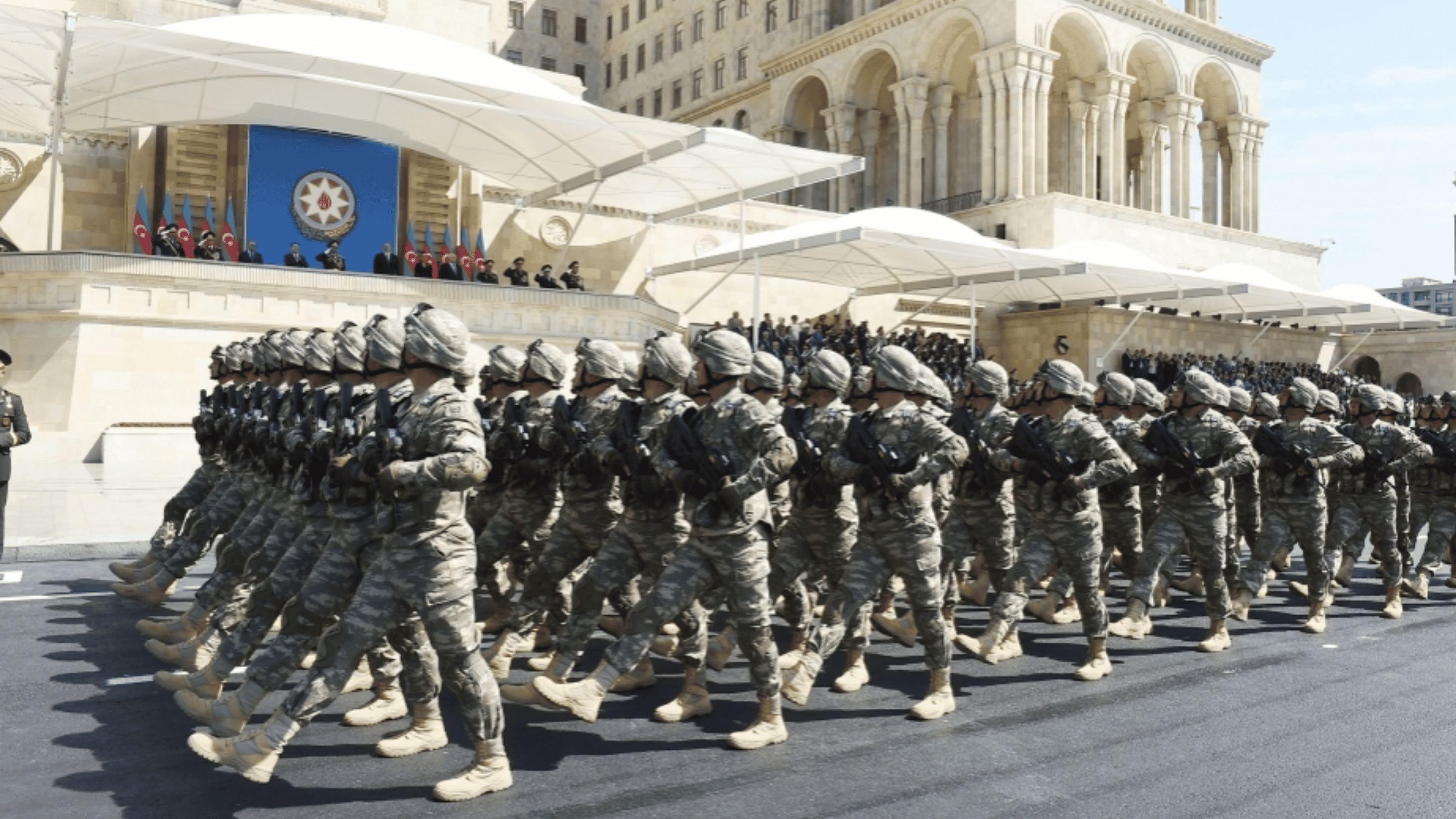
According to a study by the Caspian Research and Analysis Center, amendments to the “Law on Defence,” passed by parliament on 14 July and signed by the president on 11 August, expand the scope of the territorial defence model.
Since 1993, Article 17 has defined territorial defence largely as the responsibility of the armed forces and militarised structures. Under the new version, this task is to be carried out by the armed forces in coordination with state bodies, local self-governments and legal entities. In this way, a legal basis is created for the systematic involvement of civilian actors in the defence mechanism.
Although the amendment was adopted without public debate, its scale and logic raise questions: does the model represent a move towards “total defence” with democratic accountability, or is it about militarising the civilian sphere and deepening centralised control?
The Caspian Research and Analysis Center assesses that the amendment establishes a legal framework for a multi-actor defence model with a civilian component and opens the way towards “total defence.” Below are the key excerpts from the study.
What does the amendment change?
- Broader scope: Territorial defence will now involve not only the army, border and internal troops, but also state bodies, municipalities and legal entities in coordinated action.
- Filling a gap — partly: Since 1993, the article did not define the concept itself; the new version introduces a conceptual definition. However, the long-envisaged “Regulation on Territorial Defence” still has not been adopted — a key sub-document needed for the new system to function.
- Coordination in peacetime: The law “On Martial Law” already set out mobilisation mechanisms. The amendment points to preparing those resources in a coordinated way even in peacetime.
Regional context: a parallel wave
The study notes that Azerbaijan’s move is not unique in the region and coincides with similar trends from 2023–2025:
- Kazakhstan (30 June 2025): The law “On Territorial Defence” created a mixed civilian–military model, involving territorial troops, law enforcement, special units and self-defence groups. In emergencies, volunteers may be granted military status.
- Armenia (February 2025): “People’s self-defence units” were transformed into “Territorial Defence Forces,” formed voluntarily from reserves, with priorities on supporting the regular army and countering sabotage.
- Ukraine (2021 law; 2024 amendment): Within the “national resistance” framework, territorial defence is defined as a nationwide system of measures, with civilian–military cooperation emphasised as a key element.
These parallels reflect two logics: (1) adapting to hybrid threats and the need for rapid local response, and (2) tapping broader — and often cheaper, more flexible — mobilisation potential.
Conceptual framework: territorial defence – “total defence”
In international literature, territorial defence is usually described as a defensive, non-offensive concept, based on internal resistance and mobilisation. In the 21st century, NATO and especially Scandinavian practice has elevated this to the “total defence” model: the state, private sector, municipalities, civil society and the public sustain the “vital functions” of security within one network — leadership, internal security, supply chains, infrastructure, psychological resilience, and so on.
Azerbaijan’s new version, by formally bringing in civilian actors, is a step in this direction. The difference is that in Scandinavia and NATO practice, the system is built on parliamentary oversight, transparency and public debate, whereas in the post-Soviet space the process tends to be more militarised and centralised.
The question of governance: democratic oversight or centralisation?
Against the backdrop of Azerbaijan’s strong presidential model and limited political competition, the new framework could lead in two very different directions:
Positive scenario – democratic transformation:
- Genuine parliamentary control over budgets and operations;
- Adoption of the long-awaited “Regulation on Territorial Defence” with clear roles, rights/responsibilities, transparency and civilian oversight;
- Empowering municipalities and local communities with authority and resources;
- Open strategies for civil preparedness (supply security, critical infrastructure, cyber resilience);
- Personnel, training and reserve systems aligned with volunteerism, legal guarantees and humanitarian standards.
Negative scenario – authoritarian hardening:
- Militarisation of the civilian sphere and restrictions on information under the banner of “national security”;
- Broad powers concentrated in a non-transparent, centralised manner;
- Local self-government reduced to a token participant;
- Declining public trust and possible coordination collapse in a real war.
Ultimately, the same legal model can both strengthen deterrence and tighten political control — the decisive factor is the quality of governance.
Practical requirements: what is needed for the model to work?
- Regulatory framework: Adoption of a Territorial Defence Regulation, with clear rules on citizens’ status, training, insurance, compensation and responsibility.
- Parliamentary and public oversight: Monitoring of defence spending, implementation of local plans, and legal review of emergency decisions.
- Local planning: Sector-by-sector resilience plans (energy, water, transport, health, communications) for municipalities and legal entities.
- Civil preparedness and supply security: Stockpiles, dual-use production, redundancy of critical infrastructure and rapid recovery mechanisms.
- Cyber and information environment: Civil–military coordination against disinformation, with clear communication protocols.
- Volunteering and human rights: Ensuring participation is voluntary, training meets safety standards, and legal safeguards exist for civil–military interaction.
- Transparent communication: Clear public answers to “why, how, with whom”; trust is the real strength of defence.
Conclusion
The legal amendment signals a shift in Azerbaijan’s defence architecture towards a coordinated, multi-actor model involving civilians, and it opens the potential path towards “total defence.” Its synchronicity with similar regional steps suggests an intent to adapt to hybrid threats. Yet this model can deliver security and deterrence only if democratic institutions function properly, with parliamentary and public oversight, a transparent regulatory base and local capacity. Otherwise, the expanded mandate could instead lead to militarisation of the civilian sphere, deeper centralisation and declining effectiveness.