The European Union’s 19th sanctions package against Russia aims squarely at the Kremlin’s war machine, targeting energy revenues, financial networks, and military…
 The South Caucasus News - SouthCaucasusNews.com
BREAKING:
Saudi Arabia says if any country attack Saudi Arabia, it will use Pakistan’s nuclear weapon. pic.twitter.com/cQa42h0Cdv
— World Affairs (@World_Affairs11) September 19, 2025
#Putin will escalate. #Trump will ignore it.
Putin owns Trump. pic.twitter.com/eK9xz3erF5— JustFunStuff (@JustFunStuff53) September 19, 2025
x.com/aleksbrz11/status/1969…
FBI CIA Counterintelligence
#FBI #CIA #Counterintelligence
#Putin #US
#terrorism #sabotage
#SpecialIntelligenceOperations
Hybrid War #HybridWar
Do Putin’s threats include the US, and the acts of terrorism and sabotage as the Special Intelligence Operations?
google.com/search?q=Do+Putin…
Russian President Vladimir Putin’s threats and allegations increasingly include the United States and frame acts of sabotage and terrorism as “special intelligence operations” orchestrated by Western powers. This is part of a broader strategy of hybrid warfare, designed to sow fear and discord while providing plausible deniability. [1, 2, 3, 4]
Threats and allegations against the U.S. and WestSabotage: In early 2025, U.S. officials informed the Kremlin of a Russian intelligence plot to plant incendiary devices on cargo planes bound for North America. U.S. National Security Advisor Jake Sullivan and CIA Director Bill Burns explicitly warned Putin that America would hold Russia responsible for such sabotage, threatening to designate Russia as a state sponsor of terrorism.
Terrorism: Russian officials, including Putin’s spokesman Dmitry Peskov, have blamed the U.S. for orchestrating “terrorist attacks” against Russia. Following drone attacks on the Kremlin in May 2023, Putin himself blamed Western “special services”. This has been a recurring theme, with Moscow frequently denying its own involvement in sabotage while accusing Western nations of terrorism.
Election interference: U.S. intelligence agencies consistently report that Russia interferes in U.S. elections to damage opposing candidates, boost preferred ones, and stoke division. In 2024, the Department of Justice indicted individuals for being part of a covert Russian influence operation. The U.S. Treasury Department also sanctioned Russian entities for creating and spreading disinformation, including through the use of generative AI.
Critical infrastructure attacks: A March 2025 report from the Center for Strategic and International Studies (CSIS) details an escalating campaign of Russian-led sabotage against European and U.S. targets in Europe. These attacks include explosives, electronic attacks, and cutting undersea fiber-optic cables. In December 2024, German prosecutors announced charges against Russian nationals for allegedly surveilling a U.S. military base.
Military confrontation rhetoric: Putin and other Russian officials have used aggressive rhetoric and updated military doctrines to threaten the West.Nuclear threats: In November 2024, Russia lowered its threshold for using nuclear weapons, expanding scenarios to include a response to an attack by a non-nuclear state if it is supported by a nuclear power.
Missile deployments: In July 2024, Putin threatened to restart production of intermediate-range nuclear weapons and station them within striking distance of the West if the U.S. deployed long-range missiles to Germany. [2, 3, 4, 5, 6, 7, 8, 9, 10, 11, 12, 13, 14]Accusations as “special intelligence operations”
Russian state media, including official statements from its Foreign Ministry, often re-frame acts of sabotage and terrorism within the context of a wider conflict with the West.Mischaracterizing Ukrainian actions: Following reports of Ukrainian sabotage inside Russia, Russian Foreign Ministry spokeswoman Maria Zakharova framed Ukraine’s actions as a result of Western instruction, calling it international terrorism enabled by the West.
Framing domestic dissent: Russia uses a broader definition of “terrorism” that can blur into concerns about “extremism” and political dissent, allowing the state to categorize internal unrest or external provocations as an assault on national unity. [1, 15]Overall, Western intelligence assessments show that Russia’s hybrid warfare campaign, which includes sabotage and influence operations, is escalating and targets U.S. and European interests. Simultaneously, Russia dismisses these acts while accusing Western powers of sponsoring terrorism and interfering in its affairs. [16, 17, 18]
AI responses may include mistakes.
[1] mid.ru/en/foreign_policy/new…
[2] babel.ua/en/news/114456-nyt-…
[3] reuters.com/world/russia-acc…
[4] csis.org/analysis/russias-sh…
[5] lieber.westpoint.edu/sabotag…
[6] nbcnews.com/news/world/putin…
[7] aljazeera.com/news/2024/7/28…
[8] jpost.com/international/arti…
[9] usatoday.com/story/news/poli…
[10] en.wikipedia.org/wiki/Russia…
[11] reuters.com/world/us-suspend…
[12] home.treasury.gov/news/press…
[13] nbcnews.com/politics/nationa…
[14] recordedfuture.com/research/…
[15] brookings.edu/articles/putin…
[16] theworldmind.org/briefing-ar…
[17] newsweek.com/donald-trump-ad…
[18] youtube.com/shorts/exLWEUGtP…Putin threatens European leaders who voted for anti-Russia sanctions – Google Search google.com/search?q=Putin+th…
Following Russia’s escalation of its war against Ukraine, President Vladimir Putin has made various threats and hostile statements directed at European leaders and countries supporting sanctions against Russia. In September 2025, Europe responded to new Russian drone attacks and hybrid warfare tactics by proposing additional sanctions. [1, 2, 3]
Putin’s threats and hostile actions
Military and hybrid warfare:In September 2025, European leaders, including Czech Prime Minister Petr Fiala, accused Russia of escalating tensions and “testing how far it can go” by violating NATO airspace.
The accusations followed Russian drone incursions into Polish airspace in early September and Estonian airspace on September 19, which prompted NATO to launch its “Eastern Sentry” deterrence initiative.
The Atlantic Council stated that Russia has been engaged in a multifaceted hybrid warfare campaign against Europe since at least 2022, which includes GPS jamming, sabotage, arson attacks, and assassination attempts. [2, 4, 5]Nuclear threats:
Putin and other Russian officials have repeatedly issued nuclear threats, warning of the danger of a direct confrontation with the West.
In June 2024, Putin suggested that calls for Russia’s “strategic defeat” by Western politicians were reckless given Russia’s nuclear arsenal, stating that a “point of no return” is dangerously close. [6, 7]Targeting leaders with sanctions:
Russia has imposed its own sanctions on thousands of Western politicians, officials, and journalists in retaliation for Western sanctions. [8]
European response
New sanctions package:On September 19, 2025, the European Commission proposed a 19th package of sanctions in response to Russia’s escalated attacks on Ukraine and EU infrastructure.
The package, pending approval by EU member states, includes measures to completely ban Russian liquefied natural gas (LNG) imports by 2027 and blacklist additional vessels in Russia’s “shadow fleet”.
European Commission President Ursula von der Leyen stated, “As threats escalate, so too will our pressure,” in response to Russia’s provocations. [1, 3, 9]Bolstered military readiness:
Following airspace incursions, Poland invoked NATO’s Article 4 for consultations with allies.
NATO has launched the “Eastern Sentry” initiative and is strengthening its eastern flank with enhanced air defense and intelligence sharing. [2, 5]Diplomatic pressure:
In May 2025, European leaders traveled to Kyiv with a proposal for a 30-day ceasefire, warning Russia of “massive” new sanctions if it did not agree. However, Russia continued its attacks, showing little interest in genuine peace talks on Ukraine’s terms. [10, 11, 12]
Challenges to unity:
The European Union faces challenges in maintaining a unified front on Russia sanctions. Some far-right populist parties have historically been more sympathetic to Russia.
Hungary and Slovakia have been noted for sometimes delaying or blocking new sanctions.
Recent American statements under President Trump have also complicated European efforts to present a united front, particularly concerning energy sanctions. [13, 14, 15]AI responses may include mistakes.
[1] asisonline.org/security-mana…
[2] theguardian.com/world/live/2…
[3] theguardian.com/world/live/2…
[4] understandingwar.org/researc…
[5] atlanticcouncil.org/blogs/uk…
[6] mid.ru/en/foreign_policy/new…
[7] meduza.io/en/news/2025/08/04…
[8] consilium.europa.eu/en/polic…
[9] eunews.it/en/2025/09/19/19th…
[10] reuters.com/world/europe/eur…
[11] reuters.com/world/europe/eur…
[12] nypost.com/2025/05/10/us-new…
[13] theconversation.com/european…
[14] asisonline.org/security-mana…
[15] link.springer.com/chapter/10… x.com/aleksbrz11/status/1969025792257720611— Michael Novakhov (@mikenov) Sep 19, 2025

4 October rally in Tbilisi
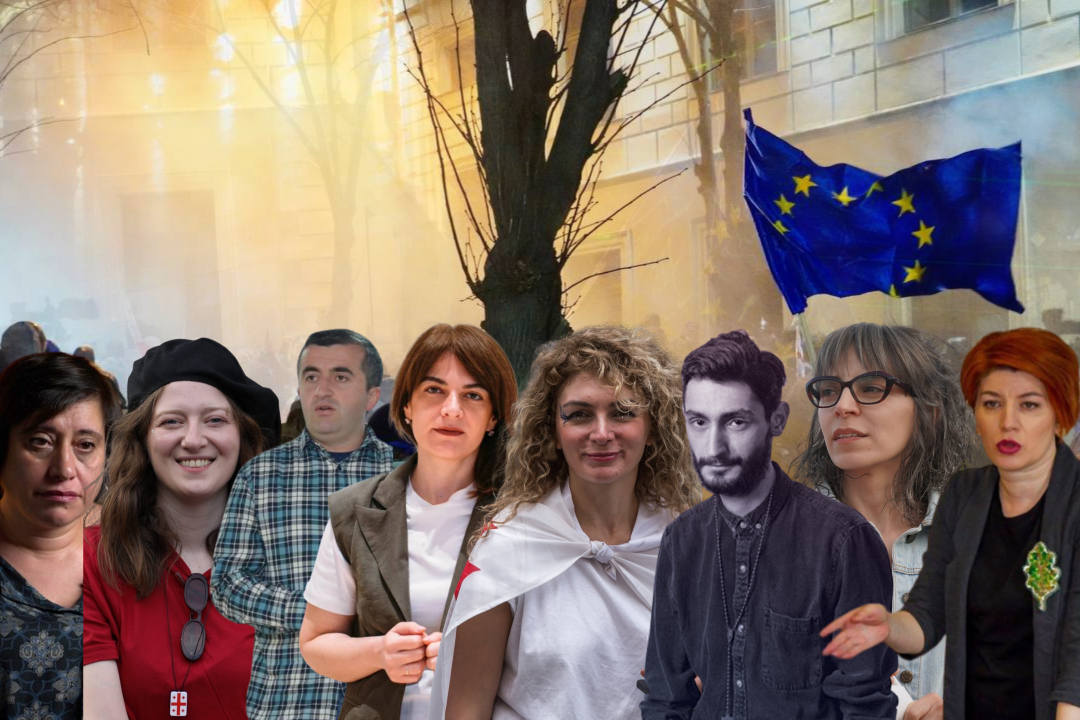
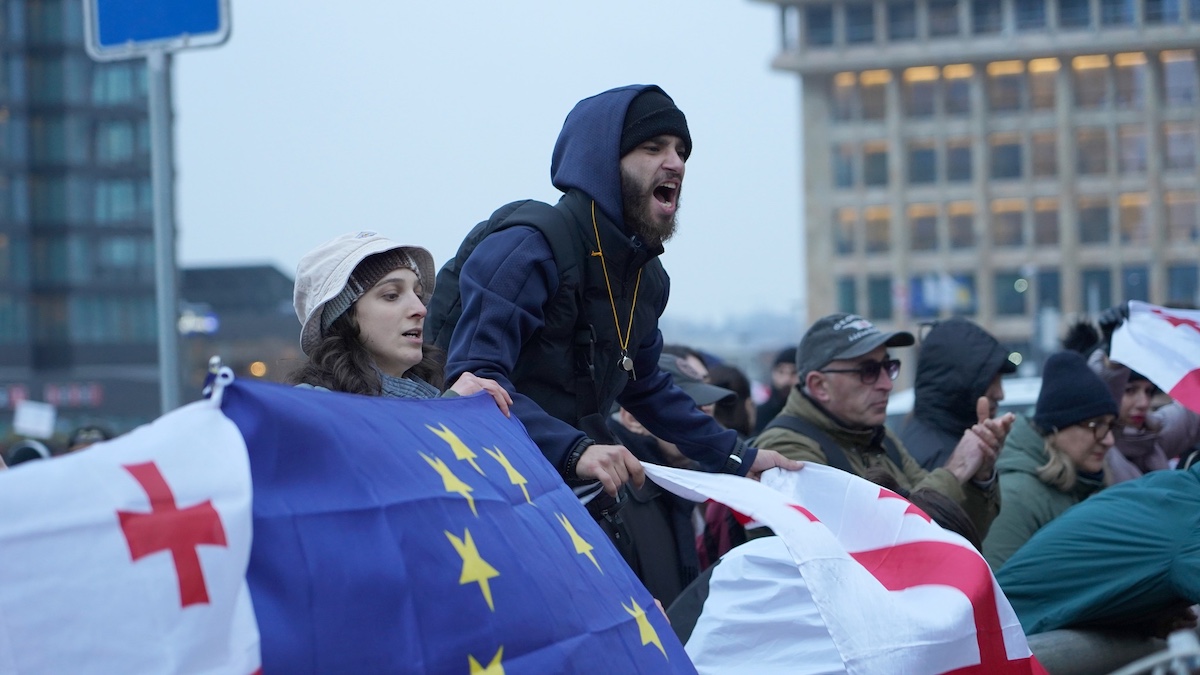
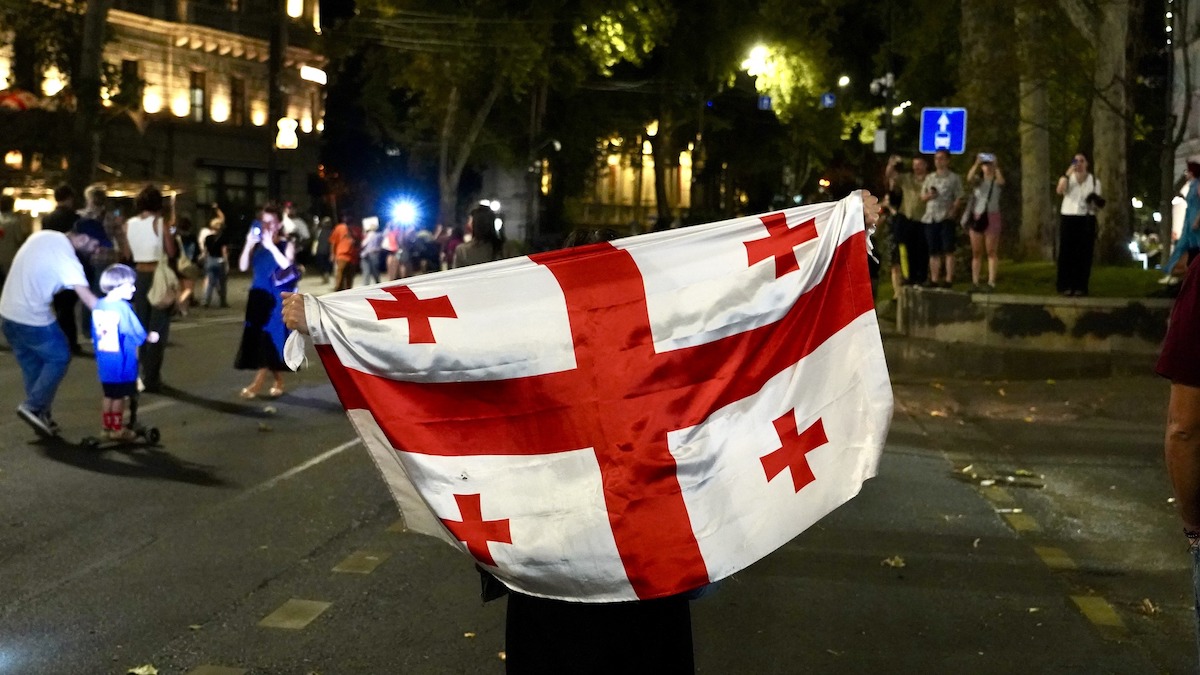
Municipal elections in Georgia are set for 4 October 2025. On the same day, a large demonstration is planned in Tbilisi with the declared aim of a “peaceful overthrow of power.” While the ruling Georgian Dream party and two opposition parties taking part in the vote are urging people to go to the polls, the main opposition forces — boycotting the elections — are calling on supporters to join the protest.
Six opposition leaders, almost all of those active in the protest movement since autumn 2024, are currently in prison on administrative and criminal charges.
However, many questions remain among the public — including supporters of the rally:
And so on.
In this article JAMnews sums up what is known — and what remains unclear — about the 4 October rally.
The 4 October rally does not have a single organiser, but several figures have been especially active — among them opera singer Paata Burchuladze.
Burchuladze entered Georgian politics in 2016, when he founded the movement State for the People and took part in parliamentary elections. His bloc failed to clear the 5% threshold to enter parliament, but he remained in politics.
When pro-European protests broke out in Georgia in 2024, Burchuladze quickly joined in. To this day he appears almost every evening outside parliament on Rustaveli Avenue in central Tbilisi. The interior ministry has already issued him 34 fines for “unjustified road closures,” totalling 170,000 lari ($63,000).
He now leads the movement Rustaveli Avenue, which emerged spontaneously during the pro-European protests. Around him have gathered people from different walks of life, united by their demand for a “Georgia without Ivanishvili.”
Another figure whose focus has recently been fixed entirely on the 4 October rally is Levan Khabeishvili, former chair of the country’s largest opposition party, the United National Movement.
He is now in prison after being arrested on 11 September by Georgia’s State Security Service. He faces two charges: publicly offering a bribe to officials — he allegedly promised $200,000 to special forces officers if they refused to disperse protests — and calling for the overthrow of the government. He has been placed in pre-trial detention and banned from any outside contact.
Khabeishvili said his arrest was directly linked to the upcoming rally.
“They are detaining me because, as it turns out, one man, Khabeishvili, can defeat Ivanishvili,” the opposition politician declared.
Before the ban on contact, he managed to send a letter from prison expressing confidence in the rally’s success:
“With this arrest, Ivanishvili has effectively helped us — he has convinced us that he has already lost,” he wrote.
“Everything begins and ends on 4 October,” Paata Burchuladze repeats in every broadcast.
“In the past, it was always the same: people would gather, shout ‘call new parliamentary elections,’ 200,000 would come out onto the streets and then go home. That will not happen on 4 October. How can we allow people to just leave again? On the 4th we begin, on the 4th we finish. On 4 October we will achieve what we want,” he told viewers on the Palitranius programme on 3 September.
Burchuladze expects between 200,000 and 300,000 people to attend the rally. He says it will take place simultaneously in three locations across Tbilisi and will address three issues — though so far he has disclosed only one:
“The first question we will put to participants is whether the Georgian people want to take power into their own hands within the framework of the constitution. I am sure everyone will say ‘yes’. And that is what we will do.
On 4 October we will present a [new] cabinet of ministers to the public and announce the composition of a technical government. As for the second and third questions, I will reveal them later.”
Many opposition figures and would-be participants, however, are sceptical about Burchuladze’s predictions. His claims even triggered a split within the opposition camp. Many argue that there can be no such thing as an “announced revolution” and that raising such hopes among disillusioned people is irresponsible.
Tamar Chergoleishvili, a leader of the Federalists party, wrote on social media that she would not take on such political responsibility:
“I can say with full responsibility that the regime is very weak, time is working against it, and it is collapsing. I take political responsibility when I say that the countdown for Ivanishvili has begun, and his fall is not a question of if but when…
The 4 October rally is a good event. But it is wrong to instil such expectations in citizens. It does nothing to rebuild trust between voters and politicians. We fight until victory, not until some arbitrary October date.”
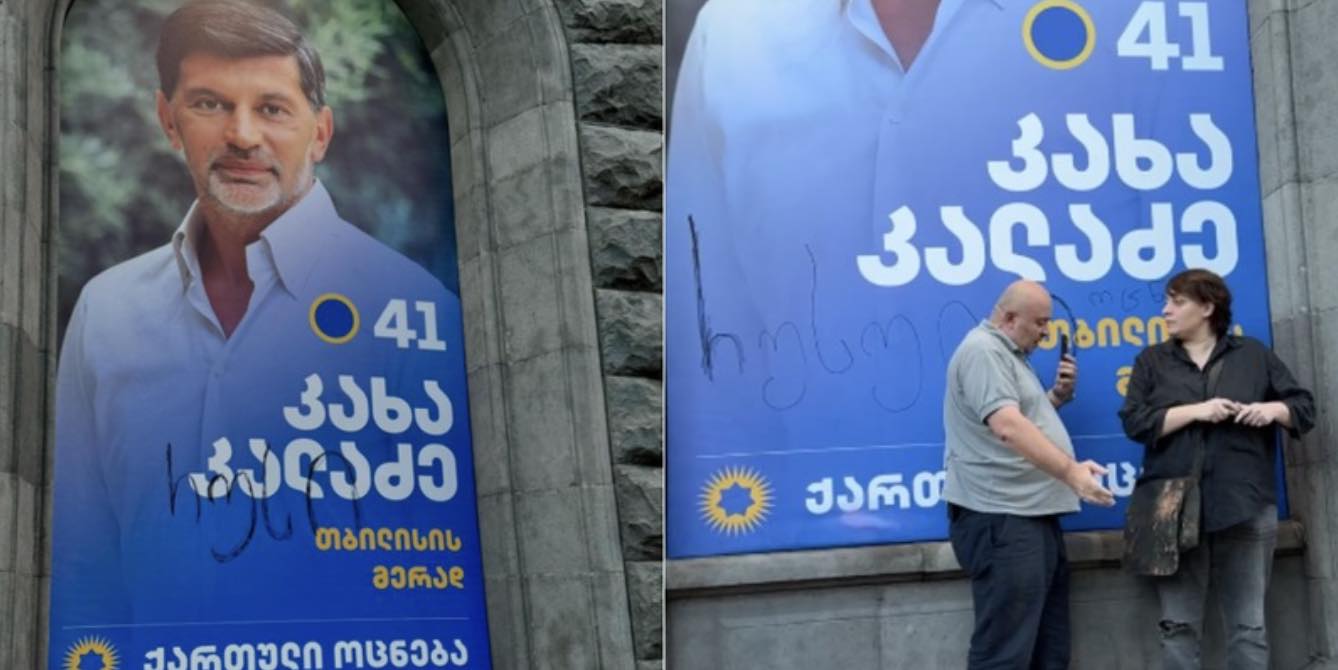
The main opposition coalition, Coalition for Change, which boycotted the government as illegitimate and refused to take part in the municipal elections, has four leaders — all of whom are currently in prison. The last of them, Elene Khoshtaria, was arrested on 15 September on criminal charges after writing “Russian” on a campaign banner for the ruling party’s candidate for Tbilisi mayor.
The rest of the coalition’s members and supporters plan to attend the 4 October rally, but they are not raising expectations too high.
“We must move forward with a united protest. We all have to be out on the streets until we end this Russian regime,” Khoshtaria declared shortly before her arrest.
The rally is also being watched with concern by those who have been taking part in near-permanent protests outside parliament in Tbilisi — now stretching past 300 days.
“The overthrow of the regime on 4 October and Ivanishvili’s early flight on the 3rd may be exactly what many crave. But announcing it gives the regime time to prepare. And if the rally fails, it will plunge us into despair and nihilism. It will take even longer to pull society out of this state,” wrote former civil servant David Chkheidze, an active protester who was fired from his job over his activism.
Two other opposition parties — Lelo and For Georgia, the party of former prime minister Giorgi Gakharia — also boycott Georgian Dream, but have decided to take part in the municipal elections with joint candidates. Their position on the 4 October rally, however, remains unclear.
The opposition party Lelo sees no problem with its supporters casting their votes in the morning and joining the rally in the evening. But the party avoids giving concrete answers — for instance, on what role it might play at the rally or whether its leaders will attend.
“We are not the organisers of this rally, we are not part of that team and we don’t even know who the organisers are. We are a civic movement, and of course anyone who wishes can go. That does not exclude going to the polling stations in the morning,” said Lelo member Lana Galdava on Georgia’s Public Broadcaster. She herself is standing in the municipal elections.
Unlike Lelo, the position of former prime minister Giorgi Gakharia’s party For Georgia is more clear-cut.
“We will not take part in the 4 October rally,” party member Levan Gogichaishvili said on 17 September.
According to him, “banging your head against the wall and making threats is artificial radicalisation. Elections are the only right path.”
The ruling Georgian Dream party appears keen to project an air of indifference about the upcoming rally. It has repeated its anti-Western talking points, insisting the opposition is “following orders from abroad.” It also claims the opposition lacks the influence and resources to bring about a change of power, and predicts Georgian Dream will again score a convincing win in the municipal elections.
“They say they want to change the government by force. Let me stress once again: all of this is being coordinated from outside. This is yet another escalation,” said Shalva Papuashvili, the parliament speaker from Georgian Dream.
Prime minister Irakli Kobakhidze warned: “If they hope their provocations and criminal acts will be tolerated, no one will allow that.”
Tbilisi’s incumbent mayor Kakha Kaladze also issued a threat: “If they dare to break the law, there will be an appropriate response and they will be punished in the strictest way — naturally, within the law.”
After Levan Khabeishvili’s arrest, many wrote on social media that Georgian Dream seemed to believe in the 4 October rally’s success more than the protesters themselves. By jailing him, they argued, the authorities had effectively done the organisers’ job by raising the rally’s profile.
“For me this means only one thing: Bidzina Ivanishvili really does fear a revolution. He takes the talk of a ‘peaceful overthrow’ on 4 October far more seriously than most of his opponents — including me. His actions are making 4 October a more important date than it otherwise would have been,” said political analyst Ghia Nodia.
News in Georgia