

Categories
South Caucasus News

Georgian Dream sent a report to the European Commission. Brussels called it “unsubstantiated”


Georgian Dream’s report to the European Commission

Radio Free Europe/Radio Liberty reviewed the contents of a 55-page letter and report sent to the European Commission by Georgia’s ambassador in Brussels, Vakhtang Makharoblishvili. The outlet also quoted a source who said: “They sent us unsubstantiated answers. The letter does not respond to the questions troubling Brussels.

Representatives of Georgian Dream, in turn, expressed outrage that the contents of a confidential document had been published, calling it “an attempt at shameful blackmail.

In mid-June 2025 it emerged that the European Commission was considering suspending Georgia’s visa-free regime in response to what it called a “serious backsliding on democracy.” The Commission issued a set of recommendations for Georgia to meet in order to avoid suspension, giving a deadline of 31 August.

On 14 July, Beate Gminder, head of the European Commission’s directorate-general for migration and home affairs, sent a letter to Georgian foreign minister Maka Bochorishvili. Attached was a list of eight recommendations, calling on the ruling Georgian Dream party to repeal laws restricting freedom of assembly and expression, and to amend the laws “On Transparency of Foreign Influence” and “On Family Values and the Protection of Minors” to ensure protection of LGBT+ rights.

The Georgian Dream government submitted its report to the Commission on 31 August — the final day of the deadline. In the 55-page document, the government claimed it was “demonstrating firm commitment to European integration.”

However, a Brussels source told Radio Free Europe/Radio Liberty on condition of anonymity that the report was “unsubstantiated” and failed to fully address the Commission’s concerns.

They sent us unsubstantiated answers. The letter does not respond to the questions troubling Brussels,” the source said.
In his letter to the European Commission, ambassador Vakhtang Makharoblishvili claimed that, in addition to faithfully implementing the Commission’s recommendations, the Georgian government had carried out a number of extra initiatives. Alongside reforms in the rule of law, good governance and anti-corruption, these had been recognised by international experts, he wrote.

The report lists “positive results” in several international — including lesser-known — indices and research rankings:

  • Georgia’s progress on rule of law reforms was noted in the 2024 Rule of Law Index compiled by the World Justice Project.
  • According to the European Research Centre for Anti-Corruption and State-Building (ERCAS), Georgia ranks third in the region and fifth among 143 countries worldwide in the Transparency Index.
  • In the Institute for Economics and Peace’s Positive Peace Index, Georgia holds 38th place.
The report also claims that Georgia ranks 42nd out of 120 countries in the Good Governance Index, ahead of EU member states such as Hungary, Bulgaria and Romania.

Radio Free Europe/Radio Liberty notes that, while the report is usually written in formal and academic language, this time it includes terms such as:

  • “Elite NGOs”: “Elite NGOs did not register in the ‘Transparency [of Foreign Influence] Register,’ and this is precisely why FARA [the ‘foreign agents’ law — JAMnews] was necessary.”
  • “Sincere NGOs”: “FARA was needed to protect sincere NGOs, and the state will actively support and cooperate with them.”
  • “Misuse of foreign aid … to support revolutionary scenarios.” The authors argue that FARA was adopted in response to these threats. The law itself is described in the report as “an exact copy of the American model,” said to serve as “an effective deterrent against external interference in the work of state institutions.”
  • “Events around USAID” are cited as justification for cancelling civil society participation in lawmaking.
  • “The sovereign right of Georgia to regulate its internal affairs” is used to defend the laws On Transparency of Foreign Influence and On Family Values and the Protection of Minors (the latter bans “propaganda” of LGBT+ issues — JAMnews). According to the report’s authors, the adoption of these laws is “aimed at strengthening democratic accountability, protecting national identity, promoting social cohesion and increasing institutional transparency.”
After the contents of the report were made public, Georgian Dream prime minister Irakli Kobakhidze said the EU had “attempted shameful blackmail,” adding that it was unacceptable for him to sit at a negotiating table where such blackmail was taking place.

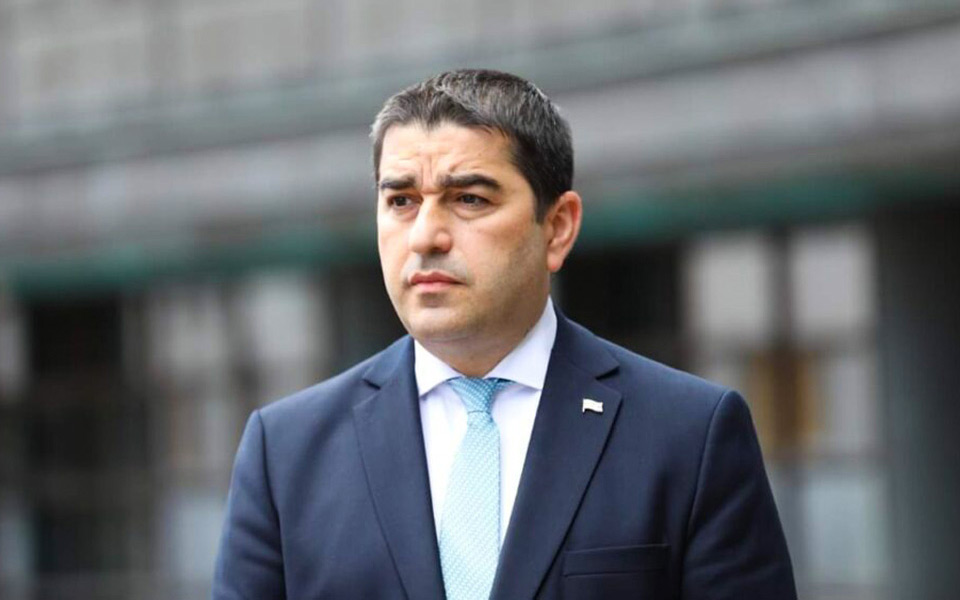
Georgian Dream’s parliamentary speaker Shalva Papuashvili accused Brussels of a “leak.”
We saw that, for some reason, an official document ended up in the hands of propaganda media. We saw that Radio Free Europe, funded by Brussels and once a CIA unit, is propaganda.

We saw that after America and Trump stopped funding this propaganda machine, Brussels took over and turned an intelligence service into a propaganda outlet.

This shows how Brussels ‘leaks’ information. But for us this is no problem. On the contrary, we wanted the document to be made public, even though we had no right to do so. We want the public to see the Georgian government’s position,” Papuashvili said.
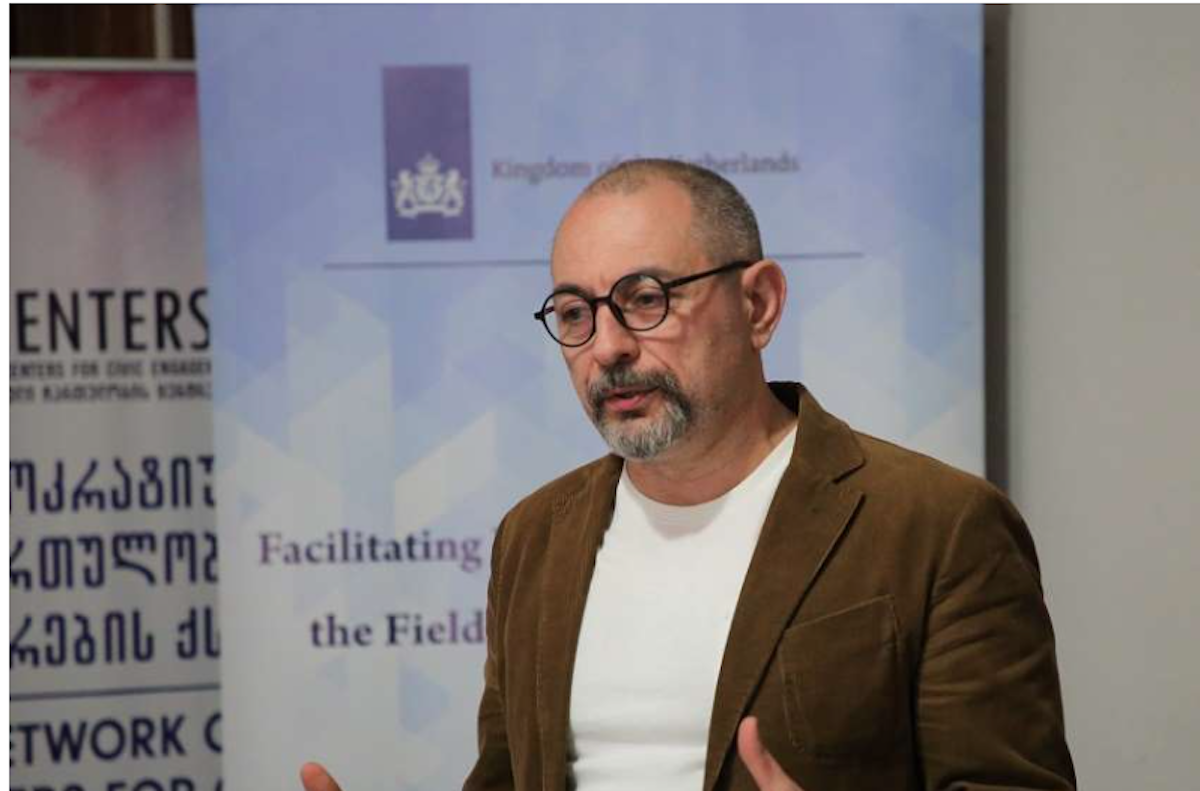
Georgian Dream’s report to the European Commission

Categories
South Caucasus News

Georgian Dream sent a report to the European Commission. Brussels called it “unsubstantiated”


Georgian Dream’s report to the European Commission

Radio Free Europe/Radio Liberty reviewed the contents of a 55-page letter and report sent to the European Commission by Georgia’s ambassador in Brussels, Vakhtang Makharoblishvili. The outlet also quoted a source who said: “They sent us unsubstantiated answers. The letter does not respond to the questions troubling Brussels.

Representatives of Georgian Dream, in turn, expressed outrage that the contents of a confidential document had been published, calling it “an attempt at shameful blackmail.

In mid-June 2025 it emerged that the European Commission was considering suspending Georgia’s visa-free regime in response to what it called a “serious backsliding on democracy.” The Commission issued a set of recommendations for Georgia to meet in order to avoid suspension, giving a deadline of 31 August.

On 14 July, Beate Gminder, head of the European Commission’s directorate-general for migration and home affairs, sent a letter to Georgian foreign minister Maka Bochorishvili. Attached was a list of eight recommendations, calling on the ruling Georgian Dream party to repeal laws restricting freedom of assembly and expression, and to amend the laws “On Transparency of Foreign Influence” and “On Family Values and the Protection of Minors” to ensure protection of LGBT+ rights.

The Georgian Dream government submitted its report to the Commission on 31 August — the final day of the deadline. In the 55-page document, the government claimed it was “demonstrating firm commitment to European integration.”

However, a Brussels source told Radio Free Europe/Radio Liberty on condition of anonymity that the report was “unsubstantiated” and failed to fully address the Commission’s concerns.

They sent us unsubstantiated answers. The letter does not respond to the questions troubling Brussels,” the source said.

In his letter to the European Commission, ambassador Vakhtang Makharoblishvili claimed that, in addition to faithfully implementing the Commission’s recommendations, the Georgian government had carried out a number of extra initiatives. Alongside reforms in the rule of law, good governance and anti-corruption, these had been recognised by international experts, he wrote.

The report lists “positive results” in several international — including lesser-known — indices and research rankings:

  • Georgia’s progress on rule of law reforms was noted in the 2024 Rule of Law Index compiled by the World Justice Project.
  • According to the European Research Centre for Anti-Corruption and State-Building (ERCAS), Georgia ranks third in the region and fifth among 143 countries worldwide in the Transparency Index.
  • In the Institute for Economics and Peace’s Positive Peace Index, Georgia holds 38th place.

The report also claims that Georgia ranks 42nd out of 120 countries in the Good Governance Index, ahead of EU member states such as Hungary, Bulgaria and Romania.

Radio Free Europe/Radio Liberty notes that, while the report is usually written in formal and academic language, this time it includes terms such as:

  • “Elite NGOs”: “Elite NGOs did not register in the ‘Transparency [of Foreign Influence] Register,’ and this is precisely why FARA [the ‘foreign agents’ law — JAMnews] was necessary.”
  • “Sincere NGOs”: “FARA was needed to protect sincere NGOs, and the state will actively support and cooperate with them.”
  • “Misuse of foreign aid … to support revolutionary scenarios.” The authors argue that FARA was adopted in response to these threats. The law itself is described in the report as “an exact copy of the American model,” said to serve as “an effective deterrent against external interference in the work of state institutions.”
  • “Events around USAID” are cited as justification for cancelling civil society participation in lawmaking.
  • “The sovereign right of Georgia to regulate its internal affairs” is used to defend the laws On Transparency of Foreign Influence and On Family Values and the Protection of Minors (the latter bans “propaganda” of LGBT+ issues — JAMnews). According to the report’s authors, the adoption of these laws is “aimed at strengthening democratic accountability, protecting national identity, promoting social cohesion and increasing institutional transparency.”

After the contents of the report were made public, Georgian Dream prime minister Irakli Kobakhidze said the EU had “attempted shameful blackmail,” adding that it was unacceptable for him to sit at a negotiating table where such blackmail was taking place.

Georgian Dream’s parliamentary speaker Shalva Papuashvili accused Brussels of a “leak.”

We saw that, for some reason, an official document ended up in the hands of propaganda media. We saw that Radio Free Europe, funded by Brussels and once a CIA unit, is propaganda.

We saw that after America and Trump stopped funding this propaganda machine, Brussels took over and turned an intelligence service into a propaganda outlet.

This shows how Brussels ‘leaks’ information. But for us this is no problem. On the contrary, we wanted the document to be made public, even though we had no right to do so. We want the public to see the Georgian government’s position,” Papuashvili said.

Georgian Dream’s report to the European Commission


Categories
South Caucasus News

Макрон: гарантии безопасности для Украины готовы


Categories
South Caucasus News

Footage of attack in Zaporizhzhia in which over 7 armored vehicles, 30 invaders are destroyed


Categories
South Caucasus News

Canada joins EU and UK in cutting Russian oil price limit


Following the lead of the European Union and the United Kingdom, the Canadian government has also reduced the price cap on Russian crude oil to $47.60 per barrel in response to the ongoing conflict in Ukraine, Azernews reports.

Categories
South Caucasus News

Российская делегация едет в Азербайджан


Categories
South Caucasus News

Georgia’s Visa-Free Report to EU Fails to Address Concerns, Brussels Source Tells RFE/RL


Tbilisi’s responses to the EU on fulfilling conditions for retaining visa-free travel claim “strong loyalty to European integration,” Radio Free Europe/Radio Liberty’s Georgian Service reported, citing a Brussels source as saying that the progress report failed to address EU concerns.

Tbilisi had until August 31 to report to Brussels on progress regarding human rights and reform-related conditions set by the EU, which Georgia must meet to preserve the visa-free regime its citizens have enjoyed with the bloc since 2017.

According to RFE/RL, which said it had seen the 55-page document, Georgia’s Foreign Ministry sent its letter to the European Commission at the deadline. The sender was identified as Georgia’s Ambassador to the EU, Vakhtang Makharoblishvili, and the addressee as Beate Gminder, Deputy Director-General at the Commission’s DG Migration and Home Affairs.

“In addition to faithfully fulfilling the set criteria, the Georgian government has implemented several additional initiatives,” RFE/RL quoted the letter in Georgian, with the letter reportedly adding that the said steps were taken “together with reforms in rule of law, good governance, and anti-corruption, are recognized by international assessments.”

The letter reportedly claims that since the beginning of 2025, Georgia has carried out “a series of measures to ensure civic and political rights, including freedom of expression, access to information, equality, inclusive protection and development, as well as public order and the rule of law.”

RFE/RL said Georgian Dream claimed its progress and “positive results” using little-known international indexes, claiming, for example, that in the Good Governance Index, Georgia ranks 42nd out of 120 countries, ahead of several EU members, including Hungary, Bulgaria, and Romania.

The letter defends the two laws that the EU asked Tbilisi to repeal as part of visa-free conditions, including the Foreign Agents Law (Law on Transparency of Foreign Influence) and the anti-LGBT legislation (Law on Family Values and Protection of Minors), as a “sovereign right to regulate internal affairs.”

RFE/RL said the letter claims the two laws were “aimed at strengthening democratic accountability, protecting national identity, supporting social unity, and strengthening institutional transparency,” and that they “fully correspond to Georgia’s sovereign right to regulate its internal affairs in accordance with the constitution and democratic processes.”

The letter, as cited by the outlet, further contrasts “elite” NGOs with “sincere” NGOs. GD authorities reportedly argue that the former’s refusal to register under the “transparency registry” necessitated the adoption of another such law – the Georgian version of the Foreign Agents Registration Act (FARA), and pledge state support for the latter, “sincere” group of NGOs. The letter also claims FARA was adopted to counter the “malign use of foreign funds…in support of a revolutionary scenario.” Additionally, the letter reportedly highlights the GD government’s “protection of journalists.”

“They have failed to respond to the concerns we have expressed,” an anonymous source from Brussels told RFE/RL, adding that the claims in the letter are not supported with arguments.

Tbilisi’s claims follow turbulent months of protests and repression, during which the Georgian Dream’s one-party parliament passed a series of repressive laws against freedom of expression and association, targeted media and civil society with inspections and criminal probes, jailed protesters and opposition leaders, and left police violence against demonstrators and journalists – particularly in the early weeks of protests – unpunished.

NOTE: All quotes are based on RFE/RL’s Georgian Service report in Georgian and may not necessarily reflect the original English wording of the letter.

Also Read:


Categories
South Caucasus News

Georgia’s Visa-Free Report to EU Fails to Address Concerns, Brussels Source Tells RFE/RL


Tbilisi’s responses to the EU on fulfilling conditions for retaining visa-free travel claim “strong loyalty to European integration,” Radio Free Europe/Radio Liberty’s Georgian Service reported, citing a Brussels source as saying that the progress report failed to address EU concerns.

Tbilisi had until August 31 to report to Brussels on progress regarding human rights and reform-related conditions set by the EU, which Georgia must meet to preserve the visa-free regime its citizens have enjoyed with the bloc since 2017.

According to RFE/RL, which said it had seen the 55-page document, Georgia’s Foreign Ministry sent its letter to the European Commission at the deadline. The sender was identified as Georgia’s Ambassador to the EU, Vakhtang Makharoblishvili, and the addressee as Beate Gminder, Deputy Director-General at the Commission’s DG Migration and Home Affairs.

“In addition to faithfully fulfilling the set criteria, the Georgian government has implemented several additional initiatives,” RFE/RL quoted the letter in Georgian, with the letter reportedly adding that the said steps were taken “together with reforms in rule of law, good governance, and anti-corruption, are recognized by international assessments.”

The letter reportedly claims that since the beginning of 2025, Georgia has carried out “a series of measures to ensure civic and political rights, including freedom of expression, access to information, equality, inclusive protection and development, as well as public order and the rule of law.”

RFE/RL said Georgian Dream claimed its progress and “positive results” using little-known international indexes, claiming, for example, that in the Good Governance Index, Georgia ranks 42nd out of 120 countries, ahead of several EU members, including Hungary, Bulgaria, and Romania.

The letter defends the two laws that the EU asked Tbilisi to repeal as part of visa-free conditions, including the Foreign Agents Law (Law on Transparency of Foreign Influence) and the anti-LGBT legislation (Law on Family Values and Protection of Minors), as a “sovereign right to regulate internal affairs.”

RFE/RL said the letter claims the two laws were “aimed at strengthening democratic accountability, protecting national identity, supporting social unity, and strengthening institutional transparency,” and that they “fully correspond to Georgia’s sovereign right to regulate its internal affairs in accordance with the constitution and democratic processes.”

The letter, as cited by the outlet, further contrasts “elite” NGOs with “sincere” NGOs. GD authorities reportedly argue that the former’s refusal to register under the “transparency registry” necessitated the adoption of another such law – the Georgian version of the Foreign Agents Registration Act (FARA), and pledge state support for the latter, “sincere” group of NGOs. The letter also claims FARA was adopted to counter the “malign use of foreign funds…in support of a revolutionary scenario.” Additionally, the letter reportedly highlights the GD government’s “protection of journalists.”

“They have failed to respond to the concerns we have expressed,” an anonymous source from Brussels told RFE/RL, adding that the claims in the letter are not supported with arguments.

Tbilisi’s claims follow turbulent months of protests and repression, during which the Georgian Dream’s one-party parliament passed a series of repressive laws against freedom of expression and association, targeted media and civil society with inspections and criminal probes, jailed protesters and opposition leaders, and left police violence against demonstrators and journalists – particularly in the early weeks of protests – unpunished.

NOTE: All quotes are based on RFE/RL’s Georgian Service report in Georgian and may not necessarily reflect the original English wording of the letter.

Also Read:


Categories
South Caucasus News

Caspian Sea levels continue to decline, raising regional concerns


The water level in the Caspian Sea is projected to continue falling over the next three to five years, according to Igor Shumakov, head of Russia’s Federal Service for Hydrometeorology and Environmental Monitoring (Roshydromet). He made the remarks at a session of the Coordinating Committee on Hydrometeorology of the Caspian Sea (CASPCOM), held in St. Petersburg.

Categories
South Caucasus News

Azerbaijan sees increase in social, unemployment, and mandatory health insurance revenues


Azerbaijan sees increase in social, unemployment, and mandatory health insurance revenues

​