
The first group of families has been resettled to Kolatağ village in Ağdərə district, marking an important step in the region’s ongoing post-conflict reconstruction and repopulation efforts, Azernews reports.
Day: August 15, 2025
GDP growth in Azerbaijan
Pro-government and state media regularly run headlines about GDP growth to suggest that Azerbaijan’s economy is developing. But what does GDP actually tell us?
Is it really a measure of economic development? Does it reflect people’s living standards?
Gross domestic product (GDP) is the market value of goods and services produced within a country over a set period of time, usually a year. In other words, GDP measures the total output of goods and services produced in a country and legally sold.
It is calculated as the sum of consumer spending, investment, government expenditure, and the trade balance (exports minus imports). For example: GDP = household consumption + investment + government spending + (exports – imports).
GDP provides a macro-level measure of economic activity and offers a rough indication of economic growth.
However, economists stress that GDP has many limitations as a measure of wellbeing. As Joseph Stiglitz put it:
“GDP measures everything, except that which makes life worthwhile.”
For example, GDP does not account for environmental quality, healthcare, education, aspects of social welfare such as inequality, or the long-term sustainability of the economy.
An IMF study notes that GDP captures only market transactions and monetary exchanges, overlooking factors such as pollution, depletion of natural resources, and environmental degradation. It also excludes the informal economy and unpaid household labour.
Ultimately, relying on GDP alone can be misleading: economic growth does not necessarily mean an improvement in people’s living standards.
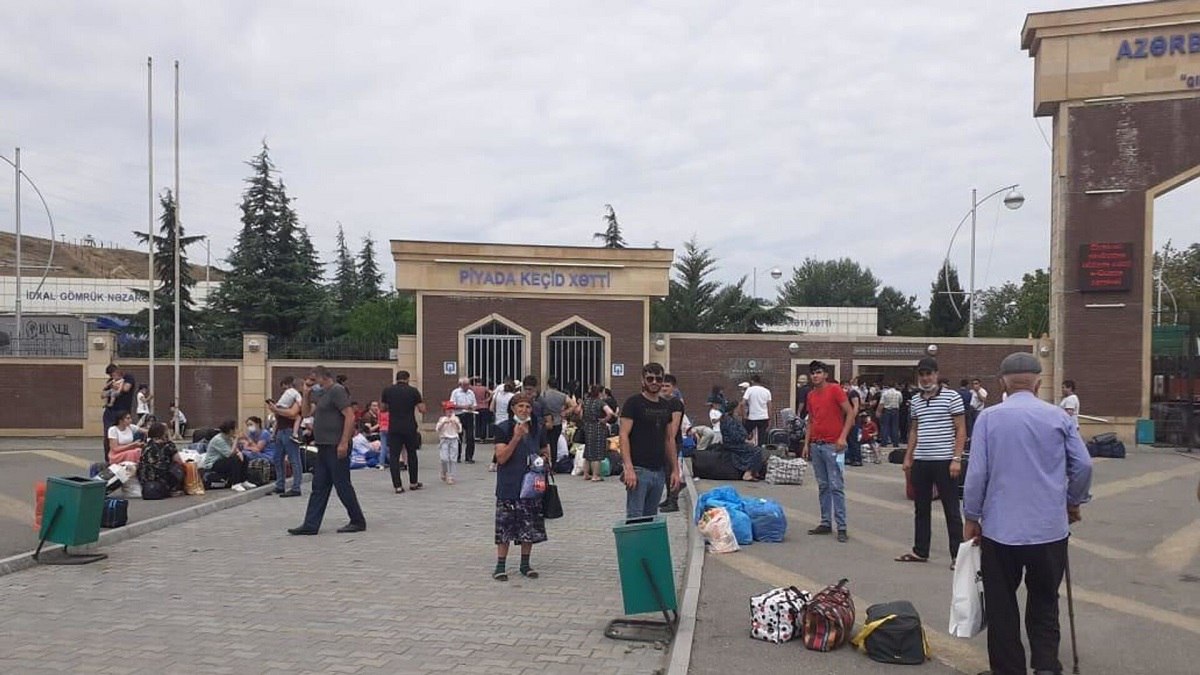
Economist Toghrul Mashalli wrote on his Telegram channel:
“We shouldn’t stop at saying that GDP has grown. When we present this, we should also refer to other indicators.”
According to him, looking at additional indicators makes it possible to understand whether GDP growth is actually positive or negative.
The value of alternative indicators
That is why additional measures have been developed alongside GDP, such as happiness indexes, environmental indicators, and others. The OECD’s Better Life Initiative, the UN Human Development Index and similar projects aim to assess social wellbeing beyond GDP.
The conclusion is that GDP shows the volume of economic activity as a primary indicator but does not reflect a society’s true wellbeing.
Economists therefore recommend going beyond the headline “GDP has grown” and looking at the structure of that growth, income distribution and other social indicators.
As Stiglitz notes, what we choose to measure shapes the choices we make, and focusing solely on GDP can lead to negative long-term outcomes.

Comparing indicators in the South Caucasus
The experience of countries in the region also shows that high GDP figures alone do not necessarily mean social development.
In 2024, Azerbaijan’s GDP stood at $74.3bn, placing it 86th in the world. However, its per capita income – about $7,268 nominally (€6,717) – is lower than in Georgia and Armenia.
At the same time, Azerbaijan’s score in the UN Human Development Index (HDI) for 2022 was 0.760, putting it in the “high human development” category.
This suggests that, unlike its neighbours, Azerbaijan has a high industrial and construction share in GDP, while other social factors lag behind.
For comparison, Georgia’s HDI in 2022 was 0.814 (ranking 58th), and Armenia’s was 0.786 (76th).
GDP growth in Azerbaijan: structure and sustainability
“Whether it’s needed or not, construction goes ahead. The private sector may not be very active, but state bodies will always find the money.
As a result of this policy, the debt of local governments in China rose from 42% to 70% of their GDP in just seven years. In the past, 1% GDP growth in China led to 0.8% growth in household consumption. Between 2011 and 2019, that figure fell to just 0.06%.
We haven’t faced the same situation only because, here, debt is issued solely by the central government. If local authorities could borrow, it would be the same story.
In countries like Azerbaijan, there’s a limit to this – if you don’t take on debt, your ability to invest is restricted, and that automatically limits GDP.
For now, growth is being maintained. But what happens tomorrow?” – asks Toghrul Mashalli.
As economist Toghrul Mashalli notes, in recent years the main driver of GDP growth in Azerbaijan has been state-led investment, particularly in construction.
According to 2023 statistics, large-scale construction and infrastructure projects were under way in post-war Karabakh and Eastern Zangezur. Analyses show that the construction sector’s contribution to GDP in 2023 grew by 13% in real terms and 18% in nominal terms.
Since 2021, the region has seen the building of two airports, railways, tunnels and housing, with spending rising each year. However, as these investments relied heavily on imported machinery and materials, the economic activity did not come from within but from imports. As a result, while construction spending is counted in GDP, its impact on the national economy remains limited.

Public debt and investment
Over the same period, local government debt also rose sharply. According to some estimates, the ratio of public debt to GDP increased from 20% to 35% between 2017 and 2024, mainly as a result of borrowing to finance state spending and investment.
With high debt levels, financial resources available to the private sector have shrunk. As the central bank has noted, this has driven up imports and negatively affected the trade balance. Rising public debt has also meant relatively less spending on education and healthcare, with the budget’s main priority shifting towards construction projects.
Oil dependence and diversification
Azerbaijan’s economy remains reliant on oil and gas revenues. When oil prices and production fall, GDP growth slows.
In 2023, for example, GDP grew by only about 1%, reflecting lower prices and reduced energy output on global markets.
Alongside oil, construction and infrastructure investment has created temporary growth, but competition and innovation in the real sector remain weak. As Stiglitz notes, sustainable growth in wellbeing depends on a combination of income, education, healthcare and environmental sustainability.
In Azerbaijan, GDP growth figures alone say little about people’s wellbeing; only by looking at other social and economic indicators can their real impact be understood.

Remember that fever is often a sign that your body is fighting infection but knowing when to seek medical help is crucial for your safety. Use this fever temperature chart listed below as a quick reference tool, but always consult healthcare professionals for medical advice, especially in cases of persistent or high fever.