
French President Emmanuel Macron has sharply criticized Israel’s plans to intensify military operations in the Gaza Strip, warning that the move could trigger an unprecedented humanitarian catastrophe, Azernews reports, citing Israeli media outlets.
Day: August 11, 2025
Social Justice Center, a Georgian human rights group, has formally requested Tbilisi’s Prosecutor’s Office to launch criminal proceedings against former and current senior officials of the Interior Ministry over violence committed against protesters during Tbilisi’s late-2024 Rustaveli Avenue protests.
The ongoing criminal case, which covers “abuse of power” and “interference with journalistic activities,” has been handled by the Tbilisi Prosecutor’s office, following the abolishment of the Special Investigation Service in July.
The SJC, which represents about 60 victims in the ongoing case, said on August 11 that investigative materials show “a well-founded assumption” that high-ranking officials, including former Interior Minister Vakhtang Gomelauri and ex-Special Tasks Department head Zviad Kharazishvili, were aware of the police abuses and failed to at least take appropriate preventive measures.
The group cites witness statements and interrogation reports, according to which Kharazishvili had “full information about the violence” carried out during the protests, yet he “failed to take appropriate action to prevent the crime, which constitutes an official offense.”
The SJC accuses him of failing to carry out his duties as head of the Department by allowing masked, heavily equipped officers to operate without special identification markings. According to the group, this policy ensured that those who assaulted protesters could not be identified or punished.
“Within the framework of the investigation, it should also be assessed whether he engaged in deliberate actions connected to the intentional absence of identification markings on Special Task Department employees and the deliberate tolerance of violence, and provision of guarantee of impunity,” the group argued.
In late May, Vakhtang Gomelauri resigned as interior minister, triggering a major reshuffle within the ministry that ultimately saw the departure of three notorious officials. Among them was Kharazishvili and his two deputies, Mirza Kezevadze and Mileri Lagazauri. All three have been sanctioned by the United Kingdom and the United States under the Global Magnitsky Act.
Beyond Kharazishvili, the SJC says the case materials point to the criminal liability of Gomelauri, who “gave the orders to disperse assemblies and was responsible for the proper conduct of this process,” as well as his former deputies, Aleksandre Darakhvelidze, Ioseb Chelidze, Giorgi Butkhuzi, and Shalva Bedoidze, and Kharazishvili’s deputies, Kezevadze and Lagazauri.
According to the SJC, video footage shows these officials observing the violence. It also cites former the statement by Irakli Shaishmelashvili, a former Special Tasks Department official who resigned in protest amid dispersals in December, “which indicates that MIA senior officials had knowledge of the violence but did nothing to prevent the clearly criminal actions,” and in some cases were directly involved.
“In view of all the above, the Social Justice Center calls on the Tbilisi Prosecutor’s Office to consider the submitted motion and ensure the initiation of criminal prosecution against [Zviad] Kharazishvili and other senior officials of the MIA,” the group argued.
Earlier Motions
The SJC says that after reviewing the criminal case files in January 2025, it submitted a series of formal motions to prosecutors seeking additional charges and investigative steps.
First, the group called for the case to be reclassified to include “torture, degrading and inhuman treatment, and robbery”, rather than solely “the abuse of power.”
Second, the SJC urged a systemic review of how the November–December 2024 protest dispersals were planned, carried out, and overseen. This included obtaining and analyzing operational plans, identifying participating officers, and questioning senior Interior Ministry officials, as well as “seizure of their mobile phones and computer equipment and the examination of electronic communications.”
The group also requested technical examinations of the Ministry’s radio communications system after records from November 28 to December 8, 2024, were found missing due to alleged “defects.” It noted similar gaps occurred in a separate spring 2024 protest investigation, raising suspicions of evidence destruction or concealment. The SJC demanded a computer-technological assessment of the Operational-Technical Department’s systems and questioning of responsible officials.
The SJC further cited that it has previously demanded prosecutors retrieve video footage from detainee transport vehicles, “since numerous witnesses questioned during the investigation indicated that after their detention, Special Tasks Department employees continued to subject them to physical violence inside the vehicles.”
Finally, the SJC asked investigators to question former Special Tasks officer Irakli Shaishmelashvili, who it says “possesses important information” about decision-making during dispersals, “illegality of using special means against protest participants,” and the direct role of senior officials in the violence.
The watchdog’s request comes as no police officer has been held accountable despite numerous documented abuses during dispersals. Dozens of protesters, however, remain in jail on protest-related criminal charges. Eleven persons detained in the context of protests that erupted in November 2024 have already been handed prison sentences, including on charges of assaulting police officers, and the number of guilty verdicts is expected to grow.
Also Read:
- 14/03/2025 – Watchdog Says GD Uses Administrative Offenses Code to Suppress Protest, Calls for Reform
- 03/02/2025 – SJC Warns of ‘Normalized’ Police Brutality, Calls for Investigation and Accountability
- 29/12/2025 – Interview With Former Senior Official Reveals Systemic Violations in Ministry of Interior
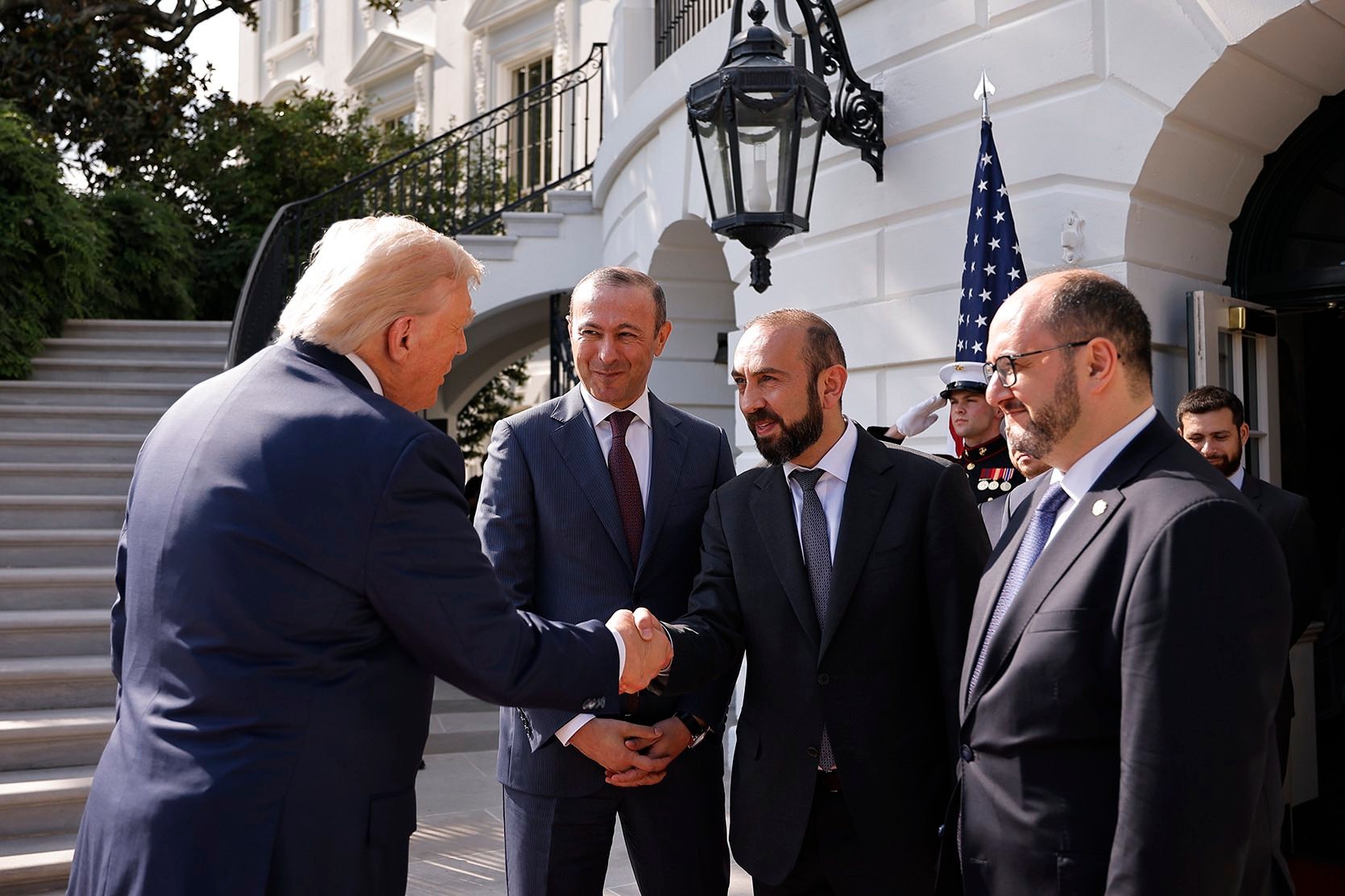
Armenian foreign minister on the Washington declaration
“The operation of infrastructure – including that to be built in Armenia under the US partnership – will take place within the territorial integrity, sovereignty and jurisdiction of the countries involved, and will ensure mutual benefit. Whatever the technical solutions, still to be discussed, they cannot go beyond these principles,” Armenian foreign minister Ararat Mirzoyan said, speaking about the “Trump Route” programme.
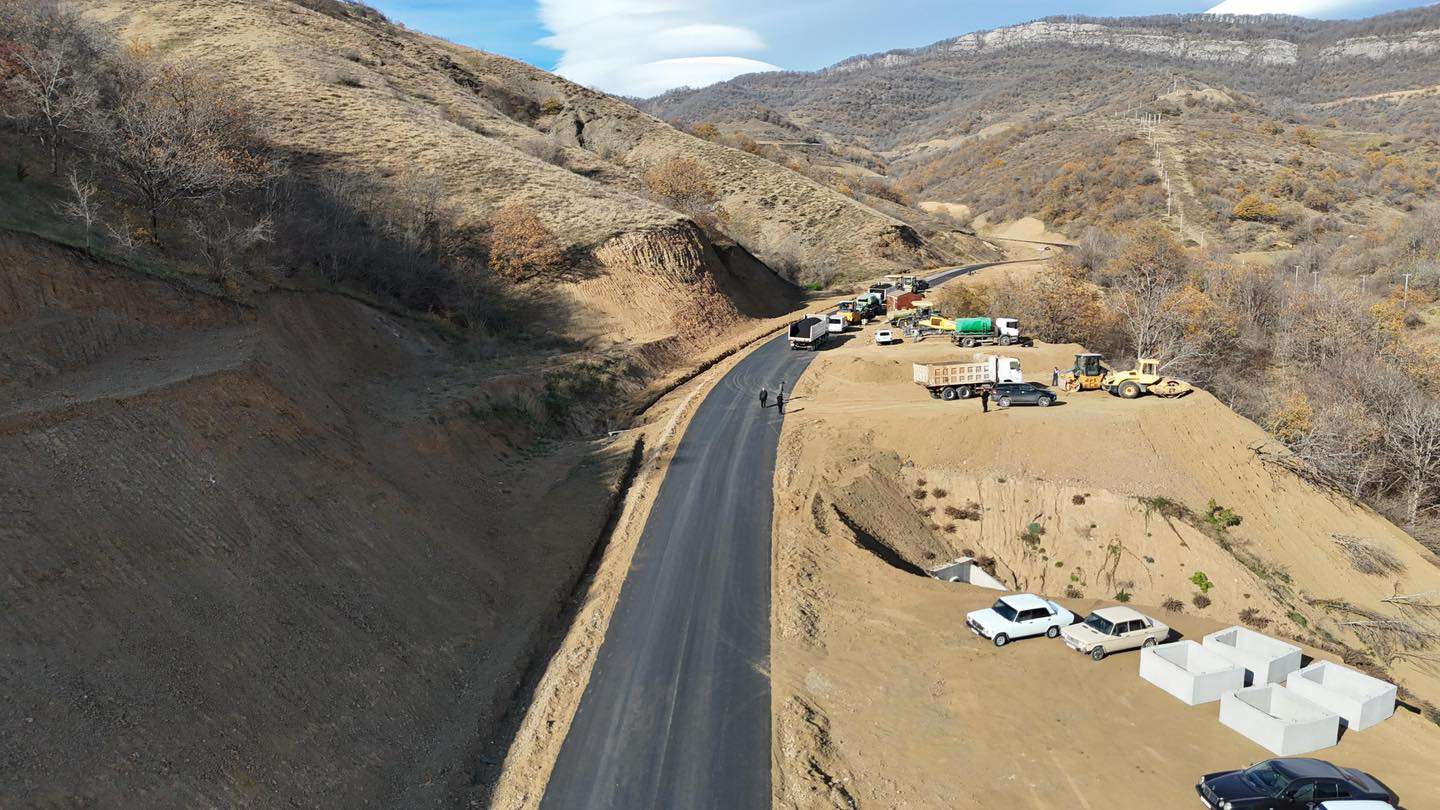
The Trump Route (Trump Route for International Peace and Prosperity – TRIPP) is a planned road linking mainland Azerbaijan with its exclave Nakhchivan. Armenia and Azerbaijan have agreed to reopen it with the participation of an Armenian–US consortium.
Mirzoyan stressed that the Washington declaration does not envisage any third-party control over the road. He was responding to the Armenian parliamentary opposition and some experts who use the term “corridor”, amid claims that Armenia had supposedly agreed to grant Azerbaijan an extraterritorial road. “With the persistence of a mule, some ‘independent experts’ or ‘dependent party figures’ keep spreading terms that have always been unacceptable to Yerevan and are absent from the Washington declaration,” he said.
In an interview with Armenpress, Mirzoyan said such interpretations were “either a product of their imagination or an attempt to mislead people”.
Details – what the declaration says, and Mirzoyan’s comments.
- ‘A chance to curb Aliyev’s ambitions’: what Armenia expects from Trump-mediated talks
- “The route through Armenia will be an alternative, not the main one”: expert opinion
- “If only the Azerbaijan–Nakhichevan route opens, Armenia’s blockade will deepen” — Opinion
The provisions of the declaration on the “reciprocity” of benefits in reopening transport links
The Washington declaration, signed on 8 August following the Trump–Pashinyan–Aliyev meeting, contains seven points.
It covers:
- the initialling of a peace treaty between Armenia and Azerbaijan
- the affirmation of the inviolability of international borders
- the inadmissibility of using force to seize territory
- the rejection of any acts of retaliation now or in the future
- the dissolution of the OSCE Minsk Group and related structures
On the “Trump Route” programme, the declaration states: “Armenia will work with the United States and mutually agreed third parties to define the framework for implementing the programme on Armenian territory.”
After the signing, Armenia’s prime minister told reporters that the US intends to be the main investor in the Trump Route, but that Armenia is also ready to work with third parties, including other investors. Pashinyan thanked the US president for showing flexibility on the issue.
“Our goal is for this project to bring involvement, and to attract other partners wherever possible, rather than creating tension or confrontation. No one should think that the Trump Route project is aimed against them, because it truly is not,” he said.
The declaration says the sides confirmed the importance of reopening transport links between the two countries for domestic, bilateral and international traffic, while stressing respect for the sovereignty, territorial integrity and jurisdiction of states:
“These efforts will include unimpeded communications between the main part of the Republic of Azerbaijan and the Nakhchivan Autonomous Republic through the territory of the Republic of Armenia, with mutual benefits for Armenia from international and domestic communications.”
At the press conference following the Washington meeting, journalists asked the prime minister whether this reference to mutual benefits also meant unimpeded communications for Armenia.
“[The document] sets out one benefit, and says that Armenia should have the same benefit. Reciprocity means that if roads are opened for Azerbaijan, they are opened for Armenia too. If they are not opened for Azerbaijan, they are not opened for Armenia either. Although that option is no longer on the table now,” he replied.
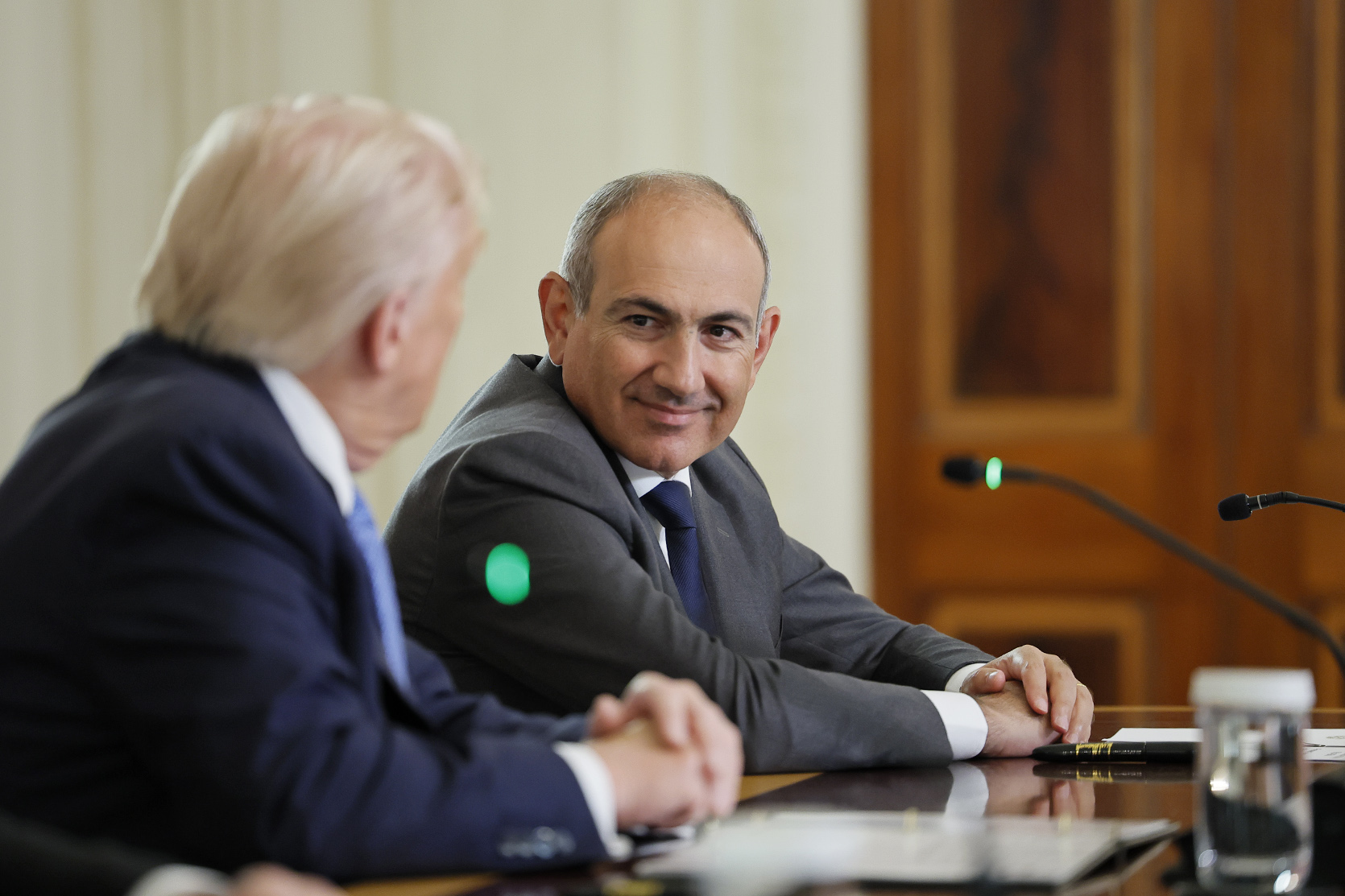
Armenia gains access to Azerbaijan’s railway infrastructure
Armenia’s foreign minister said that with the agreement on reopening transport links, a “very important and decisive” stage had been completed – talks on the general principles for operating the infrastructure.
“But this is only one stage. Now we face huge work to clarify and agree on more specific conditions and technical solutions,” he said.
Ararat Mirzoyan stressed that, under the Washington declaration, a major development was taking place – Armenia’s transport links are being reopened.
“This is what Armenia has been striving for over the past 35 years. From now on, Armenia gains access to, and can use, Azerbaijan’s railway infrastructure for international trade. […] The agreements in the Washington declaration clearly carry even more weight thanks to the participation of the US side and the US president’s signature as a witness.”
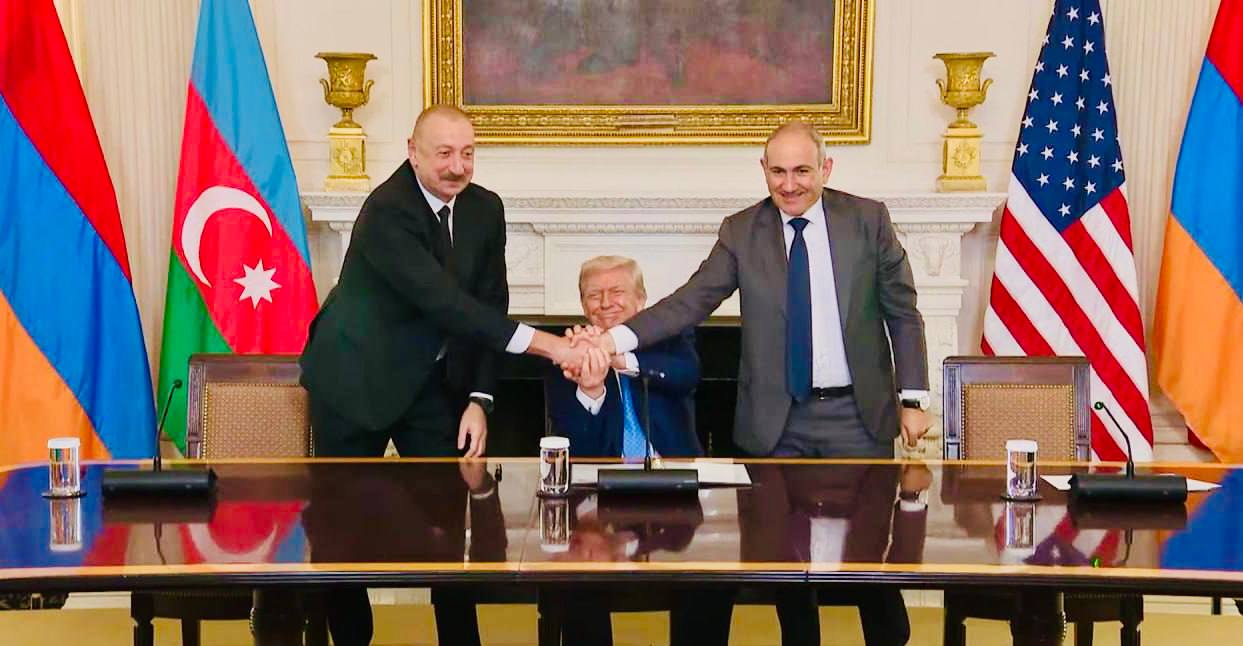
Yerevan to begin talks on Trump Route details
Foreign minister Ararat Mirzoyan said the US president had signed an order to set up a working group to implement the “Trump Route for International Peace and Prosperity” programme.
“In the near future, we expect high-level discussions in Yerevan on this issue. We should use this important moment to leave future generations a more connected South Caucasus,” he said.
He described his visit to Washington as important also for advancing the Armenia–US strategic partnership agenda. Following bilateral talks, the two sides signed three memorandums:
Memorandum on Armenia’s “Crossroads of Peace” regional reopening project:
The US expressed support for the “Crossroads of Peace” project, emphasising Armenia’s role as a regional transport hub. It highlighted the need to ensure Armenia’s infrastructure and border security, including with the participation of private investors.
Memorandum on artificial intelligence and semiconductor innovation:
Aimed at deepening cooperation in high-tech, with a focus on developing a semiconductor ecosystem and applying artificial intelligence.
Memorandum on energy security:
Intended to support Armenia’s energy resilience and modernisation of its energy system, encourage private investment, and develop civilian nuclear power.
According to Mirzoyan, there is an agreement with US secretary of state Marco Rubio to step up joint work on implementing the components of the strategic partnership.
Initialling of peace treaty a “historic event”
The Armenian foreign minister called the initialling of the peace agreement at the White House a “historic event.”
“It has become a major milestone in the process of resolving Armenian–Azerbaijani relations. The initialling and the subsequent public statements showed that peace – in the sense of no escalation on the border – has already been established. In essence, a stage of institutionalising peace is now beginning,” he said.
Mirzoyan also addressed the text of the peace treaty itself, saying he was convinced that once it is published, “with a rational approach, all speculation will stop from that moment.”
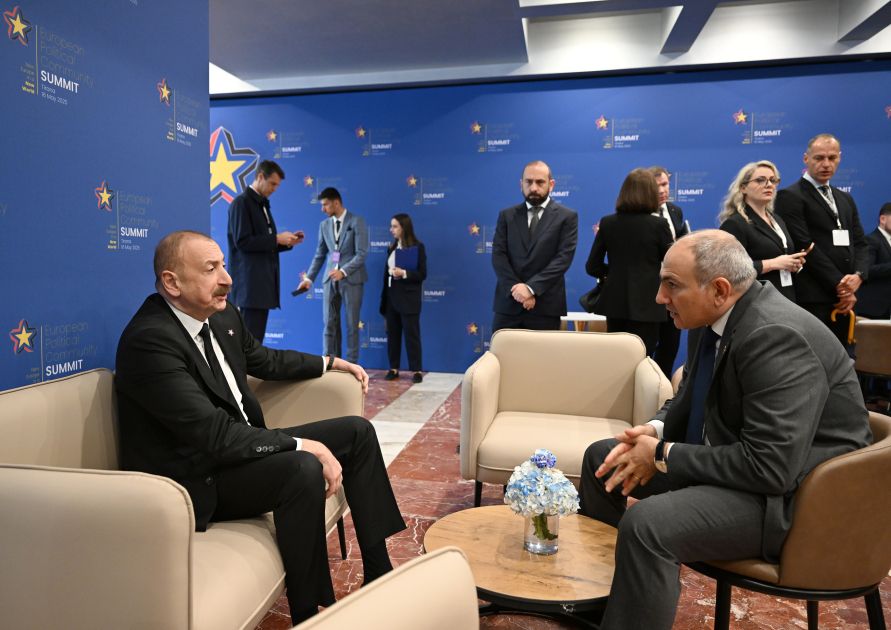
Armenian foreign minister on the Washington declaration