
Azerbaijan Railways CJSC has announced a record-high volume of container traffic through the Port of Baku for the period of January to July 2025, Azernews reports, citing the company.
Day: August 8, 2025
Assistant to the President of Azerbaijan Hikmat Hajiyev: “President won the war, and now he wins the peace” on Aliyev’s Washington meeting.#Azerbaijan #WashingtonMeeting #SouthCaucasus #RegionalStability #AliyevInWashington #AnewZ pic.twitter.com/cKcm0XxnHA
— AnewZ (@Anewz_tv) August 8, 2025
Yes, @presidentaz wins the #Peace! From now on the #SouthCaucasus will be the best place on the #World for understanding and cooperation. https://t.co/WVQ8EgRM15
— Azer Hasret #SouthAzerbaijanIsNotIran (@azerhasret) August 8, 2025
Detained activist Nino Datashvili and her lawyers said experts were sneaked into her cell to conduct a psychiatric evaluation via interview, in what appears to be an attempt by prosecutors to bypass a controversial court order mandating the activist’s forced transfer to a psychiatric facility.
On August 2, lawyers of Nino Datashvili, an activist and teacher detained on disputed charges of assaulting a public official, said the court granted the prosecutor’s request to mandate the activist’s forced examination in a psychiatric facility for 20 days. The order was based on Datashvili’s 2019 medical records indicating “emotional lability” as a symptom accompanying a serious and painful spinal condition.
The order drew widespread condemnation, including from lawyers and mental health professionals, who saw it as an inhuman treatment and a revival of Soviet-era repressive practices of punitive psychiatry.
On August 7, Datashvili and her lawyers reported that the psychiatric evaluation was conducted via interview in her cell. The activist said the examination happened unexpectedly while she was anticipating a transfer to a psychiatric facility.
“I had my bags packed,” Datashvili told the court during a lengthy pre-trial hearing on August 7, during which the court decided to keep the activist in pre-trial detention. “Yesterday, the experts came in, and I asked to call my lawyers. [They said] it’s not necessary. I couldn’t understand what was happening to me. Don’t I have my own rights?”
Medea Tsiramua, a prosecutor in the case, later confirmed to journalists that, given Datashvili’s refusal of the transfer, experts were sent into the penitentiary facility to assess her condition through an interview. Citing the defendant’s best interests, Tsiramua stated that the examination was thus completed and no further studies would be conducted.
While criticising what she called “deceptive” examination in the cell, Tamuna Gabodze, Datashvili’s lawyer from Partnership for Human Rights, a local human rights group, described the move as an activist’s “victory,” attributing it to the prosecutor’s efforts to circumvent the coercive order after widespread backlash.
“For the past few days, the prosecutor’s office has been persistently trying to prove that Nino should undergo a psychiatric examination based on documents filed by defense. Yesterday, secretly from the defense, they urgently brought Samkharauli [Forensics Bureau] experts to Nino in prison to somehow avoid her transfer to a psychiatric [facility],” Gabodze wrote on Facebook.
Abuse Allegations
Datashvili was arrested on June 20 and faces four to seven years in prison on charges of assaulting a law enforcement officer. The charges stem from a June 9 incident in which she was forcibly removed from a courtroom by bailiffs. Video footage shows her flailing her arms as she was restrained, though the nature or force of the contact remains unclear.
During the August 7 hearing, the activist also recalled the circumstances of her arrest, saying she was detained at a bus stop by plainclothes officers who neither identified themselves nor informed her of her rights, and was later forced to undress at the police station.
“When they took me to the police station, I kept pleading with them to allow me to call my child or a lawyer […] because I wanted to protect my rights. I have the right to have a lawyer,” she told the court, according to the Publika outlet.
“They stripped me. I wanted my lawyer to arrive first so I could be informed about everything before signing any documents,” the activist said, adding that she was denied access to a toilet for several hours.
Some other women detainees have reported what critics see as humiliating strip-searching practices by Georgian prison authorities. On June 13, the Georgian Public Defender’s Office said the Justice Ministry agreed to stop fully stripping inmates during body searches following the ombudsperson’s constitutional lawsuit.
Datashvili also recalled that after being taken to the police station, officers began filming her as a standard procedure. However, she claimed they were unsatisfied with the footage and made her walk back and forth multiple times to reshoot it. “They treated me like an object, not a human being,” Datashvili told the court.
The activist’s criminal case is among several recent prosecutions that critics say illustrate the ruling Georgian Dream party’s growing use of harsh criminal charges to target activists and journalists over relatively minor incidents.
Also Read:
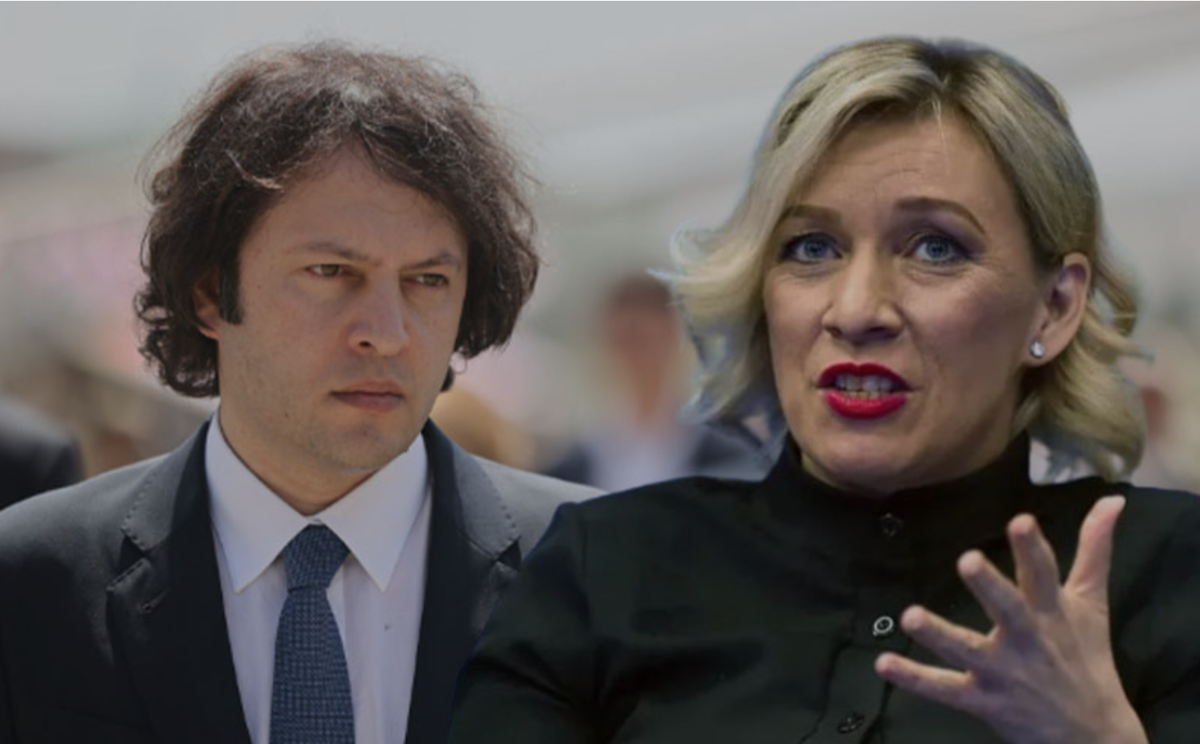
Georgian Dream on the 2008 war
Nearly all leaders of Georgian Dream have repeated the Kremlin’s disinformation narrative that Georgia started the August 2008 war, following similar remarks from prime minister Irakli Kobakhidze.
Russian Foreign Ministry spokesperson Maria Zakharova also backed the Georgian government’s statements, saying Georgia must sign a non-use-of-force agreement with Abkhazia and South Ossetia — regions currently under Russian occupation.
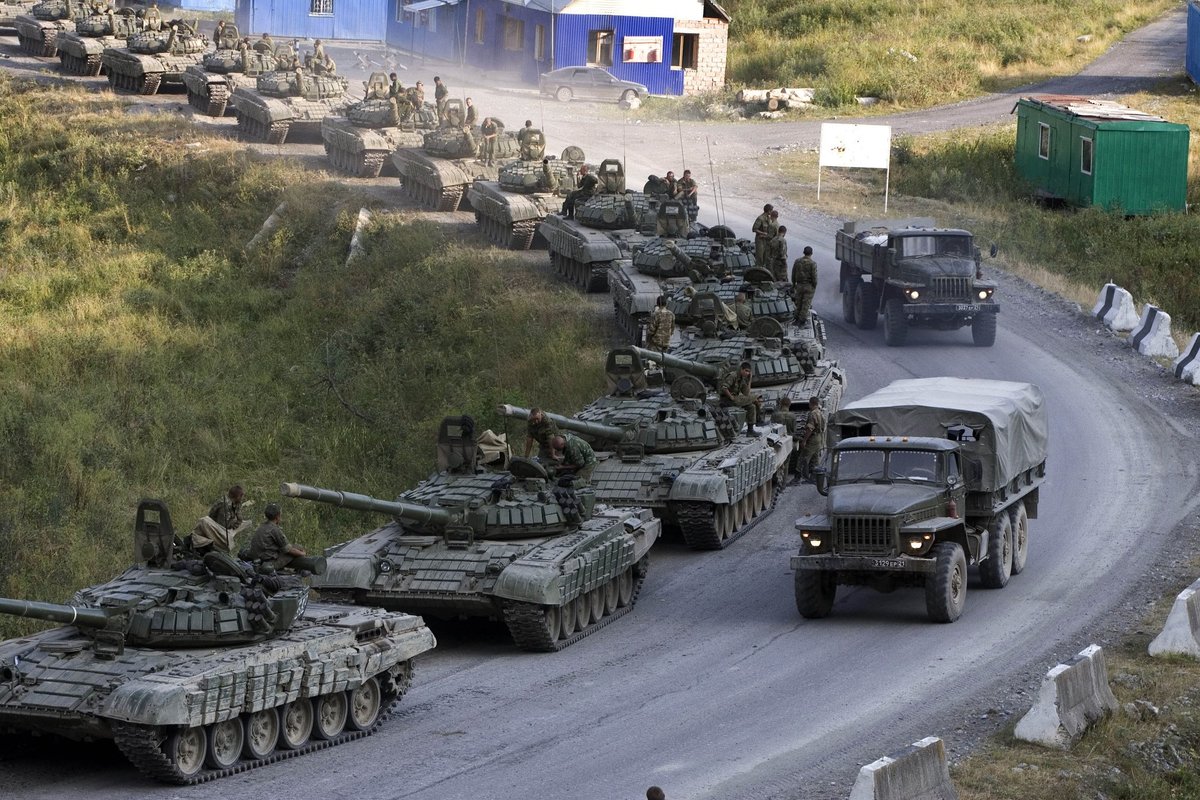
8 August marked the 17th anniversary of the 2008 Russia–Georgia war over the breakaway region of South Ossetia. Most of Georgian society — as well as the entire political opposition — blames Russia for starting the war and occupying Georgian territory.
Western allies of Georgia share this position and continue to express firm support for the country’s territorial integrity. US Senator Jeanne Shaheen, a senior member of the Senate Foreign Relations Committee, issued a statement on the anniversary, reiterating that stance.
“Russia’s 2008 invasion of Georgia should have been a wake-up call for the international community about its intent to dominate its neighbours. The Kremlin’s brutal actions in Georgia preceded its war in Ukraine — including the current full-scale invasion,” she said.
“The Georgian people know what the so-called ‘Russian world’ brings — and that’s why they are fiercely resisting Georgian Dream’s efforts to push the country toward Russian-style authoritarianism.
“On this anniversary, the United States must continue to stand against Russia’s illegal annexation of Abkhazia and South Ossetia.”
Shaheen went on to express deep concern about what she called Georgian Dream’s erosion of democratic values and betrayal of the Georgian people’s Euro-Atlantic aspirations.
“If the government wants to honour the victims of Russian aggression, it should release political prisoners — including journalist Mzia Amaghlobeli — and reaffirm its commitment to a democratic future for Georgia.
“I will continue to stand with the Georgian people and redouble my efforts to pass the bipartisan, bicameral Making Emerging Geopolitical Orientations Balanced and Accountable with Responsible Investments Act — or MEGOBARI Act.”
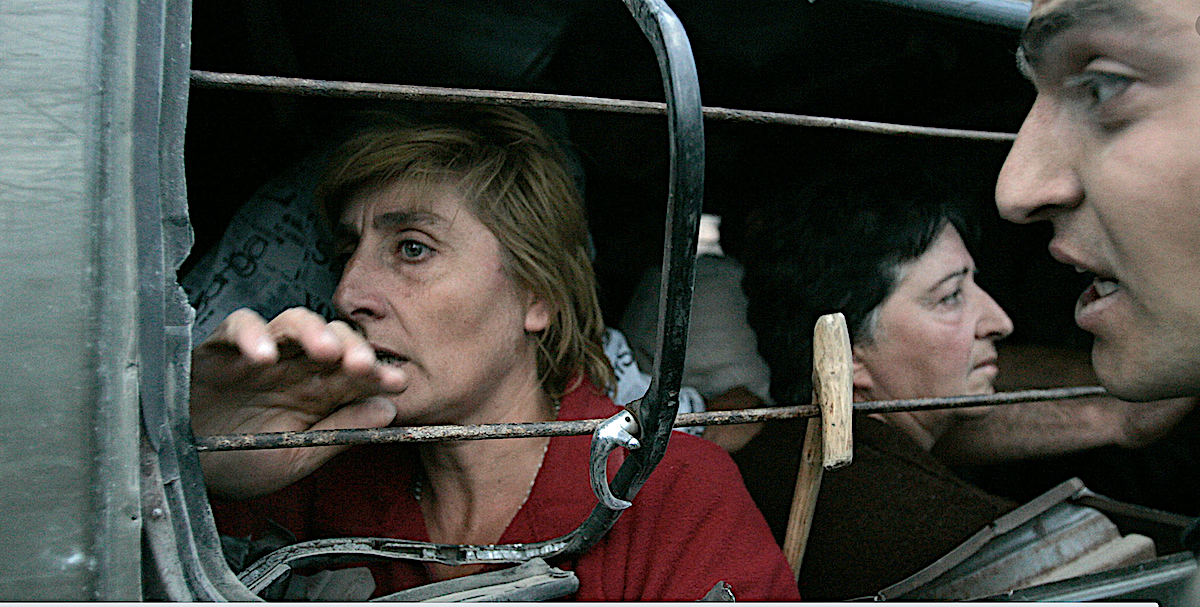
What Georgian Dream officials said
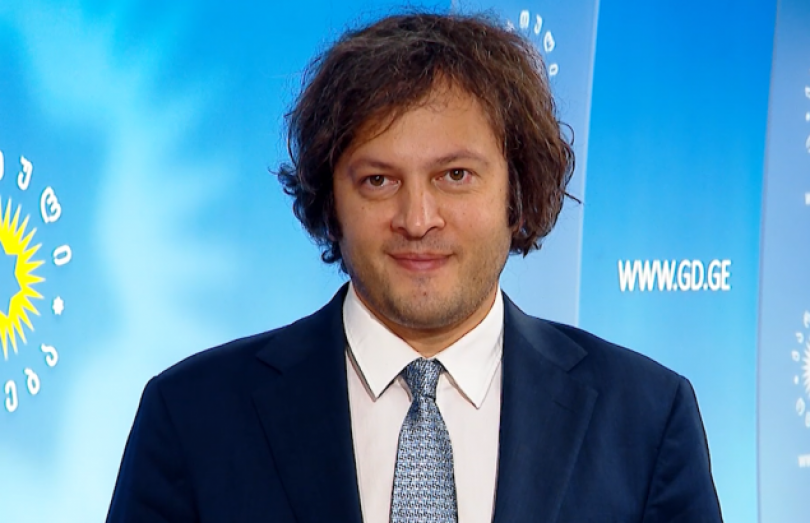
Irakli Kobakhidze, prime minister from Georgian Dream:
“Saakashvili started the war at the urging of external forces, on orders from the US State Department. The timeline of events is reflected, among other places, in a Council of Europe resolution and the Tagliavini Report, which state that on 7 August 2008, the regime at the time opened artillery fire on Tskhinvali, and the following day Russian troops entered Georgia.
The facts are there in the Council of Europe’s resolution. There was an escalation, yes — but it turned into a full-scale war after the regime launched an unannounced assault on Tskhinvali. At dawn on 8 August, they proudly told us they were capturing village after village. <…> This wasn’t a defensive operation. They openly declared that they were restoring constitutional order and launching offensive operations to do so.”
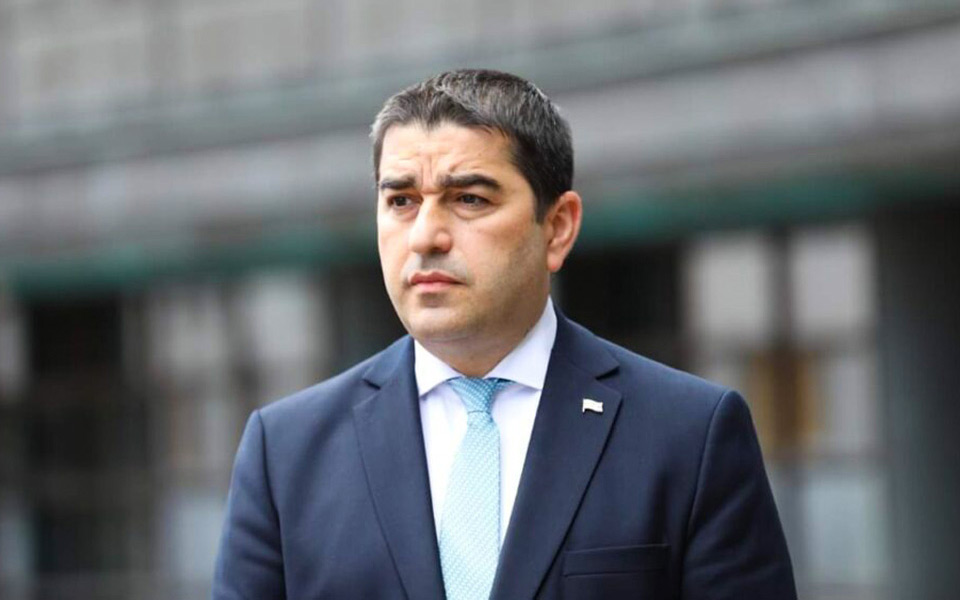
Shalva Papuashvili, chair of Georgian Dream’s parliamentary faction:
“In 2008, we had a puppet regime in the form of the United National Movement and Mikheil Saakashvili. That regime served the interests of others, not of Georgia. The result was the August war, followed by decisions that exposed their hypocrisy — on the one hand, talking about occupation, and on the other, backing Russia’s accession to the World Trade Organization. Whatever orders they were following, whatever interests they were serving, this is how they acted. That’s the difference between a puppet government and a patriotic one.
When the threat of war can emerge at any moment, a government must act in the national interest — not in the interest of foreign powers.
How can a traitor and a puppet have anything in common with Georgian heroes? Saakashvili has nothing to do with them, nothing to do with our country — its past or its future. He was a traitor, and he will remain one in our history.”
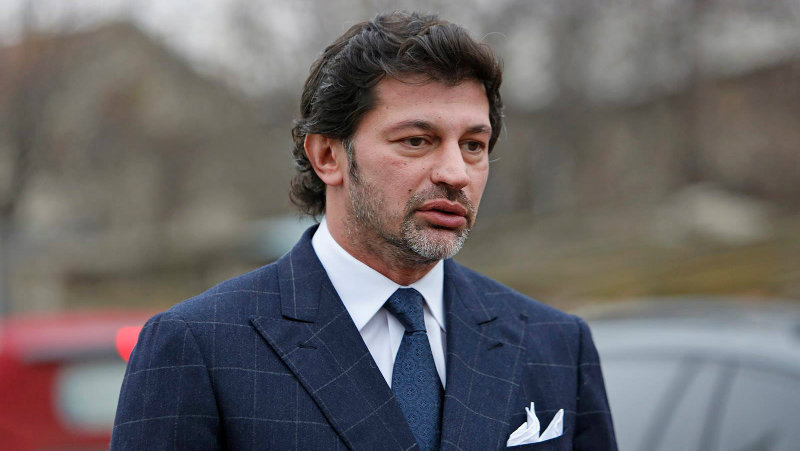
Kakha Kaladze, Mayor of Tbilisi:
“As for the war, unfortunately, the policies pursued by the United National Movement clearly didn’t serve Georgia’s interests — they served the interests of other countries or groups.
The August 2008 war showed us that the international community responds with little more than expressions of ‘concern’. It showed us exactly what a government should not be.”
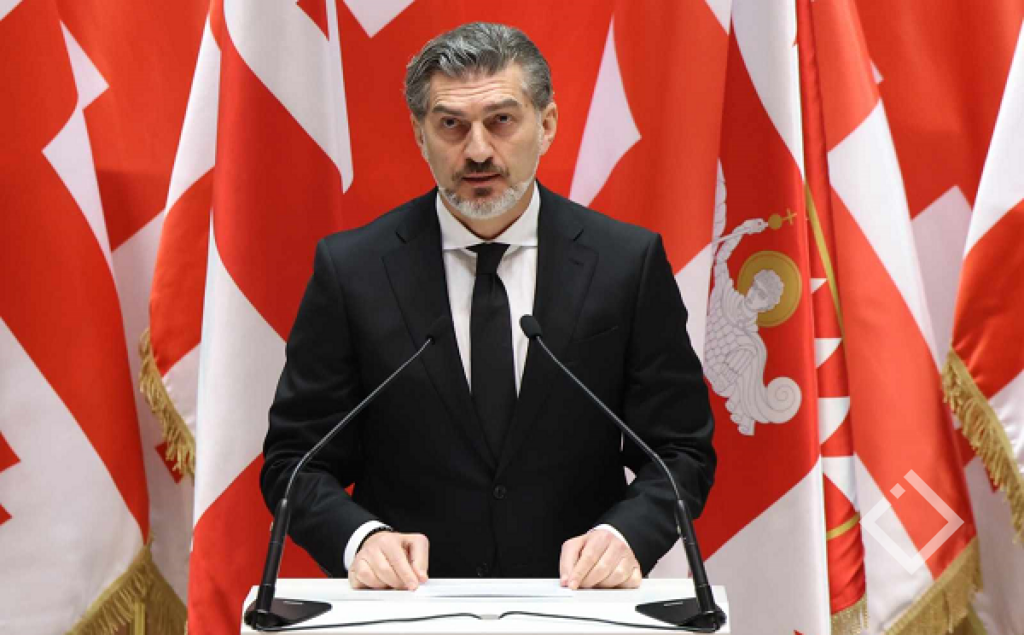
Mikheil Kavelashvili, president from Georgian Dream:
“Do you remember August 2008? Do you remember 7 August? What was the government saying at the time? On 7 and 8 August, were they talking about a Russian invasion? Is there any record of that?
Why didn’t they inform the public about the Russian army crossing the border on 7 August?”
Russian Foreign Ministry spokesperson Maria Zakharova welcomed Georgian Dream’s statements, saying they gave hope for “progress in negotiations.”
Speaking about the August war, Zakharova repeated familiar Kremlin propaganda lines, claiming that Georgia should sign a non-use-of-force agreement with the de facto authorities in occupied Abkhazia and South Ossetia.
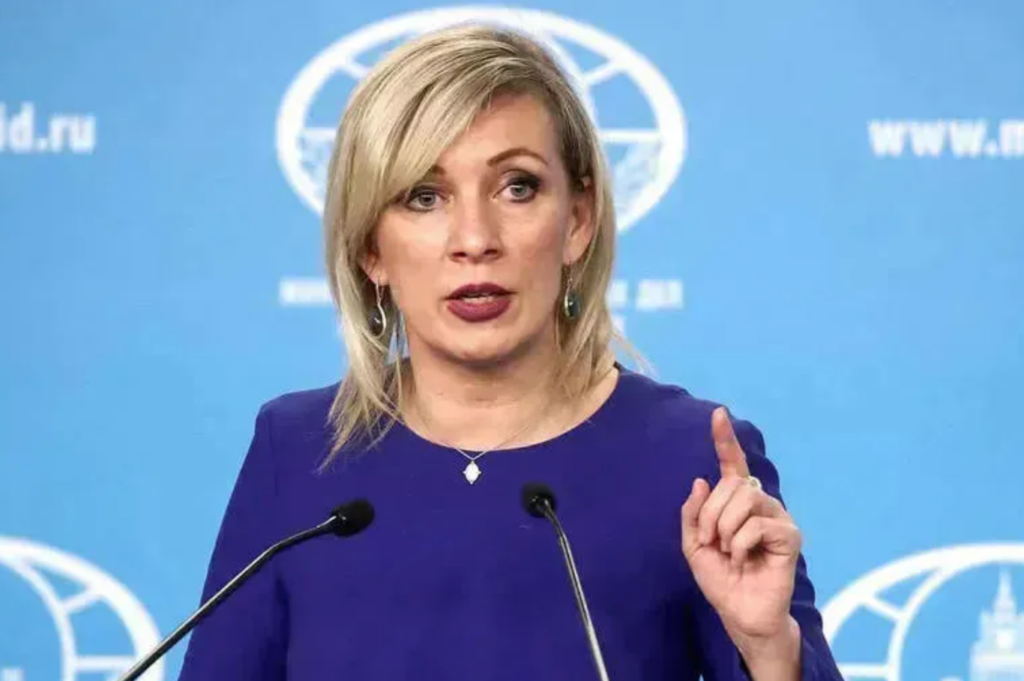
“The top priority is for Georgia to sign a legally binding agreement on the non-use of force towards Abkhazia and South Ossetia,” said Zakharova. “Such a deal would not only help prevent a repeat of the tragic events of August 2008, but also serve as a starting point for normalising relations between Tbilisi, Sukhumi and Tskhinvali.”
She also welcomed the Georgian Dream government’s recent statements, saying that “Georgia’s official recognition of Mikheil Saakashvili’s aggression against South Ossetia, as well as its calls for reconciliation with the Abkhaz and Ossetians, offer hope for progress in negotiations.”
“There is now a chance to move talks forward,” Zakharova added, “as the Georgian government has publicly acknowledged Saakashvili’s aggression against South Ossetia and has spoken about the need for reconciliation.”
“It is important,” she said, “that these statements become central to Tbilisi’s approach to restoring ties with Sukhumi and Tskhinvali — and that they lead to real, practical steps.”
Georgian Dream on the 2008 war
News from Georgia
Beyond the symbolic value, the expert emphasized practical benefits. According to him, both countries could begin exploring mutually beneficial trade and transit arrangements, particularly in the context of the Middle Corridor — the transcontinental trade route connecting Central Asia to Europe via the South Caucasus. Selective energy cooperation might also become possible, including power-swapping arrangements through Georgia and Turkiye.