
A meeting was held between the Commander of the Azerbaijani Navy, Captain 1st Rank Shahin Mammadov, and the visiting Commander of the Pakistan Navy, Admiral Naveed Ashraf, Azernews reports, citing the Azerbaijani Ministry of Defense.
Day: August 6, 2025
https://t.co/7OX5wC0DnQ#NewsAndTimes #NT #TNT #News #Times #World #USA #POTUS #DOJ #FBI #CIA #DIA #DOD #ODNI #Trump #TrumpNews #TRUMPISTAN #Israel #Mossad #Netanyahu #Ukraine #NewAbwehr #OSINT #Putin #Russia #GRU #Путин #Россия #Bloggers #Opinions #SouthCaucasus
-…— Michael Novakhov (@mikenov) August 6, 2025
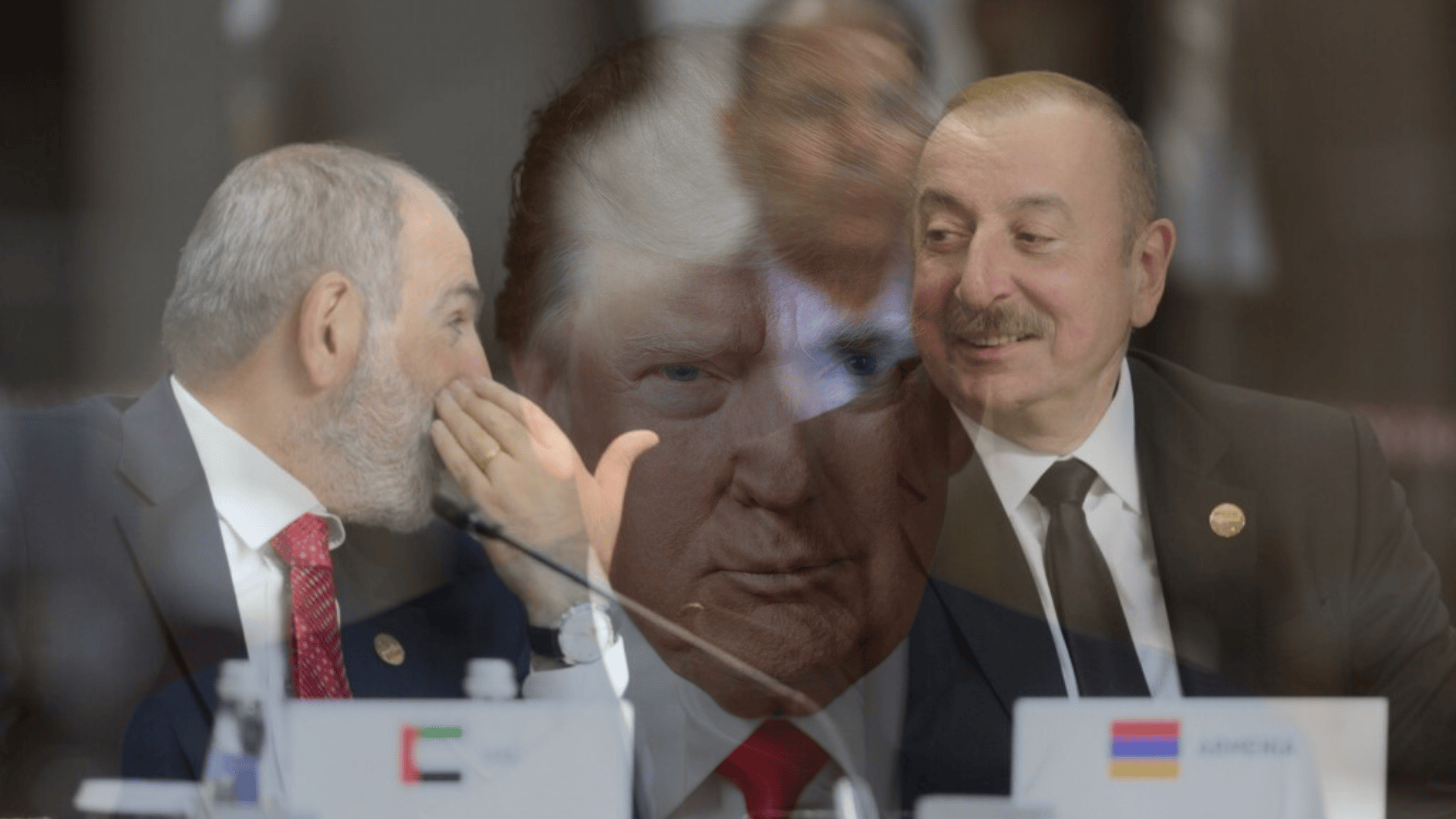
Aliyev-Pashinyan meeting in Washington
As part of ongoing efforts to resolve the decades-long conflict between Armenia and Azerbaijan, president Ilham Aliyev and prime minister Nikol Pashinyan are expected to meet in Washington in the coming days.
According to reports in international media, the two leaders are not expected to sign a full peace agreement, but rather a document outlining intentions to move towards peace — a so-called “letter of intent”. The meeting, if it goes ahead, may be mediated by US president Donald Trump, with several sources claiming that Trump plans to host Aliyev and Pashinyan at the White House.
Officials have so far neither confirmed nor denied the reports. However, the potential for such a high-level meeting in Washington signals a growing diplomatic push in the region from the West.
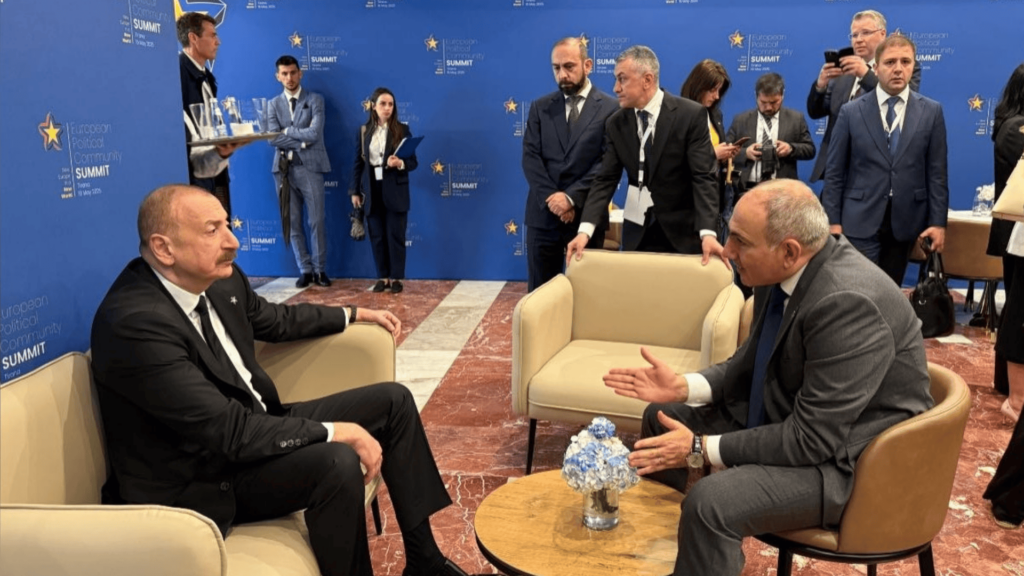
The idea for the meeting reflects a shift in diplomatic dynamics in the region. Since the 2020 war, parallel formats for peace negotiations have emerged: on one hand, Russia hosted trilateral talks, while on the other, the European Union — particularly through European Council president Charles Michel — has held summits in Brussels.
The United States has also stepped up its mediation efforts. In May 2023, US Secretary of State Antony Blinken hosted the foreign ministers of both countries in Washington for several days of intensive talks.
Russia, however, openly voiced dissatisfaction with these developments. Moscow criticised the Washington talks, saying it viewed them “negatively” — a stance that has fuelled growing competition over who mediates in the South Caucasus. In recent years, Russia’s influence in the region has waned, undermined by its war in Ukraine and deteriorating relations with both Yerevan and Baku. Trust in Russian peacekeepers and diplomatic mechanisms has eroded.
This decline became especially apparent in late 2022, when Russian peacekeepers failed to keep the Lachin corridor to Karabakh open. As a result, the region’s Armenian population faced months of food and medicine shortages — a blow to Moscow’s image as a security guarantor.
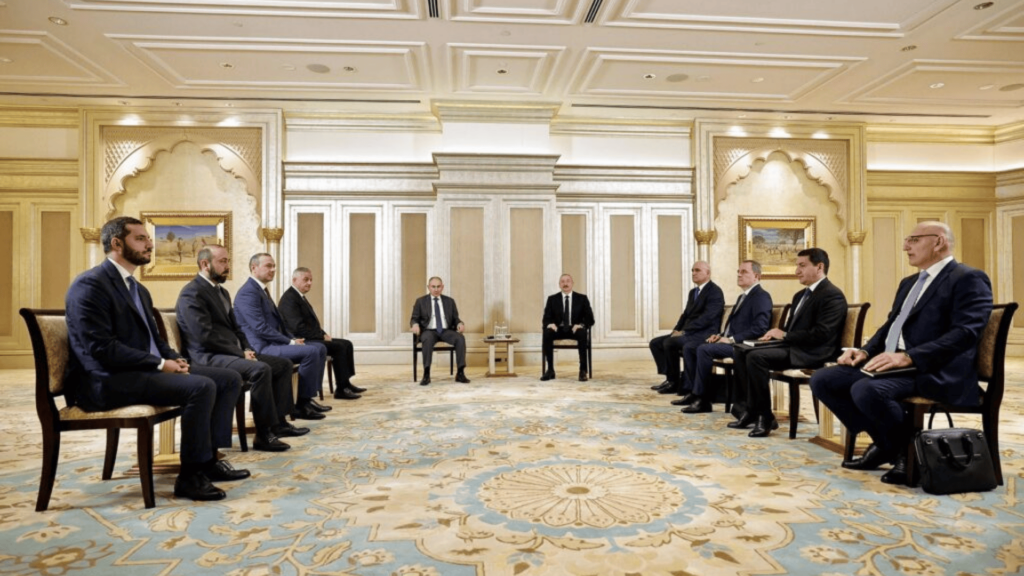
In this geopolitical context, the Trump administration has taken a more active role in the peace process. A surprise meeting between Aliyev and Pashinyan in July 2025 in the United Arab Emirates ended months of diplomatic deadlock and signalled renewed momentum. Following that meeting, both leaders reiterated their commitment to reaching a final peace agreement.
The planned talks in Washington are reported to be part of this ongoing dialogue — and their very occurrence could be seen as a major blow to Russia’s traditional role in the region. In other words, a peace deal brokered by the West would mark a clear shift in regional diplomacy, with mediation efforts moving from Moscow to Washington and Brussels.
Possible agenda: letter of intent and expected outcomes
The Washington meeting is expected to focus on the core elements of a comprehensive peace agreement between Armenia and Azerbaijan. While the two sides have yet to finalise the full text of a treaty, they are reportedly preparing to sign a memorandum in the form of a “letter of intent for peace”.
Such a document would officially affirm both countries’ commitment to peace and is seen as a key symbolic step towards a final agreement. It would also mark a diplomatic achievement for the United States. International observers note that the Trump administration is keen to secure a foreign policy success in the South Caucasus, viewing it as a matter of geopolitical influence.
As for the possible agenda, several key topics have already been outlined. Chief among them is the mutual reaffirmation of the principle of territorial integrity. Back in March 2025, officials from both Armenia and Azerbaijan stated that they had agreed on much of the peace treaty’s text, including mutual recognition of territorial borders. However, progress later stalled due to unresolved issues.
Among the most contentious are demands to amend Armenia’s constitution and disputes over the proposed “Zangezur corridor” — a transport route intended to link Azerbaijan’s Nakhchivan exclave with the rest of the country. Baku is also insisting that all references to Karabakh be removed from Armenia’s constitution, particularly mentions of the former “Nagorno-Karabakh” in the preamble.
Pashinyan’s government has already announced its intention to make the change. The prime minister said he plans to hold a referendum in 2027 to amend the constitution and remove the reference to Karabakh. Despite public backlash, he has reaffirmed his commitment to preparing a new constitutional draft ahead of the 2026 parliamentary elections.
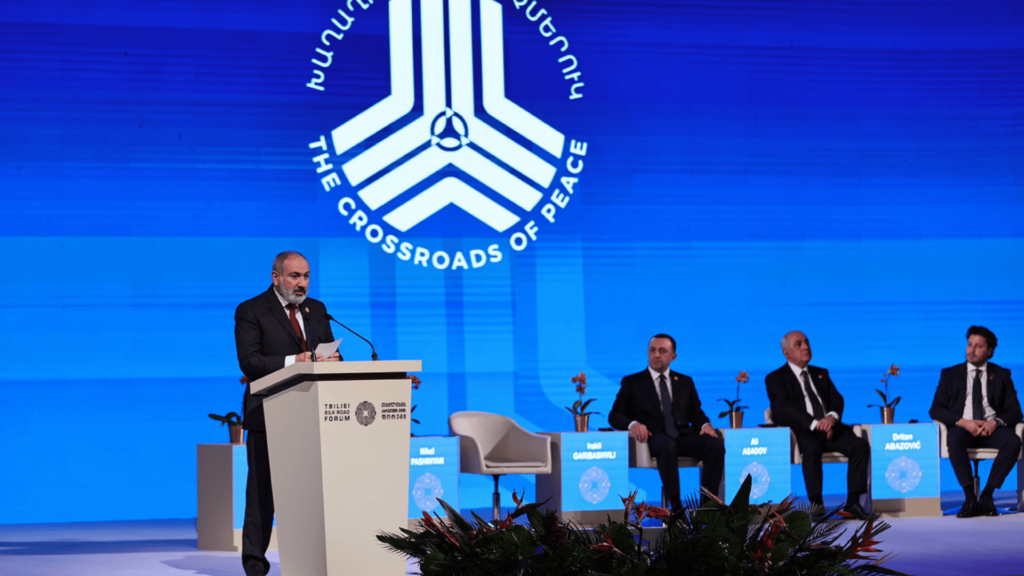
Another critical issue is the status of the road intended to connect mainland Azerbaijan with the Nakhchivan exclave. For years, Baku has pushed for the creation of a direct land route to Nakhchivan along the border with Iran, passing through Armenia’s southern Syunik region. Azerbaijan refers to this as the “Zangezur corridor” and insists on its unrestricted operation — effectively demanding sovereign control over the route.
Armenia, however, rejects the term “corridor” and sees the proposal as a threat to its sovereignty. While Yerevan says it is open to unblocking regional transport links, it firmly rules out granting any special status to such routes.
This disagreement is expected to be one of the central topics at the Washington talks. Various compromise proposals have been floated. For instance, the US reportedly suggested leasing the route to an international company for 99 years, to help build trust and manage its operation. Armenia rejected the idea, saying it would not lease its territory to any foreign entity.
Alternative models may also be on the table, such as placing the route under the management of an international consortium approved by both countries. If such a compromise is reached, it could allow more politically sensitive issues — like constitutional amendments — to be postponed to a later stage.
An official peace agreement is not expected to be signed at the Washington meeting. However, diplomatic sources believe there is a strong likelihood that a preliminary deal on key principles will be formalised. Following the last round of talks in Abu Dhabi, president Aliyev said the two sides could agree and initial the main principles of a peace deal within a few months.
“Reaching an agreement and initialling the key principles, followed by work on the full text, could be one possible path,” Aliyev said. The letter of intent expected to be signed in Washington is likely to take the form of such an initialled framework agreement.
This document is expected to include a formal renunciation of territorial claims by both sides, a commitment to mutual recognition of borders, and an agreement to open transport and communication routes. In addition, the meeting may produce a timeline and roadmap for completing and signing the full peace agreement.
If the Washington talks go ahead, their main outcome would be a political declaration marking the transition of the peace process into what many see as an irreversible phase.
Border tensions and unresolved flashpoints
Although the active phase of the Karabakh conflict has ended, the demarcation of the state border between Armenia and Azerbaijan — along with several other regional issues — remains unresolved. Due to the lack of clearly defined Soviet-era administrative boundaries, border clashes have flared up periodically since the 2020 war.
One of the most serious incidents occurred in September 2022, when fighting broke out along the border in what became the largest escalation since the 2020 ceasefire. Around 300 soldiers from both sides were killed.
During the clashes, Azerbaijani forces advanced into parts of Armenia’s sovereign territory, seizing strategic heights in the Syunik and Gegharkunik regions and gaining a tactical advantage. Both sides blamed each other for starting the hostilities, while the international community called urgently for a ceasefire. Russia responded by mediating a temporary truce. Still, the issue of border demarcation remains unresolved.
Further delays came in October 2023, when a planned meeting between Aliyev and Pashinyan in Granada, Spain, under EU mediation, was cancelled. President Aliyev withdrew at the last moment in protest at the attendance of French president Emmanuel Macron — a move that stalled progress on peace and border negotiations.
There has, however, been some progress. In April 2024, Armenia announced it would hand over several enclaves — small villages that, according to Soviet maps, are Azerbaijani territory but have been under Armenian control since the 1990s. The move was widely seen as a step towards building mutual trust. Still, the broader process of delimiting and demarcating the border remains unfinished and urgently needs agreement.
The absence of a clearly defined border continues to trigger local incidents and poses risks for both sides. Discussions also continue over security mechanisms that could support lasting peace. A civilian EU monitoring mission is currently stationed in Armenia, but Azerbaijan has opposed its presence and called for its withdrawal. Finding security guarantees acceptable to both countries remains a key challenge.
Humanitarian issues also continue to linger. After the 2020 war, the agenda included the exchange of detainees and efforts to speed up demining in affected areas. In autumn 2023, the focus shifted to the fate of tens of thousands of Armenian refugees who fled Karabakh. The Armenian government is seeking international support to help resettle them.
At the same time, Azerbaijan has launched criminal proceedings against former separatist leaders of Karabakh, accusing them of war crimes. Among those brought before Azerbaijani courts is Ruben Vardanyan, former state minister of the unrecognised “Republic of Artsakh”, along with several others. Yerevan has condemned the trials as a “political spectacle” and strongly criticised them. These developments underscore how fragile trust remains between the two countries.
Key unresolved issues in the peace process
Border delimitation:
While Armenia and Azerbaijan have formally recognised each other’s territorial integrity and international borders, the actual demarcation process remains incomplete. Clearly mapping the shared state border is a key priority — particularly the clarification of disputed Soviet-era maps and the status of several enclaves. Proper delimitation is seen as essential to preventing future territorial claims.
Connection to Nakhchivan (reopening transport links):
Azerbaijan continues to insist on the establishment of an unobstructed transport corridor — referred to as the “Zangezur corridor” — linking its mainland to the Nakhchivan exclave. This remains one of the most contentious points in the peace negotiations. One proposed compromise involves guaranteeing Armenian sovereignty over the territory the route would cross, while introducing a special regime to ensure free movement of Azerbaijani goods and citizens. There have also been discussions about involving international partners, such as the European Union, as mediators or guarantors.
Constitution and the status of Karabakh:
The preamble of Armenia’s constitution still includes a reference to Karabakh, which Baku strongly opposes. Pashinyan’s government has expressed political will to remove the clause and has scheduled a referendum for 2027. If adopted, the constitutional change would offer Baku further assurance that Armenia has fully renounced any claims over Karabakh. While Yerevan has already officially recognised Karabakh as part of Azerbaijan, enshrining this recognition in the constitution would be seen as a confidence-building step.
Humanitarian and legal issues:
These include the rights of affected populations, the protection of cultural heritage, and the pursuit of justice. Although large-scale return of ethnic Armenians who fled Karabakh is unlikely, questions remain over their property rights and the preservation of cultural and religious sites. Efforts are also needed to establish the fate of missing persons, investigate war crimes, and reduce hate speech on both sides — all of which are essential for lasting peace.
A range of options are being discussed to address these unresolved issues. Experts note that if the two sides can reach a deal on the complex question of the transport corridor and fairly share the resulting economic benefits, more politically sensitive matters — such as constitutional amendments — could potentially be postponed.
The preferred approach to border delimitation involves using international legal mechanisms, including third-party mediation or a joint commission. This process is already underway.
On the humanitarian front, confidence-building measures — such as the release of all detainees, the full handover of landmine maps, and commitments to protect historical and cultural sites — could contribute significantly to advancing the peace process.
The role of the Washington meeting in this context
Against the backdrop of the unresolved issues outlined above, the planned meeting between Aliyev and Pashinyan in Washington is being seen as a potential turning point in the peace process. If it goes ahead, it would mark the first time since the 2020 war that the leaders of Armenia and Azerbaijan sit down for talks under Western auspices.
This would signal both sides’ willingness to engage in direct dialogue outside the framework of Russian mediation. Analysts stress that any pause in negotiations increases the risk of renewed conflict, while maintaining a continuous dialogue is essential for regional security. The Washington talks could therefore play a crucial role in creating the conditions for sustained stability.
Secondly, a successful outcome — including the signing of the anticipated letter of intent and the announcement of a concrete roadmap — would bring the two countries another step closer to a final peace agreement. Such a diplomatic milestone would also place new responsibilities on both parties.
By signing the letter of intent, the two leaders would be making a formal commitment to their own populations and the international community to remain on the path toward peace. The document would also serve as a written record of previously agreed verbal commitments — a useful reference point should disputes arise in the future.
Thirdly, the meeting in Washington would have broader geopolitical implications. If the peace process continues under direct US mediation, Russia’s role in the South Caucasus would diminish further, while Western influence — from both the US and the EU — would grow. This shift could open up new opportunities for both Armenia and Azerbaijan.
A lasting peace could pave the way for deeper economic integration, expanded transport and infrastructure projects, and the normalisation of Armenia-Turkey relations. It could also lay the groundwork for future trilateral cooperation between Azerbaijan, Turkey, and Armenia.
In time, a new regional order could emerge in the South Caucasus — one built not on hostility but on economic interdependence and collaboration. Armenia could take part in regional initiatives, including East–West trade routes through the so-called Zangezur corridor, while Azerbaijan would benefit from a reduced security threat along its western border.

At the same time, it is important to recognise the reality: the Washington meeting will not resolve all outstanding issues overnight. Rather, it is expected to serve as a political signal — a step that sets out a roadmap. Complex issues such as border delimitation, the corridor, and constitutional amendments will still require time and detailed technical negotiations.
Nonetheless, any high-level agreement reached at the meeting is expected to give those technical talks a significant political boost. It may also increase the likelihood of bringing in international guarantors — such as the US and the EU — to help oversee and enforce future agreements.
If it takes place, the meeting between Ilham Aliyev and Nikol Pashinyan in Washington could go down as one of the most hopeful moments in efforts to resolve a conflict that has lasted nearly 30 years. It would demonstrate that both sides recognise there is no alternative to peace and are willing to make mutual concessions under the guidance of international partners — particularly the United States.
While building peace after decades of hostility will not be easy, a handshake in Washington would symbolise the start of a new chapter in the South Caucasus. Analysts say that high-level contacts of this kind not only help to sustain the peace process, but are also among the most effective ways of preventing renewed violence.
Signing a framework peace agreement would mark a final turning point on the road to a comprehensive treaty. That is why expectations for the Washington meeting are high — and why its outcome could prove decisive for the future of the entire region.
News from Azerbaijan
Categories
Moscow Calling – August 6
Peskov explains prolonged absence of meeting between Russian, U.S. presidents
The Kremlin said it was not surprising that Vladimir Putin had not yet met with the new U.S. president in person, marking the first time in post-Soviet history that it has taken more than six months, TASS reported. Kremlin spokesperson Dmitry Peskov said such a long pause reflects the unprecedented deterioration in Russian-American relations during Joe Biden’s presidency. According to Peskov, many irritating factors have accumulated, lowering the level of relations between Moscow and Washington “to an unprecedented level.” At the same time, the Kremlin emphasized that President Donald Trump has already spoken with Putin six times by phone (TASS).
Intended effect:
The material portrays the Biden administration as responsible for the sharp deterioration in relations with Russia and highlights Donald Trump’s “new” approach as being more favorable to Moscow. This may shape audience expectations for normalized dialogue under Trump and shift responsibility for Russia’s isolation onto the previous U.S. administration.
Zakharova comments on possible deployment of Russian weapons in Latin America
Russia is considering military cooperation with other countries, including the possibility of deploying weapons, strictly within the framework of its international obligations and bilateral agreements, Russian Foreign Ministry spokesperson Maria Zakharova said, commenting on experts’ statements about the potential deployment of Russian Oreshnik missile systems in Venezuela and Cuba. She stressed that statements on this matter reflect the personal views of the experts and that the Ministry of Defense is responsible for addressing this issue (EADaily).
Intended effect:
The material portrays Russia as a responsible actor, emphasizing its respect for international norms and partnership commitments. At the same time, it allows for the possibility of expanding Russia’s military presence in the Western Hemisphere. This could be perceived as a signal to the West that Russia is ready to respond symmetrically to the actions of the U.S. and NATO.
Nikiforova accuses London of trying to provoke U.S. into war with Russia
A version is circulating in the Russian information space which claims that British special services allegedly prepared a provocation involving Ukrainian security forces to discredit Russia and its energy exports, Russian journalist Victoria Nikiforova writes in an article on RIA Novosti. Nikiforova is under Western sanctions for spreading Russian disinformation following Russia’s invasion of Ukraine. The article claims that there were plans to stage a terrorist attack on a tanker carrying Russian oil to cause an environmental scandal and provide a pretext for sanctions and a possible military confrontation with NATO. The article concludes that the UK is behind these actions, as it allegedly benefits from escalation and even global conflict, including dragging the U.S. into a war with Russia (ria.ru).
Intended effect:
The article promotes the image of a “foreign conspiracy” against Russia, portraying London as the main villain, dreaming of unleashing World War III. It reinforces anti-British and anti-NATO rhetoric, painting the audience as surrounded by a hostile ring and justifying potential retaliatory measures.
Ashotyan accuses U.S., EU of tacitly approving persecution of Armenian Apostolic Church, opposition
Armen Ashotyan, the deputy chairman of Armenia’s former ruling Republican Party, claimed that the European Union and the United States are turning a blind eye to the persecution of the Armenian Apostolic Church and opposition politicians in Armenia. According to RIA Novosti, Ashotyan noted that those currently under arrest are not only “political prisoners of Nikol Pashinyan,” but also of the international institutions that talked about Armenian democracy for years yet proved incapable of defending their own values. Ashotyan claims that the authorities would have released those arrested if even a small European country had spoken out. According to him, he considers the U.S. and EU ambassadors to be the “jailers” of the arrested Church and opposition representatives (ria.ru).
Intended effect:
The material reinforces the narrative of Western double standards and an alleged conspiracy between international institutions and the Armenian government against the church and dissent. The material appeals to traditional values and representatives of the diaspora, while undermining trust in Armenia’s external partners, creating an image of a besieged church and a devoted “popular” movement that is allegedly being suppressed with the tacit consent of the U.S. and the EU.
Batumelebi and Netgazeti founder Mzia Amaghlobeli has been sentenced to two years in jail after the court’s last-minute decision to reclassify criminal charges from attack on a police officer to “resistance, threat or violence” against an official. While still deemed unfair by Amaghlobeli’s supporters, the verdict is seen as a slight retreat from the Georgian judiciary’s previously uncompromising stance on protest-related cases.
The ruling comes after Amaghlobeli spent seven months in pre-trial detention, where she ended up for slapping Batumi Police Chief Irakli Dgebuadze during a tense night of protests and arrests. The case had attracted widespread scrutiny, with observers describing both the criminal charges and the lengthy pre-trial custody as punitive measures aimed at silencing the journalist.
Amaghlobeli was initially charged under Article 353 prima of the Criminal Code, carrying a penalty of four to seven years in prison, and was replaced with a charge under part 1 of Article 353 Criminal Code involving “resistance, threat or violence against a protector of public order or other representative of the authorities”, punishable by a fine or house arrest for a term up to two years, or by imprisonment for a term of two to six years.
Batumi City Court Judge Nino Sakhelashvili delivered the ruling on August 6, as supporters gathered in and outside the courtroom in the coastal city to stand with Amaghlobeli.
“Whatever decision you make today, I want you to know that I consider myself a winner,” Amaghlobeli told the court in her closing remarks on August 4.
Many had traveled long distances to attend the trials, including Amaghlobeli herself, who is held at Rustavi’s fifth penitentiary facility, a six-hour drive from Batumi, where she was arrested and tried and where she has worked for many years. Among the crowds who attended three final hearings from August 1 to August 6 were family members, colleagues, activists, politicians, diplomats, and Georgia’s fifth President, Salome Zurabishvili.
The journalist had firmly rejected the plea deal floated by prosecutors during previous hearings, arguing that accepting it would mean admitting that a slap constituted an attack. “I won’t and can’t sign this plea bargain, because what happened was not an attack, and portraying and painting a slap as an attack is evil,” the journalist said, calling the offer “deeply offensive” and likening it to “being buried alive.”
Originally from Chvana village in Shuakhevi, Adjara, Amaghlobeli co-founded the local media outlet Batumelebi in Batumi with Eter Turadze in 2001. In 2010, Batumelebi established another outlet, Netgazeti, with a focus on nationwide reporting. Since then, the two outlets have become key media sources on developments in Georgia and Adjara, with a broad focus on critical coverage of politics, social issues, and corruption, among others.
A case to be “talked about by generations”
“Mzia Amaghlobeli’s case is a mirror of how the government abuses power, how the charge fails to serve its purpose, and how it tries to present the victim as the abuser and the abuse as the victim,” Maia Mtsariashvili, Amaghlobeli’s lawyer, told the court at the end of nearly eight hours of concluding remarks on August 1, describing the case as the one “to be talked about by generations.”
The journalist was placed in pre-trial detention following the tense night of arrests on January 11–12 in Batumi. She was detained twice that night — first after placing a protest sticker on an outbuilding of the Batumi Police Department, and again shortly after her release, after slapping Batumi police chief Irakli Dgebuadze during a tense standoff.
She was charged with assaulting a police officer over the latter incident, a charge under Article 353 prima of the Criminal Code carrying a penalty of four to seven years in prison. The journalist’s defense has argued that the charges of assaulting a police officer were disproportionate to the act committed, citing, among others, Georgian judicial practice not classifying a slap as such an attack.
Amaghlobeli went on a hunger strike following her arrest, which she ended on February 18, after 38 days. In June, the journalist’s lawyers raised concerns that the defendant was on the verge of losing her eyesight, with her already poor eye health further deteriorating since her detention amid a lack of medical examination and care.
Amaghlobeli also recounted inhuman treatment on the part of Dgebuadze while in custody, including verbal insults, menacing the journalist with what she said were attempts at physical attacks, spitting in the face, as well as being restricted from using the bathroom or being provided with drinking water.
Several experts testified to the court, effectively dismissing the versions of serious pain or injury inflicted on Dgebuadze’s cheek as a result of a slap. That included prosecution expert Givi Chkhartishvili, who denied identifying any “objective sign” of damage on Dgebuadze’s face following a slap in his testimony.
The defense also argued that police witnesses had given false testimony and criticized prosecutors and investigators for their unwillingness to question Amaghlobeli. Meanwhile, the court refused to admit testimony from multiple defense witnesses, the lawyers said.
Throughout her detention, Amaghlobeli has been fined twice on administrative charges, in what her lawyers argued were two fines on the same act of putting a sticker, and a result of a separate fabricated administrative case to justify her initial illegal detention on the sticker incident.
Amaghlobeli’s defence has repeatedly raised concerns about Georgian Dream officials, including GD Prime Minister Irakli Kobakhidze, claiming Amaghlobeli was carrying out a “specific instruction” to diminish police. The journalist’s lawyers motioned to question Kobakhidze as part of the trial, but the request was denied.
International scrutiny
The journalist’s case has drawn widespread domestic and international attention. Support for her release has come from a broad spectrum of individuals and groups, including academics, politicians, and even conservative figures such as Irma Inashvili, leader of the nativist Alliance of Patriots party, whose views typically differ sharply from those of the journalist.
The European Parliament has repeatedly called for Amaghlobeli’s release in its resolutions, and European diplomats routinely attended the court hearings.
The TrialWatch initiative of the Clooney Foundation for Justice (CFJ) has been monitoring the trial, describing it as a case that “has come to symbolize the growing concern over the shrinking space for free expression in Georgia.” The initiative identified several key issues in the proceedings, including the prosecution’s failure to present evidence that a slap constituted a violent act; the authorities’ failure to investigate the journalist’s complaints of ill-treatment; and pressure tactics and reputational attacks by the prosecution, including urging Amaghlobeli to plead guilty and referencing unrelated past incidents to build their case.
On June 26, the Georgian Young Lawyers’ Association (GYLA), a local human rights group, announced that the European Court of Human Rights (ECHR) had begun reviewing the appeal in Amaghlobeli’s case, roughly two months after GYLA submitted the application.
The organization said the Court indicated the case may be classified as an “impact case,” one that could significantly influence or change human rights law. The application covers the period from the opening of the investigation through to Amaghlobeli’s pre-trial hearing, and lawyers have challenged the legality of both Amaghlobeli’s detention and the custody as a pre-trial measure, and alleged political motivation, among others.
The verdict comes as no police officer has been held accountable for documented abuses during violent dispersals. Critics also note that pro-government thugs and affiliated figures often escape punishment or get away with lenient penalties, while Amaghlobeli and others arrested over protests face harsh sentences.
More to follow…