
Armenia will serve as an alternative route
“In the context of unblocking regional transport links, we are seeing political demands and threats of force from Azerbaijan. Under such conditions, economic projects cannot have a long-term character,” this is the view expressed by economist Suren Parsyan regarding ongoing negotiations on the matter.
He believes Armenia urgently needs alternative routes and must be brought out of its blockade. According to Parsyan, current developments represent an attempt by Baku to establish political control over Armenia, wrapped in an economic guise.
“The argument that such projects might help win over Azerbaijan or move relations towards a more constructive level is weak. The opposite will happen: Azerbaijan will try to corner Armenia even further by using these projects,” Parsyan said in an interview with a local television channel.
The economist calls for a sober assessment of the project — analysing both its strengths and weaknesses, as well as associated risks and opportunities.
Azerbaijan is demanding an extraterritorial corridor through Armenia, referring to it as the “Zangezur Corridor”. Baku insists on unobstructed transit between mainland Azerbaijan and its exclave, Nakhichevan. For several years, Yerevan has responded that it is willing to provide a road, but only under four conditions: sovereignty, jurisdiction, territorial integrity, and reciprocity.
Recently, Prime Minister Nikol Pashinyan announced that Yerevan and Baku had received a proposal from Washington regarding the unblocking of regional communications. The proposal reportedly involves control over the road being exercised by an American or joint Armenian-American body. The specific functions of this body have not yet been made public. According to Pashinyan, interest in outsourcing control of Armenian roads has been expressed not only by the United States but also by the European Union, with China also showing investment interest.
Below are the key points from economist Suren Parsyan’s interview.
- “Crossing Armenian border is impossible without control of local services” – Yerevan’s response to Aliyev
- “If only the Azerbaijan–Nakhichevan route opens, Armenia’s blockade will deepen” — Opinion
- Armenia wants to join EU but won’t damage ties with Russia: Pashinyan’s press conference
In Armenia, the focus is not on economic benefit, but on preventing aggression
“The current Armenian authorities are attempting to ensure a certain level of security through economic projects. Their logic is as follows: if we attract an American investor to the region, it could help deter Azerbaijani aggression against Syunik.”
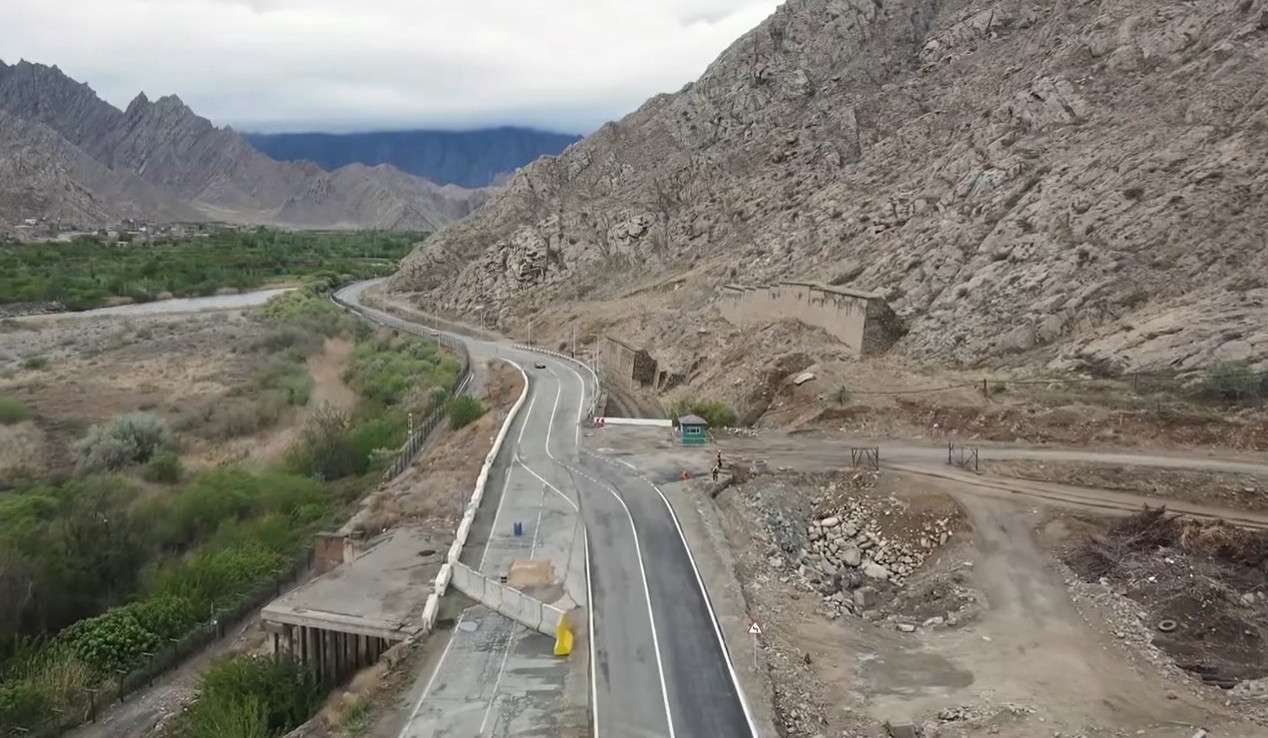
Syunik is Armenia’s southern province, which borders Azerbaijan. It is through this region, specifically the Meghri community, that the proposed road connecting Azerbaijan to Nakhichevan is expected to pass.
“In Armenia, the focus is not on investment or economic gain, but on preventing possible aggression. It is clear that by involving an American or Armenian-American organisation, the authorities are not seeking to resolve economic issues — they are addressing a security concern.”
Why US is interested in a presence on the unblocked route
“U.S. policy in our region is aimed primarily at reducing the influence of Russia and Iran. American involvement should be viewed through this lens. First and foremost, they are attempting to weaken Russia’s role in regional transit corridors.
Another factor is China. The Chinese Belt and Road Initiative is viewed as a strategic challenge by the United States. By securing influence over this route, the U.S. is seeking to assert some degree of control. Since the outbreak of the Russia–Ukraine conflict, Belt and Road projects across Russian territory have been frozen — leaving the ‘Middle Corridor’ as the remaining option.
If the United States succeeds in gaining oversight of China’s ‘Middle Corridor’, it will be in a position to exert influence over China’s economic growth and infrastructure initiatives.
China views the route through Meghri as a viable alternative, so the U.S. interest in controlling this overland [unblocked] route is far from coincidental.”
- “Baku weighing U.S. proposal”: Pashinyan-Aliyev talks in Abu Dhabi
- “Armenia could lose control over unblocked transport routes”: Opinion from Yerevan
The US proposal introduces “new rules of the game”
“The American proposal on unblocking the region fits into the logic of the MAGA [Make America Great Again] movement. The idea is that the US should have economic interests everywhere — investing and profiting globally. Washington is attempting to reframe its foreign policy in terms of economic projects, to revitalise its external engagement while simultaneously reaping certain economic dividends.”
All regional players — Iran, Russia, and Turkey — are interested in unblocking transport links, but on the condition that the routes are under their own control. And now a third party — the United States — enters the picture, not as a regional actor, and declares: “I’m part of the project too.” “This introduces new rules of the game in the region. We must understand how realistic the implementation of the American proposal is given the presence of such actors.”
“If we try to tie the functioning of the road to just one country, others will undermine the project. If the route is controlled solely by an American company, it will become a target for both Iran and Russia.
We must try to find a format in which they do not see the project as a threat to their national security. We need to strike a balance.”
Transit to Europe via Georgia remains more profitable
“If the region is unblocked, the route through Armenia will become an alternative, not the main one. Any overland transport is more expensive than maritime transport.
Maritime transit to Europe via Georgia is the shortest and least costly option. In this regard, Georgia holds a competitive advantage, and it already has a developed infrastructure.”
“Had this situation arisen in the mid-1990s, when there were no pipelines or railways, Armenia might have played a more significant role. But now that infrastructure is in place, we must accept that Armenia will be seen as an alternative, not a primary, route. The Georgian corridor will remain the main one, and only in case of problems there will cargo flows be diverted to the Armenian route.”
“The primary player in East–West freight transport will be China, through its Belt and Road Initiative and various infrastructure projects.
I find it unlikely that Chinese companies or officials will transport cargo via an ‘American corridor’, given the strategic rivalry between China and the United States.
Those same Chinese companies have already invested billions in Georgia. China views Georgia as its ‘corridor country’.
Beijing’s objective is to deliver goods to a Georgian port and then transport them by sea to Europe. Routing goods through southern Armenia and then across Turkey would be more expensive.”
“As for Central Asian states, their use of the unblocked Armenian route will depend on their export destinations. If they are aiming to ship goods to Europe, the shortest path is still through Georgia — to a Georgian port and then on to European markets.”
Armenia’s presence as an alternative could strengthen Ankara and Baku’s hand in talks with Tbilisi
“We often hear complaints that the Georgian side creates obstacles for our freight transport. In reality, Azerbaijani and Turkish companies face similar issues in Georgia. The country frequently reviews and increases transit tariffs.
At present, Georgia sets the terms, knowing that Turkey and Azerbaijan have no alternative routes. But if Armenia emerges as an alternative corridor, it could strengthen the negotiating positions of Turkey and Azerbaijan.
They would then be in a better position to demand more favourable transit terms, and so forth.”
- “Yerevan’s proposals on unblocking dispel Baku’s concerns,” Armenian officials believe
- “Erdogan’s statement points to a deal between Turkey and Russia” – opinion from Yerevan
Ankara’s goals are also more political than economic
“Among these goals are establishing a degree of political control over Armenia and weakening Iran’s influence in Nakhichevan. Moreover, the launch of the road would allow Turkey to partially control Iranian freight transport along the North–South transport corridor.
Yes, if the route through southern Armenia is unblocked, Tehran will lose its leverage over Nakhichevan. However, the financial losses in reality would be rather limited.
The Iranian side reacts sensitively to the idea of an extraterritorial road, as Armenia is viewed as an alternative route to the north. Whenever Iran faces difficulties with Turkey and Azerbaijan, Armenia has always been a fallback option.”
Follow us – Twitter | Facebook | Instagram
Armenia will serve as an alternative route