Georgian Dream Prime Minister Irakli Kobakhidze shrugged off allegations of the ruling party and its founder, Bidzina Ivanishvili, being “pro-Russian,” while thanking Tulsi Gabbard, Director of U.S. National Intelligence, for “exposing deep state.”
Kobakhidze’s July 21 remarks came in response to Gabbard’s recent statement alleging a “conspiracy” by Barack Obama administration to subvert Donald Trump’s victory in 2016, including through claims about Russian interference in the U.S. elections, as well as accompanying “Russia Hoax” memo alleging “deep state officials” leaking false information to media in 2016.
Seizing on Gabbard’s claims, Kobakhidze argued that “labeling opponents as pro-Russian is a well-worn tactic of the ‘deep state’ in various countries,” accusing the media of acting as its instrument in shaping such portrayals. He cited French far-right leader Marine Le Pen, Romanian presidential candidate George Simion, and Hungarian Prime Minister Viktor Orbán as examples, before arguing that Georgian Dream and its founder, Bidzina Ivanishvili, have been subjected to similar allegations.
“Labeling our government as pro-Russian has only one reason – we are not following foreign orders, we have cleared all branches of government of agents, we defend sovereignty, we have not allowed LGBT propaganda, and we have not engaged in war,” Kobakhidze said in the statement, adding that “nobody bothered to present us with any evidence of being pro-Russian.”
“The deep state’s strong propaganda line works against the ruling party’s founder, Mr. Bidzina Ivanishvili,” Kobakhidze added. Although we have heard accusations for years that Ivanishvili is pro-Russian and has Russian ties, no one has presented a shred of evidence to confirm this.”
“We are dealing with Goebbels-style propaganda methods,” he added, referring to the chief propagandist of Nazi Germany (1933-1945). “An enemy icon is created first, and then opponents are accused of ties to it. Such propaganda needs no facts – what matters is that the message is total and repeated by as many agents as possible.”
“Tulsi Gabbard also said that a discrediting campaign against Trump was orchestrated by the ‘deep state,’ with government structures fully involved in its execution,” Kobakhidze said.
Thanking Gabbard for “exposing deep state,” Kobakhidze concluded: “The public must be fully informed about the methods used by the oligarchy’s informal governance to discredit political opponents, because a society shielded by truth is the strongest guarantee of a state’s resilience.”
Jogue os primeiros jogos do Friv original no Jogos 360. Jogue Raft Wars, Bad Ice Cream e Fireboy and Watergirl, entre outros. Divirta-se com os clássicos do Friv antigo original no PC ou celular.
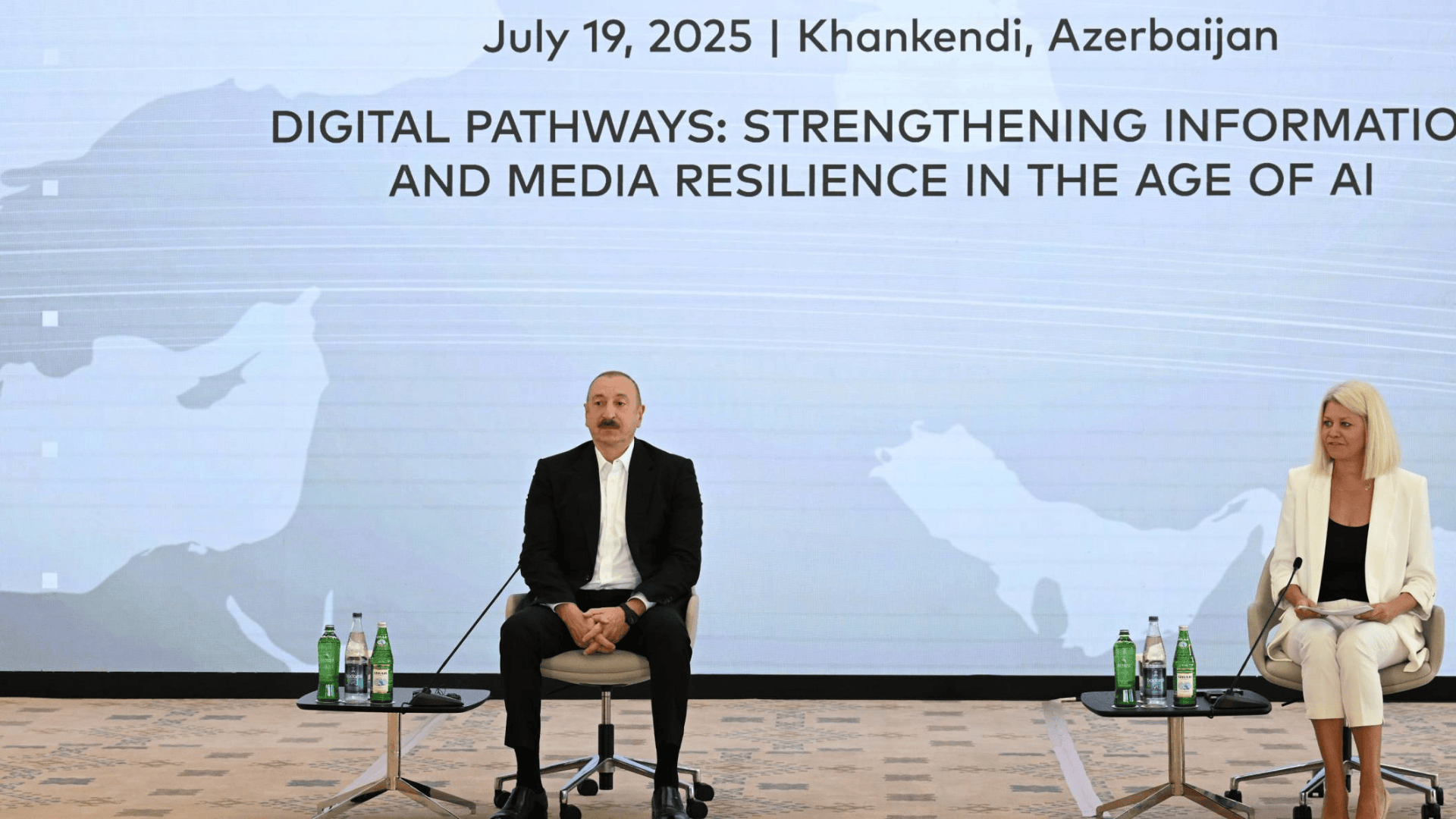
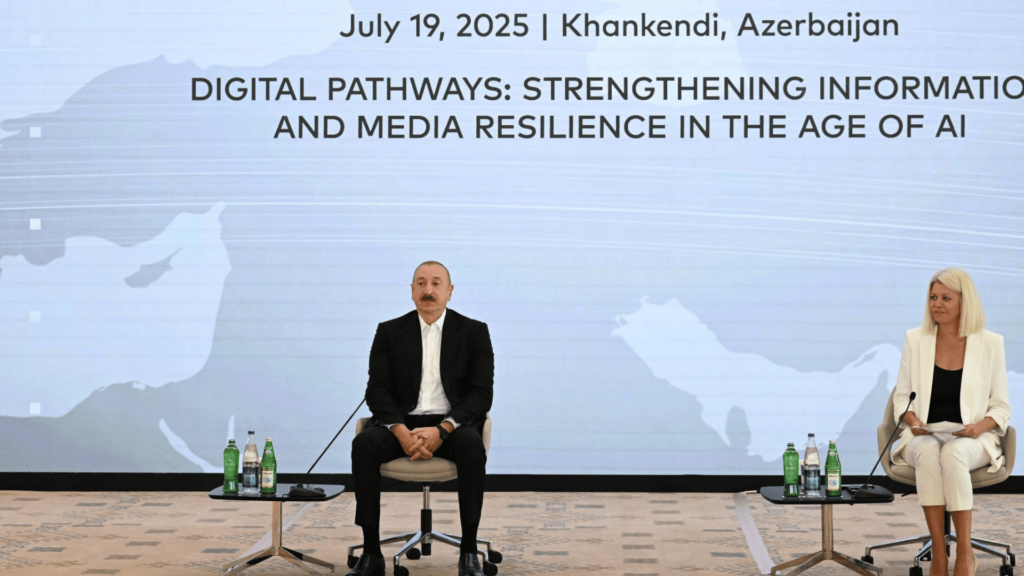
On July 19, Azerbaijani president Ilham Aliyev spoke at the media forum in Karabakh, addressing key topics such as regional connectivity, the Zangezur corridor, and relations with Armenia and Russia.
The Global Media Forum, held for the third year in Shusha, is seen as an international platform. This year, it gathered 140 participants from 52 countries under the theme: “Digital transitions: strengthening information and media resilience in the age of AI.”
Experts believe the forum helps Azerbaijan promote international legitimacy for territories regained after the second Karabakh war. However, many also see it primarily as an ideological tool for the government.
This year’s highlight was a session where Aliyev delivered major policy messages to an international audience, outlining Azerbaijan’s official stance on regional developments.
President Ilham Aliyev answers questions from participants of the Shusha Global Media Forum, July 19, 2025, Khankendi | photo: DND
Relations with Armenia
While answering questions, President Aliyev addressed the technical and legal details of the peace negotiations with Armenia.
He stated that although a preliminary version of the peace agreement was reached in March 2025, the signing of the document depends on constitutional amendments in Armenia and the official dissolution of the OSCE Minsk Group.
During his speech at the forum, Aliyev expressed clear distrust toward Armenia.
He recalled Nikol Pashinyan’s 2019 statement in Shusha – “Karabakh is Armenia, period” – and said he remains cautious about recent remarks by the Armenian leadership:
“Back then, they said: ‘Karabakh is Armenia.’ That statement marked the beginning of their current troubles. Now they say Karabakh should have long been recognized as part of Azerbaijan. It should have. I told them so in 2018 and 2019. I warned them things would get worse.
Our position has never changed. In 2003 I said Karabakh is our land, and I’ve said the same for the past 22 years. But the Armenian position has changed. So what guarantees it won’t change again?”
According to Ilham Aliyev, Armenia’s true intentions can only be judged through practical steps.
“Such a guarantee must come in the form of internationally binding legal documents that, as I told Prime Minister Nikol Pashinyan during our meeting in Abu Dhabi, must slam shut the coffin lid on separatism.
Armenia says the Karabakh issue is no longer on the agenda. In that case, the Minsk Group should also be removed from the agenda, as it was created to resolve the Karabakh conflict, which is now over.
Armenia’s constitution must also be amended to remove the independence declaration containing territorial claims against Azerbaijan.
And that’s basically it. The peace agreement text is finalized.”
Speaking about the peace treaty, Aliyev said negotiations started over two years ago but stalled due to Armenia’s attempts to reintroduce the Karabakh issue.
He claimed Armenia accepted the terms only after Donald Trump’s victory:
“During the meeting in Abu Dhabi, I told Mr. Pashinyan: ‘You probably hoped Madam Harris would win, and you’d be back on a white horse — but that didn’t happen.’
I’m absolutely convinced that if Trump hadn’t won, they wouldn’t have agreed to sign the agreement. They wanted more than they deserved and more than they could handle.”
Aliyev also stated that the implementation of agreed points on border delimitation and the opening of transport links remains delayed, accusing Armenia of using these issues as leverage for political bargaining.
Plane downed by Russian air defenses and ties with Moscow
In his speech, President Ilham Aliyev openly accused Russia for the first time of downing the AZAL passenger plane near Aktau, Kazakhstan, on December 25, 2024 – after it was shot down by Russian air defense systems as it approached Grozny, Chechnya.
Until now, the incident had been officially described as a “technical accident.” But Aliyev’s remarks strongly suggested it was a deliberate strike by Russian forces.
“Our AZAL plane was shot down by a missile near Aktau. No one has taken responsibility. This is a gross violation of international law,” he said, comparing it to the MH17 tragedy and warning of possible legal action in international courts.
“This is not just a technical issue,” he added. “We will take this into the legal sphere. Such crimes cannot be forgotten.”
Though Aliyev avoided naming Russia directly, his comments were widely understood as a clear rebuke. “It’s been seven months – no explanation, no accountability. This doesn’t align with strategic partnership.”
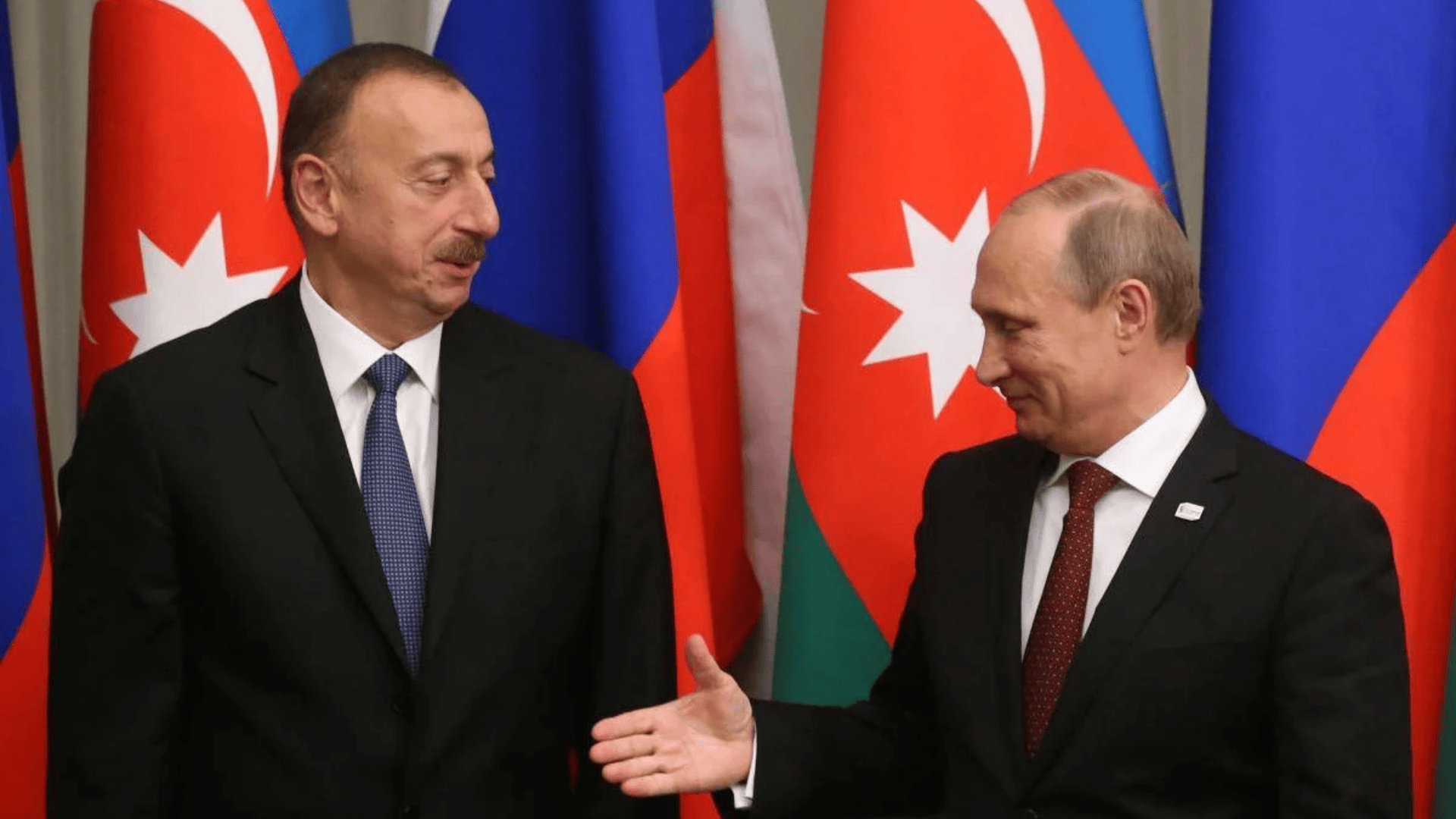
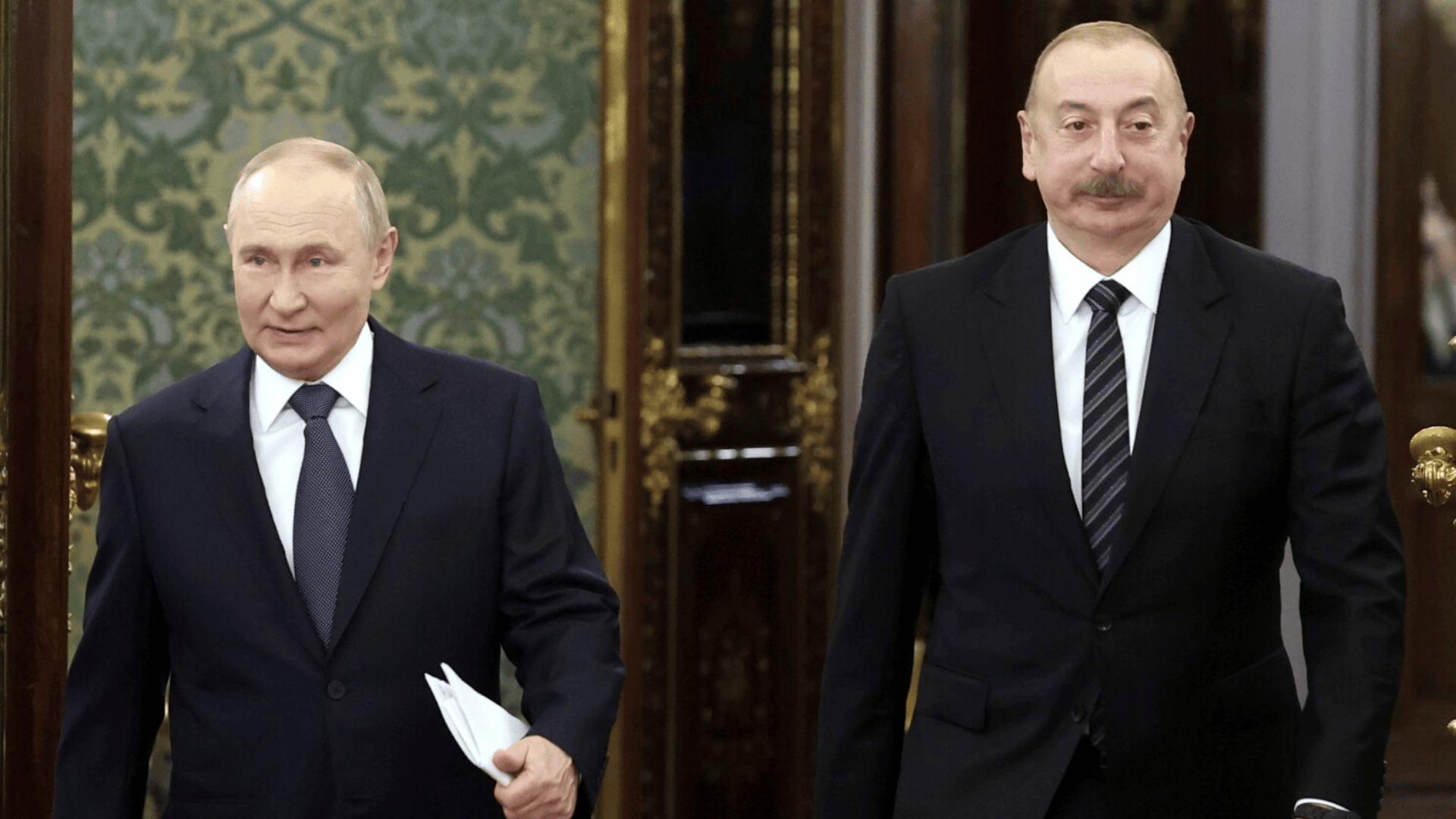
The statement marks a sharp departure from the pragmatic tone that had defined Baku–Moscow relations since 2020.
Aliyev now implied the attack may not have been accidental, but a provocation or political message.
He warned that the lack of responsibility poses a threat to Azerbaijan’s sovereignty and said silence is no longer an option: “We must speak out and take legal steps. If international law fails, we must create new legal tools.”
This statement appears to signal the end of the silent consent model that had defined Baku–Moscow relations since 2020.
President Ilham Aliyev placed special emphasis on the topic of the Zangezur corridor.
This proposed land route is intended to connect mainland Azerbaijan with its Nakhchivan exclave through Armenian territory. Yerevan insists on maintaining control over the section that crosses its land, while Baku demands an extraterritorial corridor with no Armenian checkpoints.
Speaking at the forum, Aliyev stated that the transport route would not only link Azerbaijan with Nakhchivan but could also serve as a “strategic artery uniting the entire Turkic world”:
“This project is not just about Nakhchivan. The Zangezur corridor is an integral part of the Middle Corridor. It is an infrastructure line connecting Turkic states and creating major logistical opportunities.”
Aliyev openly warned that Armenia’s refusal to participate in the project would result in its regional isolation. He emphasized that Armenia’s current passivity would ultimately lead to economic and political self-isolation:
“If Armenia refuses to join the project — that is their choice. We will complete all technical infrastructure on our side by 2026.”
The president’s statement conveyed two key messages:
Azerbaijan is prepared to implement the Zangezur corridor technically and without Armenia’s involvement;
By staying out of the project, Armenia risks not only geopolitical but also economic isolation.
Aliyev also outlined specific logistical parameters: the corridor will have a capacity of 15 million tons per year and stretch 43 kilometers. The road will run from Azerbaijan toward Meghri, and the entire project will be financed from Azerbaijan’s state budget.
“We are finishing the infrastructure on our side. The Armenian side is merely observing. Their refusal to join the project means regional isolation.”
In this context, the Zangezur corridor is no longer portrayed as a bilateral issue between Azerbaijan and Armenia but rather as an alternative trade route between Europe and Asia.
“The Middle Corridor has already become an alternative route for energy and trade between Europe and Asia. Armenia can become part of this system — or isolate itself.”
Media, artificial intelligence, and information security
Ilham Aliyev also dedicated significant time to outlining Azerbaijan’s position on the main theme of the Global Media Forum — “Digital transitions: strengthening media and information resilience in the age of artificial intelligence.”
He presented Azerbaijan’s approach to media and information security across three main areas:
1. Media in the service of the state
Aliyev defined the primary role of Azerbaijani media as defending the country’s information sovereignty and countering international information attacks.
In this context, the principle of media freedom is replaced by the goal of protecting state interests.
“There are biased information campaigns being conducted against us. The media must respond — and to do that, they must be armed with facts,” said Ilham Aliyev.
2. Artificial intelligence and a new wave of disinformation
Aliyev warned about the threats posed by artificial intelligence, particularly in the context of deepfakes, digital manipulation, and tools of information warfare.
He identified the spread of disinformation as a threat to Azerbaijan coming from certain Western media outlets.
He stressed that the response to these challenges cannot be purely national:
“As artificial intelligence capabilities grow, so does the scale of information manipulation. Combating this requires international cooperation, as the consequences could pose a real threat to all.”
3. Media literacy and legitimizing propaganda
Aliyev repeatedly emphasized the need for a “fact-based approach,” improved media literacy, and the introduction of information security as a subject in the education system.
He did not comment on the extent to which such initiatives could also be used for expanding state control over information flows or silencing critical views.
Effectively, the model presented by President Aliyev at the Shusha forum abandons the liberal concept of media freedom in favor of a framework based on information sovereignty and security.
Key features of this model include:
media as a tool to communicate the state’s position and respond to external attacks;
artificial intelligence as a driver of disinformation requiring a global response;
criticism framed as “biased foreign influence” and neutralized through that narrative.
This approach is not unique: similar models of “state-centered information security” are already in place in Russia, China, India, and several MENA countries. It now appears to be taking hold in Azerbaijan as well.
Georgia’s Revenue Service seized online media outlet Batumelebi/Netgazeti’s bank accounts on July 17 through an incasso order, officially citing the collection of outstanding tax debt. However, the outlet claims this is an “attempt to shut down the media organization.”
“This means the National Bureau of Enforcement could begin selling off Batumelebi’s assets, including technical equipment and its office,” Batumelebi said on July 21, noting that the bank levy comes just a week before a court is expected to deliver a verdict in the case of Mzia Amaghlobeli, the outlet’s founder, who faces four to seven years in prison for slapping Batumi police chief Irakli Dgebuadze in the face.
“The seizure and the other actions planned for the coming days appear aimed at breaking her personally and, ultimately, destroying the media organization she founded,” the outlet added.
As of now, the debt totals GEL 47,000 (about USD 17,300), down from GEL 136,000 (about USD 50,200) earlier in July, when the Revenue Service informed Batumelebi it had to cover the tax debt within five days, warning that failure would result in account seizure via incasso order. In addition to the principal amount, the debt includes GEL 126,000 (about USD 46,500) in accrued interest and GEL 109,000 (about USD 40,200) in penalties.
Batumelebi, which appealed the seizure warning to the Revenue Service requesting a repayment plan but was denied, says its debt was formally acknowledged and has been paid off in regular installments. The outlet calls the threat of seizure a “telling example” of selective pressure, noting that pro-government TV stations Imedi and Rustavi 2 owe far larger sums – GEL 17 million (about USD 6.27 million) and GEL 25 million (about USD 9.23 million), respectively – to the state budget.
The targeting of Batumelebi comes amid an intensified crackdown on critical media in the country, including the adoption of several laws restricting foreign funding sources for media outlets.
Two other media outlets – Radio Tbilisi and Trialeti TV – said in late June that their accounts were also seized by authorities through debt levying, which they allege was a politically motivated move against critical broadcasters.
The Government of Azerbaijan has approved a new procedure for exempting foreign trucks, trailers, and semi-trailers from road tax under certain transportation conditions, Azernews reports.
Georgia’s external merchandise trade (excluding non-declared trade) reached USD 11.93 billion in January-June 2025, marking a 12.8% increase compared to the same period last year, the National Statistics Office of Georgia (Geostat) reported on July 21.
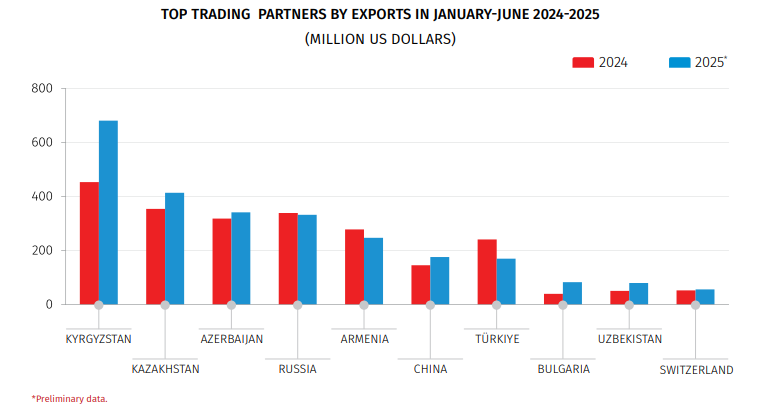
Exports totaled USD 3.23 billion, up 13.7% year-on-year, while imports stood at USD 8.7 billion, a 12.4% increase. The resulting trade deficit was USD 5.46 billion, accounting for 45.8% of total external trade turnover during the reporting period.
Kyrgyzstan (USD 681.3 million), Kazakhstan (USD 414 million), and Azerbaijan (USD 341.8 million) were Georgia’s main export destinations. The top ten export partners accounted for 79.8% of total exports, according to Geostat.
On the import side, Turkey led with USD 1.29 billion, followed by the United States with USD 1.283 billion and Russia with USD 950.5 million. The top ten import partners made up 71.7% of total imports.
Source: Geostat
Motor cars remained Georgia’s leading export commodity, totaling USD 1.21 billion (37.6%). Precious metal ores and concentrates followed with USD 174.6 million (5.4%), while spirituous beverages ranked third with USD 123.2 million (3.8%).
Motor cars also topped imports at USD 1.662 billion (19.1%). Petroleum and petroleum oils followed with USD 601.9 million (6.9%), while imports of paintings, drawings, and pastels remained third with USD 481.2 million (5.5%).