
To retrieve your DS-160 application, please enter your Application ID. Your Application ID is: The DS-160 application you are attempting to retrieve has been archived because it was submitted more than 30 days ago.
Day: June 25, 2025
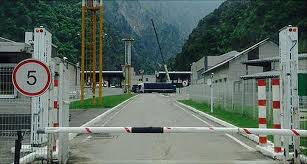
Ukrainians stranded at Georgian border
This story was prepared by JAMnews media partner, Russian outlet Novaya Gazeta.
For over a week, dozens of Ukrainian citizens have been held in a basement at the Upper Lars border crossing between Russia and Georgia. Through Georgian volunteers, these individuals managed to contact Novaya Gazeta and the international human rights group Civic Assistance Committee.
They say Russian migration authorities brought them to the border for deportation, but Georgia has refused to allow them entry.
The basement they are being held in is overcrowded and stiflingly hot — temperatures in Upper Lars have reached 36°C.
Footage obtained by Novaya Gazeta shows 35 people packed into three basement rooms, but witnesses say the actual number is higher and continues to grow by the day.
На границе с Грузией более 40 украинцев с оккупированных территорий держат в подвале. Россия их депортировала, Тбилиси не впускаетhttps://t.co/Majm0tPhSP pic.twitter.com/U25lzDWW8x
— The Insider (@the_ins_ru) June 21, 2025
Volunteer Tamara (name changed) told Novaya Gazeta:
“Russia regularly deports Ukrainian citizens through Upper Lars, but we’ve never encountered so many people at once. According to our information, they are currently being brought here from across Russia — from Volgograd, Engels, Tula, Tambov, Elista, and Oryol.
These are only the ones we know about — the ones we’ve been in contact with. All of them spent a long time in deportation centres.
It seems an order has come from the top to proceed with mass deportations. But the problem is that the basement is already overcrowded.
This is an unfinished customs terminal on the Georgian side of Upper Lars — the Dariali terminal. We equipped it ourselves, bringing in 17 beds, but that’s nowhere near enough for so many people.
The conditions there are inhumane — and that’s putting it mildly. There’s no food apart from what we bring in, and it’s not enough for everyone held there. Some deportees are HIV-positive or have tuberculosis. There are no sanitation facilities, and they can’t even wash.”
There are three categories of Ukrainians being held in the basement:
- The first includes those who were serving prison sentences in Ukraine at the time Russia launched its full-scale invasion. After being transferred to Russia, they were retried, given reduced sentences, and eventually released — only to be immediately placed in temporary detention centres for deportation (known in Russia as TsVSIGs).
- The second category consists of Ukrainian civilians from regions currently under Russian military control. They refused Russian citizenship, were banned from entering Russia, and were also placed in TsVSIGs for deportation.
- The third group includes Ukrainian nationals who committed crimes on Russian territory, served their sentences in Russian prisons, and upon release were placed in deportation centres.
We’ve been dealing with deported Ukrainian citizens for two years now. In the past — even if it was difficult — Georgia would at least allow them entry.
But now, it’s the Ukrainian embassy in Georgia that is opposing their entry.
The embassy insists that Georgian border authorities conduct thorough identity checks before letting anyone in. But this process usually takes around two months.
Here’s how it works: the individual is interviewed, writes a detailed biography, consents to the processing of personal data, and then the embassy sends formal requests to Ukrainian authorities — civil registries, prison records, archives, etc. Only once responses are received is entry permitted.
But now Russian migration services are bringing dozens of people to the border, and verifying them all could take months — if not years.
Many of the deportees have valid Ukrainian passports and are fully entitled to enter Georgian territory. Yet the Ukrainian embassy still demands identity verification.
And no one appears willing to speed up this process — as was sometimes possible when deportations were carried out via Belarus.
We’ve appealed about this issue to the Red Cross, to the UNHCR, to the UN Committee Against Torture — you name it.
No one has managed to resolve this issue in two years — not even the Ukrainian Ombudsman’s representative. She came to the border, spent an entire day with us, saw the conditions in which people are being held, filed a complaint with her own embassy — but nothing changed.
We warned back then that if Russia began mass deportations of Ukrainian citizens, it would turn into a complete nightmare. And now, that nightmare has arrived.
We managed to contact one Ukrainian man who is currently being deported on a bus under escort from a major regional centre. At the time of writing, they are about 900 kilometres from the border.
There are five people on board, all handcuffed, with limited access to food and water. No one is being allowed off the bus.
Novaya Gazeta has reached out to Russia’s Human Rights Commissioner Tatyana Moskalkova and to Georgian MPs, urging them to intervene and take the situation under their control.
Bad credit, no credit history, fixed or unemployment income and more—dealers enrolled with Credit Acceptance are able to approve everyone. Build up your credit. When you make on-time payments, every time, you maximize the opportunity to improve your credit score. Plus, we report to all 3 major credit bureaus. Financing for new and used cars.
The demand for diversified trade routes is also driven by mounting global instability. Western sanctions on Russia have made the Northern Corridor less attractive, while the flare-up of the Iran–Israel conflict is raising concerns about disruptions in maritime shipping via the Suez Canal. These factors have prompted Chinese freight operators to expand use of overland routes, particularly the Middle Corridor. During the conflict, Azerbaijan once again demonstrated its role as a “hub” for countries around the world, offering secure guarantees in a place full of chaos.