
Hundreds flee Iran to Azerbaijan amid rampant Israeli strikes The Jerusalem Post
Day: June 17, 2025
Azerbaijan produced agricultural goods worth 3.706 billion manats from January through May 2025, Azernews reports, citing data from the State Statistics Committee.
According to the data, this marks a 1.5% increase compared to the same period in 2024.
According to the data, this marks a 1.5% increase compared to the same period in 2024.
The value of crop production rose by 3.1% year-on-year to reach…
#Iran|ian Amb. to #Armenia Mehdi Sobhani: Joint 🇦🇲-🇮🇷 infrastructure projects won’t be affected by the escalation with #Israel. Projects are being implemented very quickly in Armenia.#MiddleEastCrisis #SouthCaucasus pic.twitter.com/KvpVC9LpLC
— Karina Karapetyan (@KarinaKarapety8) June 17, 2025
Less than four months before Georgia’s municipal vote on October 4, the opposition groups, which are currently boycotting the parliament, are debating whether to participate. The rift is widening between those who think it is pointless to enter the race, bound to be unfair, and those who believe they must use every opportunity to challenge the ruling party.
The debate intensified after some opposition figures and pundits said they could wrest control of major cities, including the opposition-leaning capital city of Tbilisi, from the Georgian Dream. Heated discussions have drawn in politicians and voters alike, and protesters on Tbilisi’s Rustaveli Avenue have been seen collecting signatures to call for a boycott.
The nationwide rallies have been ongoing for over 200 days, albeit with smaller numbers than in their heyday in December 2024-January 2025. The ruling party met the resistance with growing repression and hardening of the legislation against all forms of dissent. All four opposition forces that reached the 5% threshold in the disputed 2024 parliamentary elections refused to take up parliamentary mandates. The Georgian Dream now sits unopposed in the legislature, and even though this allowed for passing the restrictive laws at a breakneck speed, the legitimacy of the rump parliament remains questionable. Some fear that participating in municipal elections would mean breaking the boycott.
Tina Bokuchava, chair of the opposition United National Movement (UNM) party, did not mince words, warning that “participation in this special operation called elections is treason [of the opposition’s cause].” Her party has made it clear that it intends to boycott the vote. This has also been the position of the Coalition for Change (CfC), which came on top of the opposition groups last October, according to the contested official results. Three of its leaders—Zurab Japaridze, Nika Melia, and Nika Gvaramia—are now in pretrial detention for defying the summonses of the parliamentary commission.
Their imprisonment, as well as the disproportionate and unfair sentences passed against the detained demonstrators, is one of the arguments for those who say participating in elections under these conditions means giving a patina of democratic legitimacy to the autocratic rule and may break their international isolation. Another argument is that the election environment, which already helped distort the October 2024 vote, has only worsened since, precluding free and fair elections.
“What’s planned for October isn’t an election — it’s a lie,” Zurab Japaridze, who leads the Girchi-More Freedom party, wrote in a letter from prison a week ago. “The regime wins when you participate in the lie and get yourself mired in this dirt.” Elene Khoshtaria, leader of the Droa party, also part of the CfC coalition, is sharing this view, arguing that participating in the elections “legitimizes a violent Russian regime.” She is calling for the strategy of “non-recognition and non-cooperation” with the Georgian Dream.
- ISFED on Changes to Election Code: GD Uses Legislative Process to Maintain Power at All Costs
- ODIHR: We Have Not Received Invitation to Observe Local Elections in Georgia
The Federalists could not take part in the October vote as they had just splintered from the European Georgia party and were not properly registered. Giga Bokeria, one of the Federalist leaders, has been most vocal in supporting the boycott. He describes participation as “capitulation,” saying it would help “normalize the Ivanishvili regime.” Another leader, Tamar Chergoleishvili, suggested running a campaign against participation in the local elections.
In a statement on June 3, Freedom Square—another new force that ran as part of the Lelo-led Strong Georgia coalition last October, but recently left the alliance—also said that it won’t partake in a “premeditated plan to bury democracy.”
Unity vs Unity
The other two major opposition forces are also considering participating in municipal elections but have yet to make a formal decision.
For Georgia, a party led by Giorgi Gakharia has long made it clear that it was preparing for “any elections.” On June 9, party member Beka Liluashvili said For Georgia had “moved past discussions about participation” and would consider backing a “neutral candidate” for Tbilisi mayor if other parties join the race. Gakharia, former prime minister in the GD government, has found himself in the crosshairs of the prosecution and is being probed by Georgian prosecutors over tensions following the installation of a police checkpoint near the occupation line in 2019. It is unclear whether this legal pressure would affect the party’s decision.
The leaders of Lelo for Georgia, which also boycotts the parliament, argue now that participating in the municipal elections is a form of “fighting,” while boycotting amounts to “capitulation.” Party leader, Mamuka Khazaradze, says he wants to bring other opposition parties on board and present a “united front.”
“If we — the opposition — do not participate in these elections, do not fight, and [thus] allow [the Georgian Dream] to keep the cities we’ve already won [in the October elections], then […] Bidzina Ivanishvili will gain legitimacy in the eyes of the world,” Khazaradze told TV Pirveli. He further warned that with the real opposition boycotting, the Georgian Dream would create an appearance of competition by fielding pseudo-opposition parties. “The country’s liberation and de-occupation from the Russian government must start from Tbilisi,” Khazaradze wrote in a June 16 Facebook post.
Lelo leaders argue that participating in municipal elections does not mean abandoning key demands of the ongoing resistance: new parliamentary elections and the release of protesters detained during pro-EU protests. Instead, another party leader, Badri Japaridze, told RFE/RL that municipal elections may become a potential “instrument” for keeping the resistance alive.
“Georgian Dream is prepared for a boycott, it is also prepared for a partial boycott,” another Lelo member, Salome Samadashvili, told TV Pirveli. “But it is not prepared for facing a united, strong front,” she added.
Samadashvili has called for discussion and “broad opposition unity” on the issue. But many say Lelo is flip-flopping on previous commitments and is undermining the unity that seemed to exist in the shape of the Resistance Platform, led by Salome Zurabishvili, Georgia’s fifth president.
Zurabishvili now sounds irate: “Scheduling and participating in local elections when we have sixty or more political prisoners in the country is a little bit surprising and for me even incomprehensible,” she said in the June 5 briefing. Zurabishvili also cited the lack of judicial independence, the ongoing crackdown on the media, the changes to electoral legislation, and the skewed composition of the Central Election Commission as reasons why she didn’t consider local elections a reasonable instrument for redressing Georgia’s trajectory.
Survey Brings More Questions
Divided and confused, the opposition has turned to a public opinion survey for answers, only to find more questions. A recent poll by the Institute of Social Studies and Analysis (ISSA), a Georgian polling organization, has become another bone of contention.
The poll was conducted from May 5 to 20 through face-to-face interviews with 2,000 people nationwide and was released on June 15. It showed that most Georgians (54.4%) wanted opposition parties to participate in municipal elections. The share is 55% among supporters of the “pro-European opposition.” Still, as ISSA Head Iago Kachkachishvili clarified, slightly more than half of these 55% of opposition supporters will only go to the municipal vote if new parliamentary elections are held either before or simultaneously. The Georgian Dream has so far ruled that out.
The pollster did not present clear data on what share of opposition voters would take part in the municipal vote without authorities granting any of the key protest demands.
Kachkachishvili believes the opposition stands a real chance of defeating the ruling party in Tbilisi, but under certain conditions. “First, all opposition forces must participate. Second, the opposition must boost the willingness of Tbilisi residents to participate,” the sociologist said, pointing out that the support for the opposition’s participation is slightly lower in the capital (50%) than the national average. Kachkachishvili also emphasized the need for unity, including consensus on joint candidates for mayoral and majoritarian races. “Without these conditions, defeating Georgian Dream in Tbilisi appears unrealistic,” the sociologist warned.
Some commentators in the opposition now think the poll was commissioned by one of the parties that support participation and imply the questions were biased. ISSA has not disclosed who solicited the poll.
Meanwhile, the Georgian Dream seems content with opposition infighting. Its leaders are confident the party will win all 60 municipalities in the local elections. Party leadership said they plan to nominate the sitting mayor, Kakha Kaladze, for a third term in the capital, Tbilisi.
“I plan to remain mayor, and I intend to defeat all radical groups who express readiness to take away Tbilisi,” Kaladze told his opponents. “Let them participate, and we’ll see who takes what from whom.”
According to the disputed official results of the 2024 fully proportional parliamentary vote, the combined vote share of the four major opposition alliances exceeded that of the Georgian Dream only in Rustavi (46.24% vs GD’s 41.4%) and Tbilisi (46.02% vs GD’s 42.12%). In Kutaisi and Batumi, two other major Georgian cities, the Georgian Dream ended up just under 50%, but still got more votes than all four opposition alliances combined.
Unlike parliamentary elections in which the voters cast ballots for the proportional party lists, municipal votes are conducted using a mixed, proportional/majoritarian system. Last December, the Georgian Dream rushed through the widely criticised amendments increasing the share of the majoritarian seats in the self-government bodies. Traditionally, majoritarian voting favored the ruling party in the past, which was one of the main reasons why the opposition long called for abandoning the mixed system in the parliamentary elections.
The ISSA poll showed that the Georgian Dream would receive 35.2% of the vote if elections were held at the time the survey. The Coalition for Change follows with 16.9% of the vote, the United National Movement with 14.5%, Lelo/Strong Georgia with 13.4%, and Gakharia’s For Georgia with 12.4%.
Also Read:
- 30/04/2025 – Local Elections: New Divisive Issue for Opposition

Will EU suspend visa-free travel with Georgia
The Council of the European Union and the European Parliament have adopted a decision to reinstate mechanisms for suspending visa-free travel with third countries — a move that could also affect Georgia.
The statement notes that, as a result of these changes, the EU will be able to respond more effectively to situations “where the visa-free regime is being abused or goes against the interests of the EU.”
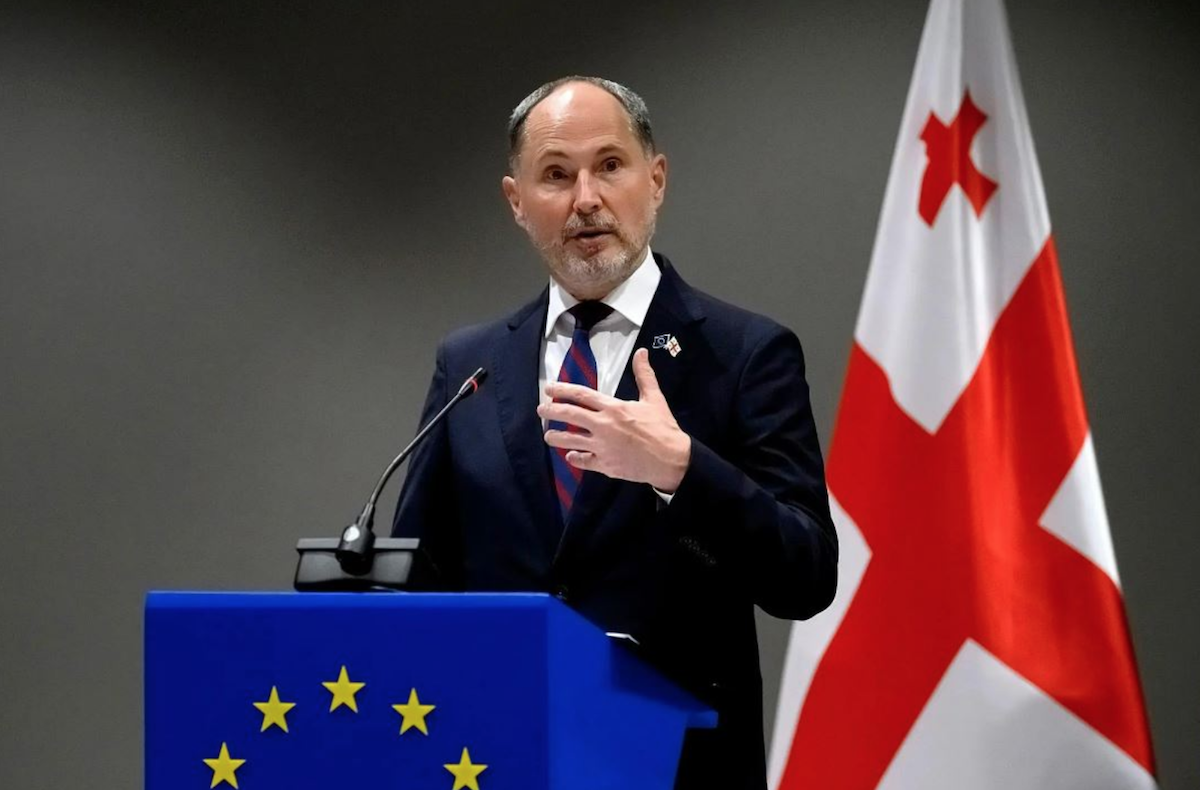
What does the statement say?
“Visa-free travel to the EU benefits both foreign nationals and the European Union. But if citizens of third countries abuse this privilege, the EU must have all necessary tools at its disposal to correct the situation. These tools can apply pressure on countries that avoid cooperation in preventing and combating illegal migration,” said Polish Foreign Minister Radosław Sikorski, whose country holds the rotating presidency of the EU Council for the first half of 2025.
The new grounds for suspending visa-free travel are defined as follows:
- A country’s visa policy no longer aligning with the EU’s, particularly if this may lead to an increase in unauthorised arrivals of nationals from other third countries due to geographic proximity to the EU;
- The operation of investor citizenship programmes, whereby citizenship is granted to individuals with no genuine ties to the country in exchange for predefined payments or investments;
- Hybrid threats and weaknesses in legislation or procedures concerning document security;
- Deterioration of external relations between the EU and the third country, particularly concerning human rights, fundamental freedoms, or serious violations of the UN Charter.
It is emphasised that these new criteria are in addition to existing grounds for suspension, such as a rise in asylum applications from nationals of countries with low recognition rates, or an increase in third-country nationals being refused entry or overstaying their permitted duration.
The mechanism will also be improved by limiting the suspension of visa-free access specifically to officials responsible for breaches of fundamental rights and foreign policy obligations, as applying the suspension to an entire population in such cases would be disproportionate.
The duration of a visa-free suspension has also been changed — extended from 9 to 12 months. However, this initial period may be further extended by up to 24 months.
“This temporary suspension phase will allow the European Commission to launch a dialogue with the third country so that the concerned country may address the issues that led to the suspension.
The European Union may also decide on a permanent suspension of visa-free travel if the third country does not address the causes of the temporary suspension,” the statement concludes.
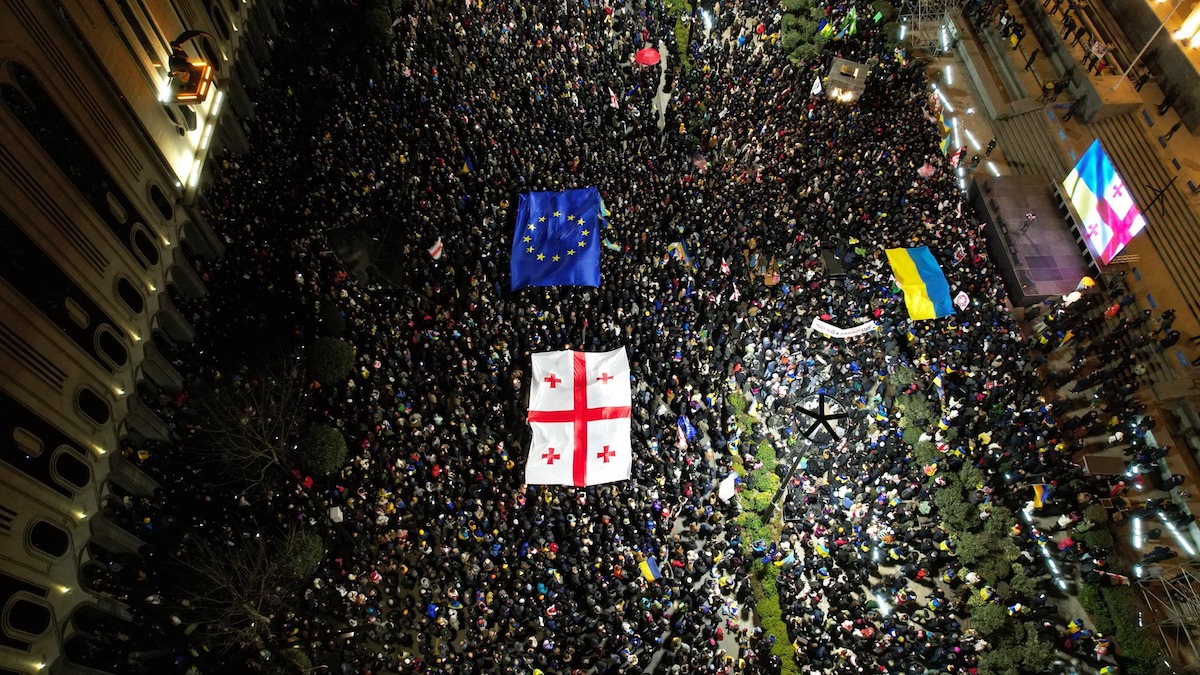
Will EU suspend visa-free travel with Georgia?
On 11 June, Polish Prime Minister Donald Tusk stated that his government is working with other EU countries to restrict or revoke visa-free travel for Georgian citizens:
“We are trying to build the necessary majority to restrict or suspend the visa-free regime with Georgia and other countries. Yes, that is my intention, although I understand that one-third of Georgians share our values.
I apologise to the Georgian people if this statement is offensive, but overall I support restricting visa-free travel for countries which, as in the case of Georgia, no longer respect democracy, or for countries whose migration poses a threat to the rule of law in Poland and in Europe.”
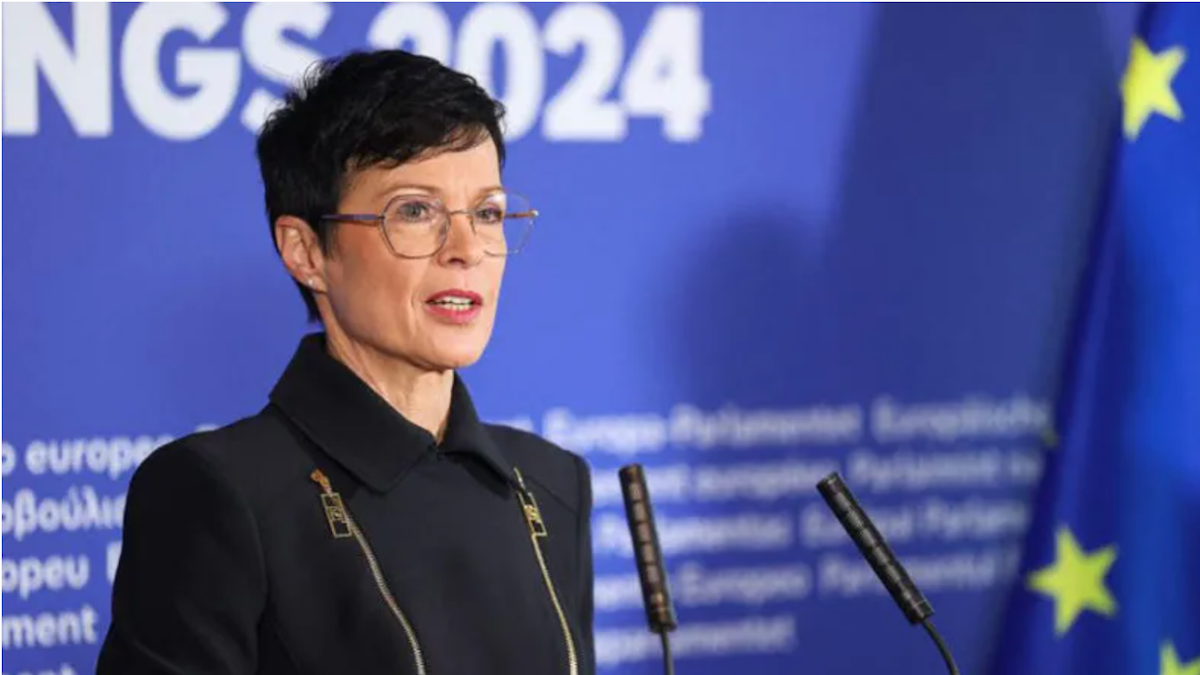
According to EU Ambassador to Georgia Paweł Herczyński, Georgia risks losing a historic opportunity to integrate into the European Union.
However, regarding Tusk’s statement, the ambassador clarified that the majority of EU member states are opposed to suspending the visa-free regime with Georgia.
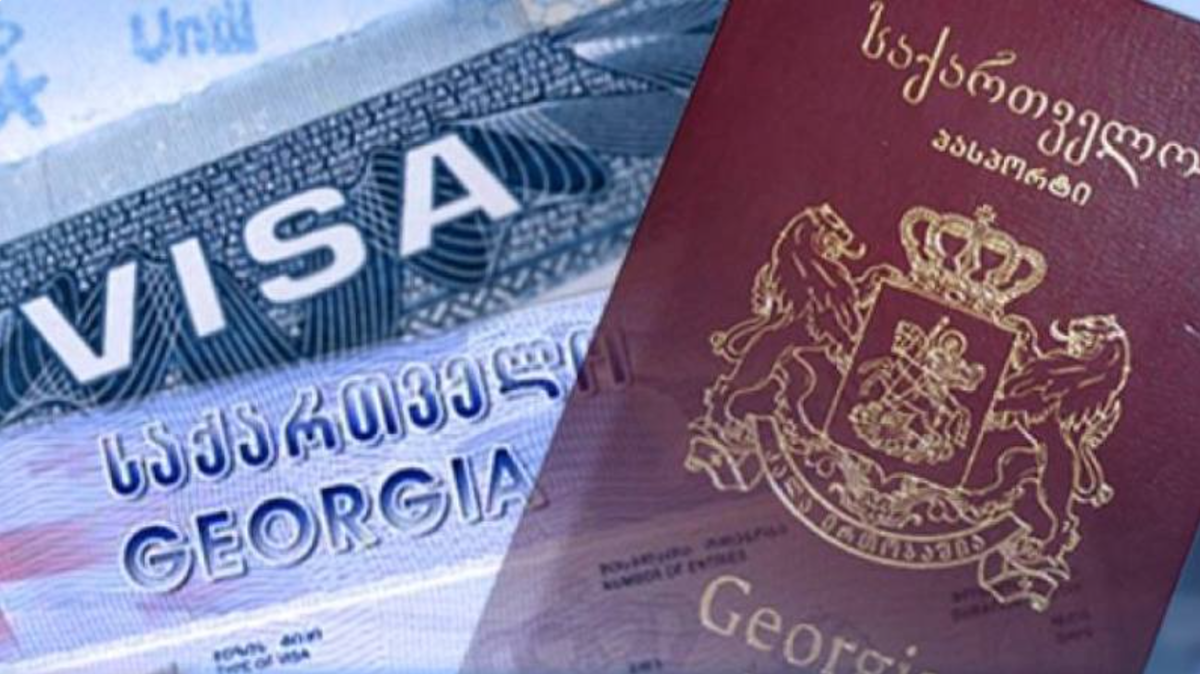
- The visa-free regime between Georgia and EU countries came into effect on 28 March 2017.
The European Union reserves the right to activate a so-called “suspension mechanism” to review or revoke visa liberalisation. Although the Georgian government maintains that, despite existing challenges, there is currently no threat of such a review. - Georgian citizens seeking asylum in Europe most frequently cite unemployment as the reason. Additionally, many Georgians travel to Europe for medical treatment — highlighting problems within Georgia’s healthcare system.
- Georgian criminal activity remains a serious concern in Europe, with Germany particularly vocal on the issue. In 2024, German officials even demanded that Georgia’s Minister of Internal Affairs take effective measures in response.
Will EU suspend visa-free travel with Georgia