Heydar Aliyev’s return to power in 1993 marked a turning point in Azerbaijan’s modern history, lifting the country out of political chaos and laying the foundation for statehood, order, and national identity. This was emphasized by Oleg Tulyakov, an associate professor at Sumy State University of Ukraine, in an article published by azconsulate.com.ua, Azernews reports.
Day: June 16, 2025
There are numbers that quietly tell a story of transformation. One of those numbers is 3.1 billion — the amount in manats that Azerbaijan’s tourism sector contributed to added value by 2024, marking a 30% increase over the last seven years. Behind this figure lies a compelling narrative of resilience, planning, and forward-looking ambition — one that deserves recognition as Azerbaijan enters a new phase in its tourism journey.
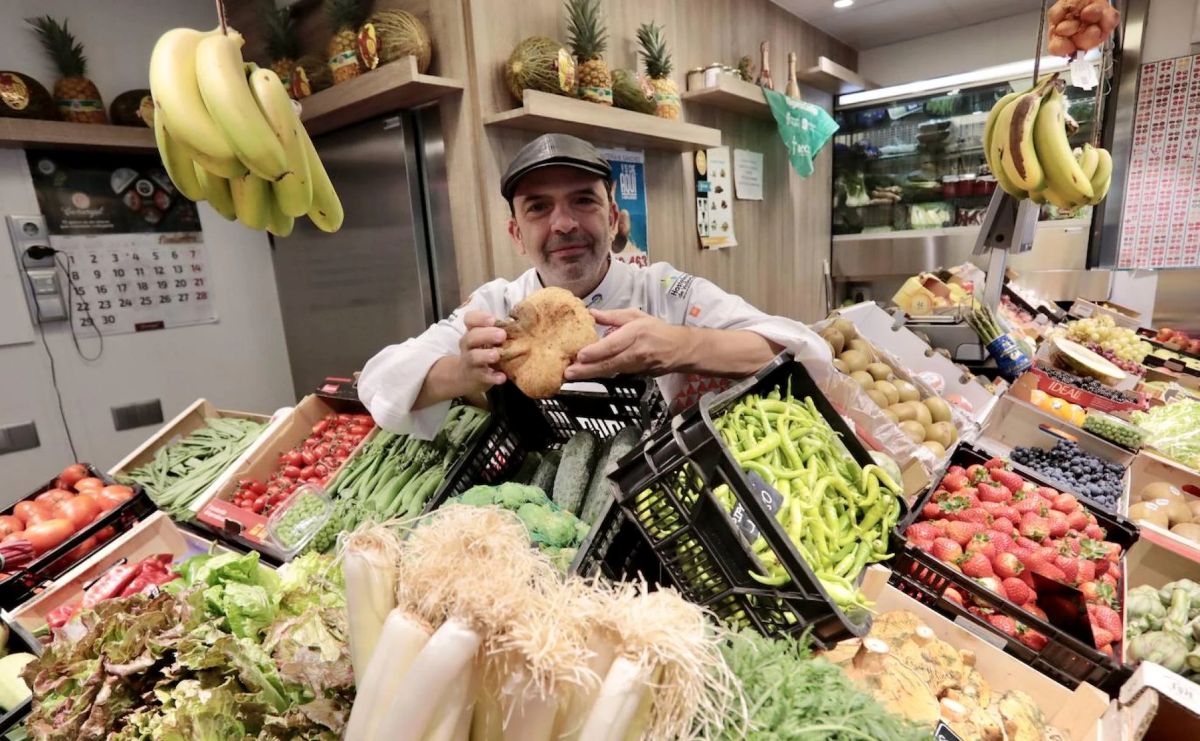
Imported fruit and vegetables cheaper than Armenian
Armenia does not produce enough agricultural goods to meet domestic demand — even though the number of greenhouses and intensive orchards has increased in recent years. The issue is that a significant share of the harvest is exported. This applies in particular to Armenian-grown apricots, cherries, tomatoes, and strawberries.
As a result, fruit and vegetables have seen the sharpest price rises in the national food basket over the past few years. According to Armenia’s Statistical Committee, in April 2025 vegetable prices were up 17.9% compared to April 2024. Over the same period, fruit prices rose by 7.9%. Together, fruit and vegetables make up 8.28% of the consumer basket.
- Combating land desertification in Armenia: no positive progress so far
- Water shortage in Armenia: Causes and how to prevent desertification
- Benefits of solar energy in Armenia: three examples
Walk through Yerevan’s markets: what vendors are saying
Rising prices are pushing locals to seek cheaper produce at markets. To find out what they end up choosing, a JAMnews journalist visited several Yerevan markets and spoke to vendors. They said that imported fruit and vegetables are often sold at lower prices than those grown in Armenia — and even admitted that they themselves often struggle to tell the difference.
Lida, who has worked at the market for eight years, said she only recently realised that she was regularly selling imported carrots, tomatoes, and cucumbers.
“It surprised me. There are so many greenhouses now, it feels like half the country is farming. But I was told that a large share of local produce is exported, mostly to Russia. And so we have to import to avoid shortages on our own markets,” she explained.
According to Lida, agricultural products have nearly doubled in price over the past three years — and there are months when vegetables become scarce:
“Of course, prices drop once new stock arrives. For example, this winter I was selling potatoes for 600–700 drams ($1.5–1.8) per kilo. Once supplies came in, the price dropped to 300–450 drams ($0.7–1.1).”
Another vendor, Khachatur, noted that “although Armenia is a land of sun, fruit, and vegetables,” the volume of imports has grown significantly in recent years:
“In this situation, people have got used to buying tasteless fruit and vegetables — as long as they look good.”
He added that customers don’t even ask whether the produce is local or imported:
“I show them the locally grown stuff, usually set out next to it — and it’s a bit more expensive. I say, ‘Our fruit and veg taste better.’ They reply, ‘What about the look? What about the price?’”
Vendors regret that in recent years local produce — particularly fruit and vegetables grown outdoors — has also lost its visual appeal.
“Their appearance suffers from hailstorms, and frosts and droughts affect quality. And the small amount of high-quality produce is exported. In the end, the best is not for our people — others get to enjoy it abroad. What can we do? That’s the free market,” said Khachatur.

Export and import statistics
According to the Statistical Committee, the situation in 2024 was as follows:
| Product | Export | Import |
| Cucumbers | 5000 tonnes | 5,5 tonnes |
| White and cauliflower, kohlrabi | 280 tonnes | 3650 tonnes |
| Melons and watermelons | 94 tonnes | 8900 tonnes |
| Strawberries, blackberries, raspberries, currants, mulberries, kiwis, pomegranates | 3200 tonnes | 10 000 tonnes |
Armenia also imports potatoes, courgettes, carrots, turnips, beets, tomatoes, and other vegetables — all of which are exported in much larger volumes.

“Our agriculture is uncompetitive” – farmer
According to farmer Arutyun Mnatsakanyan, the price gap between imported and locally grown agricultural products in Armenia is driven by three main factors.
Firstly, he points out the lack of seed selection stations in the country to help farmers choose high-quality seeds:
“We need to understand which varieties are most effective and better suited to our soil and climate. In other words, we need to know which seeds to plant in order to achieve optimal yields.”
The second issue is the shortage of professional agronomists. The farmer claims there are virtually no qualified specialists in Armenia’s agricultural sector:
“Even within the state system, you can count those with the right expertise on one hand. As a result, there’s no clear agricultural development policy. When there’s no macro-level vision for advancing the sector, you end up with the kind of situation we now have. It’s obvious that local produce has become uncompetitive.”
Mnatsakanyan adds that due to climate change, soil degradation, and poor land use and management, the situation has become extremely worrying. In his view, professional intervention is now an urgent necessity:
“There are no competent specialists to provide farmers and business owners with analysis. But they need precise calculations to understand which crops to grow for high yields.”
He explains that due to these problems, Armenia often ends up with either a shortage or, conversely, a surplus of certain products:
“A few years ago, we had a case with cucumbers — prices fell to 30–50 drams (7–13 cents) per kilo. At the same time, local potato growers held back their produce from the domestic market in hopes of exporting it at a higher price. But they failed to organise the export, and in the end, lost their entire crop. It had to be thrown away.”
Mnatsakanyan says that imported goods end up being cheaper despite including customs duties and other costs. The main reason, he believes, is automation in foreign agriculture.
He cites the example of carrot production abroad, which is almost entirely mechanised — from planting to harvesting:
“The cost price of one kilo of carrots abroad is around 30 drams. Even if you add transport and other expenses, imported carrots are still cheaper than local ones. Ours cost more because everything is done by hand. On top of that, local carrots often look worse than imported ones. And most customers don’t even care whether the carrots are local or imported. Since there’s no demand from consumers, sellers don’t bother sorting them by origin.”